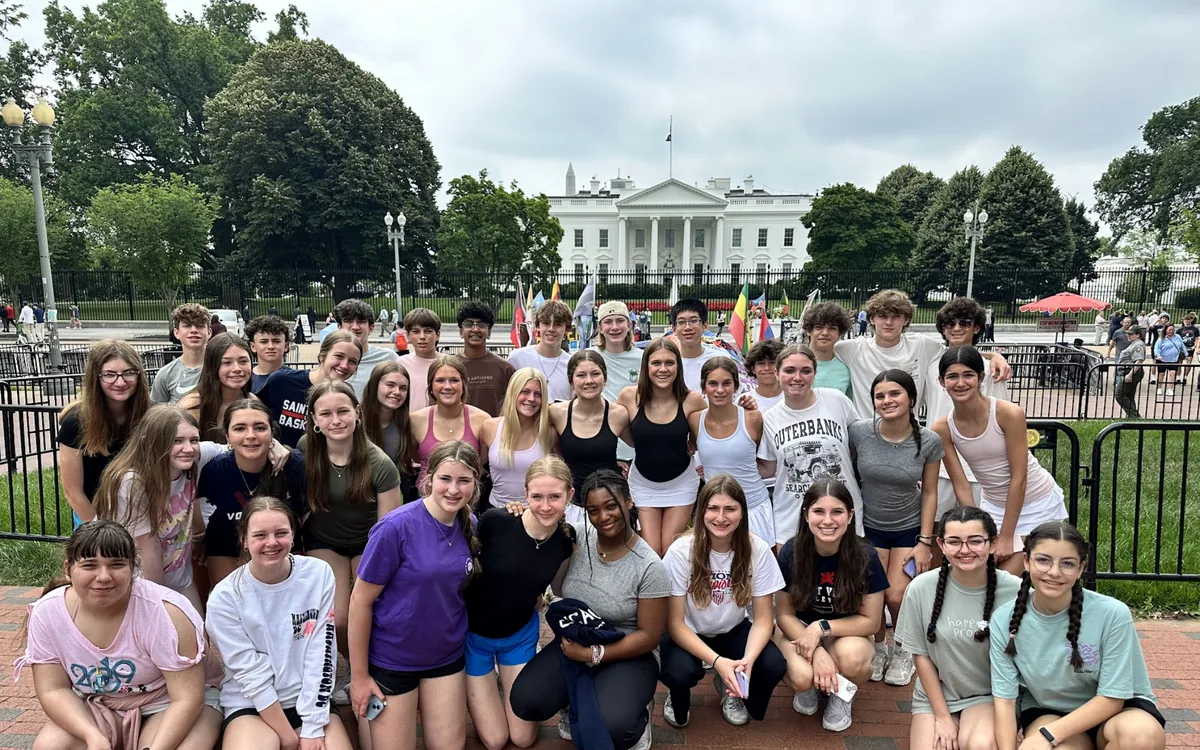
The best Washington, DC field trip ideas for school groups are the National Mall monuments, the free Smithsonian museums, a guided tour of the U.S. Capitol, and Arlington National Cemetery. Those four anchor almost every successful student itinerary — and because the monuments and Smithsonians are free, DC delivers more learning per dollar than any other destination in the country.
The hard part is not finding things to do. It is choosing well. Below are the stops that school groups actually book, organized the way teachers plan: what to see, what to cut, ideas by grade level, and how to pay for it.
The National Mall: monuments and memorials
The Mall is the spine of any DC field trip. It is walkable, free, and open around the clock — which is why experienced groups tour it in the evening, when the crowds thin and the memorials are lit.
- Lincoln Memorial — students stand where Dr. King delivered “I Have a Dream.” The speech is engraved on the steps.
- Washington Monument — the best orientation point in the city for understanding how DC is laid out.
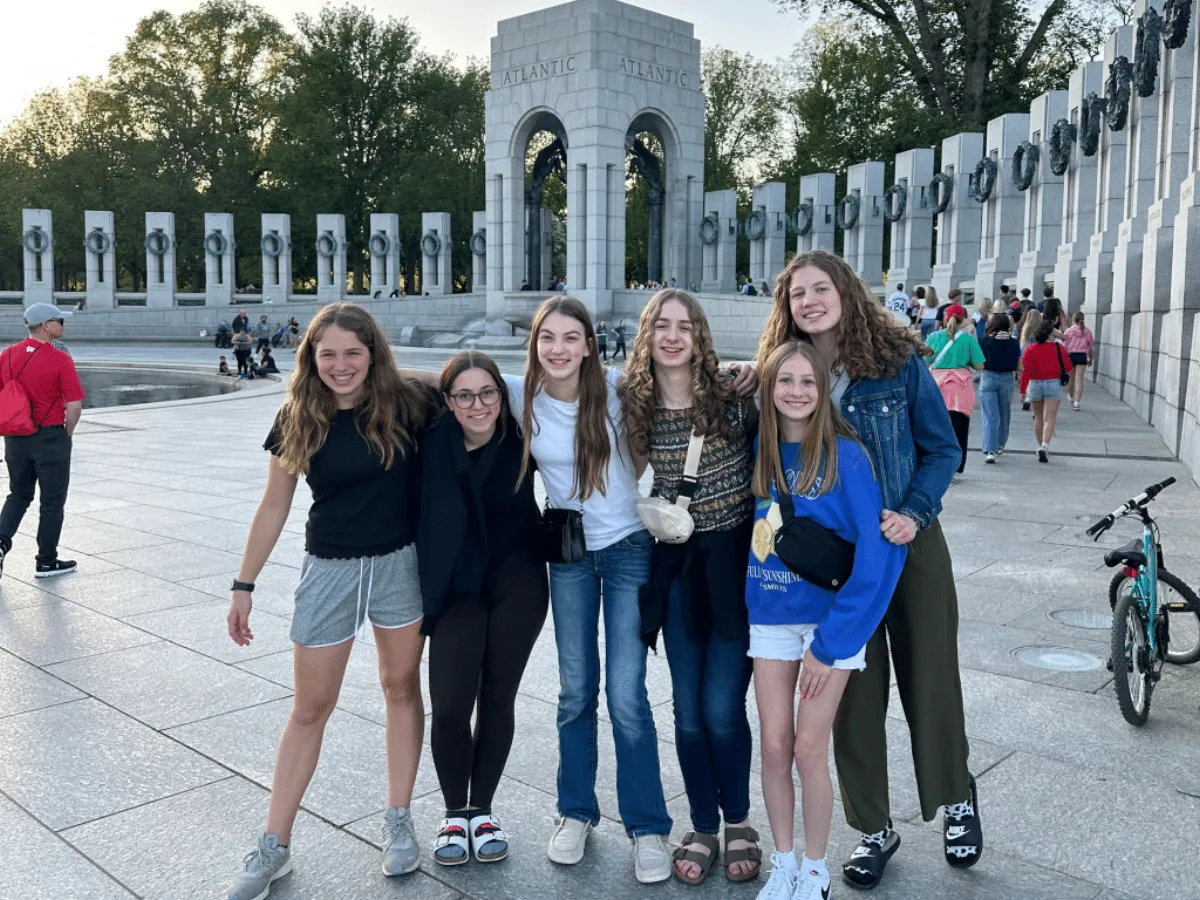
- World War II Memorial — a natural place to connect a class to family history.
- Vietnam Veterans Memorial — students can do name rubbings; deeply memorable for older grades.
- Korean War Veterans Memorial — the 19 steel figures land hard in person.
- Martin Luther King, Jr. Memorial — pairs naturally with a civil rights track.
- Franklin D. Roosevelt Memorial — four outdoor rooms covering the Depression and WWII.
- Thomas Jefferson Memorial — best at sunset, across the Tidal Basin.
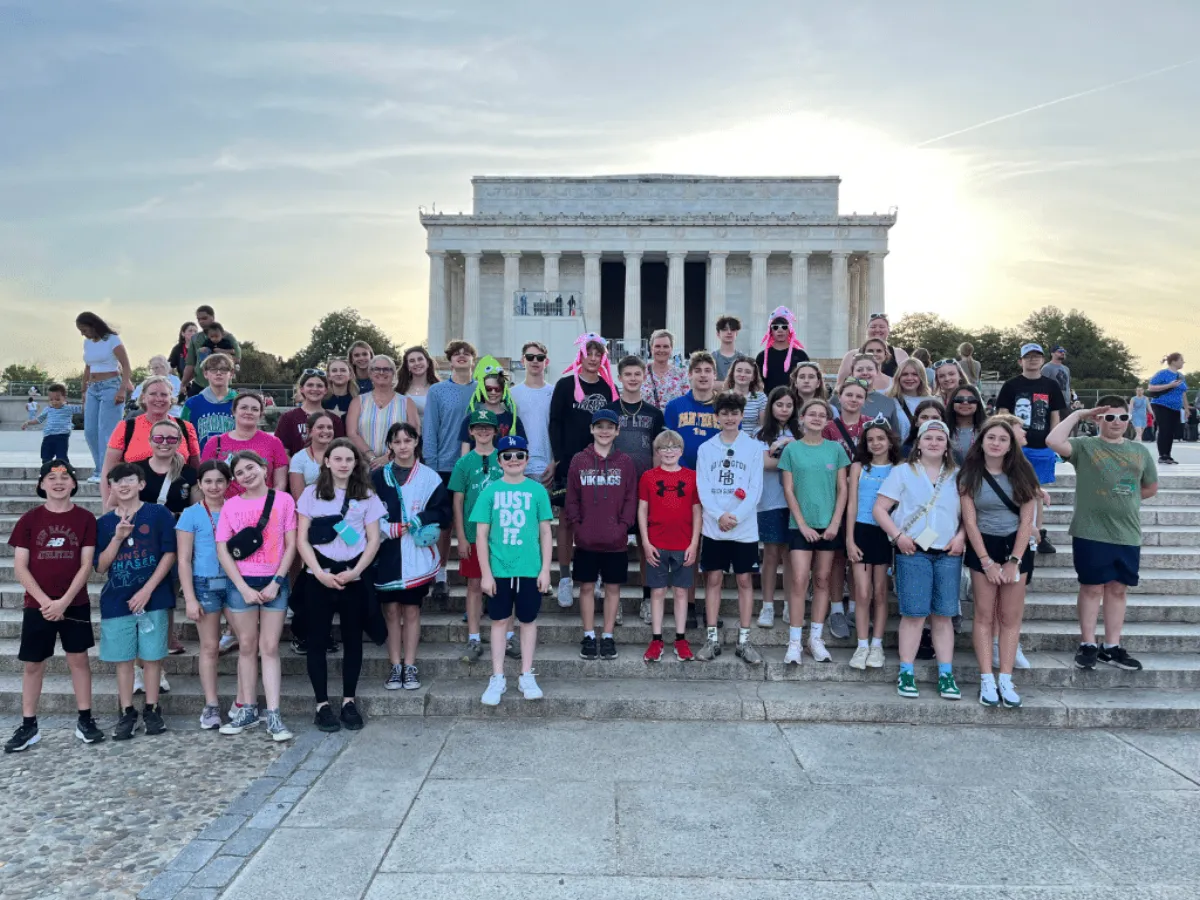
Teacher tip: do the monuments at night. You will cover more ground in less heat, and students remember it far longer than a midday walk.
Smithsonian museums (all free)
There are 17 Smithsonian museums in the DC area and admission is free at every one. No group can do them all — pick two or three that match your curriculum.
- National Air and Space Museum — the perennial favorite, and the strongest STEM tie-in.
- National Museum of Natural History — dinosaurs, the Hope Diamond, and a live insect zoo.
- National Museum of American History — the actual Star-Spangled Banner.
- National Museum of African American History and Culture — timed passes required; plan at least three hours.
- National Museum of the American Indian — often the quietest, with the best cafeteria in the city.
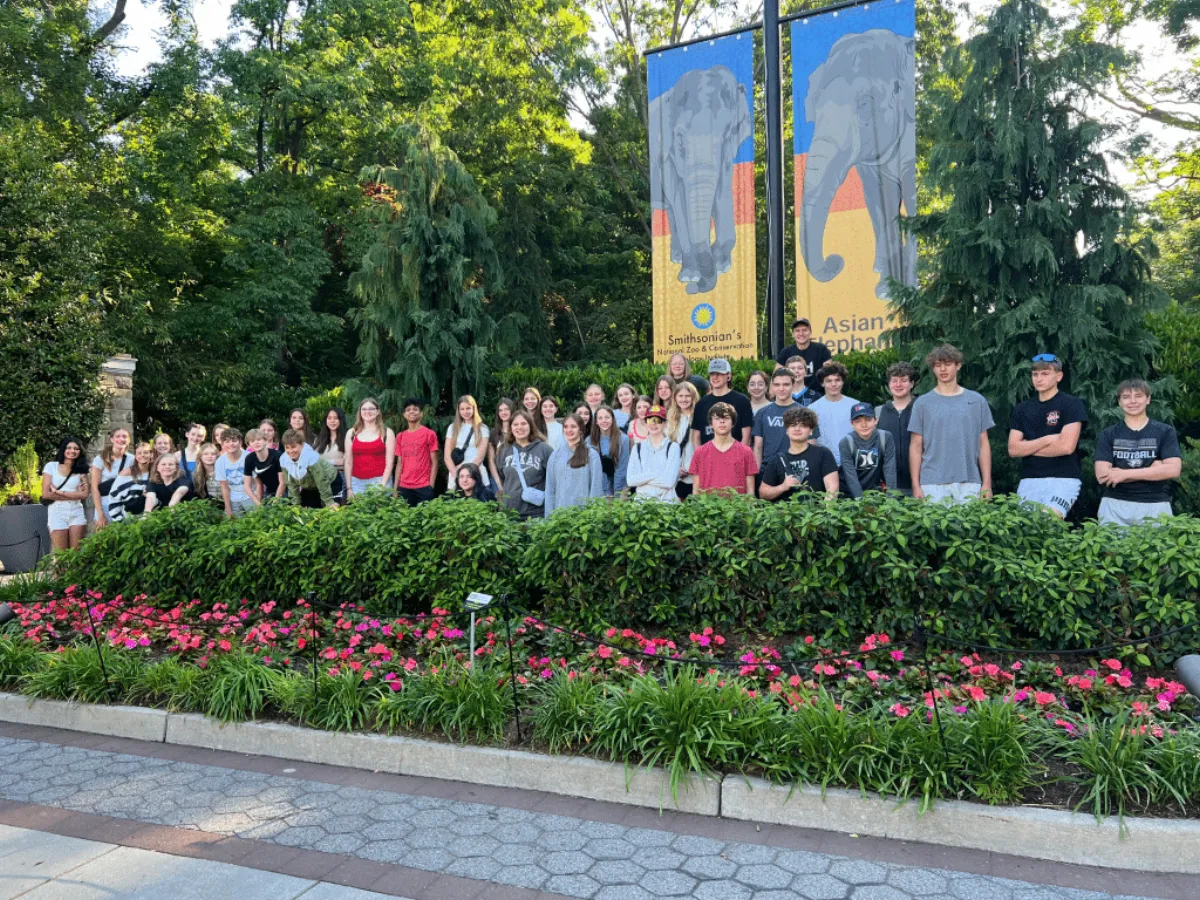
- Smithsonian’s National Zoo — free, and a strong fit for younger grades.
Government and civics in action
This is what students cannot get from a textbook: watching the branches of government operate in the same afternoon.
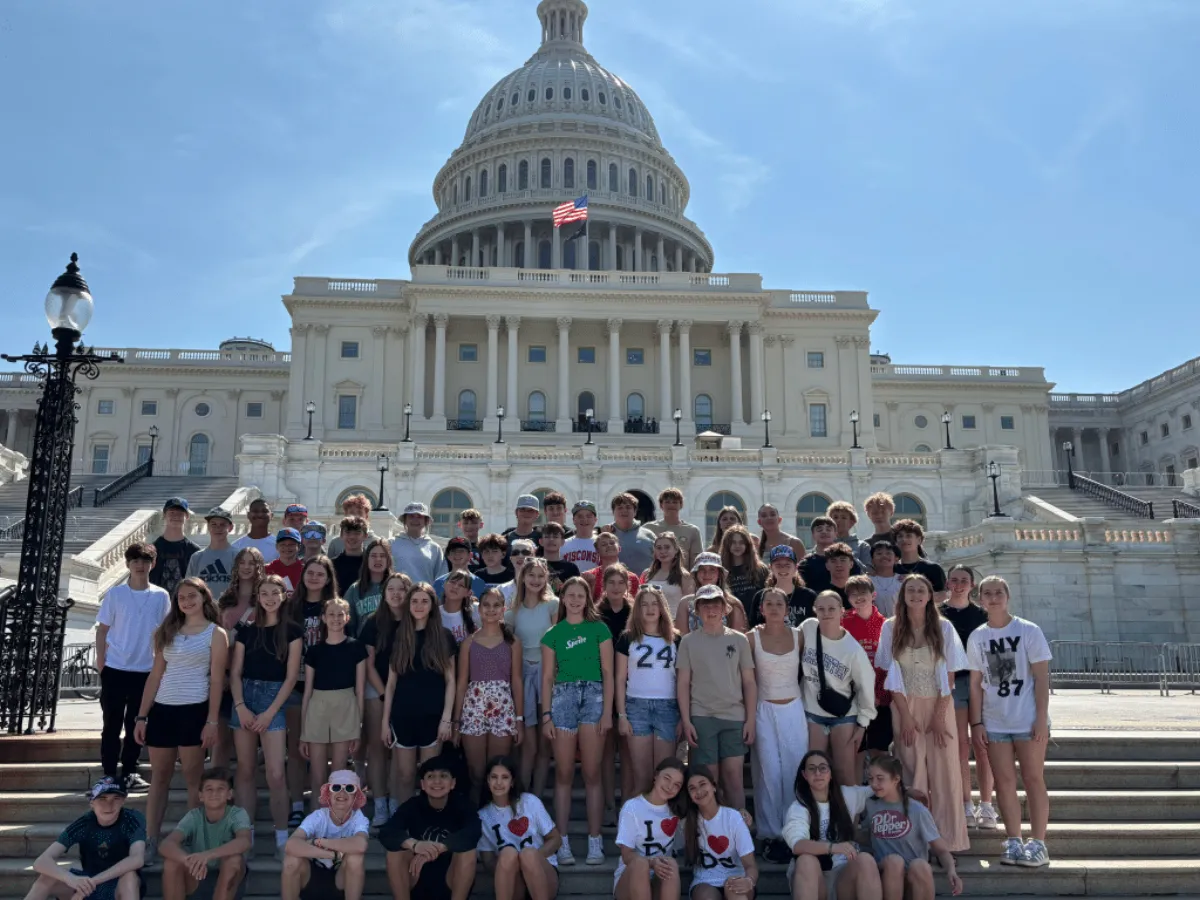
- U.S. Capitol — book through your senator or representative’s office, months ahead.
- Supreme Court — courtroom lectures when the Court is not sitting.
- Library of Congress — arguably the most beautiful interior in Washington.
- Meeting your member of Congress — request early; a photo on the Capitol steps is the trip souvenir.
- National Archives — the Declaration, Constitution, and Bill of Rights.
Arlington National Cemetery
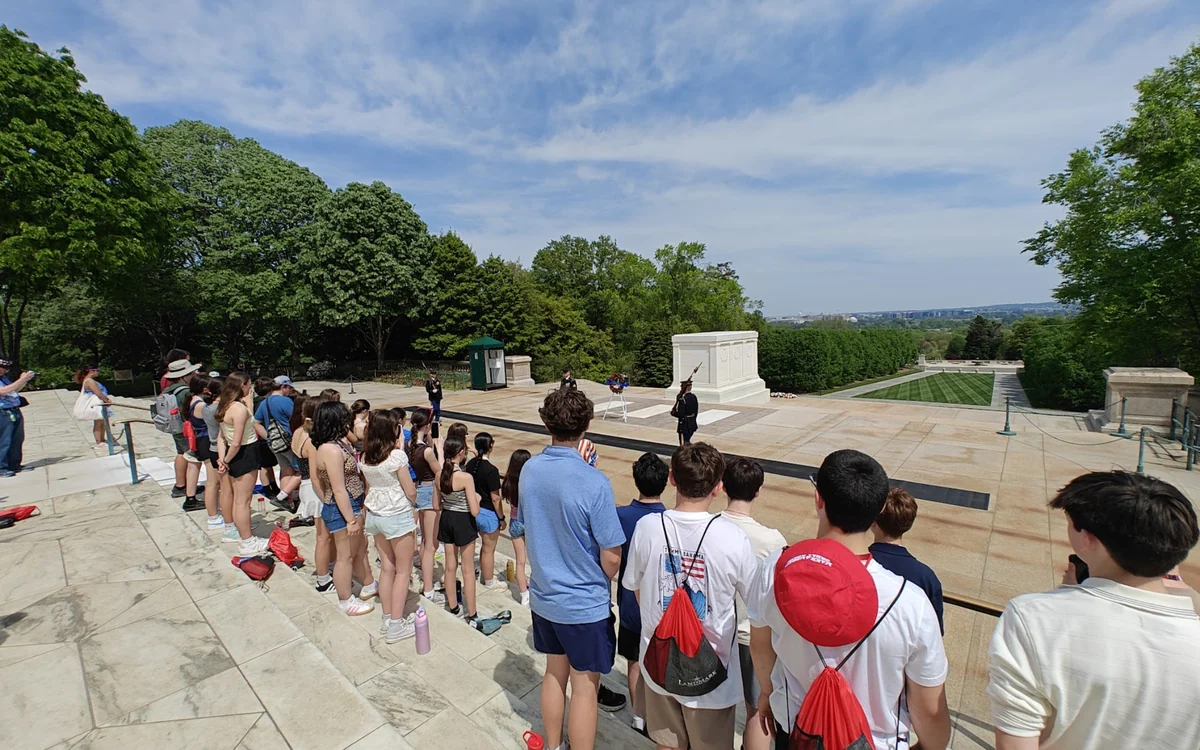
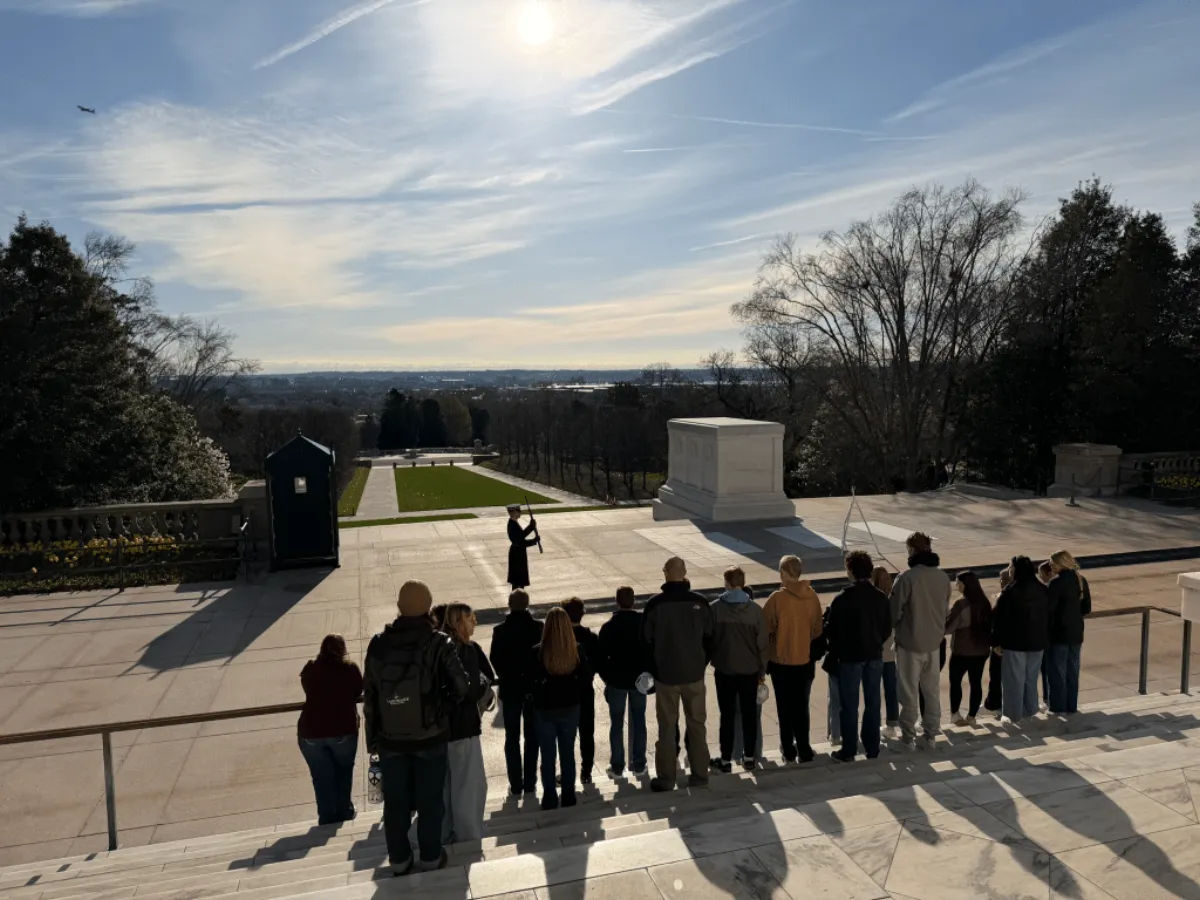
Arlington is the stop teachers consistently name as the most powerful of the trip. Time your visit around the Changing of the Guard at the Tomb of the Unknown Soldier — every 30 minutes in summer, every hour the rest of the year. Some groups apply to participate in a wreath-laying ceremony, which requires advance application and is worth the paperwork.
Beyond the Mall
- George Washington’s Mount Vernon — about 30 minutes south; pairs colonial history with an honest look at slavery.
- Marine Corps War Memorial (Iwo Jima) — free, quick, and unforgettable.
- National 9/11 Pentagon Memorial — sobering and appropriate for middle grades up.
- Ford’s Theatre — the Lincoln assassination told in the room where it happened.
- Historic Georgetown — a good stop for free-time and dinner.
- Howard University and other HBCUs — turns a field trip into a college visit.
Washington, DC field trip ideas by grade level
Elementary school
Keep it visual and keep it moving. The National Zoo, Natural History, and Air and Space carry the day, with a short monument walk at the Lincoln and Washington Monument.
Middle school and 8th grade
The classic 8th grade DC trip: monuments by night, a Capitol tour, Arlington, and two Smithsonians. It maps directly onto the American history and civics curriculum most 8th graders are already in. See our 8th grade Washington, DC itinerary and middle school class trip programs.
High school
Go deeper and more thematic. Strong options include a civics-focused tour, an African American history tour, a STEM track, or HBCU campus tours that double as college visits.
How many days do you need?
Three to four days is the sweet spot. Two days is enough for the Mall and a museum or two. Three adds the Capitol and Arlington. Four lets you add Mount Vernon or a themed track without marching students past everything at speed. Compare our 4-day and 5-day DC itineraries.
What a DC field trip actually costs
Here is the thing most cost guides bury: the attractions are mostly free. The Smithsonians, the monuments, the Capitol, Arlington, and the Pentagon Memorial cost nothing to enter. Your budget is driven by travel distance, number of nights, lodging, and meals — not admission tickets. That is what makes DC unusually affordable for a destination of its caliber. For the full breakdown — what is free, the hidden line items, and how to compare quotes — see what a DC school trip costs.
How to pay for it: fundraising and grants
Very few groups pay for a DC trip out of pocket in one lump sum. Most combine:
- Family payment plans — families register online and pay monthly instead of all at once.
- Fundraising — see our guide to 8 ways schools can raise money for field trips.
- PTA, booster, and alumni support — often the fastest yes.
- Local sponsorships — civic groups and businesses frequently sponsor students.
- Education travel grants — check your state and district first; many have dedicated civic-education funds for DC specifically.
Planning tips from trips we actually run
- Tour the monuments at night. Cooler, emptier, more memorable.
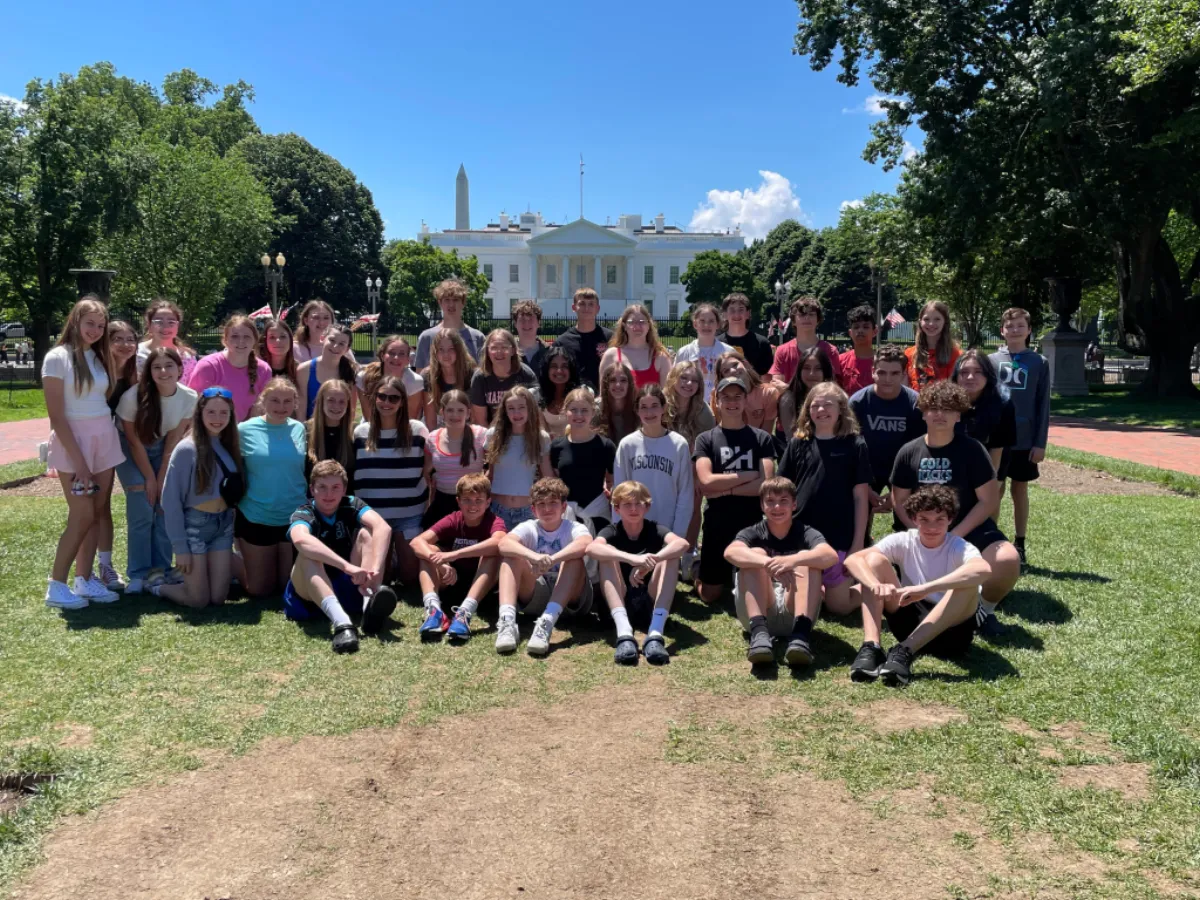
- Request Capitol and White House tours early. Congressional offices book out months ahead, and White House requests must go in 21 days to 3 months out — with no guarantee.
- Use the Metro. It is cheaper and often faster than a motorcoach downtown.
- Pick two museums, not five. Groups that try to see everything remember nothing.
- Go in the fall. Late September to early November means mild weather, thinner crowds, and better pricing than spring.
- Book timed passes for NMAAHC as soon as your dates are set.
Turning these ideas into a real itinerary
Every stop above appears on trips Landmark runs for schools each year. We handle the pieces that eat a teacher’s evenings — motorcoach and flights, student-appropriate hotels with overnight security, meals, timed museum passes, congressional tour requests, and an online portal where families register and pay directly.
Fitting these into a trip is the harder half of the job, and it depends on how long you stay. How many days students need in Washington, D.C. covers what each length realistically holds and the timed-entry windows that decide it.
Browse our full Washington, DC school trips, or tell us your group size, grade level, and travel window and a Travel Consultant will build a custom itinerary and quote at no cost.