
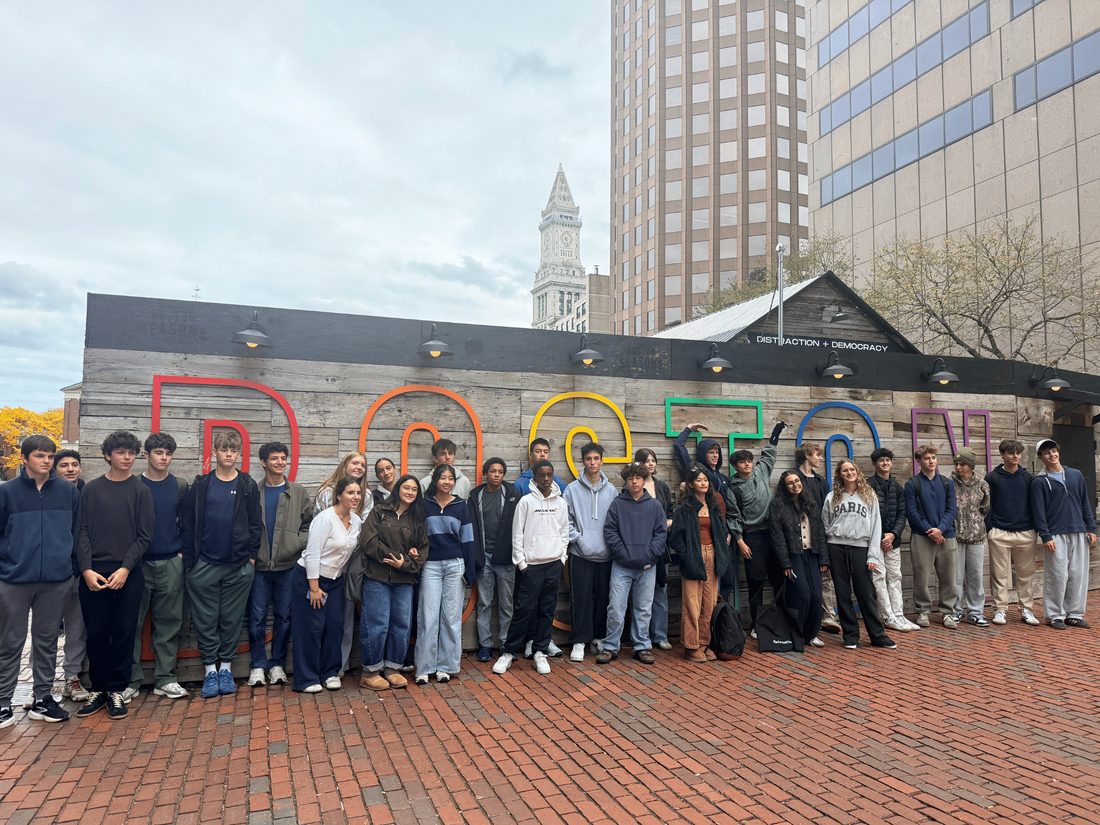
Both cities teach the American founding, but they teach different halves of it. Boston is where the Revolution happened — the events, the agitation, the war. Philadelphia is where the country was written down — the Declaration, the Constitution, the machinery of government. Choose based on which half your curriculum covers.
That is the short answer. Below is the longer one, because a few other factors — walkability, grade level, university access — can tip it either way.
Why Boston and Philadelphia stand out
Few American cities preserve the founding story as directly. Students walk through buildings where the events happened, which does something a textbook cannot: it turns a date into a place. Both cities also support more than history — literature, government, architecture, economics, art and science all have a foothold, so teachers can build interdisciplinary units that continue after the trip ends.
Boston brings the Revolution to life
Boston gives students the American Revolution on the streets where much of it occurred. Groups follow the Freedom Trail through historic churches, meeting houses and government buildings, and the sequence of stops does the teaching — each one reinforces leadership, sacrifice and civic responsibility in a way that reading about them does not.
The city also pairs preservation with a working modern identity as a center for education and research, which lets students connect the historical events to the present rather than leaving them in the past.
Philadelphia offers the foundations of American democracy
Philadelphia gives students the documents. Independence Hall, the Liberty Bell and the National Constitution Center put them in the rooms where independence was debated and the framework of American government was written. For a class studying constitutional principles or civic education, that is the more direct fit.
Philadelphia also has a practical advantage: the historic district is compact. Several major sites sit within walking distance of one another, which means less time on a coach and more time in front of the material — a real consideration for younger groups or shorter trips.
Which city matches your curriculum?
Boston suits units on:
- Revolutionary War events
- Colonial life
- Early American leadership
- Higher education exploration
- Maritime history
Philadelphia suits units on:
- The Declaration of Independence
- Constitutional government
- American democracy
- The founding documents
- Civic education
Many schools alternate between the two across years, which works well — students who see both get the argument and the outcome rather than half the story.
University campuses inspire future planning
Boston offers access to some of the country's best-known universities, and campus visits are frequently the part of the trip students talk about afterwards. Seeing a working campus makes higher education feel concrete rather than abstract, particularly for younger students. Philadelphia has respected universities too, with the same effect.
Museums create interactive learning
Both cities have museums with programming built for school groups, often aligned to state standards. Boston's lean toward colonial history, science and innovation. Philadelphia's cover American history, art, medicine and the founding documents. Either way, a guided museum program gives students something to do rather than something to look at.
Logistics matter more than schools expect
A well-chosen destination can still produce a difficult trip. Transportation timing, hotels, meals, attraction reservations and group safety all determine whether the itinerary holds together on the day. Poor coordination costs instructional time, which is the one thing a school trip cannot spare.
On a Landmark trip your group travels privately — no other school is merged with yours — and a professional Tour Director is assigned exclusively to your group for the whole trip to handle the timing on the ground. Students receive a safety briefing and bracelets at their first meeting with their Tour Director, and the group does not leave an attraction until two separate headcounts are complete.
So: Boston or Philadelphia?
Start with the unit you are teaching. If it is the Revolution, go to Boston. If it is the Constitution, go to Philadelphia. If it is both, pick the one you have not done recently, or ask us to quote both and compare them side by side — planning is free until you decide to proceed.
Request a free quote for either city, or both.