Start with your learning objectives, then choose attractions that serve them — not the other way round. New York City has more to see than any group can cover — and, as our guide to NYC school trip cost explains, the itinerary you choose shapes the budget — so an itinerary built from a list of famous places produces a tiring week that teaches less than a shorter, focused one.
New York works for school groups because it supports several disciplines at once: American history, economics, literature, science and the performing arts are all available in one destination. That range is the opportunity and the trap. Below is a planning sequence that keeps a trip focused, and a checklist you can hand to your chaperones.
Establish clear educational goals before planning
Identify the curriculum connections before you look at attractions. Clear objectives make the itinerary easier to build and much easier to defend — a trip with a stated academic purpose gets through school board and district approval more smoothly than one framed as a visit.
Bring department leads into that conversation early. Their priorities will shape which attractions earn a place on a finite schedule.
Choose attractions with educational value
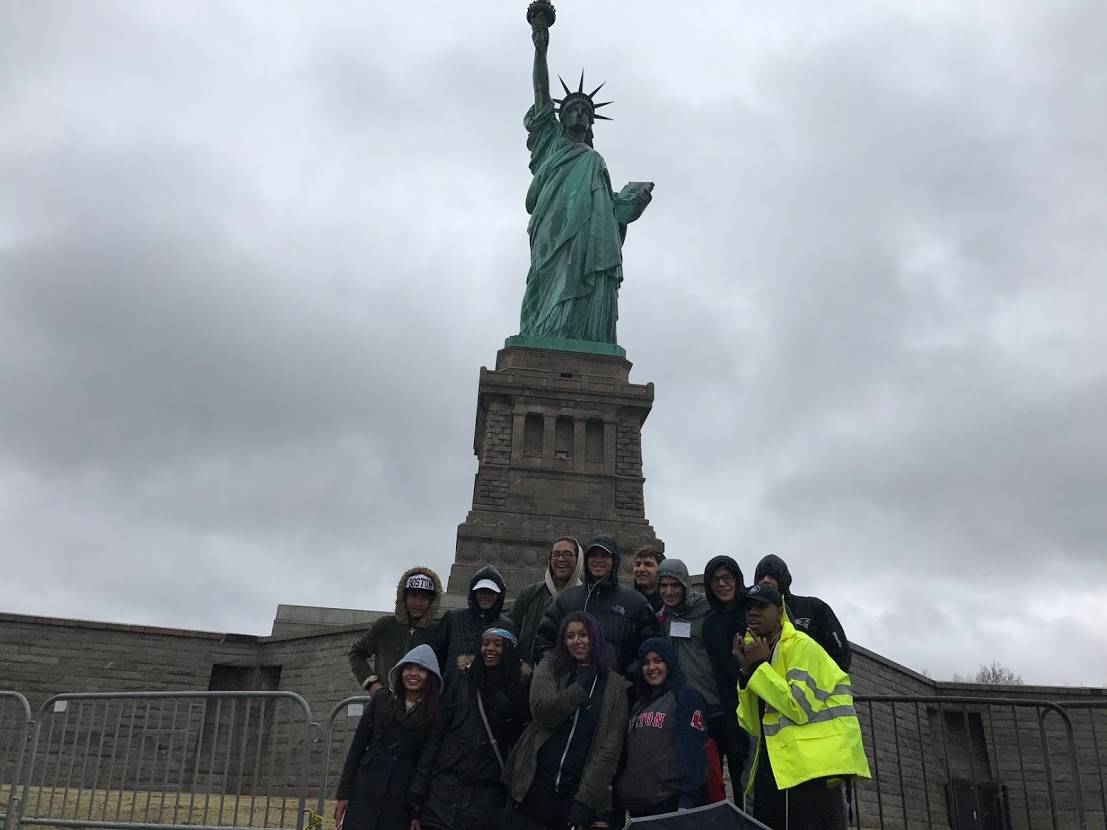
Prioritize sites that connect to what you are teaching. Commonly used New York City school trip destinations include the American Museum of Natural History, Ellis Island and the Statue of Liberty, and the 9/11 Memorial Museum. Broadway performances and theater workshops support literature and arts objectives, and Financial District tours introduce economics and business concepts.
Each stop should earn its place. If you cannot name the lesson it serves, it is a candidate for cutting.
Develop a detailed safety plan
Establish supervision procedures before departure, with defined responsibilities for every teacher and chaperone and an agreed way to communicate. Consistent expectations reduce confusion far more effectively than more adults do.
Emergency preparedness matters just as much. Keep medical information and emergency contacts current and accessible during the trip rather than filed at school, and make sure staff know the local emergency procedures and nearest healthcare options.
On a Landmark trip this is structured from the start: students receive safety bracelets and a briefing at their first meeting with their Tour Director, groups move in chaperone groups or on the buddy system depending on age, and the group does not leave an attraction until two separate headcounts are complete — one by a Tour Director and a final one by the head chaperone.
Select reliable transportation and accommodations
Work with providers who understand student group travel specifically. In New York, public transportation is sometimes genuinely the most efficient way to move a group, and a good operator will tell you when that is true rather than defaulting to a coach.
For hotels, prioritize properties experienced with student groups and located to reduce transit time between activities. On our trips students are placed in quads and adult chaperones in singles by default, you submit the rooming list and decide who rooms together, and we do our best to keep a group on the same floor or wing subject to the hotel's layout. Overnight security is available on request.
Build a balanced itinerary
Overpacked schedules produce tired students who absorb less. Leave room to breathe. A common pattern that works well: a museum in the morning, a performance in the evening, with unstructured time between them for the group to process what they have seen.
Prepare students and families before departure
Hold pre-trip meetings covering expectations, schedule and safety procedures. Students need to hear the behavior and communication expectations before the day, not on it.
Families need the same transparency — itineraries, contact information and emergency procedures. Parents who understand the safety plan are supportive parents.
Pre-departure checklist
- Finalize participant rosters and emergency contacts
- Confirm transportation and hotel reservations
- Review student conduct expectations
- Collect medical information and required forms
- Assign chaperone responsibilities
- Distribute itineraries to families
- Verify attraction reservations and tickets
- Establish communication procedures for the group
Create learning opportunities during the trip
The strongest trips extend learning past the scheduled stops. Journals, discussion prompts and reflection tasks help students connect what they are seeing to what they studied. Guided discussion turns sightseeing into something closer to a lesson, and questions asked on the spot tend to stick.
Evaluate after returning home
Gather feedback from students, families and chaperones, and assess how well the trip served the academic objectives you set at the start. Documented outcomes make the next trip considerably easier to get approved — a completed evaluation is the strongest argument for the following year's proposal.
Working with an operator
Operators who specialize in student groups coordinate logistics, accommodations, transportation and attraction scheduling, which removes most of the administrative load from teachers. On a Landmark trip your group travels privately — no other school is merged with yours — and your Tour Director is assigned exclusively to your group for the whole trip.
Request a free quote and we will build a New York itinerary around your objectives, your dates and your group.