The Ultimate Guide to a Williamsburg School Trip: Living History Your Students Will Never Forget
History has a way of coming alive when you’re actually standing in it. On a Williamsburg school trip, students don’t just learn about colonial America — they walk its streets and watch its tradespeople work with the same tools used centuries ago. Colonial Williamsburg is the kind of place that makes a quiet student speak up, a disengaged student lean in, and every student leave with a story worth telling. For schools looking for a field trip that delivers both rigorous educational content and genuine excitement, it simply doesn’t get better than this.
Williamsburg School Trip
Why Colonial Williamsburg Belongs on Your School Trip List
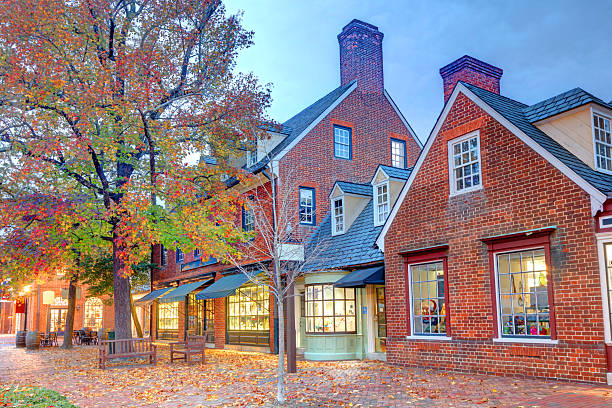
Colonial Williamsburg isn’t a museum in the traditional sense. It’s a 301-acre living history site in Williamsburg, Virginia, where the 18th century hasn’t just been preserved — it’s been brought back to life. More than 600 restored and reconstructed buildings line the original street plan of Virginia’s colonial capital, and hundreds of costumed interpreters, tradespeople, and actors inhabit them daily.
For students, the difference between reading about colonial life and actually standing inside it is profound. A Williamsburg school trip answers the questions that textbooks can’t: What did a colonial kitchen smell like? How heavy was a musket? What did ordinary people — not just the famous ones — think about independence?
The site connects directly to some of the most important threads in American history: the road to the Revolutionary War, the complexity of colonial society, the contradiction between the ideals of liberty and the reality of enslavement, and the political debates that shaped the United States Constitution. For middle school and high school students especially, these aren’t abstract concepts at Colonial Williamsburg — they’re conversations happening in front of them, in real time.
What Students Experience on a Williamsburg School Trip
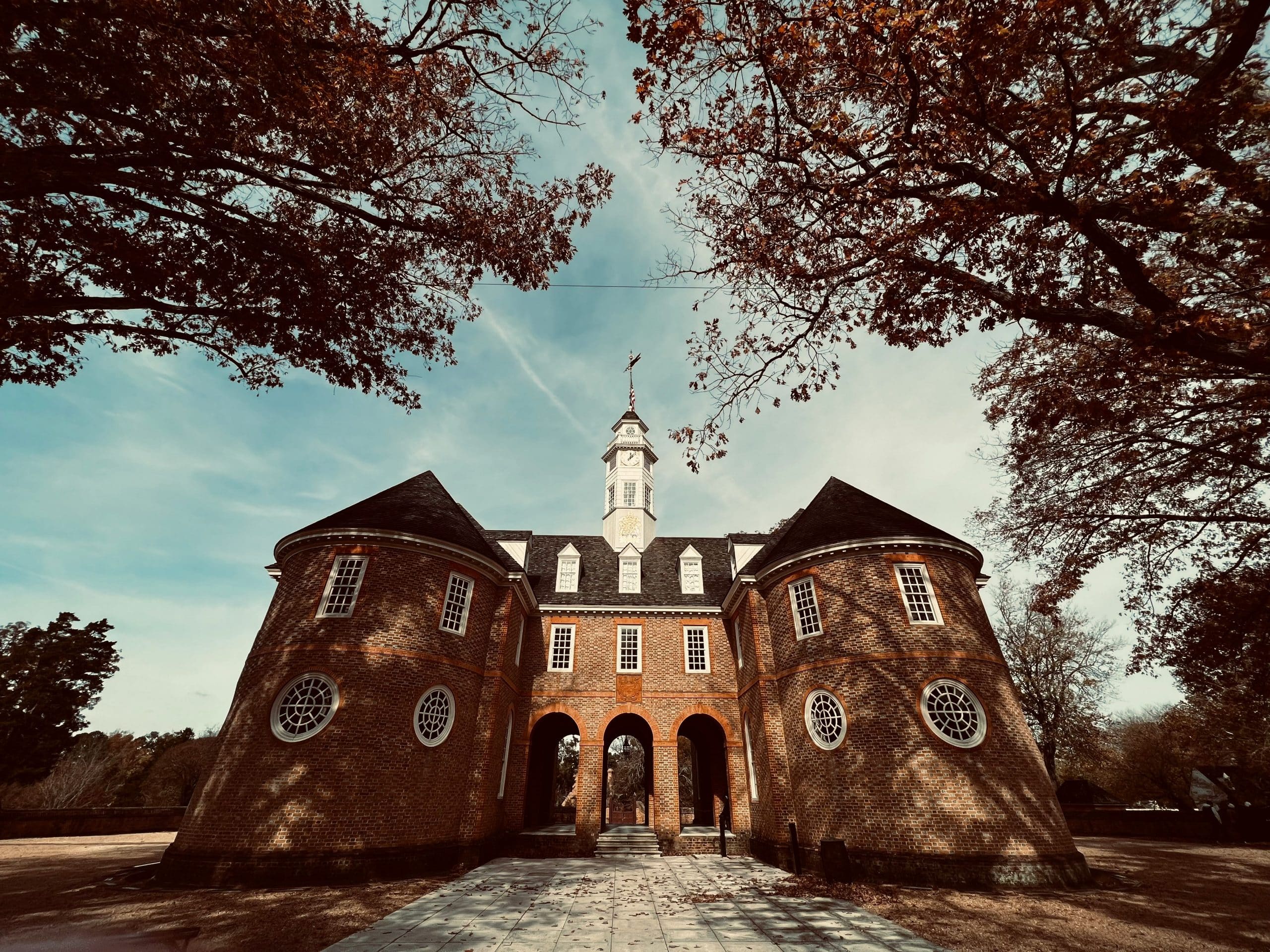
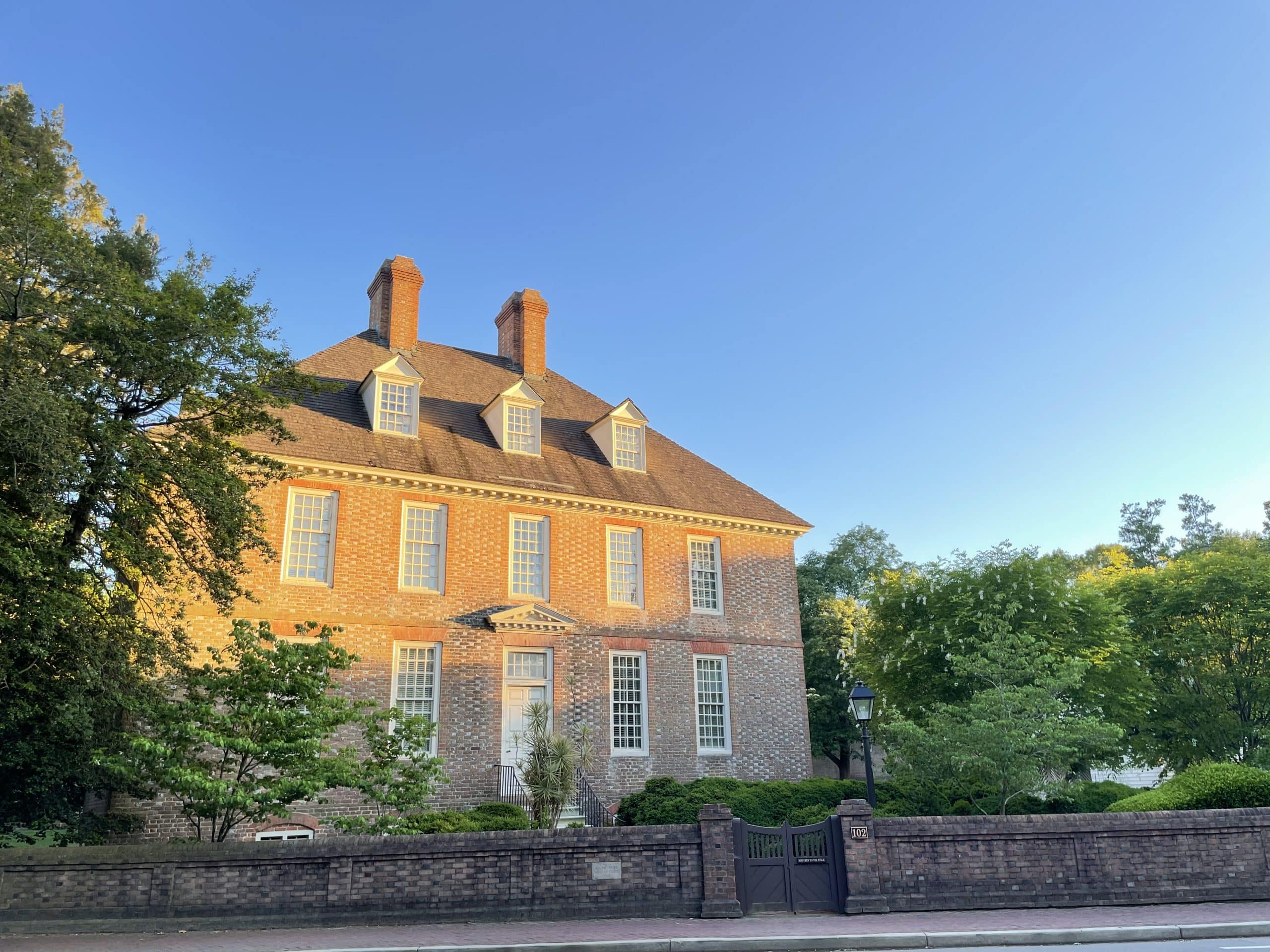
The Historic AreaThe heart of any Williamsburg school trip is the Historic Area itself. Students can explore the Capitol building where Virginia’s colonial legislature met, tour the Governor’s Palace, and walk through the reconstructed homes of tradespeople and craftspeople who made up the fabric of 18th-century life.
What makes this experience different from a standard tour is interactivity. Interpreters stay in character and engage directly with students — answering questions, challenging assumptions, and sometimes sparking genuine debate about colonial-era issues that echo into the present day. A student might find themselves arguing the merits of colonial taxation with a character portraying a loyalist merchant, or discussing the risks of revolution with someone portraying a colonial militiaman.
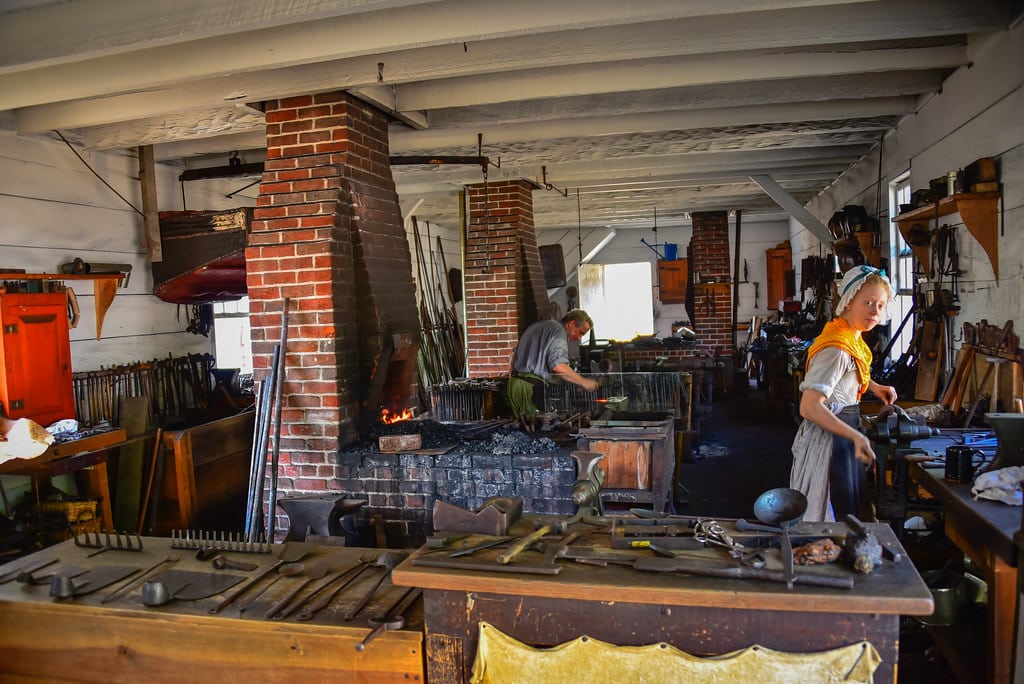
Working Trades and DemonstrationsOne of the most memorable aspects of a Williamsburg school trip is watching — and sometimes participating in — authentic colonial trades. The Historic Area includes working sites for blacksmithing, gunsmithing, shoemaking, printing, bookbinding, cabinetmaking, and more. Students can see the tools, techniques, and physical labor that sustained everyday colonial life.
For students who learn best by doing, these demonstrations are invaluable. There’s a tactile, sensory quality to watching a printer operate a replica 18th-century press or a weaver work at a hand loom that no video or photograph can replicate.
 The DeWitt Wallace Decorative Arts Museum and the Abby Aldrich Rockefeller Folk Art Museum
For groups that want to go deeper into material culture and artistic history, Colonial Williamsburg’s two museums house extraordinary collections. The decorative arts museum alone contains more than 54,000 objects spanning furniture, ceramics, metals, paintings, and textiles from the 17th through early 19th centuries. These collections allow students to examine the objects of daily colonial life in detail, with expert curatorial context that brings the period into sharper focus.
The Enslaved Peoples’ HistoryAny serious Williamsburg school trip should engage with the site’s work on the history of slavery in colonial Virginia. Colonial Williamsburg has made significant strides in ensuring that the experience of enslaved people — who made up roughly half of Williamsburg’s 18th-century population — is represented honestly and with depth. Programs like “The Other Half” tour and various living history presentations confront students with the full complexity of colonial society, which is essential for genuine historical understanding. This is often one of the most powerful and challenging parts of a Williamsburg school trip, and one that many teachers find opens up remarkable classroom conversations both before and after the visit.
Curriculum Connections That Make the Trip Matter
A Williamsburg school trip aligns directly with U.S. history standards covering the colonial period, the Revolutionary War, and the founding of the republic. It also connects to broader themes in social studies, civics, economics (colonial trade and commerce), and even STEM through the physics and engineering embedded in colonial crafts and construction.
Many teachers find it valuable to assign pre-trip reading or classroom activities so students arrive with enough context to ask sharper questions and extract more meaning from each experience. The site rewards preparation. Students who come in with some background knowledge leave with a much richer understanding than those encountering the material cold — though even first-timers tend to come away genuinely moved by what they see and hear.
The Historic Triangle: Extending Your Williamsburg School Trip
Colonial Williamsburg sits at the heart of Virginia’s Historic Triangle, which means a school trip here can easily be extended to include Jamestown and Yorktown. Jamestown, the site of the first permanent English settlement in America, and Yorktown, where the final major battle of the Revolutionary War was fought, together with Williamsburg form a complete arc of early American history that few other regions in the country can match.
Covering all three sites gives students a true beginning-to-resolution narrative of the colonial era — from the first uncertain English foothold on American soil, through the intellectual and political ferment of colonial Williamsburg, to the battlefield where American independence was secured. It’s a sequence that makes each site more meaningful in the context of the others.
What Students and Teachers Take Away
The consistent theme in teacher feedback after a Williamsburg school trip is connection. Students who engaged reluctantly with colonial history in the classroom find themselves genuinely invested once they’re standing inside it. The conversations that happen on the bus ride home — and in the classroom weeks later — reflect a kind of understanding that goes beyond what any test score can measure.
Ready to Start Planning Your Williamsburg School Trip?
At Landmark Educational Tours, we specialize in crafting school trips that are educational, well-organized, and genuinely unforgettable. Whether you’re planning your first Williamsburg school trip or looking to improve on a previous visit, we’d love to help you build an itinerary your students and teachers will be talking about for years.
Contact us today to start planning your Williamsburg school trip. Our team is ready to handle every detail so you can focus on what matters most — your students.