The best Atlanta attractions for students interested in African American history sit in three clusters: Martin Luther King, Jr. National Historical Park and the Sweet Auburn district around it, the National Center for Civil and Human Rights downtown, and the historically Black colleges of the Atlanta University Center. Each one does something the others cannot, and together they cover the story from the nineteenth century to the present day.
Few American cities hold this much Black history within walking distance, which is what makes Atlanta work so well for a two or three-day school trip. The table below is the short version for middle school and high school groups planning a trip to Georgia.
| Item | Detail |
|---|---|
| The anchor | Martin Luther King, Jr. National Historical Park, Auburn Avenue — no entrance fee |
| Allow | Two to four hours at the park, plus 90 minutes to two hours downtown |
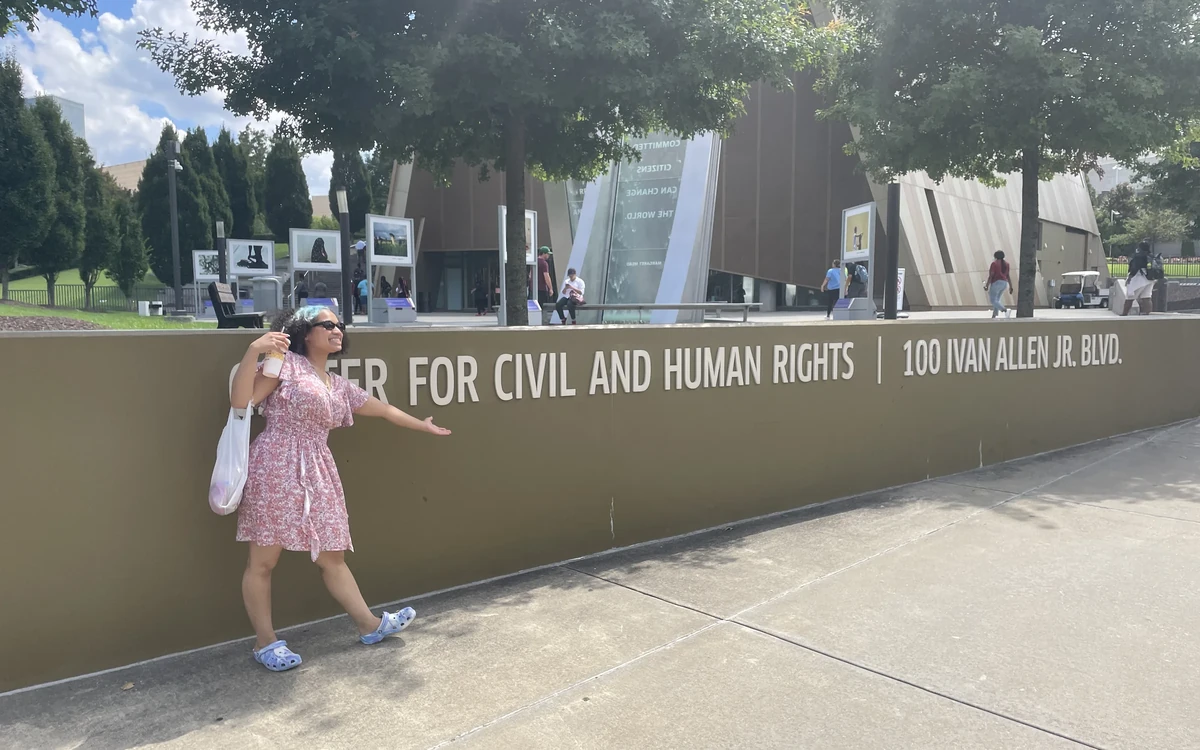
| Downtown | National Center for Civil and Human Rights, 100 Ivan Allen Jr. Blvd. |
| Campuses | Clark Atlanta, Morehouse, Spelman, and a visit to Morris Brown College |
| Book ahead | Museum groups need advance reservations; Birth Home places are same-day only |
| Typical cost | $300 to $400+ per traveler per day, fully inclusive |
| Trip length | Two days covers the core; three days adds the campuses properly |
| Attraction | What students get |
|---|---|
| King park Auburn Ave | Birth Home, Ebenezer Baptist Church, the King tomb, Fire Station No. 6 2–4 hrs |
| The King Center Auburn Ave | The centre Coretta Scott King founded, and its King Library and Archives 1 hr |
| Civil & Human Rights Downtown | The lunch counter sit-in simulation and four permanent exhibitions 1.5–2 hrs |
| APEX Museum Auburn Ave | Black history from African civilisations to Sweet Auburn and Black inventors 1–1.5 hrs |
| AUC campuses West End | Guided tours and admissions sessions at historically Black colleges Half day |
What Is Sweet Auburn, and Why Does It Anchor the Trip?
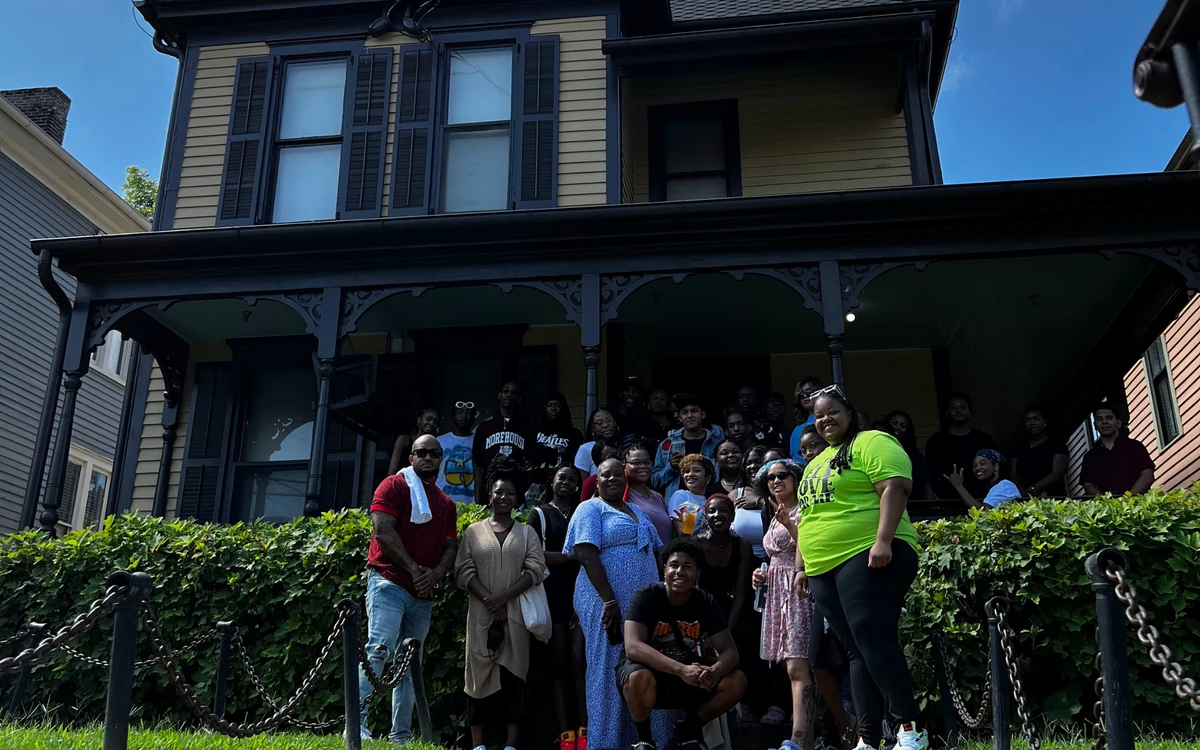
Auburn Avenue is where most Atlanta itineraries on this subject begin, because the density is remarkable. Within a few walkable blocks students find the house Dr. King was born in, the church where he was baptized and later co-pastored, the fire station that was the second in Atlanta to be integrated, and the tomb where Dr. and Mrs. King are buried.
That concentration is the practical argument for Atlanta. It is also the historical one: Auburn Avenue was a centre of Black business, press and church life long before the events students know from textbooks, and standing on it makes the movement look like something that grew out of a neighbourhood rather than something that arrived from nowhere.
What Can Students See at Martin Luther King, Jr. National Historical Park?
The park is the centrepiece, and it is free. The National Park Service states plainly that an entrance pass is not required, and ranger-led activities are free as well. The park is open daily from 9 am to 5 pm except Thanksgiving, Christmas and New Year’s Day, and the Park Service suggests allowing two to four hours.
Within the park students can see:
- The Birth Home of Martin Luther King, Jr. The house on Auburn Avenue where he was born.
- Historic Ebenezer Baptist Church. Described by the Park Service as the spiritual home of the King family, and the church where Dr. King was baptized and later co-pastored.
- The tomb of Dr. and Mrs. King, which rests on a brick island within a reflecting pool.
- Historic Fire Station No. 6, which the Park Service describes as the second fire station integrated in the City of Atlanta.
- The “I Have a Dream” World Peace Rose Garden.
Is the Visitor Center Open?
This is worth knowing before you build the day. The park’s main visitor center is closed for renovations, though park hours are not affected. A temporary visitor center is operating at Historic Fire Station No. 6, 39 Boulevard NE, and the lobby exhibit is unavailable during construction. Free parking, including bus parking, is on John Wesley Dobbs Avenue.
How Do Groups See the Birth Home?
Birth Home presentations are ranger-led and free, and the booking works differently from most sites. Tickets are reserved at the park on the day of the tour, at the temporary visitor center information desk. No advance registration or phone reservations are accepted, and places go first come, first served. A presentation runs about thirty minutes.
Because capacity and daily schedules have changed during the renovation, confirm the current times and group limits with the park directly before you commit a departure time. Arriving early in the day, and on a weekday rather than a Saturday, gives a group the best chance.
What Is The King Center, and Is It the Same as the Park?
They are two different things on the same street, and it is worth knowing which is which before you build the day. The national park is run by the National Park Service. The King Center — in full, The King Center | The Center for Nonviolent Social Change — is its own organisation at 449 Auburn Avenue NE, and its site describes Mrs. Coretta Scott King as its founder.
For students, it is the part of Auburn Avenue that looks forward rather than back. Its programmes include Students with King, classroom resources for teachers, and the King Library and Archives. Because hours and group arrangements are set by the Center rather than the Park Service, confirm them directly when you fix your date.
Our post on Martin Luther King, Jr. National Historical Park covers the park side in more detail, and Dr. King’s impact is a good pre-trip read for students.
What Is at the National Center for Civil and Human Rights?
Ten minutes away downtown, the National Center for Civil and Human Rights does the thing the park cannot: it connects the American civil rights movement to human rights work now, in its own words offering “immersive experiences that connect the history of the American Civil Rights Movement to ongoing human rights issues around the world.”
Its exhibitions include American Civil Rights: Rolls Down Like Water, MLK: A Committed Life, Reconstruction Era: Broken Promises, and Human Rights: Everyone. Everywhere.
The exhibit most groups remember is the Lunch Counter Sit-In Simulation, where students take a seat at a recreated lunch counter. It is on the main floor and listed as ongoing. It is intense by design, and it is the single strongest argument for briefing students before they arrive rather than after.
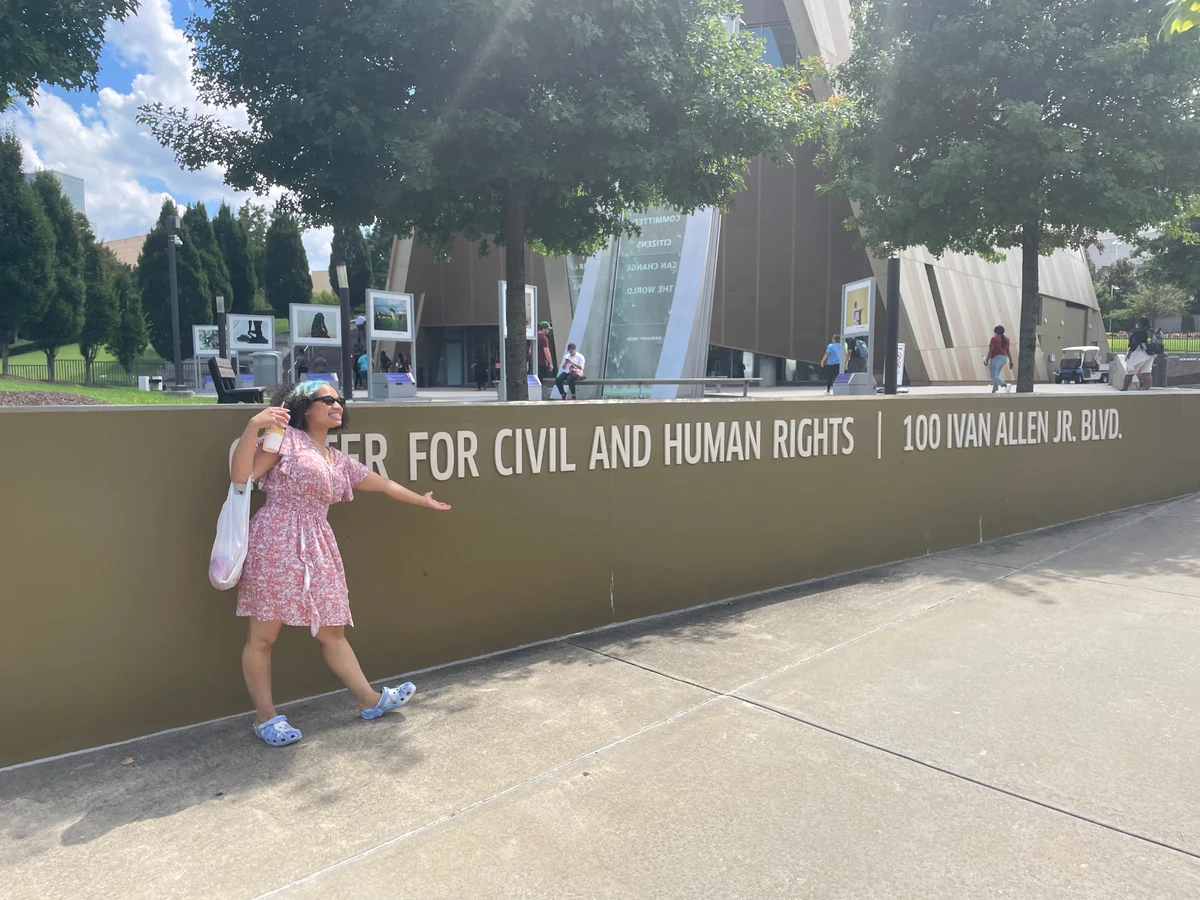
For planning: groups of ten or more qualify for group rates, reservations and payment should be completed at least two weeks before the visit, and most groups spend about 90 minutes to two hours. The Center also notes that eligible schools and youth organisations may qualify for assistance through its Operation Inspiration programme, subject to funding availability — worth asking about if cost is the obstacle to the trip happening at all.
What Does the APEX Museum Add?
The APEX Museum is back on Auburn Avenue, and it widens the frame beyond the civil rights era. Its stated purpose is “to preserve, protect, & promote Black History,” which makes it the best single stop on the itinerary for Black history before and after the civil rights era, and its group tours take students through African civilisations, the MAAFA, Sweet Auburn’s legacy and Black inventors.
Its featured exhibit, Sweet Auburn: Before, During & Beyond 1906, is centred on the 1906 Atlanta Race Massacre — a subject most students will not have met, and one that explains a great deal about why Auburn Avenue developed as it did.
Two practical notes. The museum offers docent-led tours tailored to grade level, plus optional pre-visit and post-visit lesson plans, which is unusually helpful for a teacher building a unit around the trip. And its hours are narrower than most — the school trips page lists Tuesday to Saturday, 11 am to 3 pm — so it needs to be placed in the itinerary deliberately. Field trips must be booked in advance, the museum recommends one chaperone for every ten students, and bus drivers receive complimentary admission.
Why Visit the Atlanta University Center?
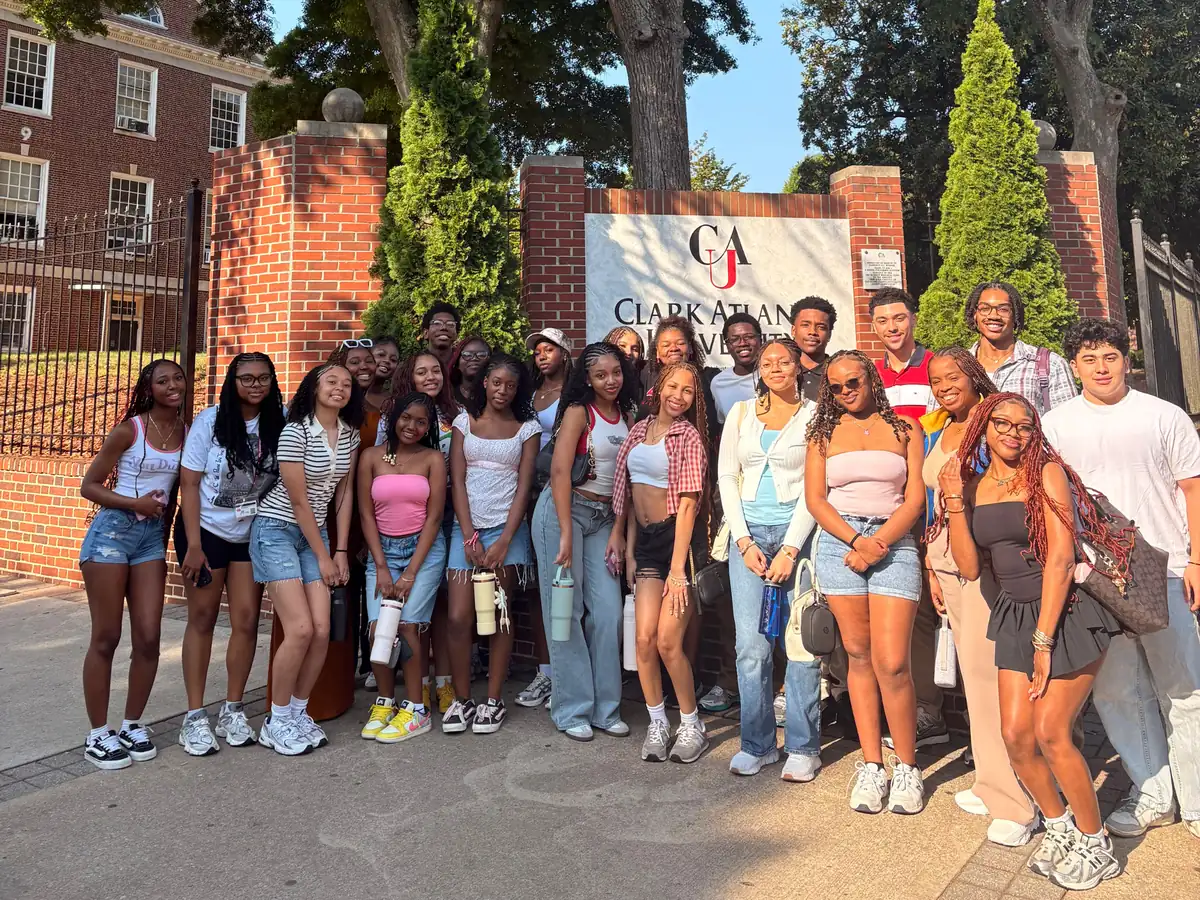
The Atlanta University Center Consortium was formed in 1929 and describes itself as the world’s oldest and largest association of historically Black colleges and universities. Its member institutions are Clark Atlanta University, Morehouse College, Morehouse School of Medicine and Spelman College.
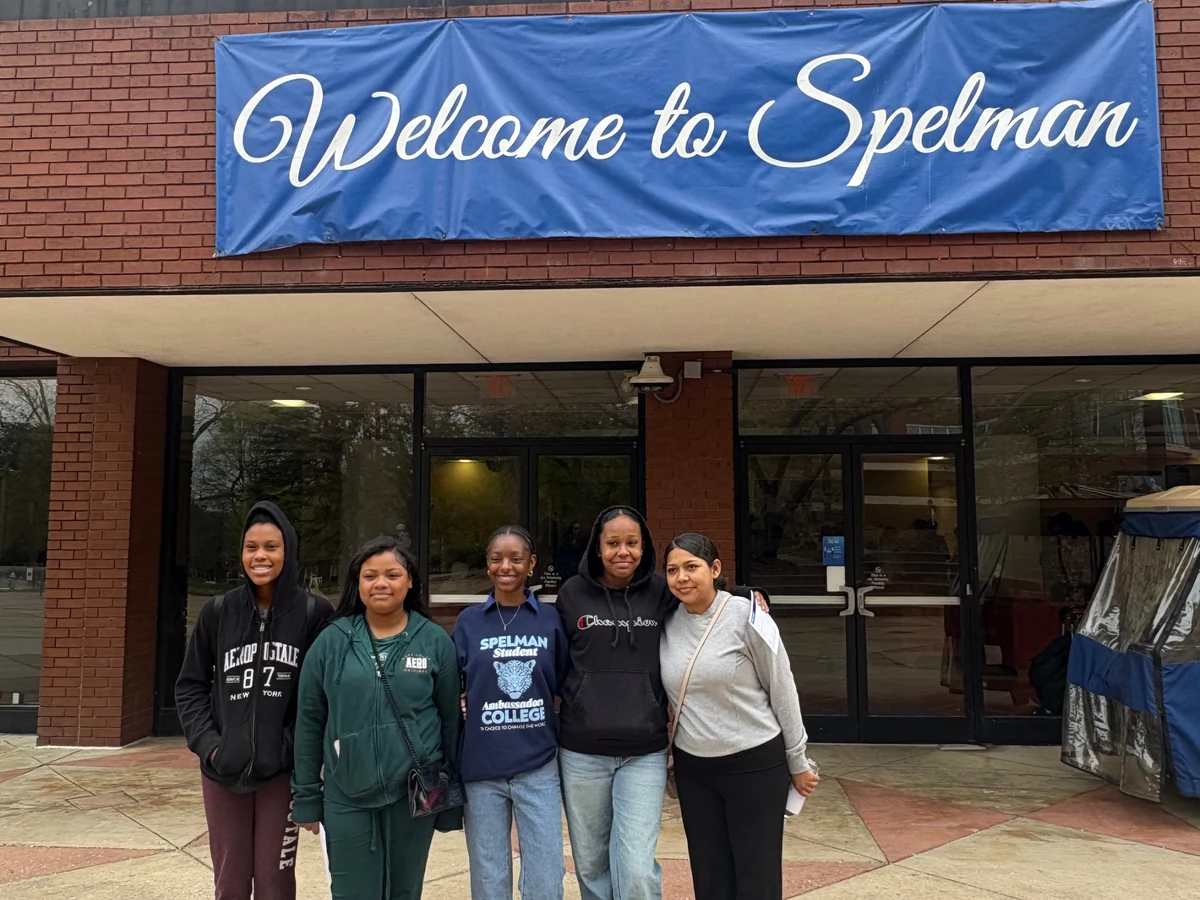
For a student group this is the part of the trip that turns history into something personal. The morning is about what happened; the afternoon is about where students like them are studying now. Landmark’s Atlanta itineraries include guided campus tours with admissions sessions at Clark Atlanta, Morehouse, Spelman and Morris Brown College, so the visit is a real conversation with an admissions office rather than a walk past a building.
If the campuses are the main reason for your trip, our guide to planning an HBCU college tour and what to expect on a first HBCU tour both go deeper, and the Atlanta HBCU field trip is built around them. How HBCUs shaped the civil rights movement is worth reading before the campus day.
How Do the Sites Fit Into a Two or Three-Day Trip?
The sites group naturally, and the geography does most of the work for you.
| Day | What it covers |
|---|---|
| Day 1 Downtown | Arrival, then the National Center for Civil and Human Rights — the orientation that makes everything after it legible |
| Day 2 Auburn Avenue | Martin Luther King, Jr. National Historical Park for the morning, APEX Museum, and the Sweet Auburn district on foot |
| Day 3 Campuses | Guided tours and admissions sessions at the Atlanta University Center campuses and Morris Brown College |
| If you have a half day | The Atlanta History Center, or the Jimmy Carter Presidential Library and Museum |
For more on the neighbourhoods themselves, see the historic treasures of Atlanta’s neighbourhoods. Two days covers the core comfortably. The third day is what lets the campus visits be more than a drive-through, and for most groups it is the day students talk about afterwards. See the 2-day Atlanta school trip and the 3-day Atlanta field trip for how we build them.
How Much Does an Atlanta School Trip Cost Per Student?
Atlanta prices like other domestic trips, and the park being free helps the budget more than people expect. The figures below are per traveler and fully inclusive; airfare is quoted separately because it moves with your origin and dates.
| Trip length | Nights | Per student |
|---|---|---|
| 2 days | 1 | About $600 to $800+ |
| 3 days | 2 | About $900 to $1,200+ |
| 4 days | 3 | About $1,200 to $1,600+ |
| Per traveler, per day | — | $300 to $400+, fully inclusive |
| Included | What it covers |
|---|---|
| Transportation | Motorcoach, plus rail or transit where the itinerary calls for it. Airfare quoted separately |
| Hotel | Students four to a room; availability confirmed at group deposit |
| Meals | Included, apart from extra meals a group chooses to add |
| Admissions | Every scheduled site on your itinerary, booked in advance |
| Tour Director | A background-checked Landmark employee with your group the whole trip |
| Gear | A string bag, a reusable water bottle and a safety bracelet for each traveler |
| Support | 24/7 support while you are traveling |
| Quoted separately | Gratuities for the Tour Director and step-on guides; optional travel protection through battleface |
Ten travelers is the usual threshold for group rates, and deposits are $150 per traveler on trips that include airfare. For the wider picture see how much a 3-day school trip costs and what is included in a school trip package. To spread the cost for families, payment plans and fundraising ideas both work well.
How Should Teachers Prepare Students for These Sites?
These are substantial places, and a prepared group gets far more from them.
- Give them the chronology first. Students who arrive knowing roughly where the 1906 massacre, the Montgomery bus boycott and the 1963 March on Washington sit in relation to each other read the exhibits instead of decoding them.
- Tell them about the lunch counter in advance. The simulation lands harder when students know it is coming and know why it is built the way it is.
- Talk about conduct at the tomb and the church. They are a burial site and an active place of worship, and students respond well to being told that plainly beforehand.
- Use Black History Month if the calendar allows. Our Black History Month post has classroom material that works well as pre-trip reading at any time of year.
- Leave room to talk afterwards. The coach ride after the Center is often where the real conversation happens, so try not to schedule it full.
For a route that continues beyond Georgia, the best civil rights history trips for students covers how Atlanta combines with Birmingham, Selma, Montgomery and Memphis.
Who Is Landmark Educational Tours?
Landmark is a 100% employee-owned student travel company with more than twenty years in educational travel. Our sixteen travel experts have explored 48+ countries, and every trip is private to your group and built around what you teach rather than sold as a fixed package.
We are accredited by the Student & Youth Travel Association (#13443), the American Bus Association (#84360), IATA (22576046) and the Better Business Bureau (#544197), hold California Seller of Travel registration 2168995-50, and are members of ETOA — the full list is on our accreditations page. We are an approved vendor for Broward County Public Schools and the New York City Department of Education. You can read more about Landmark, and the questions teachers should ask a student tour company before booking is a good place to start with any company.
Plan Your Atlanta School Trip
Tell us the grade, the group size and roughly when you would like to travel, and we will build an Atlanta itinerary around the sites that matter to your course. Request a quote, see our Atlanta school trips, browse the full destinations list, or get in touch and we will start from your dates.