Students explore Viking history in Norway in three ways: the Viking Age collections in Oslo, the reconstructed Viking town of Njardarheimr at Gudvangen in the western fjords, and the stave churches and Trondheim sites that show what the Viking Age turned into. Those three together cover the objects, the daily life and the ending — which is more than any single museum can do.
There is one piece of timing every teacher planning a Norway trip needs first, because it changes which of the three you lead with. Oslo’s Viking ships are between homes.
| Item | Detail |
|---|---|
| The Viking ships | Museum of the Viking Age, Oslo — closed for rebuilding, reopening in 2027 |
| Viking Age on display now | Historical Museum, central Oslo — VÍKINGR, Miðgarðr and the Mørstad Hoard |
| Living history | Njardarheimr Viking Village, Gudvangen — open daily, year round |
| Oldest standing churches | Stave churches: Gol, dated around 1200, at the Norwegian Museum of Cultural History |
| The Viking king | Nidaros Cathedral, Trondheim, built over the burial site of St. Olav |
| Landmark’s trip | 10 days: Oslo, Bergen, Flåm, Sogndal, Trondheim and Røros |
| Typical cost | $4,000+ per student, airfare quoted separately |
| Deposit | $150 per traveler on trips with airfare |
Where Are the Oslo Viking Ships Right Now?
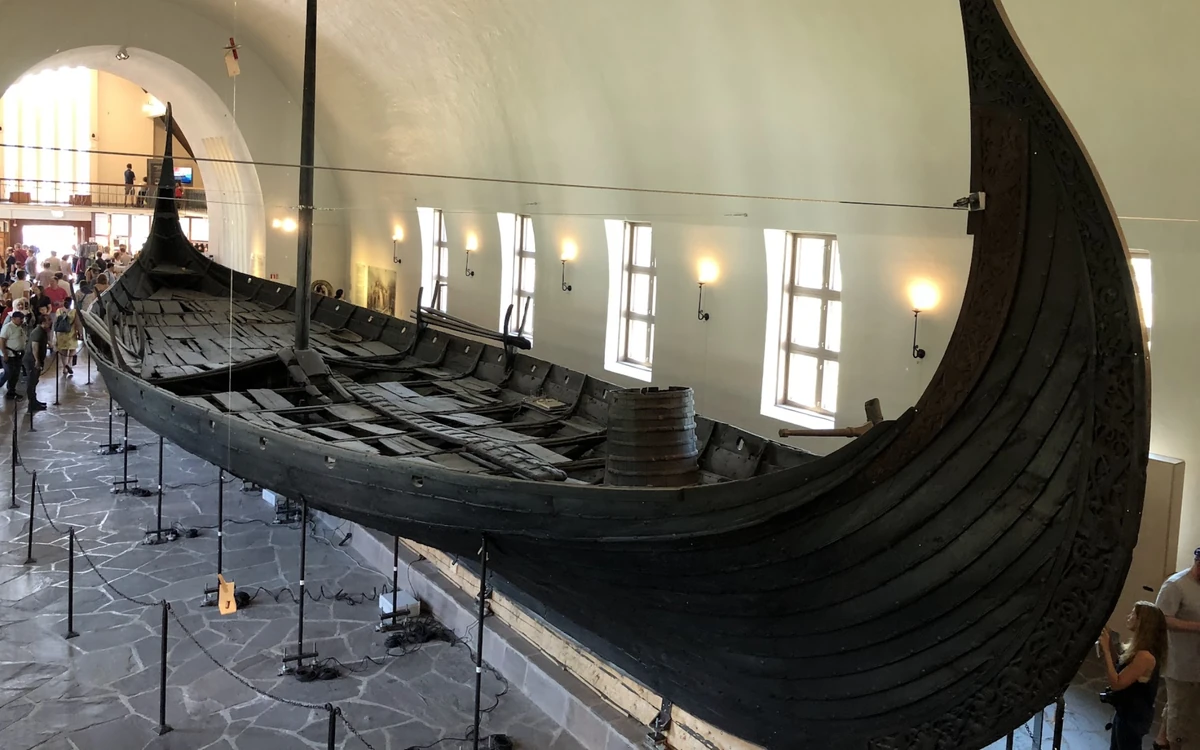
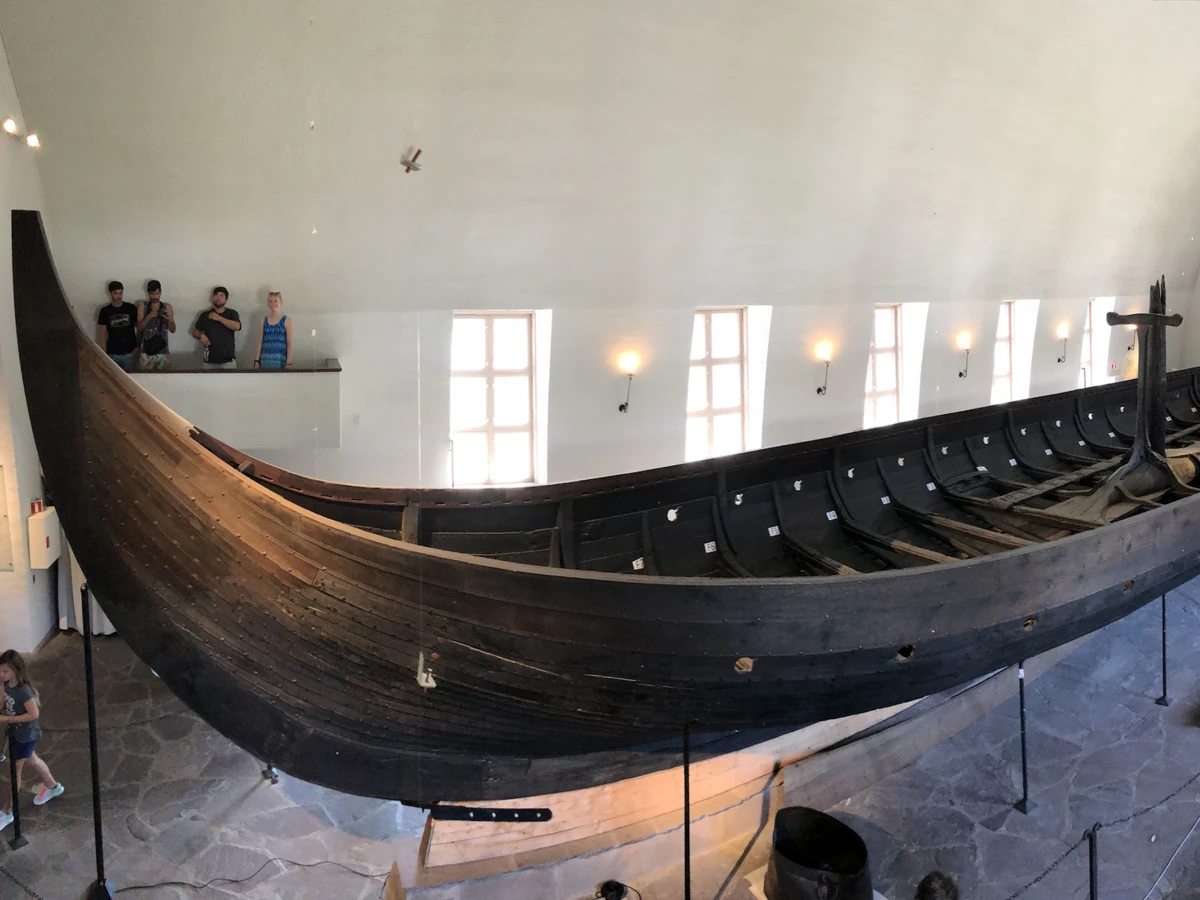
The Oseberg, Gokstad and Tune ships belong to the Museum of the Viking Age on Bygdøy, and that museum is closed while the new building is finished. It is due to reopen in 2027. As of spring 2026 the museum reported that all the Viking ships and the Oseberg sledges were safely in place inside the new museum.
Is the Viking Ship Museum in Oslo Open?
No. The Viking Ship Museum is the building’s former name, and it has not been open to visitors for several years. The collection is the same one; the museum around it is being replaced, and it returns as the Museum of the Viking Age in 2027. If a guidebook or an older itinerary still lists the Viking Ship Museum as an Oslo stop, that is why.
For a school looking at 2027 or later, that is good news rather than bad: the ships will be in a purpose-built museum rather than the cramped 1920s hall most photographs show. For a group traveling before it opens, Oslo still has a great deal of the Viking Age on display, just in a different building.
The Oseberg Ship
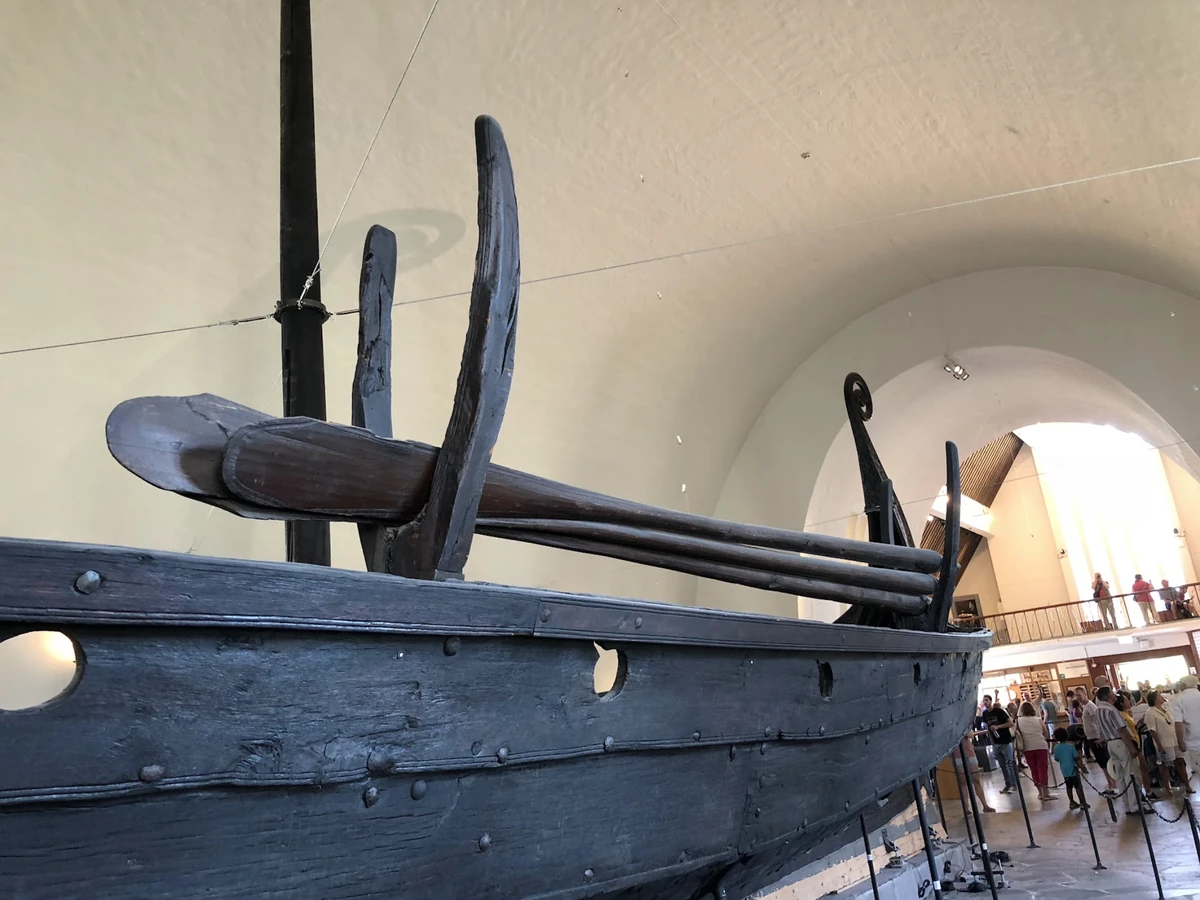
The Oseberg ship is the one most people picture when they think of a Viking ship, and the numbers are worth giving students before they see it. According to the museum’s own description, it is 21.5 meters long and 5 meters wide, with 15 rowing holes on each side and room for 32 people: 30 rowers, a helmsman and a lookout. It was built in southwestern Norway in 820, out of oak.
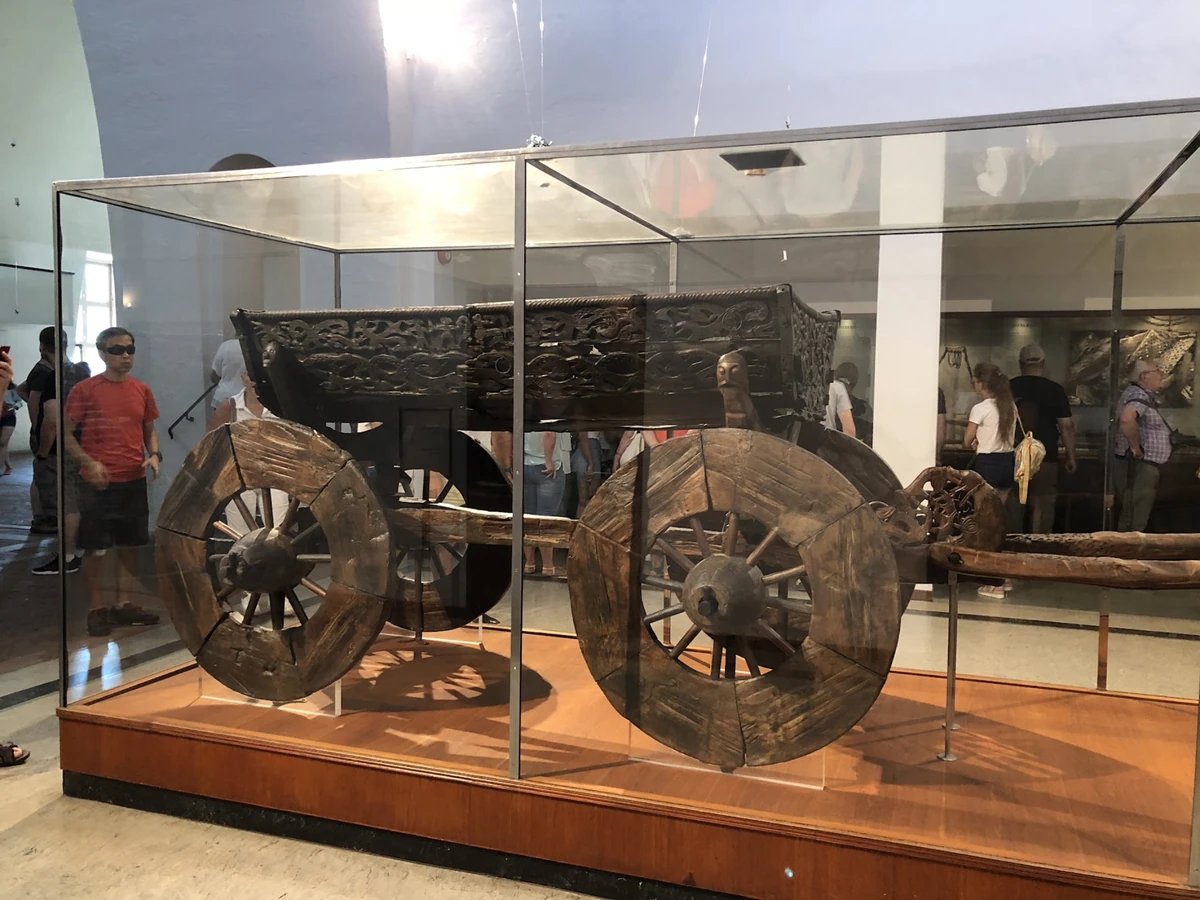
Then the part that makes a classroom go quiet. After roughly fourteen years at sea the ship was hauled ashore and used as a burial ship for two women in 834. The mound was found in 1903 outside Tønsberg. We still do not know who the two women were.
Where Can Students See Viking Artifacts in Oslo Now?
The Historical Museum in central Oslo is where the Viking Age currently lives, and it is a short walk from the main streets rather than a ferry ride across the harbor. Three exhibitions there are built around it.
- VÍKINGR. The museum’s standing Viking Age exhibition, and the place to start if students have never handled the period outside a textbook.
- Miðgarðr — The Mythical World of the Vikings. Norse mythology told through objects, including the serpent head from the Oseberg ship, which the museum says had never been exhibited before.
- The Mørstad Hoard. Billed as Norway’s largest Viking Age coin find. A hoard is one of the few object groups that lets students reason directly about trade routes and wealth.
The museum also holds one of the two best-preserved Viking helmets in the world — and it is worth telling students in advance that it has no horns, because the horned helmet is a nineteenth-century invention and seeing the real thing is the moment that lands.
What Is Njardarheimr Viking Village?
In Gudvangen, at the head of the Nærøyfjord, Njardarheimr is a built Viking town rather than a display about one. Students move between the houses while the people living and working there explain what they are doing. It appears on our 10-day Norway itinerary as a fjord tour from Flåm.
It is open every day of the year, with longer hours from April through October and shorter winter hours, so it works for a spring, summer or winter departure. For most groups this is the part of the trip where the Viking Age stops being a case of objects and becomes a place with a smell and a temperature.
What Are Norway’s Stave Churches?
The stave churches are the bridge. They are timber buildings put up after Norway became Christian, by people using the same woodworking tradition that built the ships, and the carving on them still carries Norse motifs alongside Christian ones. Students who have just seen the Oseberg carvings recognize the vocabulary immediately.
The Norwegian Museum of Cultural History in Oslo has the Gol Stave Church, which it dates to around 1200. Further into the fjords, Kaupanger Stave Church sits near Sogndal and appears on our itinerary as an option on the Sogndal day, alongside the Sogn Folkemuseum.
Who Was St. Olav, and Why Does Trondheim Matter?
Trondheim is where the story closes. Nidaros Cathedral was built over the burial site of St. Olav, the Viking king who became Norway’s national saint. Olav Haraldsson was born in the 990s and grew up in Ringerike, was baptized in Rouen in 1014, and was paid tribute as king at the Øreting assembly in 1016.
He was killed at the Battle of Stiklestad on 29 July. His grave was opened one year and five days after the battle, and he was made a saint. That sequence — raider, king, saint, cathedral — is the whole arc of the Viking Age compressed into one man’s lifetime, and standing in the cathedral is how students feel the size of it.
Landmark’s itinerary gives Trondheim a guided walking tour with a local guide, plus the Trøndelag Folk Museum, before the group takes the train on to Røros.
Which Viking Sites Are on the 10-Day Norway Itinerary?
Here is where each of these sits on the 10-day Norway school trip, so you can see how a Viking thread runs through a trip that also covers fjords, glaciers and renewable energy.
| Where | What students do |
|---|---|
| Oslo Days 1–2 | Viking Age collections at the Historical Museum; the Gol Stave Church at the Norwegian Museum of Cultural History; Akershus Fortress |
| Bergen Days 2–3 | Guided city tour with a local guide and the Fløyen funicular, in a city built on the sea trade the Viking Age opened |
| Flåm and Gudvangen Day 4 | The Flåm Railway, then the fjord tour to Njardarheimr Viking Village |
| Sogndal Day 5 | Guided hike to a farmhouse; Kaupanger Stave Church and the Sogn Folkemuseum |
| Balestrand Day 6 | RIB boat fjord trip and an orchard visit, putting students on the water the Viking Age was built on |
| Trondheim Days 7–8 | Nidaros Cathedral and the Trøndelag Folk Museum; guided walking tour |
| Røros Days 8–10 | Copper mine, Sámi culture workshop and dog sledding in a UNESCO-listed mining town |
What Subjects Does a Norway School Trip Support?
A trip this far usually has to earn its place on more than one syllabus, and Norway makes that easier than most destinations. Landmark’s Norway program is built around hands-on learning in environmental science, cultural traditions and renewable energy as well as history, so the Viking thread sits inside a wider academic case rather than carrying the whole trip on its own.
| Subject | What it covers |
|---|---|
| World history | The Viking Age end to end, from the objects in Oslo to its closing at Nidaros Cathedral |
| English and mythology | Miðgarðr at the Historical Museum, and the Norse material the sagas were built from |
| Geography and earth science | Fjords and glaciers at Flåm, Sogndal and Balestrand, read from the water rather than a map |
| Environmental science | Norway’s renewable energy and sustainability work, which runs through the whole itinerary |
| Cultural studies | The Sámi culture workshop at Røros and the folk museums in Oslo and Trondheim |
That spread is also what makes a Norway trip easier to get approved. A proposal that names four departments is a stronger document than one that names a single unit, and it widens the group you can recruit from.
How Much Does a Norway School Trip Cost Per Student?
Norway is a long-haul trip with internal flights, so it sits at the upper end of international student travel. The figures below are per student and exclude airfare, which is quoted separately because it moves with the season and your departure airport.
| Trip length | Nights | Per student |
|---|---|---|
| Six to eight-day international trip | 5 to 7 | $2,800+ to $3,600+ |
| Nine to ten-day Norway trip | 8 to 9 | $4,000+ |
| Any international trip, per day | — | $400+ |
Two notes on reading that. Travel protection is optional coverage bought separately through battleface and is never bundled into the trip price. And deposits are $150 per traveler on trips that include airfare, with families paying individually through our own portal — each traveler has a login and payments are processed by Stripe — or the school paying by check. For the line-by-line picture of what a quoted price covers, see what is included in a school trip package.
For the wider picture see how much a school trip costs, and if you are closing a gap, fundraising ideas for middle and high school trips. A Norway trip benefits more than most from a long runway, so start early.
Planning a Norway Trip Around the Viking Thread
A few things make the difference between a trip that touches the Vikings and one that teaches them.
- Book well ahead. We prefer trips booked at least 60 days before departure, and for an international trip with internal flights, a year out is a far more comfortable place to start.
- Decide on 2027 deliberately. If seeing the Oseberg and Gokstad ships matters to your course, the Museum of the Viking Age reopening is the single biggest factor in which year you travel.
- Put the objects before the reconstruction. Oslo first, Gudvangen later, is how the itinerary already runs, and it is the right order — students read the living town much better once they have seen the real carvings.
- Use the water. The fjord days are not a break from the history. The sea is why the Viking Age happened, and a RIB boat makes that argument better than a page of text.
- Settle your chaperone numbers early. Internal flights and train legs are easier to price once the adult count is fixed; how many chaperones you need for a school trip covers the ratios schools usually land on.
If your group is on the smaller side, the best educational trips for small school groups covers how a short roster changes what you can book.
Who Is Landmark Educational Tours?
Landmark is a 100% employee-owned student travel company with more than twenty years in educational travel. Our sixteen travel experts have explored 48+ countries, and every trip is private to your group and built around what you teach rather than sold as a fixed package.
We are accredited by the Student & Youth Travel Association (#13443), the American Bus Association (#84360), IATA (22576046) and the Better Business Bureau (#544197), hold California Seller of Travel registration 2168995-50, and are members of ETOA (the full list is on our accreditations page). We are an approved vendor for Broward County Public Schools and the New York City Department of Education. Every trip includes a Landmark string bag, a reusable water bottle and a safety bracelet, and overnight hotel security is available on request — our travel safety and support page sets out how that works abroad. You can also read more about Landmark and how employee ownership changes the way a trip gets built.
Before booking with anyone, it is worth reading the questions teachers should ask a student tour company before booking. For other options abroad, see the best international school trip destinations.
Plan Your Norway School Trip
Tell us the grade, the subject and roughly when you want to travel, and we will build the Viking thread into an itinerary that fits your curriculum and your calendar. Request a quote, read the Norway school trip overview, compare it with our other school trips to Europe, or browse the full destinations list. If you would rather talk it through first, get in touch and we will start from your calendar.