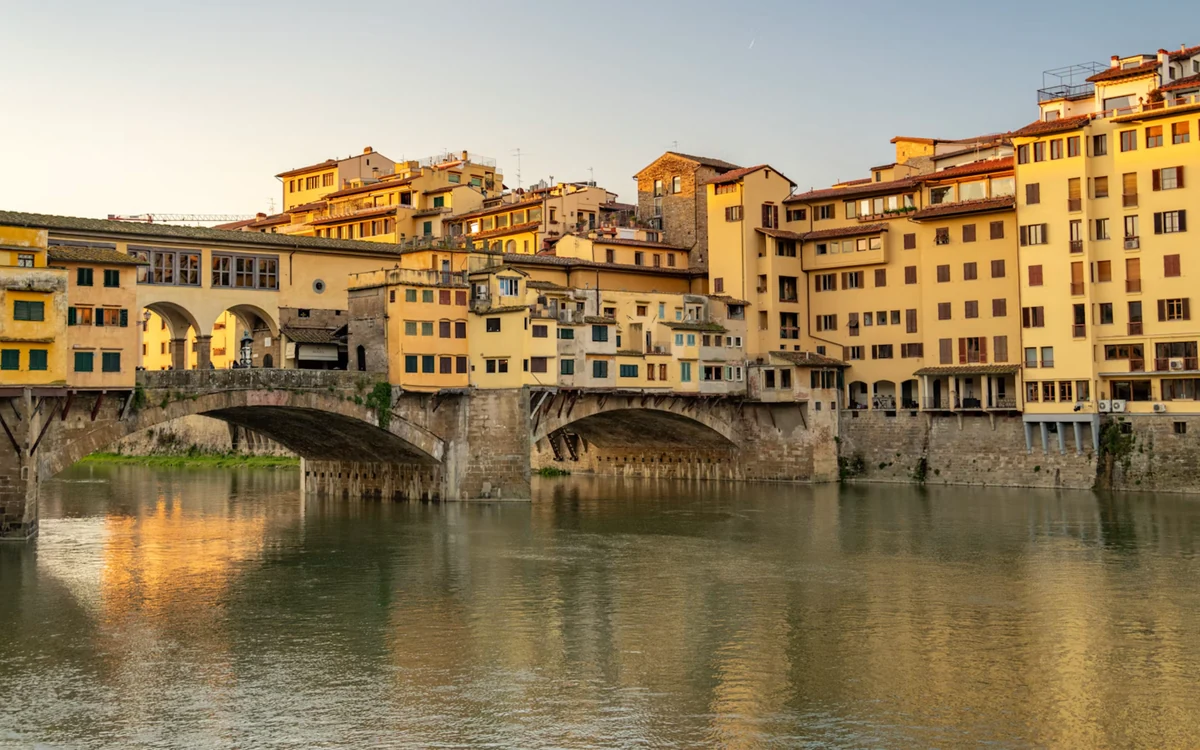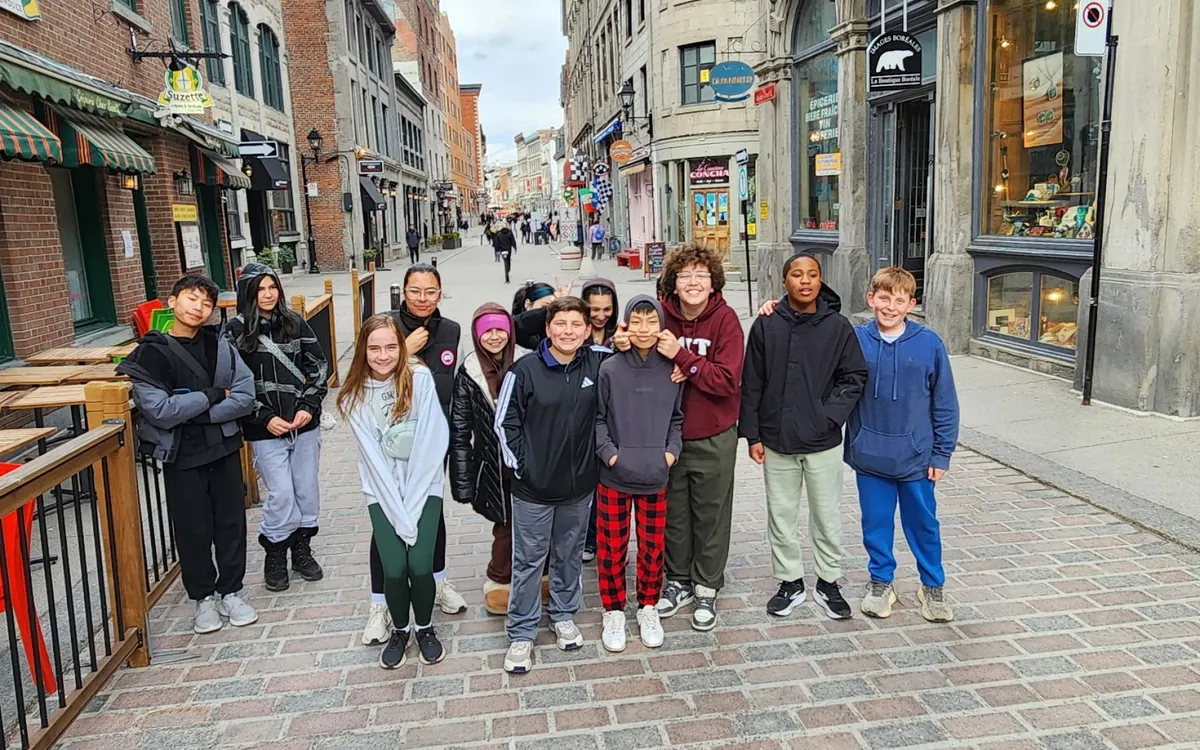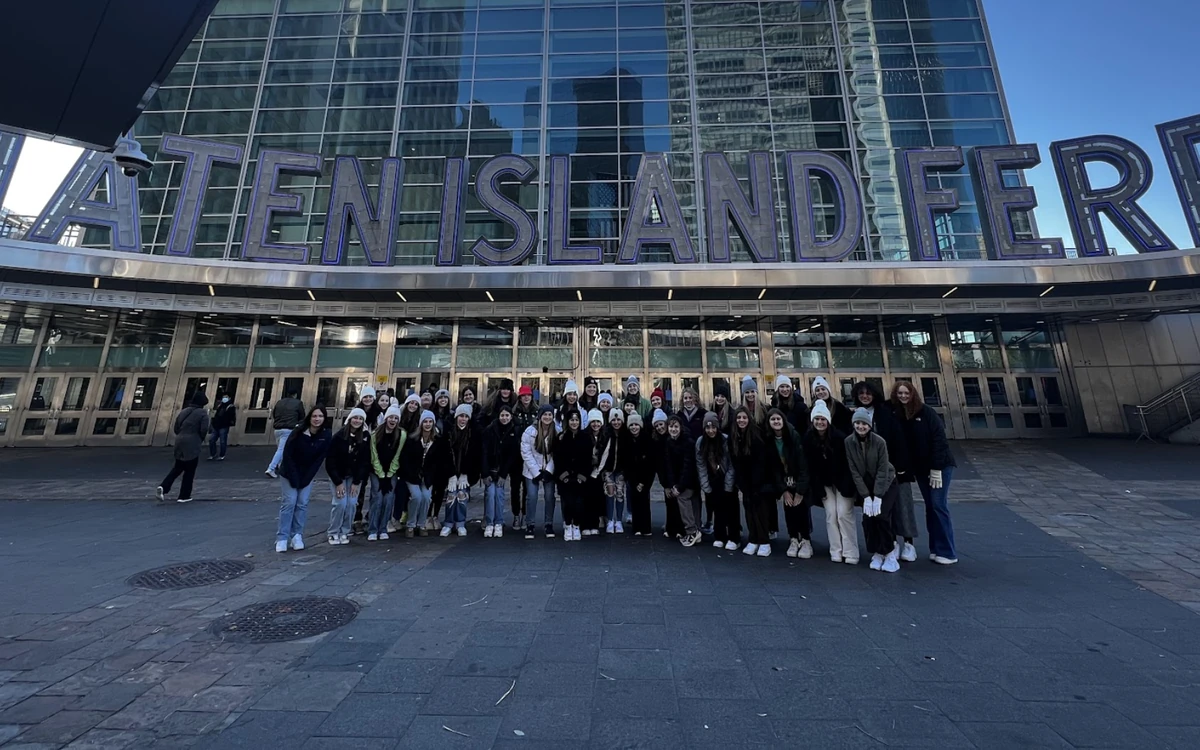
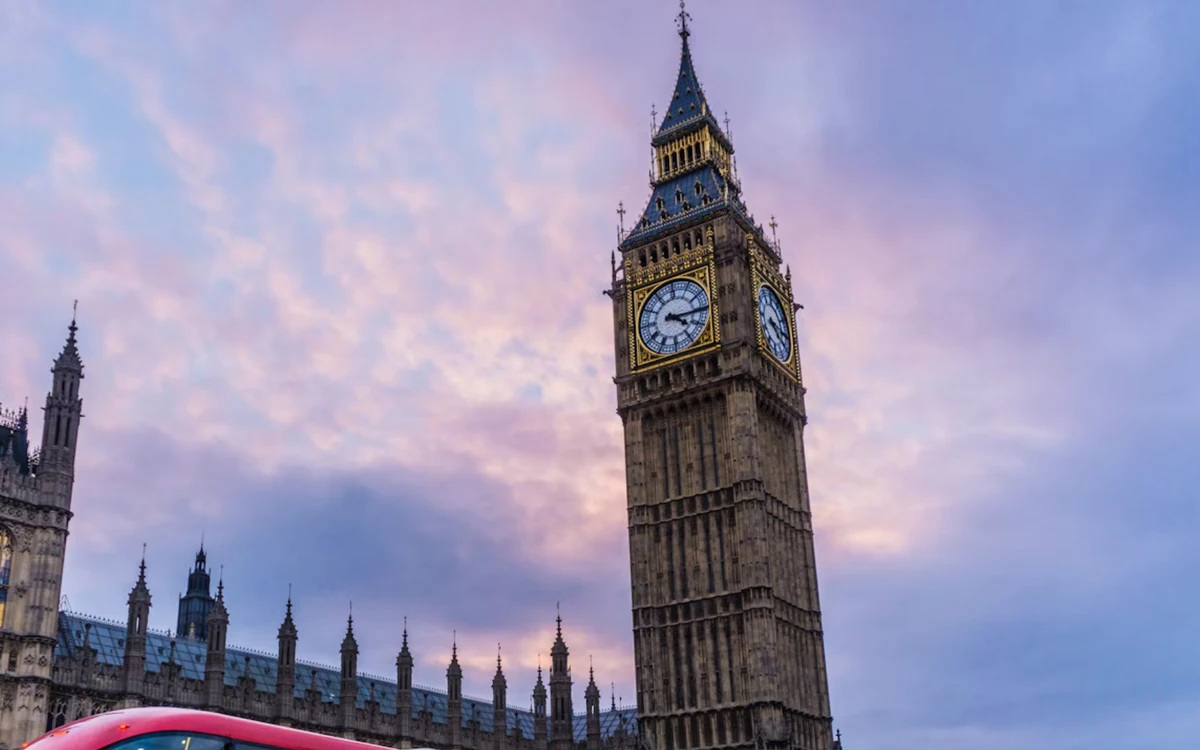
For a school going abroad for the first time, Canada, England, Italy and Costa Rica are the best international school trip destinations. They are the shortest flights — or no flight at all — the easiest to chaperone, and the most forgiving of a group that has never traveled overseas together.
Beyond those four, France, Ireland, Norway, Japan and South Korea each answer a specific curriculum rather than a general wish to travel.
That distinction matters more on an international trip than a domestic one. A four-day class trip to Washington can absorb a vague goal. A nine-day trip to Ireland cannot: it costs more, runs longer, and asks more of your chaperones, so it needs a reason that holds up in front of a principal and a parent meeting.
The short version, before the detail:
- Best for a first trip abroad: Canada — Quebec City or Montreal. No flight needed from much of the Northeast.
- Best value: Costa Rica. Six or seven days, the shortest overseas flight on this list.
- Best for middle school: Canada. Short enough to match an 8th grade attention span and a middle school budget.
- Best for high school: Italy, which has seven itineraries from six to ten days.
- Best for English and the arts: England. No language barrier, and two programs built on the literature curriculum.
- Best for science: Costa Rica for ecology, Norway for earth science and renewable energy.
- Best for language study: France or Quebec for French, Costa Rica for Spanish, Italy and Japan for their own.
- Most ambitious: Seoul to Beijing, fifteen days, for advanced language and global studies groups.
Below are all nine destinations in full: what each one teaches, how long each trip runs, how far the flight is, which grades it suits, and when to go. You can request a quote at no cost before committing to anything.
Best International School Trip Destinations at a Glance
If you have not started yet, how to start planning a student trip is the step before choosing a country.
| Item | Detail |
|---|---|
| Easiest first trip abroad | Canada — Montreal or Quebec City. French-speaking, close enough to reach by motorcoach from much of the Northeast |
| Most-booked in Europe | Italy and England, which between them cover ancient history, art history, and English literature |
| Best for science | Costa Rica for ecology and conservation; Norway for renewable energy and glaciology |
| Typical trip length | Two to five days in Canada; six to ten days in Europe and Costa Rica; fifteen days for Seoul to Beijing |
| Booking lead time | Twelve months or more for anything requiring passports |
| Deposit | $150 per traveler on any trip involving airfare; $50 on land transportation |
| Group minimum | Most vendors treat ten travelers as the threshold to qualify as a group |
| Tours | Private group tours only — your itinerary is your own and is not shared with another school |
All Nine International Destinations, Compared
This is the whole international catalog on Landmark's destinations page, side by side. Trip lengths are the programs currently published; every one of them is customizable to your group, grade level, subject focus and budget. Every destination here requires a flight except Canada, which is drivable by motorcoach from much of the Northeast.
| Destination | Best for | Published trip lengths |
|---|---|---|
| Canada — Montreal & Quebec City | French language, colonial North American history, a first trip across a border | 2 to 5 days |
| Italy | Ancient Rome, Renaissance art, archaeology, Italian language | 6 to 10 days |
| England | English literature, Shakespeare, British history, performing arts | 8 days |
| France | French language, art history, European history | 9 days |
| Ireland | Literature, emigration and the Famine, modern conflict and peace studies, geology | 9 days |
| Norway | Renewable energy, glaciology, Viking history, Arctic exploration | 10 days |
| Costa Rica | Ecology, conservation, volcanology, Spanish language, service learning | 6 to 7 days |
| Japan | World history, modern technology and design, Japanese language and customs | Built to your group, typically 8 to 12 days |
| South Korea | Korean language, modern geopolitics, East Asian history | 15 days, Seoul to Beijing |
The table above answers the academic question. The one below answers the practical one, which is usually what decides it: how far students have to fly, which grades the trip suits, and when to go.
| Destination | Flight | Grades | Best months |
|---|---|---|---|
| Canada | None | 6–12 | Apr–Jun, Sep–Oct, Jan–Feb |
| Costa Rica | 5–6 hrs | 8–12 | Dec–Apr |
| Ireland | 6–7 hrs | 9–12 | May–Sep |
| England | 6–7 hrs | 8–12 | Apr–Jun, Sep |
| France | 7–8 hrs | 9–12 | Apr–Jun, Sep–Oct |
| Norway | 7–8 hrs | 9–12 | May–Sep |
| Italy | 8–9 hrs | 8–12 | Apr–Jun, Sep–Oct |
| Japan | 13–14 hrs | 9–12 | Mar–Apr, Oct–Nov |
| South Korea | 14 hrs | 10–12 | Apr–Jun, Sep–Oct |
Flight times are approximate, assume a Boston or New York departure with no connection, and are quoted properly with your trip. Canada is reached by motorcoach. Costa Rica’s window is its dry season; Quebec’s January and February window is Carnival. Grade ranges are our guidance, not a rule — the real test is the group, not the year.
Nothing on that list is a fixed departure you buy a seat on. Landmark runs private group tours only, which means your group decides who travels, and your Tour Director is assigned to your group alone for the whole trip.
The Easiest First Trip Abroad: Canada
If your school has never taken students out of the country, start here. Canada gives you a genuine international experience — a different currency, a different working language, a border crossing — on a trip short enough and close enough that the logistics stay recognizable.
Quebec City is the stronger pick of the two for a first-timer. It is a walled colonial city, a UNESCO World Heritage Site, where French is the everyday language, and Landmark publishes three, four and five day itineraries, each in a summer and a winter version.
The winter programs are built around Carnival and the Plains of Abraham under snow, which is a different trip entirely from the same city in June.
Montreal is the more urban of the pair — Old Montreal, French-Canadian food and culture, and a bigger-city feel — and runs as a two or three day program. It is the shortest international trip Landmark offers, which makes it a realistic answer when the budget will not stretch to a week in Europe.
One practical note that catches schools out: Canada is close, but it is still a border. Documentation rules differ depending on whether you fly or drive, and they differ for travelers under sixteen. We wrote a full post on passports for a student trip to Canada because it is the single question that delays Canadian trips most often.
Europe: The Five Classics
Europe is where most American student travel abroad ends up, and Landmark runs five European countries. They are not interchangeable. Each one lines up with a different department, which is usually how an international class trip actually gets decided inside a school.
Italy — the deepest catalog
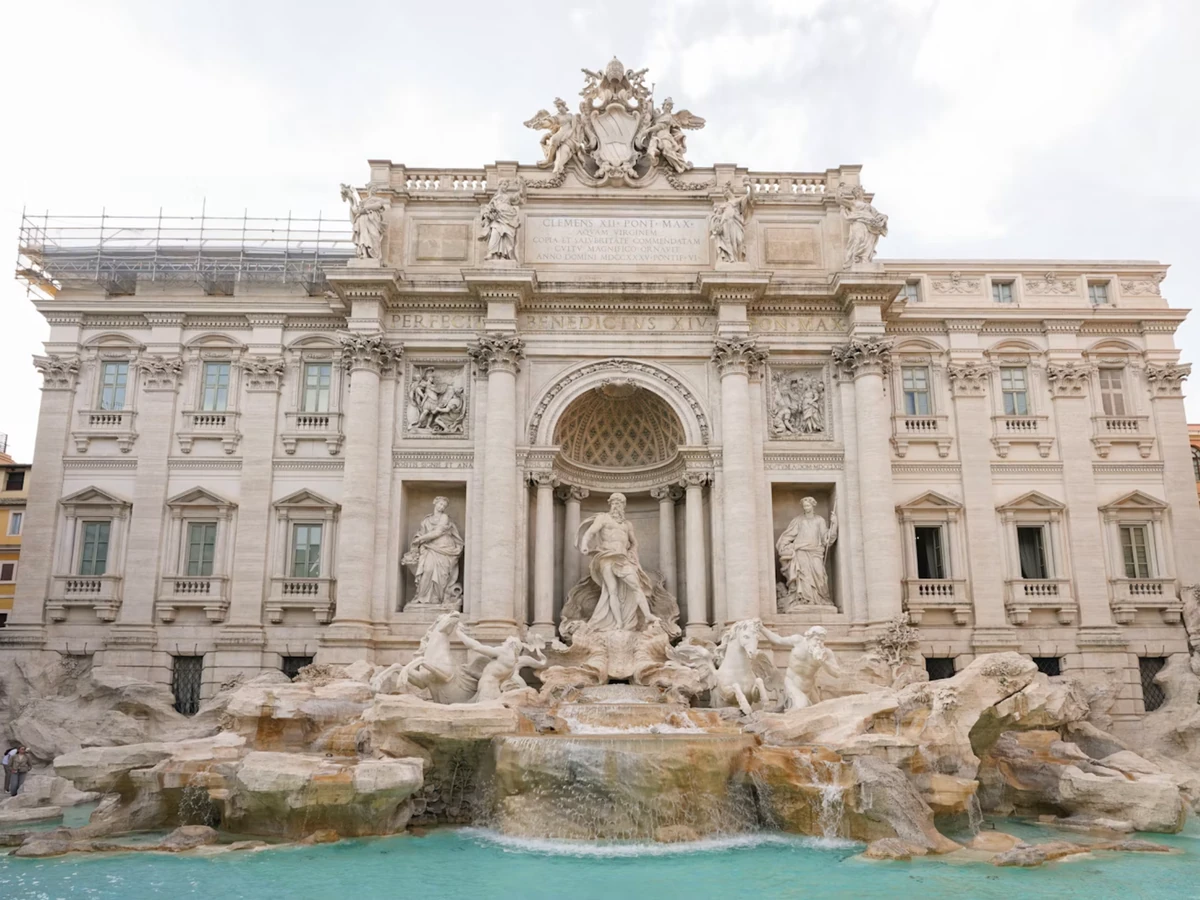
Italy is Landmark's largest international program, with seven published itineraries running from six to ten days. That range is the point: Italy is not one trip, it is several, and you pick the one that matches the course.
A Latin or ancient history class takes the Rome, Florence and Venice grand tour or a classical Rome program built around the Roman Forum and the Colosseum. An archaeology or classics elective takes the Pompeii and Naples archaeology trip, where students walk a Roman town preserved mid-collapse.
An art department takes a Renaissance Florence program and the Uffizi. A language class takes the Italian immersion itinerary and practices in the markets, which is the only part of a language trip students reliably remember.
England — literature and the stage
England is the easiest international trip for a group that has never left the country and is nervous about language. Both England programs run eight days, and both are built around the English curriculum rather than general sightseeing.
The England school trip covers London's landmarks and the West End, then moves out to Shakespeare's Stratford-upon-Avon, Bath and Oxford. The England Theatre, Literature & Culture itinerary goes further in the same direction: two West End performances, Shakespeare's Globe, the Tower of London, and Westminster Abbey's Poets' Corner. The British Museum and the British Library sit on both.
For an English department that teaches Macbeth or Romeo and Juliet every year, this is the trip where the text stops being homework.
France — language plus the Riviera
The Paris and French Riviera educational tour runs nine days and splits into two halves that feel like different countries. Paris delivers the Louvre, the Palace of Versailles and a cruise on the Seine. The second half moves south to Saint-Paul-de-Vence, the Riviera and Monaco.
The detail that makes it work for a language class is the French-speaking macaron workshop, which forces students to use the language for something other than ordering. Disneyland Paris is on the itinerary too, and it is not a throwaway — on a nine-day trip, one afternoon that is purely fun does a lot for group morale.

Ireland — history that is still being argued about
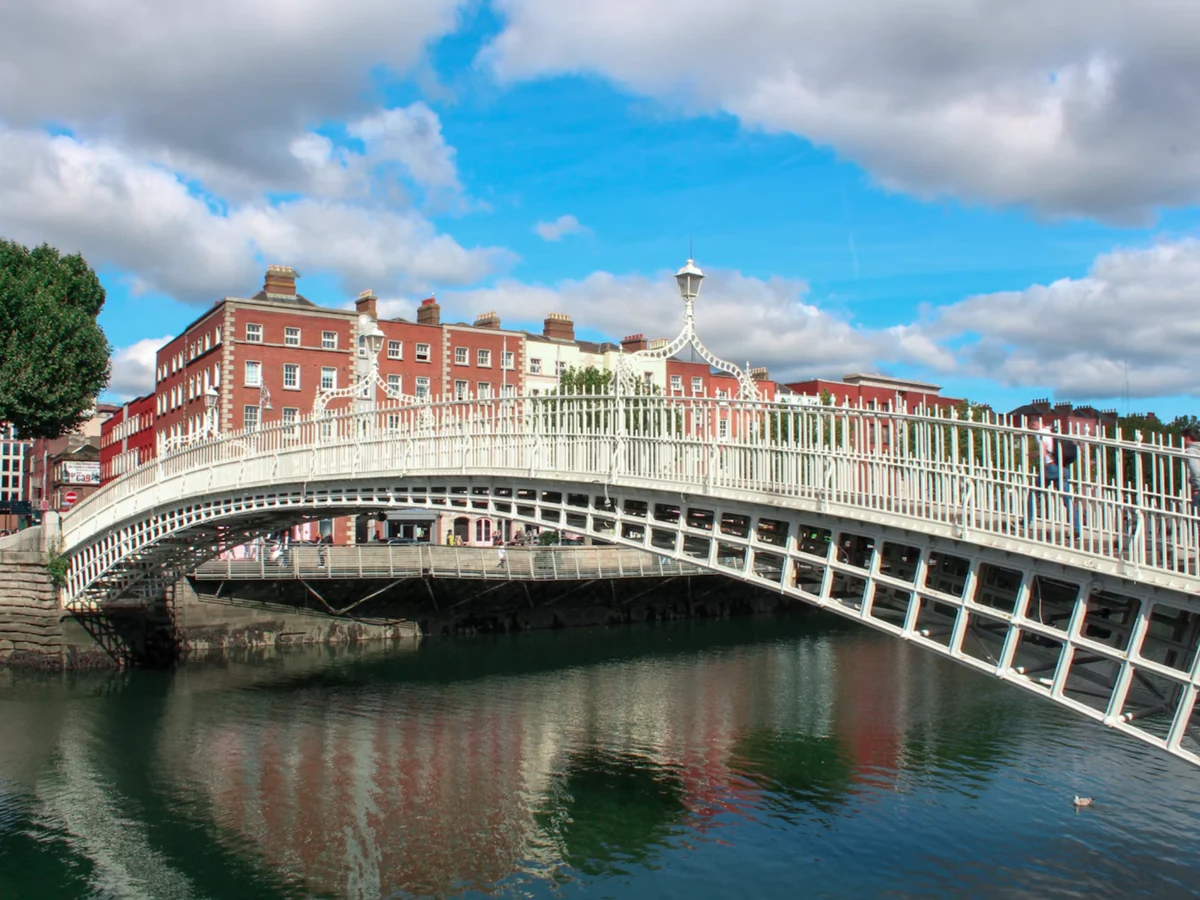
Historic Ireland runs nine days and covers more ground per day than any other European program Landmark offers. Students see the Book of Kells at Trinity College, the Giant's Causeway on the Antrim Coast, Blarney Castle, the Rock of Cashel, the Ring of Kerry, the Cliffs of Moher, and Newgrange — a passage tomb older than Stonehenge and older than the pyramids at Giza.
The Causeway and Newgrange are both UNESCO World Heritage Sites.
What sets Ireland apart academically is Belfast. The Troubles, the peace walls and the murals are recent enough that students meet people who lived through them, which is a different experience from reading about a conflict that ended two centuries ago. If Ireland is on your shortlist, we have a longer piece on Ireland field trip ideas for students.
Norway — the science trip
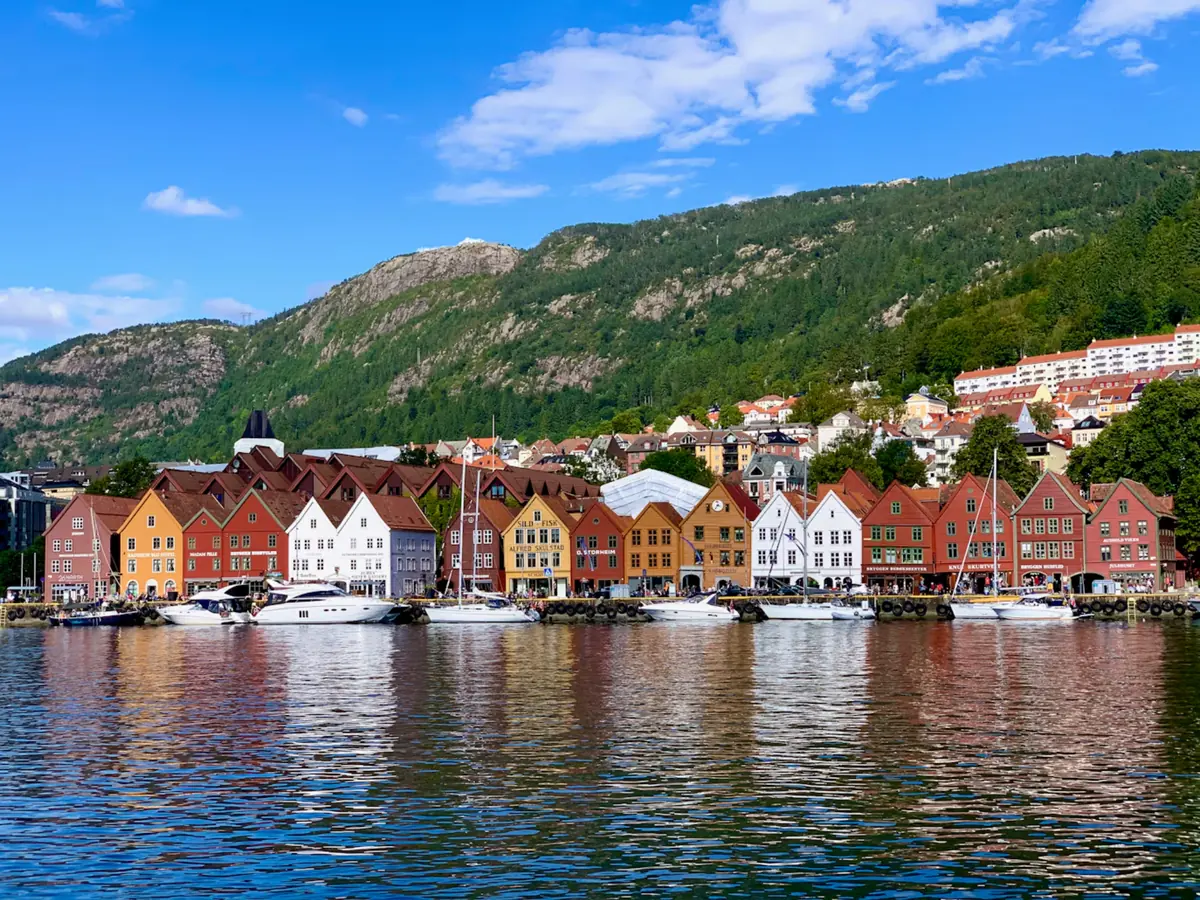
The 10 day Norway school trip is the one most schools have not considered, and it is the strongest science itinerary in Europe. Ten days across Oslo, Bergen — whose Bryggen wharf is a UNESCO World Heritage Site — and the fjords, built around glaciers, Viking seafaring, museums of Arctic exploration, and a country that is a world leader in renewable energy.
For an environmental science or earth science department, Norway does something a classroom cannot: students stand in a fjord and see the glacial geology that carved it, then visit the energy infrastructure of a nation that runs on hydropower. It is also the only Landmark program where sustainability is the subject rather than a side note.
Asia: Japan and South Korea
Asia is the longest and most ambitious way to travel abroad with students, and it suits a specific kind of group: older students, an experienced chaperone team, and usually a language program or a global studies course behind it.
Japan is built around the contrast students notice immediately — ancient temples and neon skylines in the same week. Landmark's Japan programs cover cherry blossom season in Tokyo, traditional customs and etiquette, centers of modern technology and design, and everyday life in Japanese cities. Itineraries are built to your group rather than sold off a shelf.
South Korea has one published program and it is the most ambitious trip on this list: the Seoul to Beijing cultural and language immersion, fifteen days taking in Gyeongbokgung Palace, Bukchon Hanok Village, the Korean Demilitarized Zone, the Busan coast, then on to Shanghai, the Forbidden City and the Great Wall.
Fifteen days across two countries is a serious undertaking. It is the right trip for an advanced language class or an international studies program, and the wrong trip for a general-interest group looking for a nice week away.
Central America: Costa Rica
Costa Rica is the best value on this list and the strongest science trip overall. It runs six and seven day programs — shorter than Europe, so cheaper, and a shorter flight from most of the United States.
The academic case is unusually concrete. Students hike cloud forests, see active volcanoes up close, and learn from local conservationists in a country that has built its national identity around sustainability. Landmark's Costa Rica itineraries include a reforestation program in Sarapiquí, rainforest and cacao study at the Tirimbina Biological Station, and volunteer service at a local school.
That service component is worth flagging separately. Service hours earned abroad tend to carry weight on a transcript, and for a group that wants its trip to be more than sightseeing, Costa Rica is the easiest place to make that real.
Which Grades Suit Which Destination?
Trip length is what separates a middle school trip abroad from a high school one. Everything else — the sites, the Tour Director, the safety protocol — is the same.
Middle school, grades 6 to 8. Canada is the natural answer. Two to five days is a realistic first time away for this age, the cost sits within reach of a middle school fundraising effort, and a border crossing still feels genuinely international. Strong 8th grade groups travel well to England, Italy or Costa Rica; see the best 8th grade trip destinations for how the domestic options compare.
High school, grades 9 to 12. This is where the eight to ten day European programs make sense. Students can handle the pace, the trip can carry a real academic focus, and the cost is easier to justify over four years of fundraising. Ireland, France, Norway and the longer Italy itineraries all sit here.
Grades 10 to 12 only. The fifteen-day Seoul to Beijing program. Two countries, a fourteen-hour flight and a serious time change ask more of a student than any other trip on this page.
Age also changes how students are supervised. Free exploration happens in chaperone groups or on the buddy system depending on the age of the group, which is worth explaining at the parent meeting before anyone asks.
When Is the Best Time to Travel?
School calendars decide this more than weather does. Most international school trips run during February or April break, or in the two weeks after classes end in June. Those windows are also when every other school travels, which is the single biggest reason to book early.
Within those windows, a few things are worth knowing. Europe in April and early June is mild and far less crowded than July. Costa Rica’s dry season runs December to April, which lines up well with February break.
Quebec in late January and February is a different trip entirely — Landmark publishes separate winter itineraries built around Carnival and the Plains of Abraham under snow. Japan’s cherry blossom season falls in late March and early April, which is the most oversubscribed window in the country.
If your school can travel outside the standard breaks, say so early. It usually lowers the price and always improves what is available.
What an International School Trip Costs
Landmark's fully inclusive trips run $300 to $400+ per traveler per day depending on package inclusions. On an international trip, two things change that arithmetic: the trips are longer, and international airfare is quoted separately for your departure city, your dates and your group size.
Here is what the per-day range works out to across the trip lengths Landmark publishes internationally.
| Trip length | Typical total | Destinations |
|---|---|---|
| 2 to 3 days | $600 to $1,200+ | Montreal |
| 4 to 5 days | $1,200 to $2,000+ | Quebec City |
| 6 to 7 days | $1,800 to $2,800+ | Costa Rica, short Italy |
| 8 to 9 days | $2,400 to $3,600+ | England, Italy, France, Ireland |
| 10 days | $3,000 to $4,000+ | Norway, Italy grand tour |
| 15 days | $4,500 to $6,000+ | Seoul to Beijing |
Treat those as the shape of the number, not the number. Only a quote accounts for your actual departure airport, season, group size and inclusions — and on an overseas trip, airfare moves the total more than the destination does. Our fuller breakdown of what a school trip costs walks through the variables.
The deposit is the figure parents ask about first. It is $150 per traveler on any trip involving airfare, and $50 on land transportation — so a flight to Rome takes a $150 deposit, while a motorcoach to Quebec City takes $50. Planning is free until you decide to proceed.
How an International Trip Differs From a Domestic One
Schools that have run a dozen trips to Washington are sometimes surprised by what changes when the trip leaves the country. The differences are manageable, but they are real, and they are the reason the booking window is longer.
| What changes | Domestic | International |
|---|---|---|
| Lead time | Six to twelve months | Twelve months or more — passports alone can take months |
| Documents | Usually none | A valid passport per traveler; some countries need more |
| Travel | Motorcoach from your school | Group air, airport transfers and every connection, booked and managed by Landmark |
| Trip length | Three to five days | Six to fifteen days |
| Time zones | None to speak of | Five to fourteen hours — day one abroad is usually a light day on purpose |
| Phones | Normal service | International plans or local data; worth settling at the parent meeting |
| Support | Office hours plus your Tour Director | A Landmark team member reachable around the clock, across time zones |
| Deposit | $50 on land transportation | $150 where airfare is involved |
Passports are the item that derails the most trips, because they are the one thing you cannot speed up at the end. Processing times are published by the federal government at usa.gov/passport, and renewal timelines move with demand.
Collect passport numbers and expiration dates at sign-up, not in the spring. Many countries require a passport valid for six months beyond the return date, which means a passport that has not technically expired can still be refused.
Health requirements are the second item. The CDC's destination pages list what is recommended for each country, and that information belongs in the first parent letter rather than the last one.
How to Choose Between Them
Four questions settle an international field trip faster than any list of destinations does.
What course is paying for it? If a department is behind the trip, the destination is close to decided, and our curriculum themes show how programs get built around a subject. English goes to England. Latin, classics and art history go to Italy. French goes to France or Quebec. Environmental science goes to Costa Rica or Norway. Global studies goes to Japan or South Korea.
Has this group been abroad before? If not, choose Canada, England or Costa Rica. Short flight or no flight, manageable trip length, and nothing about the day-to-day that will surprise a first-time chaperone.
How many days can you actually take? This eliminates more options than budget does. A school that cannot release students for more than five days is choosing between Montreal and Quebec City, and that is fine — a strong four-day trip beats a stretched eight-day one.
What will parents pay? Ask before you announce a destination, not after. Costa Rica at six days and Montreal at two sit in a different conversation from fifteen days across Korea and China, and the number you float first is the number families anchor to.
If the answers point in different directions, the shorter trip is almost always the right call for a first attempt. Schools that run a good four-day trip to Quebec usually run a good eight-day trip to Italy two years later. It rarely works in the other order.
When to Start Planning
Twelve months out, minimum, for anything requiring passports. That is not a sales line — it is passport processing, group air inventory, and the fact that families need time to pay. Landmark prefers trips booked at least sixty days before departure as an absolute floor, but sixty days is a domestic figure and no help to you on an overseas trip.
Early booking also protects the price. Airfare and hotel inventory both get worse as the date approaches, and a group holding space early is not competing with every other school that waited. We have written separately on how far in advance to book a school trip and on why booking early makes school travel easier.
The planning itself costs nothing. A Landmark Travel Consultant will build a personalized itinerary and quote it before you commit to anything, and you can keep adjusting it until it is right.
What Landmark Handles Abroad
Taking students abroad adds logistics a domestic trip never does. Landmark's international programs are built so those logistics do not land on a teacher.
Group air and every connection. Flights, airport transfers and each onward link are booked and managed by Landmark, so your group moves as one unit rather than as forty individual travelers.
A dedicated Tour Director. One Landmark Tour Director travels with your group start to finish, providing the context that makes a site mean something rather than just photograph well.
Round-the-clock support. A Landmark team member is reachable at any hour, across time zones, before, during and after the trip.
Safety protocols that do not change by country. Students receive safety bracelets and a briefing on first contact with their Tour Director. Free exploration happens in chaperone groups or on the buddy system depending on the age of the group.
No group leaves a site until two separate headcounts are done — one by the Tour Director, a second by the head chaperone. Our travel safety and support page covers the rest.
Everything on the itinerary, priced up front. Admissions, accommodation and the meal plan are quoted before you commit. See what a school trip package includes for the full list, and how many chaperones you need before you set your adult count — it is worth settling early, because chaperone seats affect the per-student price.
Every itinerary above is a starting point. Landmark builds customized itineraries around what your group is studying, and if the destination you want for your students is not on this page, ask — the published programs are the ones schools request most, not the limit of what can be built. If you are also weighing domestic options, our guide to the best 8th grade trip destinations covers those.