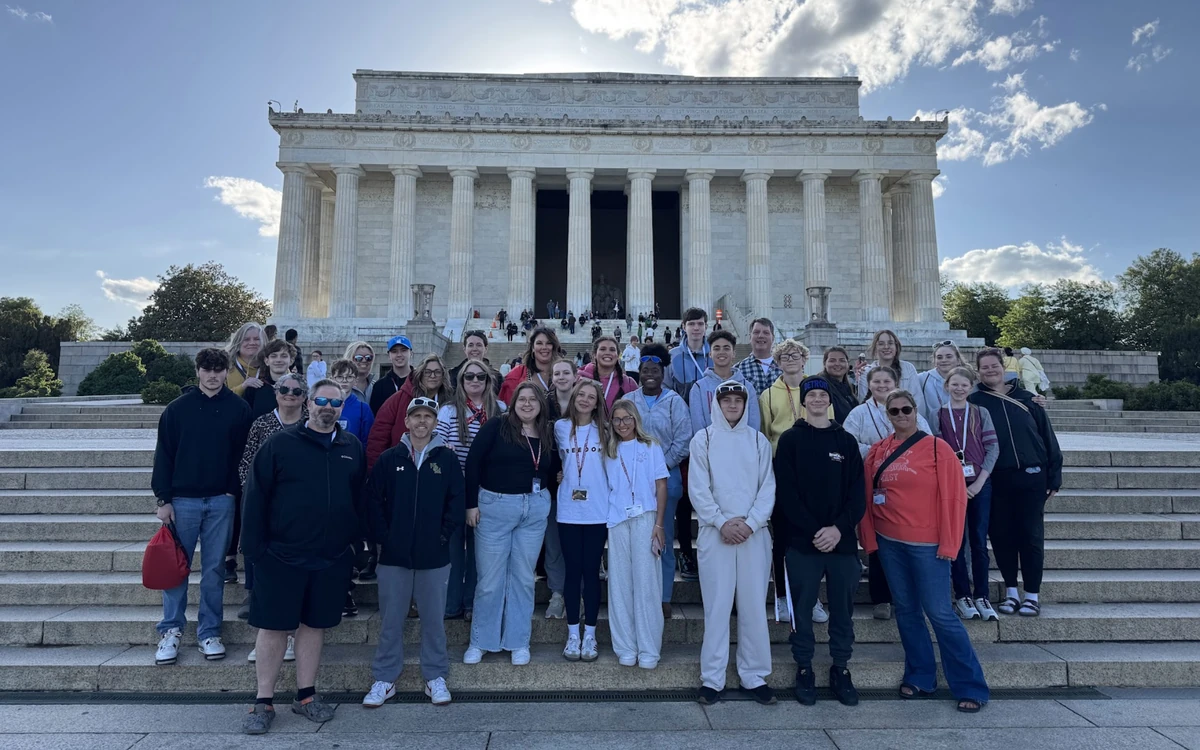
Most school trips need one adult for every ten students — but the ratio that actually applies to you is set by your school district, not by any national standard. There is no federal chaperone-to-student rule and, in most states, no state-wide one either. Districts write their own, and they differ more than most trip organizers expect.
Ratios also tighten in three predictable ways: for younger students, for overnight travel, and for international travel. Below is what real district policies require, how the number changes by trip type, which venues set their own rules, and who is actually allowed to count toward your total.

The short answer
As a planning starting point, before you check your own district’s policy:
- Pre-K and kindergarten — roughly one adult per four to six students.
- Elementary — roughly one adult per six to eight students.
- Middle school — roughly one adult per eight to ten students.
- High school — roughly one adult per ten to fifteen students.
- Every trip, regardless of size — a minimum of two adults. This is close to universal, and it exists so that one adult can leave with a sick or injured student while the group stays supervised.
Treat those as the shape of the answer, not the answer. The binding number is whatever your district has written down.
How district requirements differ in practice
The spread between districts is the reason there is no single correct answer. The three policies below are as their districts published them, read in August 2026. Districts revise travel policies, sometimes without announcement, so treat these as an illustration of how widely the numbers vary — not as a source to plan your own trip against. Your own district’s current policy is the only one that governs your trip.
- Chicago Public Schools published ratios by trip category rather than by grade: one adult per ten students on a one-day field trip, and one per six on domestic overnight and international trips, with at least two chaperones on every trip, one of them a certified teacher.
- District of Columbia Public Schools set them by grade band and trip type in its January 2025 field trip policy: pre-K day trips at one per four; elementary at one per eight for day trips and one per six overnight; secondary at one per ten for day trips, one per six for domestic overnight, and one per eight internationally — two chaperones minimum on every trip.
- Albuquerque Public Schools published them by school level: one adult per seven elementary students, one per ten in middle school, and one per fifteen in high school, with at least one male and one female chaperone on any overnight trip.
Compare high school across those three: one per ten in two of them, one per fifteen in the third. Elementary ranged from one per six to one per eight depending on the district and the trip type. A number that satisfies one district would leave you out of compliance in another — which is why United Educators, which insures a large share of American schools, declines to publish a single ratio at all. Its guidance is to set the number from the trip’s risk, duration, distance, and the age of the students, and never to go below two adults.
Teacher tip: pull your district’s current written policy and check the date on it before you promise anyone a number. Ratios usually live in a student travel or field trip procedural directive rather than the staff handbook, the overnight figure is often stricter than people remember, and the version circulating by email is not always the version in force.
Overnight and international trips need more adults
This is the single most common planning mistake: taking the day-trip ratio and applying it to a multi-day trip. Every policy above tightens for overnight travel, and usually tightens again for international.
- Overnight adds hours, not just nights. Supervision becomes continuous. Someone has to manage room checks, curfew, medication, and the stretch between dinner and lights-out — which is when most trips actually need adults, and when a day-trip ratio leaves you short.
- Rooming changes the count. Chaperones are typically housed separately from students, so the number of adults you bring is also a rooming decision. On Landmark trips, students are placed in quads and adult chaperones in singles by default, though you set the rooming list yourself.
- International adds logistics and distance. More adults are needed to handle documents, health issues, and anything that requires one adult to leave the group without leaving it unsupervised.
- Gender representation is often required. Albuquerque’s published policy called for at least one male and one female chaperone on overnight trips, and United Educators recommends chaperones representing each gender in the student group.

Some venues set their own ratio
Your district sets a floor. Individual sites on your itinerary can set their own requirement on top of it, and theirs applies regardless of what your policy says.
- Museums and libraries. The Library of Congress has required one chaperone for every eight students in grade school groups — tighter than the one-per-ten most districts use for secondary day trips.
- Water and swimming. Beaches, pools, and boat activities routinely require far tighter supervision than a museum day, and some venues will not admit a group that arrives under-staffed.
- Adventure and high-ropes activities. Operators set their own minimums and enforce them at check-in.
- Students with disabilities. An individual student’s IEP may require one-to-one support or a nurse. That adult supports one student and should not be counted as general supervision for the rest of the group.
The practical consequence is that your ratio is set by the strictest requirement on your itinerary, not by the average of them.

Who is allowed to count as a chaperone
Hitting the number is only half of it. Districts also restrict who is eligible, and an adult who does not qualify does not count toward your total.
- A minimum age. Chicago’s policy set a floor of eighteen. United Educators suggests considering twenty-one for volunteers.
- At least one school employee. Nearly every policy requires it, and several specify a certified teacher rather than any staff member.
- Background checks. Chicago called for a criminal background check and tuberculosis screening for overnight chaperones; Albuquerque, a current unsupervised background clearance. Build in time for these — clearance can take weeks, and it is a common reason a volunteer drops off the list late.
- Volunteers may be barred entirely on overnight trips. DCPS’s 2025 policy did not allow volunteers to serve as chaperones on overnight or international trips at all. Parents can travel as non-chaperone adults, but they do not count toward the ratio.
Does your tour director count toward the ratio?
No — and you should assume no even where your policy is silent. A tour director works for the tour operator, not the school. DCPS put the position plainly in its 2025 policy: program staff contracted through an educational travel vendor should never be left alone with students, because the district cannot verify they have been background-checked.
That is the correct way to think about it. A good tour director carries the logistics, knows the ground, and takes real work off your staff — but supervision authority stays with the school. On Landmark trips the division is explicit: students get safety bracelets and a briefing at their first meeting with the Tour Director, and a group does not leave an attraction until two separate headcounts are done, one by the Tour Director and the final one by the head chaperone. The operator supports supervision. Your chaperones own it.
Teacher tip: recruit one adult beyond what your ratio requires. Chaperones cancel, and a group that leaves at the exact minimum is out of compliance the moment one person drops out the week before departure.

What the ratio means for the rest of the trip
The number of adults you bring is a planning input, not just a compliance box.
- Seats and rooms. Every chaperone occupies a seat on the coach and a bed in the hotel block, so the ratio shapes both the rooming list and the vehicle you need.
- Complimentary chaperone places. Most operators build a number of free adult places into a group quote. Landmark does, and the number varies with the trip and group size — worth asking about early, because it changes how many adults you can afford to bring.
- Free time is the constraint. Groups rarely run short of adults at a guided museum stop. They run short in the evening and during free exploration, which is where you should aim your strongest chaperones.
Getting the number right for your group
Start with your district’s current written policy, check every venue on the itinerary for a stricter rule, tighten for overnight and international travel, confirm each adult is actually eligible, and then add one more. That sequence gets you a defensible number rather than a guess. Every figure quoted above is drawn from a published policy at the time of writing and is included to show how much the requirements vary — confirm the current numbers with your own district and venues before you commit to a count.
For guidance on choosing and preparing the adults themselves — what makes a good chaperone and how to brief them before departure — see our companion guide to choosing and preparing your chaperones. You may also want what’s included in a school trip package and how Landmark keeps students safe on a trip.
Landmark builds every trip privately around a single group, with a dedicated Travel Consultant, a Tour Director on the ground, and 24/7 support while you travel. Tell us your group size, grade level, and destination and we will tell you how the chaperone count works for your trip, including how many complimentary adult places it carries. You can also read our travel safety and support page or our frequently asked questions.