The best educational trips for small school groups are Washington, D.C., Boston, Philadelphia, New York, Atlanta, Chicago, Charleston and Savannah at home, and Costa Rica, Quebec City and Italy abroad. Every one of them is walkable or transit-rich, keeps its headline sites free or low cost, and is built out of short moves rather than long ones — which is exactly what a group of ten to twenty-five students does best.
A small group is its own kind of trip. It fits a single timed-entry slot, seats one restaurant table, fills one workshop, and keeps every student inside the same conversation from the first stop to the last. Choosing the destination around those strengths is what turns a short roster into the best thing about the week.
What Counts as a Small School Group?
Ten travelers is the practical floor. As our destinations page puts it, “Most vendors require a minimum of 10 travelers to qualify as a group, so that is the practical minimum we plan around.” Hotels, motorcoach companies, museums and restaurants generally set their group threshold at the same place, and once you clear it you are quoted as a group rather than as a stack of individuals.
From there, most small school trips land somewhere between ten and twenty-five students. That is one class, one club, one grade at a small independent school, one honors cohort, one language section, one history elective. It is also the size at which the whole group can stay inside one conversation all day, from the first stop to the last.
Size never changes who you travel with. Every Landmark trip is private to your group, and no other group is merged with yours. That is what keeps every advantage below intact: a small group stays small, and the trip stays built around your students rather than around a shared schedule.
| Item | Detail |
|---|---|
| Practical minimum | 10 travelers, the threshold most vendors use to quote a group rate |
| Common size | 10 to 25 students — one class, club, grade or elective |
| Group status | Private to your school; never merged with another group |
| Typical day rate | $300 to $400+ per student, per day |
| Three-day domestic | About $900 to $1,200+ per student |
| Deposit | $150 per traveler on trips with airfare, $50 on land-only trips |
| Booking lead time | We prefer trips booked at least 60 days before departure |
| Best-fit destinations | Walkable cities, free or low-cost admissions, strong public transit |
The Advantages of Traveling as a Small School Group
These are the strengths worth building a destination around. Each one gives you real time back in the day, and time is the currency a school trip actually runs on.
- One group, one timed entry. Independence Hall tours leave every twenty minutes. A group of twenty fits a single departure, so the whole class hears the same ranger in the same room, and the question one student asks gets answered for everyone.
- Conversation, not announcement. At fifteen students, your Tour Manager is close enough to answer a question the moment it comes up. Quiet students tend to speak up when speaking up is easy.
- Public transit becomes part of the lesson. Where an itinerary calls for it, Landmark trips use the metro, subway, transit bus, light rail, train and Amtrak alongside motorcoach. A group of twenty boards a subway car together and reads the city from inside it.
- Rooms and tables sized for you. Neighborhood restaurants, cooking classes, printmaking studios, lab benches, theater talkbacks and ranger programs are all run for limited numbers, and a class-sized group walks straight into them as one unit.
- The day can flex. An exhibit runs long, the weather turns, a conversation is worth another twenty minutes — a small group can take the extra time on the spot.
- Everyone is accounted for in seconds. Head counts are quick at every door, crossing and departure, which is why small groups tend to run ahead of schedule.
All six pay off hardest in compact places, where a day is made of many short moves rather than a few long ones. That is the filter for choosing where to go.
The Best Destinations for a Small School Group
Every destination below is one Landmark runs, drawn from our full destinations list. What separates the ones on this chart is how well they convert a short roster into access, mileage and subject depth.
| Destination | Why it works |
|---|---|
| Washington, D.C. Civics, American history, STEM | The Smithsonian museums are free, the National Mall is walkable end to end, and the Metro covers the rest |
| Boston The Revolution, higher education | The Freedom Trail is a walking route; the whole colonial city is a two-and-a-half mile line |
| Philadelphia Founding era, constitutional law | A compact historic core with timed-entry sites that a small group clears in one slot |
| New York City Immigration, the arts, economics | The subway is the itinerary; small groups move through it in minutes |
| Atlanta The Civil Rights Movement | Civil rights landmarks sit within a few blocks of one another |
| Chicago Architecture, world cultures, STEM | Neighborhoods reachable by the L, each a different culture and cuisine |
| Charleston Colonial and antebellum history | A small walkable historic district where the whole day is on foot |
| Savannah Southern history, architecture | Twenty-two squares laid out on a grid, each one a stop |
| Costa Rica Environmental science, biology | Field stations, reserves and research sites are built for small cohorts |
| Quebec City French language immersion | A walled old city you cross on foot, fully French-speaking |
| Italy Classical and Renaissance studies | Rome and Florence reward walking; small groups fit museum entry windows |
The Domestic Trips That Suit a Small Group Best
Washington, D.C.
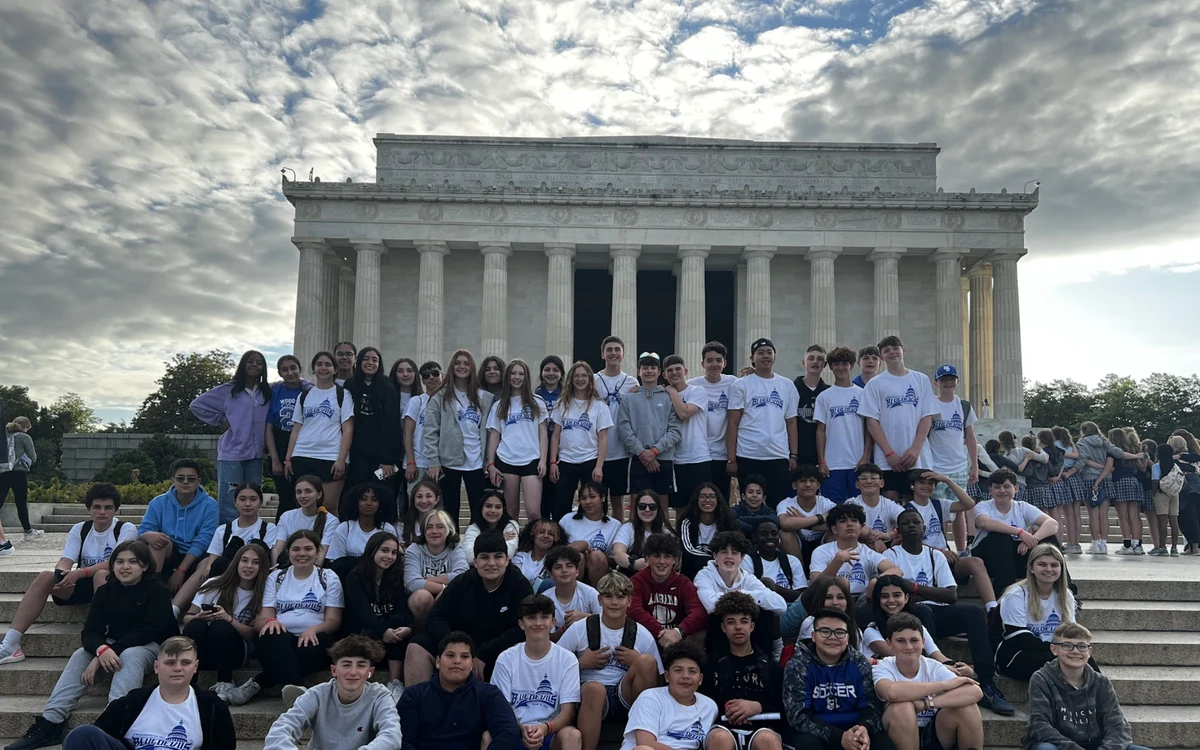
D.C. is the strongest value in American student travel, and the reason is simple: the Smithsonian museums charge no admission. For a small group that is decisive, because admissions are the line item that scales straight off your headcount. Spend the morning in the National Museum of American History and the afternoon in Air and Space and you have paid nothing for either.
The geography does the rest. The memorials, the monuments and most of the museums sit on or beside the National Mall, which you cross on foot, and the Metro reaches the Capitol, Arlington and Georgetown. A group of twenty on a Washington, D.C. school trip can fit four substantial stops into a day without ever waiting on a coach to reposition.
Boston and Philadelphia
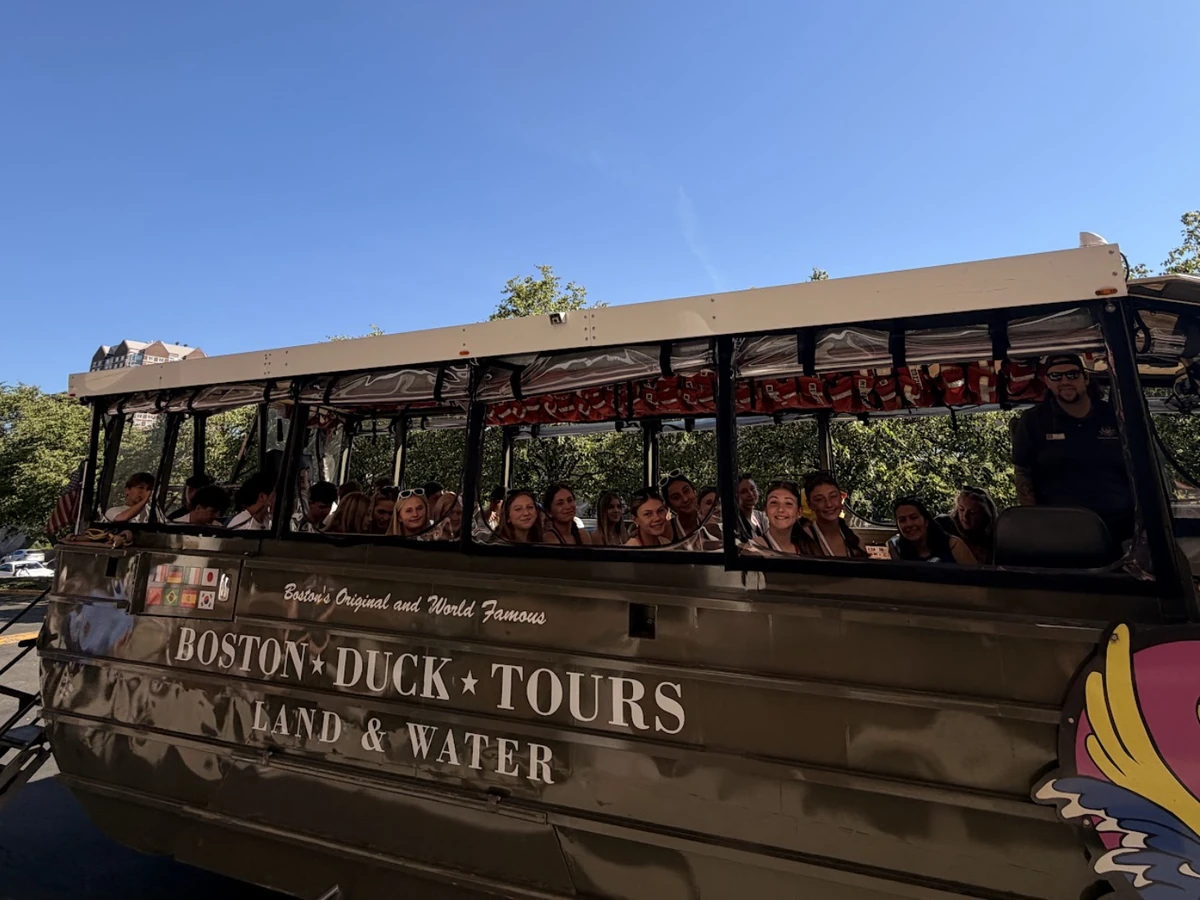
Both cities are essentially walking tours with buildings attached. Boston’s Freedom Trail is a red-lined route linking 16 historic sites across 2.5 miles, and a small group walks it at conversation pace. Add Harvard and MIT across the river and a Boston school trip covers the Revolution and the college question in the same three days.
Philadelphia packs Independence Hall, the Liberty Bell, the National Constitution Center and the Museum of the American Revolution into a few blocks. Because so much of it is timed entry, a Philadelphia school trip is one of the clearest small-group advantages on this list — your whole group goes in together, every time. If you are weighing the two, we compared them directly in Boston or Philadelphia for a school trip.
New York City
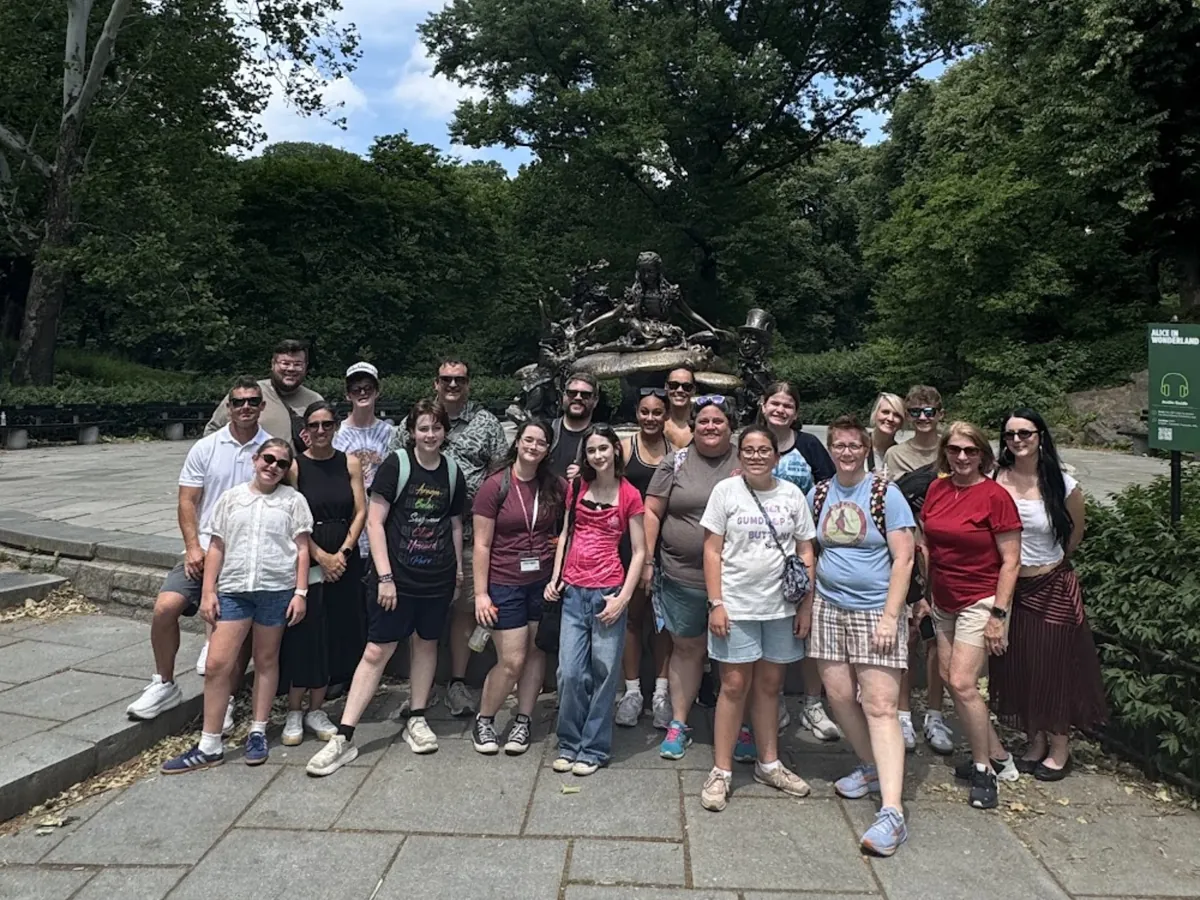
New York is a transit city, and transit rewards short rosters. A group of eighteen gets through a turnstile, onto a car and off at the right stop quickly enough that the subway stops being travel time and becomes part of the day. That is why a New York City student trip can hold Ellis Island, the Tenement Museum, the Met and a Broadway matinee in the same few days.
Small size also opens the city’s best teaching rooms. Workshop sessions, backstage talks and gallery programs are run for limited numbers, and a class-sized group books into one as a single unit. We break the budget down in what a New York City school trip costs.
Atlanta
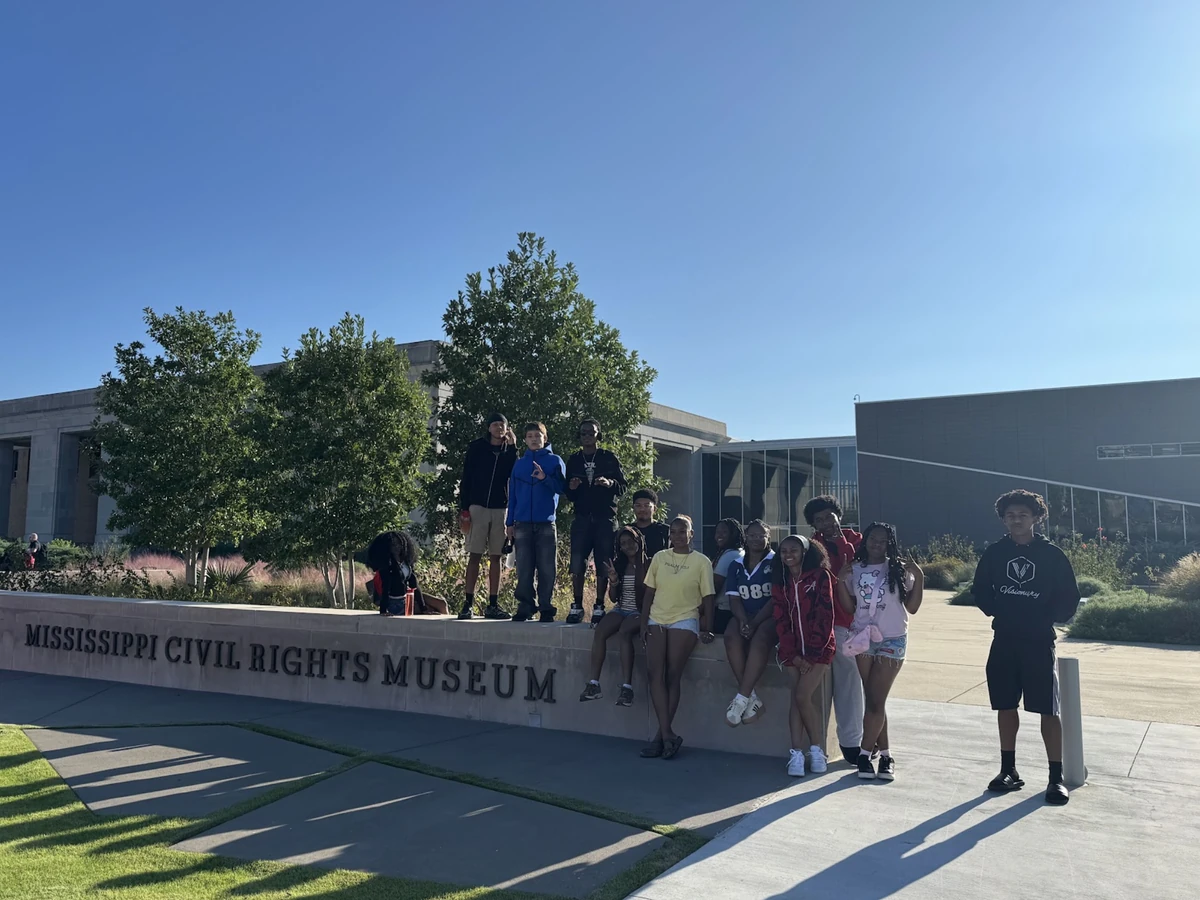
Atlanta concentrates the Civil Rights Movement into a handful of walkable blocks: the Martin Luther King Jr. National Historical Park, Ebenezer Baptist Church, the King Center and the National Center for Civil and Human Rights. A small group on an Atlanta field trip can stand in each of them in a single day and still have the afternoon for Fernbank or an HBCU campus. We cover the broader route in the best civil rights history trips for students.
Chicago
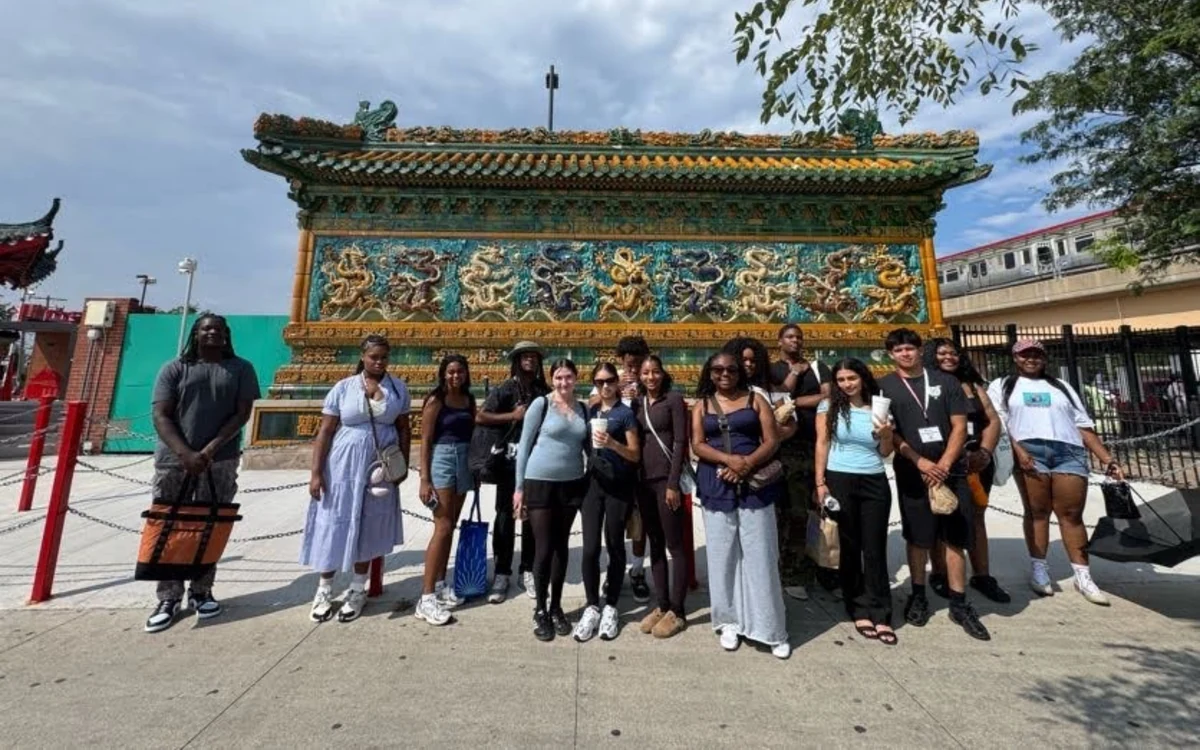
Chicago is a city of neighborhoods, and neighborhoods are where small groups shine. Chinatown, Pilsen, Bronzeville and Devon Avenue each carry a different culture, cuisine and immigration story, and a group of fifteen can eat in any of them without a reservation negotiation. The L connects them. A Chicago student tour built this way doubles as a world-cultures unit; we mapped it out in six Chicago neighborhoods for cultural immersion.
Charleston and Savannah
These two are the most underrated small-group destinations in the country. Both have historic districts you can cross in twenty minutes on foot, which means the day is spent inside buildings rather than between them. Charleston holds the colonial port, the Old Slave Mart Museum and Fort Sumter across the harbor. Savannah is built around twenty-two surviving squares on a grid, so the walk between sites is itself the tour. See Charleston field trips and a field trip to Savannah, GA.
The International Trips That Work at a Small Size
Costa Rica
Environmental science is the subject that most rewards a short roster, because fieldwork is done in small numbers by design. Our seven-day Costa Rica school trip puts students in a reforestation program at Sarapiqui, on the Arenal Hanging Bridges, and at the Tirimbina Biological Station for a rain forest and cacao tour — sessions where a group of fifteen works together rather than in shifts. We go deeper in why Costa Rica is a great STEM destination.
Quebec City and Montreal
For French, Quebec City is the most efficient immersion a U.S. school can reach, and it is a drive or a short flight rather than an ocean crossing. Old Quebec is walled, compact and entirely French-speaking, so a small group is immersed from the first corner store onward — and at fifteen students, everyone has to order for themselves. See Quebec City student trips and our guide to French immersion in Quebec City.
Italy
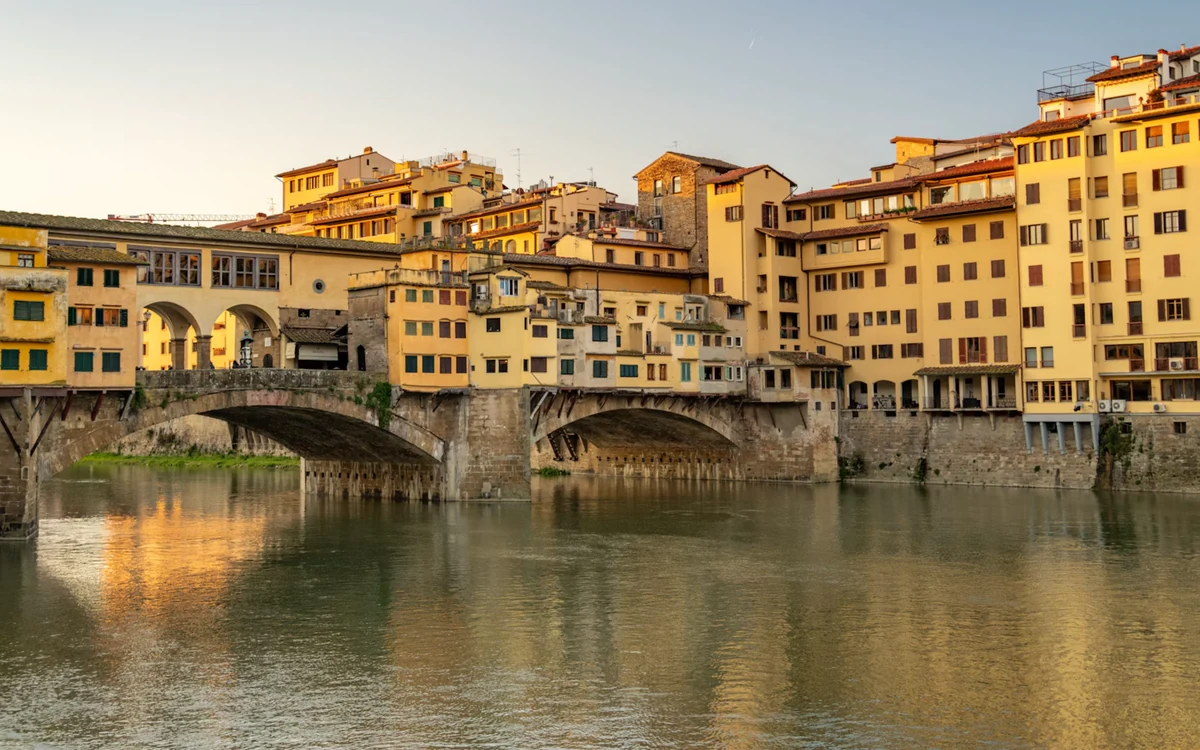
Rome and Florence are walking cities with timed museum entry, which is the same structural advantage Philadelphia offers, at a different scale. The Uffizi, the Accademia, the Vatican Museums and the Colosseum all admit in windows, and a small group fits one window. An Italy school trip is also where a short roster pays off socially: twenty students eating together in a trattoria is a meal, not a logistics operation.
Matching the Destination to What You Teach
The fastest way to choose is to start from the course, not the city. This is the mapping we use when a teacher tells us what they are trying to cover.
| Subject | Destination |
|---|---|
| Civics and American history | Washington, D.C. or Philadelphia |
| The Revolution and higher education | Boston |
| Immigration and the arts | New York |
| The Civil Rights Movement | Atlanta |
| Environmental science | Costa Rica |
| Classical and Renaissance studies | Italy |
| French language | Quebec City and Montreal |
Landmark travels to Washington D.C., New York, Atlanta, Boston, Orlando, Philadelphia, Williamsburg, New Orleans, Charleston and Savannah on the East Coast; Chicago and Mackinac Island in the Midwest; San Antonio and Santa Fe in the Southwest; Los Angeles, Seattle, Denver and Honolulu on the West Coast; and internationally to Canada, Italy, Costa Rica, Norway, England, France, Ireland, Japan and South Korea. If the subject you teach is not on the chart above, the destinations page is the place to start.
What a Small-Group Trip Costs Per Student
Cost is driven by nights and distance far more than by roster size. The large line items — a hotel bed, a dinner, an admission ticket — are per student no matter how many students you bring, which is why a well-chosen small-group trip lands in the same range as a large one.
| Trip length | Nights | Per student |
|---|---|---|
| Two-day regional trip | 1 | $600 to $900 |
| Three-day domestic trip | 2 | $900 to $1,200+ |
| Four-day domestic trip | 3 | $1,200 to $1,600+ |
| Five-day domestic trip with airfare | 4 | $1,800 to $2,400 |
| Six to eight-day international trip | 5 to 7 | $2,800+ to $4,000+ |
| Any trip, per day | — | $300 to $400+ |
A few notes on how to read that chart. Airfare is quoted separately, so international figures move with the season and the departure airport. Travel protection is optional coverage purchased separately through battleface and is never bundled into the trip price. And the single biggest lever on a small-group budget is the destination itself: a city with free museums and a walkable core, like Washington, D.C., does more for your per-student number than any other decision you will make.
For the full breakdown, see how much a school trip costs, and if you are closing a gap, fundraising ideas for middle and high school trips is where to go next. Families pay individually through our own portal — each traveler gets a login, payments are processed by Stripe — or the school can pay by check. Deposits are $150 per traveler on trips with airfare and $50 on land-only trips.
Who Is Landmark Educational Tours?
Landmark is a 100% employee-owned student travel company with more than twenty years in educational travel. Our sixteen travel experts have explored 48+ countries, and we plan trips the way we would want one planned for our own students: private to your group, built around what you teach, and staffed by people who answer the phone.
We are accredited by the Student & Youth Travel Association (#13443), the American Bus Association (#84360), IATA (22576046) and the Better Business Bureau (#544197), hold California Seller of Travel registration 2168995-50, and are members of ETOA. We are an approved vendor for Broward County Public Schools and the New York City Department of Education. Every trip includes a Landmark string bag, a reusable water bottle and a safety bracelet, and overnight hotel security is available on request.
Before you talk to anyone — us included — it is worth reading the questions teachers should ask a student tour company before booking. If your school is small as well as your group, choosing a tour company for a small private school covers the approval and business-office side.
Plan Your Small-Group Trip
Tell us the grade, the subject and roughly when you want to travel, and we will build an itinerary around your actual roster, your curriculum and your calendar. Request a quote, browse the full destinations list, or read our frequently asked questions first.