Plan a Broadway-focused student trip by choosing the show and the performance first, then building the rest of the itinerary around it. Broadway runs on a fixed weekly schedule, so the curtain time is the one thing on the trip you cannot move. Everything else bends around it.
Most guides to this start with a list of shows. That is the last decision, not the first. Here is the order that actually works.
- Pick the performance — it sets your travel dates
- Choose the show for content fit and run time
- Add the workshop, which is what makes it a study trip
- Build the day around the curtain, backwards from the theater
- Fill the rest with the performing-arts city around it
Below is each step, and the scheduling facts that drive them. You can request a quote at no cost before committing to anything.
Broadway Student Trips at a Glance
| Item | Detail |
|---|---|
| The fixed point | The performance. Broadway shows play a set weekly schedule, so the curtain time anchors the whole itinerary |
| Performances per week | Generally eight, with most productions taking one day off |
| Matinee or evening | Both work. An evening curtain pairs with a group dinner beforehand; a matinee leaves the evening free |
| Typical trip length | Three days covers a show, two workshops and the wider performing-arts city |
| What makes it a study trip | A Broadway workshop with working professionals, not just the ticket |
| Beyond the show | Radio City backstage, the Museum of Broadway, Lincoln Center, Times Square |
| Who books it | Landmark handles tickets, workshops and timings. Teachers do not chase box offices |
Step 1: Pick the Performance Slot First
This is the step almost everyone gets backwards, and it is the one that decides whether the trip works.
Broadway productions generally play eight performances a week, and most take one day off. Only a few play Sunday or Monday evenings. Evening curtains are generally 8:00 p.m.
That means a show is not available on every day of your trip. The performances fall where they fall, and your dates have to meet them rather than the other way round.
Matinee or evening is then a genuine choice, and both work well. An evening curtain pairs with a group dinner beforehand and feels like the event it is. A matinee leaves the evening open for Times Square, and can make it easier to seat a large group together.
Our guide to planning an NYC school trip covers the wider logistics. It also explains why these trips are planned early. The performance you want is a narrow slot in a finite inventory, and school groups are not the only ones booking it.
Step 2: Choose the Show for Content and Length
Once the slot is fixed, the show choice is a matter of fit rather than taste.
Three things decide it for a school group.
Content. Broadway is not written for school audiences. Productions publish content advisories, and they are worth reading properly before a permission slip goes home, not after.
Run time. A two-and-a-half-hour show with an interval eats a different amount of the day than a ninety-minute one. It changes what else fits.
What your students are studying. A musical theater class, a dance program and an English class pulling apart a text want different things from the same afternoon.
Tell your Travel Consultant the age group and the subject, and the shortlist comes back already filtered. That is a faster route than reading advisories yourself.
Step 3: Add the Workshop
This is the difference between a trip that sees a show and a trip that teaches.
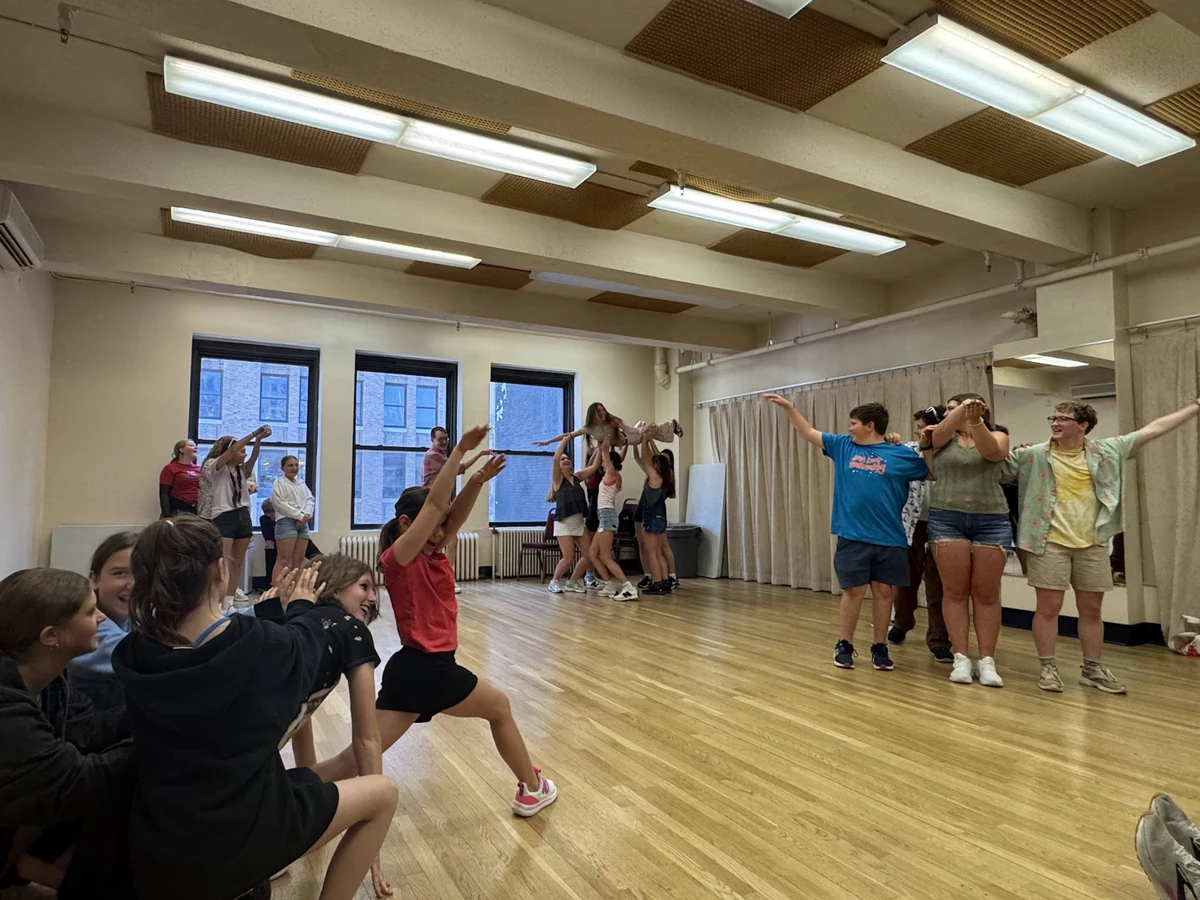
A Broadway workshop puts students in a studio with a working performer, learning choreography or scene work from a current or former cast member. It usually lands as the thing students talk about afterwards, more than the show itself.
Landmark’s NYC performing arts tour includes two workshops across three days, which is deliberate: the first teaches students the vocabulary, and the second is where they use it.
The Museum of Broadway runs its own educational workshops with Teaching Artists in a private studio, and groups booking one get an educational guide with pre-visit and post-visit material. That is a ready-made way to extend the trip into classroom time at both ends.
Step 4: Build the Day Backwards From the Curtain
With the performance fixed, the show day plans itself in reverse.
| Working back from | What it means |
|---|---|
| Curtain | The one immovable time on the entire trip |
| Seated before curtain | Theaters have security and a lot of people arriving at once. A group of forty does not filter in quickly |
| The meal before | Close to the theater and pre-arranged. Forty students finding somewhere to eat in Midtown on the day does not work |
| Earlier that day | Something walkable and close. A show day is not the day for a trip to the outer boroughs |
| After the show | Energy is high and the group is in the middle of the theater district. Times Square is right there, which is the point |
Our guide to NYC attractions for school groups covers what works nearby. The common mistake is scheduling the morning somewhere far from the theater district and then racing back. Keep the show day tight and put the ambitious travel on another day.
Step 5: Fill In the Performing-Arts City
A Broadway-focused trip is not only Broadway. The city around it supports the same subject.
| Stop | Why it fits the theme |
|---|---|
| Radio City Music Hall | A backstage tour, sometimes with a Rockette meet and greet. Students see the machinery behind a show rather than the front of it |
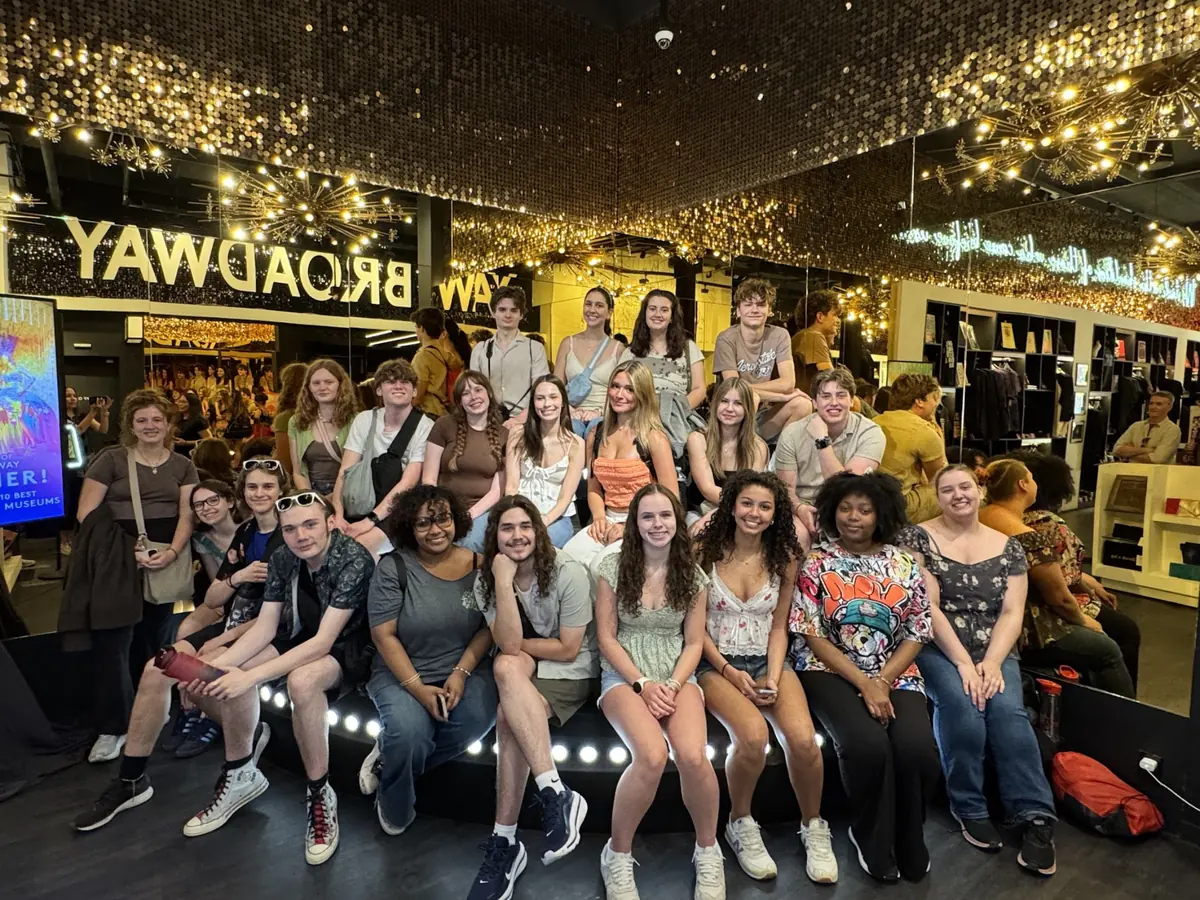
| Museum of Broadway | The history of the form, plus its own education program and studio workshops |
| Lincoln Center | Opera, ballet and orchestral work on one campus. The counterweight to the commercial theater of Midtown |
| Times Square and the theater district | Worth walking with someone who can point out which building is which and what is playing in it |
| Top of the Rock | A break from the theme that still reads as New York, and useful for pacing |
| Chelsea Market, the High Line and SoHo | A gentler final morning before departure |
Our NYC performing arts tour outline shows how these fit into three days, and the best NYC museums for educational travel covers the wider city.
What Catches Groups Out
Four things that are easier to know now than to discover in Midtown.
Assuming the show plays every night. Most productions are dark one day a week, and only a few play Sunday or Monday evenings. Build the dates around the performance, not the reverse.
Content advisories. Read them before, not after. A show that is perfect for a high school musical theater class may not suit a mixed middle school group.
Seating a group together. Forty seats in one block is a different request from forty seats, and it gets harder the later you ask.
Treating the show as the whole trip. The ticket is two and a half hours of a three-day trip. The workshops and the backstage access are what make it curricular.
Landmark holds the tickets, the workshop slots and the timings, so none of this lands on a teacher. Our travel safety and support page sets out the protocols.
Who the Trip Suits
| The group | What to emphasize |
|---|---|
| Musical theater or drama program | Two workshops, the backstage tour, and a show chosen for what they are rehearsing |
| Dance program | Choreography workshops and Radio City; the Rockettes are the reference point |
| Choir or music program | Lincoln Center alongside Broadway, for the contrast between the two traditions |
| English or literature class | A play rather than a musical, with the text read before the trip |
| A mixed year group | A well-known musical, one workshop, and more of the wider city |
For the trip either side of this one, see how to start planning a student trip and how payment plans work.
What a Landmark Trip Includes
A package typically covers a private group tour for your group only, a custom itinerary built around your curriculum, transportation, student-appropriate hotel accommodations, admission to every scheduled site, the meals named in the itinerary, a professional Tour Director traveling with your group, and restaurant and driver gratuities.
For a Broadway trip that also means the performance tickets, the workshop slots and the backstage bookings, held and confirmed by Landmark rather than by the school.
On average, Landmark’s fully inclusive trips range from $300 to $400+ per traveler per day, or about $1,200 to $3,500+ total for an all inclusive package. Airfare is an additional variable cost.
| Item | Detail |
|---|---|
| Per traveler, per day | $300 to $400+, fully inclusive |
| All inclusive package | About $1,200 to $3,500+ in total |
| Broadway tickets | Included. Held and confirmed by Landmark as part of the itinerary |
| Workshops and backstage tours | Included when they are on your itinerary, with the slots booked by Landmark |
| Hotel, transportation and admissions | Included, along with the meals named in the itinerary |
| Tour Director and gratuities | Included, with restaurant and driver gratuities covered |
| Airfare | Quoted separately. A variable cost that depends on your origin and dates |
| Travel protection | Optional coverage, bought separately rather than included |
| Student spending money | Not included. Souvenirs and any meals not named in the itinerary |
See what a school trip package includes and what a New York City school trip costs.
Who Is Landmark Educational Tours?
Landmark Educational Tours is a 100% employee-owned domestic and international educational travel company headquartered at 1 Central Street, Suite 205, Middleton, Massachusetts, reachable at (888) 886-2781.
Landmark plans and operates fully managed, custom class trips for public districts alongside private, religious, prep and independent schools. Every trip is a private group tour, and each group travels with a Landmark Tour Director who is an employee of the company.
Landmark is a member of the Student & Youth Travel Association (#13443), along with ABA Member #84360, IATA Code 22576046, BBB Business ID 544197, California Seller of Travel 2168995-50, and ETOA membership. More on the about Landmark page.
Starting the Conversation
Four things make a first call productive: a rough headcount, the year group, the subject the trip supports, and which weeks of the year you could travel.
That last one matters more here than on any other trip, because the performance schedule is what everything else hangs on.
A Landmark Travel Consultant will come back with workable dates and a shortlist of shows already filtered for age and content, free, with nothing held until you say so. Our New York City school trips cover the rest of the city.