A school trip to New York City with Landmark Educational Tours generally costs $300 to $400+ per student per day, fully inclusive, or about $1,200 to $3,500+ per student in total depending on trip length and what you include. Airfare, where a trip needs it, is quoted separately because it moves with the calendar in a way ground costs do not.
New York sits toward the upper end of that range rather than the lower. Manhattan hotel rates are the highest of any school trip destination in the country, most of the city’s signature attractions charge admission, and motorcoach parking is genuinely constrained. None of that is seasonal — it is how the city is built.
New York City School Trip Cost at a Glance
| Item | What to expect |
|---|---|
| Per student, per day | $300 to $400+, fully inclusive |
| Total per student | About $1,200 to $3,500+, depending on length and inclusions |
| Where New York sits in that range | Toward the upper end |
| Airfare | Quoted separately; varies by origin and date |
| Room basis | Students four to a room by default; adults in singles |
| Group size | Ten travelers is the usual threshold for group rates |
| Gratuities | Not included; budgeted separately for your Tour Director and any step-on guides |
| When to book | Nine to twelve months ahead; New York’s reservation lead times run longer than most |
What a New York Trip Costs by Length
Because the per-day rate is the constant, trip length is the cleanest way to see how a per-student price is built.
| Trip length | Nights | Full days on the ground | Estimated per student |
|---|---|---|---|
| 3 days | 2 | 1 | About $900 to $1,200+ |
| 4 days | 3 | 2 | About $1,200 to $1,600+ |
| 5 days | 4 | 3 | About $1,500 to $2,000+ |
These are planning ranges rather than quotes, and they exclude airfare. A written quote for your group, dates and itinerary is the only number to put in front of families. Read the third column twice: going from three days to four doubles your full days on the ground while raising the price by about a third. In a city that holds more than any group can cover in a week, that matters more here than almost anywhere. How much a 3-day school trip costs and how much a 4-day school trip costs work the arithmetic through in full.
Where the Money Goes in New York
The same forces apply in every destination, but they are weighted differently here.
| Cost driver | Effect | Why it lands harder in New York |
|---|---|---|
| Lodging | Large | Manhattan rates are the highest of any US school trip destination, and every night compounds. Where the hotel sits changes both the price and how much of the day you spend commuting. |
| Admissions | Large | Most of the city’s signature experiences charge, and a Broadway show is a significant line of its own. |
| Trip length | Large | Each night adds a room, a day of meals and another day of Tour Director and driver time. It moves in clean, predictable steps. |
| Group size | Large | The motorcoach and the Tour Director cost the same whether thirty or fifty students travel, so those fixed costs divide further as the group grows. |
| Room occupancy | Moderate | The lever most groups underuse. Four students to a room rather than two changes the lodging share substantially — and in New York lodging is the biggest share. |
| Distance from New York | Moderate to large | Usually the largest single line for groups outside the Northeast, and it becomes airfare once you are beyond driving range. |
| Time of year | Moderate | Spring is the busiest school window and the weeks around the holidays are busy for everyone. Moving dates changes the quote without changing the trip. |
| Local transportation | Small, in your favor | The subway is inexpensive and excellent. A group that uses it deliberately cuts motorcoach hours out of the day, saving money and time at once. |
The subway is the lever other cities do not have
That last row deserves more than a line. In most destinations a motorcoach is how a group moves, and the hours it runs are hours you pay for. In New York the subway is faster than the coach for much of the day, costs a fraction of it, and goes places a fifty-foot vehicle simply cannot.
A group that builds its days around transit rather than around the coach can cut real money out of the quote and real time out of the itinerary at once. It also does something no line item captures: riding the subway is, for a lot of students, the part of New York that actually feels like New York.
It does not make the city cheap. It is the largest saving a New York itinerary has that most other destinations do not offer at all.
Why No Two Quotes Match
Ask two schools what their New York trip cost and you will get two different answers. There is no single price for a New York City school trip, because no two New York itineraries are the same. Every Landmark trip is built privately around one group, so what your students see, how long you stay, and how you travel are all yours to decide — and those choices are what set the number. Two schools traveling the same week can build very different weeks, and their quotes will reflect that.
That is good news for planning, because it means the cost is something you shape rather than something you are handed. Below is what moves the number, the booking lead times worth knowing before you set an itinerary, what a complete quote should contain, how to compare two quotes that look nothing alike, and how most groups pay for the trip.
Your itinerary is the real variable
New York rewards a focused week far more than a comprehensive one. Groups that try to see everything spend the week moving; groups that choose a lane come home with something students can actually talk about. Deciding that lane early is the most useful planning decision you will make, and it is the one that shapes the quote.
- American history and civics — Ellis Island and the immigration story, Federal Hall where Washington was inaugurated, the 9/11 Memorial, and the Financial District. See how these fit together in exploring American history through NYC landmarks.
- The performing arts — Broadway, workshops with working performers, and backstage programming. Our performing arts tour is built around it.
- Art and design — the museum mile, contemporary galleries, and studio visits. Start with the best museums for educational travel or our art-focused itinerary.
- STEM — science centers, planetarium programming and engineering-minded city walks. More in STEM attractions for students in NYC.
- Global studies — a guided visit to the United Nations, plus the neighborhoods that make the city the most linguistically diverse place on earth.
- Literature and journalism — the New York Public Library, Harlem Renaissance sites, and the newsrooms and publishing houses that shaped American writing.
Teacher tip: pick the two or three experiences that genuinely serve your curriculum and build the week outward from those. A focused itinerary is easier to price, easier to chaperone, and consistently the one students remember.
Booking lead times worth knowing early
New York’s institutions run on reservation systems built for volume, and their lead times are longer and stricter than most teachers expect. Knowing them early shapes what is realistic for your dates, and it is the main reason to start planning sooner than feels necessary.
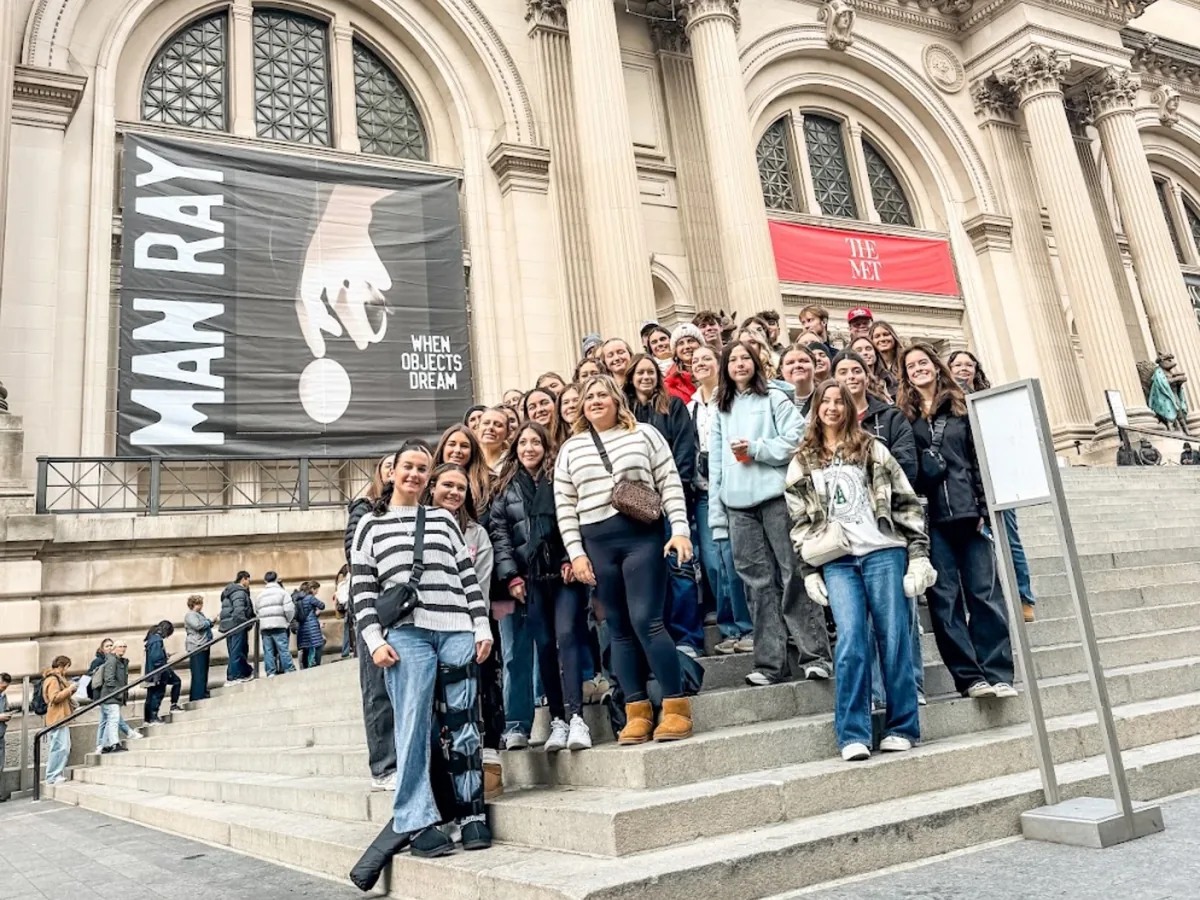
- The Metropolitan Museum of Art requires an appointment for every school group, requested at least three weeks ahead, and limits each school to one group visit per day.
- The American Museum of Natural History asks for five weeks’ notice and takes school bookings by phone rather than online. The reservation must be made by the group leader from the school itself, so a tour operator cannot place that call for you, and the museum does not offer guided field trips — which surprises groups expecting a docent.
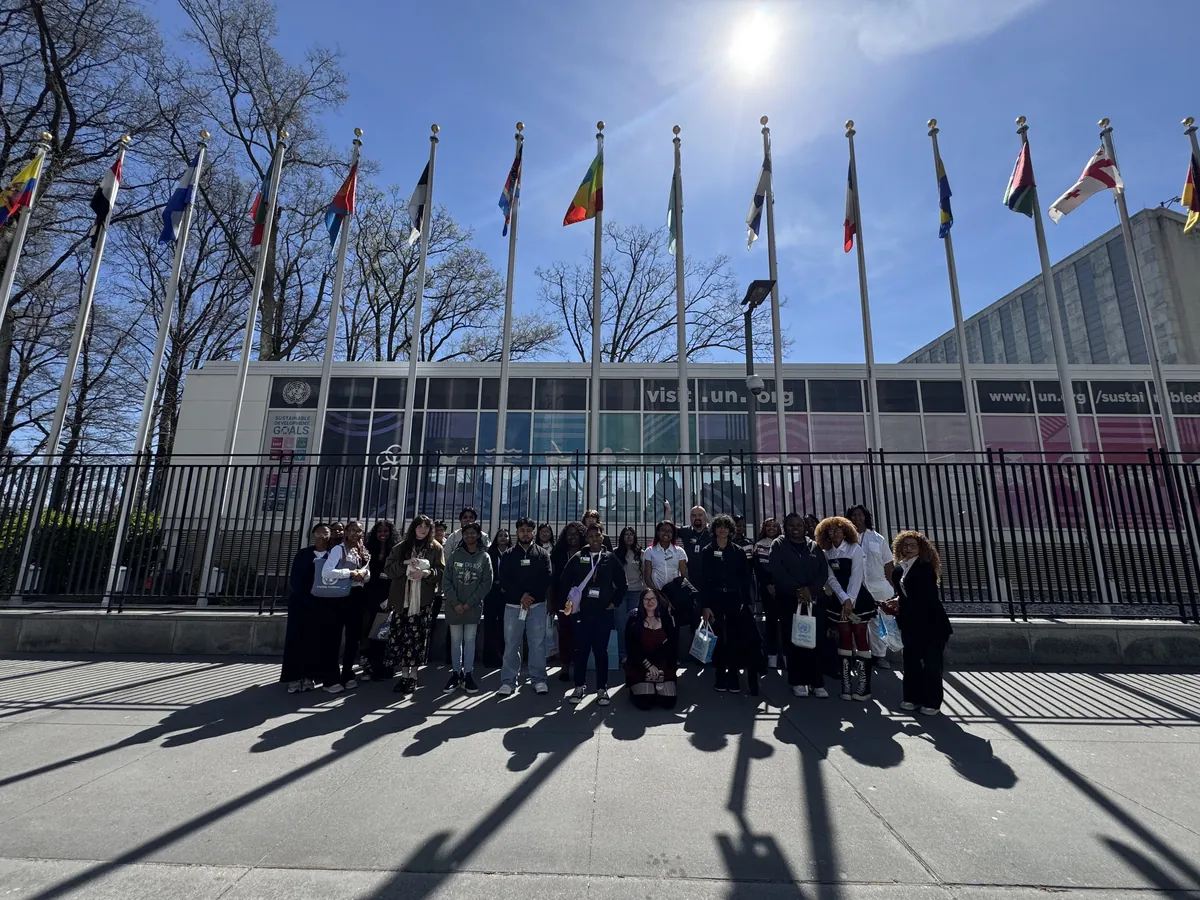
- United Nations visits must be reserved in advance, with identification and security screening requirements for every traveller.
- Broadway group bookings move earliest for the shows students most want to see, and school-group seats are limited.
- Ferry sailings to Liberty Island and Ellis Island fill up during the spring school window, and pedestal and crown access are reserved separately and further ahead.
This is the practical argument for working with an operator who holds these dates as a matter of routine. It is also why the earlier you can name a travel window, the more of the city stays available to you.
What a quote should include
A complete quote states all of the following in writing. If an item is missing, it has not been priced yet — and that is worth knowing before you compare it against anything else.
- Round-trip transportation — plus ground transportation for every day of the itinerary.
- Hotel — with the occupancy it assumes stated explicitly, where it sits, and taxes and fees included.
- A specific count of meals — by meal and by day, rather than “most meals”.
- Every experience named — each attraction, tour and show on the itinerary, listed individually.
- Local transportation — how the group moves around the city on each day.
- A tour director with the group — plus any step-on guides.
- Complimentary chaperone spots — the number at your group size. How many adults you need is its own question, covered in how many chaperones you need for a school trip.
- Gratuities and travel protection — in or out, stated plainly.
- 24/7 support while you travel — and the safety protocols behind it.
- A written list of exclusions — this is where two quotes usually differ.
How to compare two quotes that look nothing alike
Most trip organizers gather two or three quotes and find them impossible to line up. They usually differ in structure rather than in value. Normalize them like this:
- Line up the itineraries first. A shorter quote is often a shorter trip. Match them experience for experience before you look at anything else.
- Reset both to the same room occupancy. This single adjustment explains more differences than any other.
- Count the meals. “Most meals” and “seven meals” are different products.
- Bring gratuities, taxes and local transport inside both so you are comparing a delivered price rather than a starting point.
- Check where the hotel is, not just how it is rated. Commuting time comes out of the itinerary you are paying for.
- Ask what happens if your numbers change. Some quotes are held at a headcount band and re-price below it.
- Confirm who travels with the group. A tour director with your students is not the same as a phone number to call.
Teacher tip: tell your Travel Consultant the per-student figure your families can carry, early. It is far more efficient to build an itinerary toward a number than to build one first and negotiate backward from it.
What Is the Cheapest Way to Take a School Trip to New York City?
The cheapest New York trip travels outside the peak spring weeks, keeps students four to a room, brings a full group, and moves by subway rather than by coach wherever the day allows. Those four choices move a per-student price further than any negotiation will.
If the first number comes back too high
If the first number comes back above what your families can carry, these are the levers that move it, roughly in order of effect:
- Shorten the trip by a night. Usually the single largest adjustment available.
- Put four students to a room rather than two. Standard practice on student trips.
- Move the dates. Shoulder periods price differently for the same itinerary.
- Grow the group. Fixed costs spread across more travelers.
- Refine the itinerary. Trading one experience for another that serves the same curriculum goal often changes the number more than families expect.
- Adjust inclusions. Meal allowances in place of some sit-down meals, for instance.

How to pay for it: fundraising and payment plans
The per-student figure is only half the affordability question. How it is collected matters just as much, and it usually determines whether every student in the grade can travel. Most groups combine:
- Family payment plans — families register online and pay monthly instead of all at once. The single most effective accessibility measure most groups have.
- Fundraising — see our guide to 8 ways schools can raise money for field trips. It works best started at enrollment rather than after the first deadline is missed.
- PTA, booster and alumni support — often the fastest yes.
- Local sponsorships — civic groups and businesses frequently sponsor individual students.
- A quiet scholarship fund — so that cost never decides who travels.
Is New York Worth the Higher Price?
It is a fair question to ask when New York sits at the upper end of the range, and the honest answer is that it depends on what you are teaching — but for a lot of groups, yes.
Few destinations give a class this much range in a single week. New York is a working immigration story, a working financial district, a working theater district and a working seat of international diplomacy, all within a few miles of each other. American history, literature, art, economics, global studies and the performing arts each have a real home here rather than a representation of one — which is why the same city can carry a civics trip, an arts trip and a STEM trip without any of them feeling borrowed.
If your curriculum is squarely civics or American government, Washington, DC costs less and does that job better. If your subject is art, theater, immigration, finance or architecture, nothing substitutes for New York at any price, and the premium buys something Washington cannot.
How this differs by grade
Middle school groups do best with shorter blocks and a clear task at each stop, and New York’s density suits that well — several substantial experiences can sit within a few blocks of each other. High school groups can handle defined independence, a set area and a meeting time, which is where the city really opens up: a class studying finance, theater or art history can spend a genuinely long stretch inside one institution rather than passing through it.
Turning a budget into a real itinerary
The most useful thing you can do with a target number is hand it to someone who builds these trips for a living and ask what it buys. You can request a quote at no cost, and the whole planning conversation is free until you agree to proceed. Trip length, room occupancy, season, group size and the experiences you choose are all adjustable, and moving any one of them moves the number in a way that is easy to model before you present anything to families.
Landmark builds every New York City trip privately around a single group — your dates, your curriculum, your budget — and handles the pieces that eat a teacher’s evenings: motorcoach and flights, student-appropriate hotels with overnight security, meals, museum reservations and their lead times, Broadway group bookings, a tour director on the ground, and an online portal where families register and pay directly. Browse our New York City school trips, compare our NYC student trip, check our accreditations and certifications, or read what other teachers have said on our testimonials page.
Planning the rest of the trip? Start with the top attractions for school trips, unique things to see on a NYC school trip, and how to plan a safe and educational school trip to NYC.