
Student trips are expensive because almost everything in the price is a logistics cost, not an admission cost. A motorcoach and a licensed driver, a hotel block, meals, a Tour Director who travels with the group the whole time, and the insurance and staffing behind all of it. On most domestic trips the sites students actually come to see are free.
That is the part that surprises families, and it is why the honest answer to “why are school trips so expensive?” is rarely the one people expect.
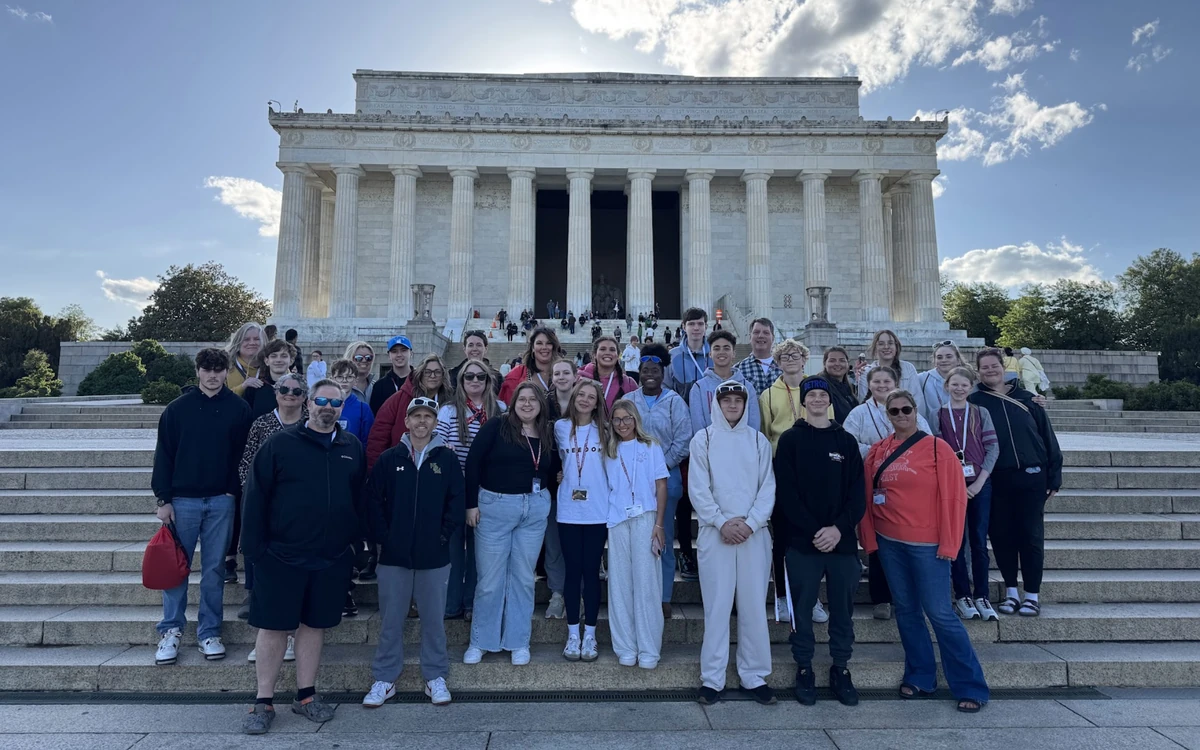
A class trip to Washington is not expensive because the Lincoln Memorial charges money. It does not. It is expensive because moving forty teenagers several hundred miles, housing them safely, feeding them and supervising them around the clock for four days costs what it costs.
The short version, before the detail:
- Transportation is usually the largest single line. The coach and driver are billed by the day whether thirty students travel or fifty.
- Lodging is second, and every extra night compounds it.
- Admission is often the smallest line, because in Washington and many other destinations the major sites are free.
- Fixed costs are why small groups pay more per student. One coach and one Tour Director divided by 25 students costs far more per head than the same two things divided by 50.
- Trip length moves the price more than destination does. Each night adds a room, a day of meals, and another day of driver and Tour Director time. A three-day field trip and a six-day one are different products.
- Peak season costs more because every school in the country travels in the same few spring weeks.
Below is where each dollar actually goes, what is not in the price, which levers genuinely lower it, and how to explain the number to parents. You can request a quote at no cost before committing to anything.
What a Student Trip Costs at a Glance
| Item | Detail |
|---|---|
| Typical cost | $300 to $400+ per traveler per day depending on package inclusions, or about $1,200 to $3,500+ in total for an all-inclusive domestic trip |
| Largest cost line | Transportation, on nearly every domestic itinerary |
| Smallest cost line | Admissions, in destinations where the major sites are free |
| Deposit | $150 per traveler on any trip involving airfare; $50 on land transportation |
| Cost to get a quote | Nothing. Planning and quoting are free until you decide to proceed |
| Group minimum | Most vendors treat ten travelers as the threshold to qualify as a group |
| Default rooming | Students in quads, adult chaperones in singles — the single biggest lever on lodging cost |
| Booking lead time | Six to twelve months domestically; twelve months or more for anything requiring passports |
If you want the figure for a specific trip length rather than the general range, we have broken out what a 3-day trip costs and what a 4-day trip costs separately.
Where the Money Actually Goes
Here is the per-student price broken into its parts, drawn from what a complete school trip package covers, with the detail that matters most: whether each line is a fixed cost for the whole group or a cost that scales with each traveler. That distinction explains nearly every confusing thing about student trip pricing.
| Cost line | What it buys | How it scales |
|---|---|---|
| Motorcoach and driver | A coach and a licensed driver dedicated to your group, for travel to the destination and every mile inside it | Fixed per day. Costs the same for 30 students as for 50 |
| Hotel | Student-appropriate accommodation for every night, with occupancy stated in the quote | Per room, per night. Four students to a room rather than two roughly halves it |
| Meals | The meals named in the itinerary, by meal and by day | Per student, per day |
| Admissions | Entry to every paid stop on the itinerary, pre-booked | Per student. Often the smallest line on a domestic trip |
| Tour Director | A professional Tour Director traveling with your group for the whole trip, assigned to your group alone, because Landmark runs private group tours only | Fixed per day. Divides across the group |
| Student gear | A string bag, a reusable water bottle and a safety bracelet for every student | Per student, one time |
| Planning and operations | Itinerary design, vendor contracting, rooming lists, the payment portal, and round-the-clock support during the trip | Fixed. Spread across the group |
Read that last column again, because it is the answer to most pricing complaints. Three of those seven lines do not care how many students travel. The coach costs the same, the driver costs the same, and the Tour Director costs the same whether the group is 25 or 50. The same structure holds at independent and parochial schools, where groups are often smaller.
Why Smaller Groups Pay More Per Student
This is the single most counterintuitive thing about student travel pricing, and the thing most worth understanding before you compare two quotes.
A motorcoach holds roughly 50 passengers and is billed by the day. If 25 students travel, the whole coach is still chartered — the group simply pays for empty seats. Move to 50 students and the same bus cost divides across twice as many people.
The same is true of the Tour Director, and of the planning work behind the trip. A 25-student group and a 50-student group need almost identical itinerary design, vendor contracting and rooming coordination.
The practical consequence: recruiting ten more students usually lowers the price for everyone already signed up. That is worth saying out loud at the parent meeting, because it reframes recruiting from a favor to the school into something that directly benefits every family in the room.
What You Are Not Paying For: Admission
In the destination most American schools visit, the headline sites charge nothing. The National Park Service states plainly that there are no fees to enter National Mall and Memorial Parks and most of its hundreds of sites. The Lincoln Memorial, the Vietnam Veterans Memorial, the Korean War Veterans Memorial, the World War II Memorial and the Martin Luther King, Jr. Memorial are all free. So are the Smithsonian museums.
Two sites on the Mall are the exception and need timed entry tickets: the Washington Monument and Ford's Theatre.
So when a family asks what the money is going toward on a Washington, D.C. trip, the honest answer is almost never "tickets." It is the bus, the hotel, the meals, and the adult who is awake and responsible at two in the morning. Our Washington, D.C. trip cost breakdown goes further on that specific city.
This also explains why a New York trip costs more than a Washington trip of the same length. In New York the signature experiences charge, hotel rates are the highest of any US school trip destination, and a Broadway show is a significant line of its own. The New York City cost breakdown has that comparison.
Why Have School Trips Gotten More Expensive?
Teachers who ran the same field trip five years ago are often the ones asking this, and the answer follows directly from the table above: the lines that rose hardest are the lines that dominate the price.
Fuel and driver pay. Motorcoach pricing tracks both, and both have moved. Coach operators also compete for a limited pool of licensed commercial drivers, which puts a floor under what a charter can cost.
Hotel rates. Lodging is the second largest line, and the hotels willing to take student groups are a smaller pool than the general market. When room rates rise, a trip with three nights absorbs that three times over.
Food and staffing. Restaurant pricing and the cost of employing Tour Directors and drivers have both climbed.
Insurance. Commercial liability coverage for transporting minors has not gotten cheaper.
Admissions are the one line that has barely moved — because in the destinations most schools visit, the major sites were free then and are free now. The trip costs more than it did, but not because the museums started charging.
Why It Costs More Than a Family Vacation
Parents often benchmark the trip against what they would spend taking one child to the same city. The comparison feels fair and is not, for four reasons.
Supervision is a staffed service, not a favor. A family vacation has no one on duty overnight. A student trip has a Tour Director, chaperones, and a documented safety protocol for what happens when a student is sick, lost, or awake at 3am.
Everything is pre-booked and guaranteed. A family can decide at breakfast what to do. A group of forty cannot.
Every entry, meal and coach movement is contracted in advance. That costs more than improvising, and it is the only way a group of that size sees anything at all.
Group rates are not always lower rates. Hotels that accept student groups are a smaller pool, often require deposits far earlier, and price accordingly.
The trip carries commercial insurance and vetted vendors. Coaches, hotels and activity providers are contracted under standards a family booking online never has to think about, and the itinerary itself is built to your group rather than sold off a shelf.

Could You Organize It Cheaper Yourself?
Sometimes, and it is worth being honest about when.
A short field trip to a city two hours away, with one hotel, no attraction bookings and parents driving, can genuinely be done for less by a teacher willing to do the work. Plenty of schools run exactly that trip and should keep running it, and a close-to-home destination is often the right answer for a first field trip.
Where self-organizing stops saving money is at distance, overnight stays and group size. Once a trip needs a chartered coach, a block of hotel rooms, contracted meals and timed entries for forty people, a teacher is doing a logistics job on top of a teaching job.
And doing it without the vendor relationships, the liability coverage or anyone to call when something goes wrong at midnight 400 miles from home. On an international class trip that gap widens considerably.
The real comparison is not price against price. It is price against price plus roughly a hundred hours of unpaid teacher time plus the risk sitting on one person's shoulders.
What Is Not Included in the Price
A price is only meaningful alongside what it excludes. Anything missing from a package list is not free — it simply has not been priced yet.
| Item | Detail |
|---|---|
| Gratuities | Tips for your Tour Director and for any step-on guides are not included. Travelers budget for these separately |
| Travel protection | Optional coverage underwritten by battleface, purchased separately rather than built into the trip price |
| Airfare on international trips | Quoted separately for your departure city, dates and group size |
| Spending money | Souvenirs, snacks and any meals the itinerary leaves on their own |
| Passports | On international trips, each traveler's own passport cost |
| Room upgrades | Fewer students per room than the quoted occupancy |
When you compare two quotes, compare these lists before you compare the headline numbers. A lower price with four of these excluded is not a lower price. Our full guide to what a school trip package includes sets out what a complete package should cover.
What Actually Lowers the Price
Most of what people try first — negotiating the quote — moves the number least. These are the levers that genuinely work, in rough order of impact.
| Lever | Impact | What to do |
|---|---|---|
| Trip length | Large | Each night removed takes out a room, a day of meals, and a day of coach and Tour Director time |
| Group size | Large | Recruit more students. Fixed costs divide further and everyone's price falls |
| Room occupancy | Large | Four students per room rather than two or three |
| Time of year | Moderate to large | Travel in fall rather than peak spring, when every school in the country is traveling |
| Distance | Moderate to large | A closer destination cuts the largest line. Beyond driving range it becomes airfare |
| Itinerary mix | Moderate | Build around the free civic sites and choose paid attractions for curriculum fit, not volume |
| Booking early | Moderate | Protects both price and availability, and gives families more months to pay |
| Negotiating | Small | The quote reflects real contracted costs. The levers above move it far more |
Booking early is the one schools most often underrate. It protects the price, and it widens the window families have to pay — which matters more to most households than the total does. We have written separately on why booking early makes school travel easier and how far in advance to book.
One lever worth checking before you set the price: your chaperone count. Adult places affect both the rooming math and the per-student number, so settle it early rather than late. See how many chaperones you need.
How to Explain the Price to Parents
If you are the teacher explaining the value of the trip at a parent meeting, these are the four points that land. The goal is not to defend the total — it is to show what the money buys.
Name the largest line. "Most of this is the bus and the hotel" is more convincing than a defense of the total, and it is true.
Say what is free. Parents assume they are paying for admission. Telling them the memorials and the Smithsonians cost nothing reframes the whole conversation.
Explain the group-size effect. More students signed up means a lower price for everyone. This turns recruiting into a shared interest.
Lead with the payment plan, not the total. Families respond to the monthly figure. A $1,500 trip committed twelve months out is a very different conversation from $1,500 due now.

How Families Actually Pay
The total is rarely the real obstacle. The timeline is.
Each family pays individually through their own portal account, so the teacher never collects cash or checks. The deposit is $50 per traveler on land trips and $150 where airfare is involved, and it is part of the trip cost rather than a charge on top of it. The balance is then spread across the months between commitment and final payment.
Landmark processes cards through Stripe, and organizers can opt to pay by school check instead. Affirm is available as a financing option for families who want to spread payments further. Our full explanation of how school trip payment plans work runs through all three routes with worked numbers.
Making a trip affordable is usually a combination of levers rather than one. Most schools pair a payment plan with fundraising, and many set aside a quiet mechanism — a district fund, a PTO line, an anonymous sponsorship — so that no student is excluded by cost. Our eight ways schools raise money for field trips covers the methods that raise the most per hour of effort.
What If a Family Cannot Afford It?
This is the question families ask last and worry about first, and it deserves a straight answer: there is usually something, and it almost never comes from the tour operator.
Assistance on school trips is generally arranged at the school — a district activity fund, a PTO or booster line, a community or alumni sponsorship, a travel scholarship, or a discreet arrangement a principal can make. The people who know what exists are the trip organizer and the front office.
Two practical points. Ask early, because these funds are finite and are usually allocated in order. And ask the organizer privately rather than raising it publicly — most schools handle it discreetly and would far rather be asked than have a student quietly not sign up.
Fundraising is the other half of the answer, and it runs on calendar rather than effort: a group that commits twelve months out has two selling seasons, while a group that commits in February has one push. Our guide to payment plans and financial assistance goes further on both.
Is It Worth It?
That is a judgment, not a calculation, and it is fair to ask.
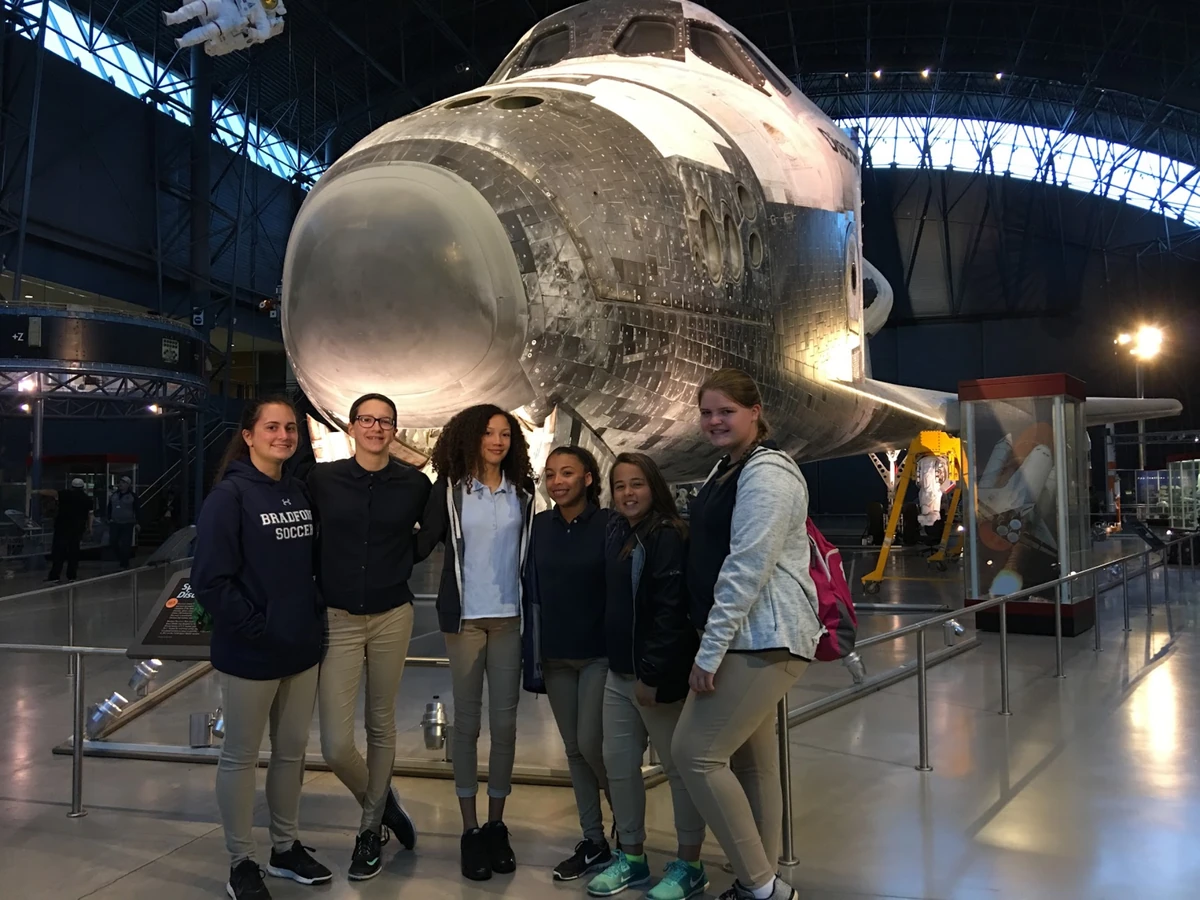
What a trip buys that a classroom cannot is scale and consequence. Standing at the base of the Lincoln Memorial, or seeing a space shuttle close enough to count the heat tiles, does something to a fourteen-year-old's sense of what is real that a photograph on a projector does not.
For many students it is also the first time away from home without a parent, the first time managing their own schedule and money, and the first time they are responsible to a group. Those are the things graduates mention years later, far more often than the sites.
None of that makes the price smaller. It does mean the question is whether the trip is worth what it costs, rather than whether it costs too much — and those are different questions with different answers.
Getting a Real Number for Your Group
Everything above is the general shape. The only number that matters is the one for your school's origin, dates, group size and itinerary.
Planning and quoting cost nothing, and nothing is held until you say so. A Landmark Travel Consultant will build an itinerary around your curriculum and budget and price it line by line, so you can see exactly which of the components above is driving your number.
If the quote comes back higher than your families can afford, say so — trip length, group size and season are all adjustable, and adjusting them is a normal part of the process rather than a failed quote.
If you have not started, how to start planning a student trip is the step before pricing one, and what a school trip costs has the fuller cost picture.