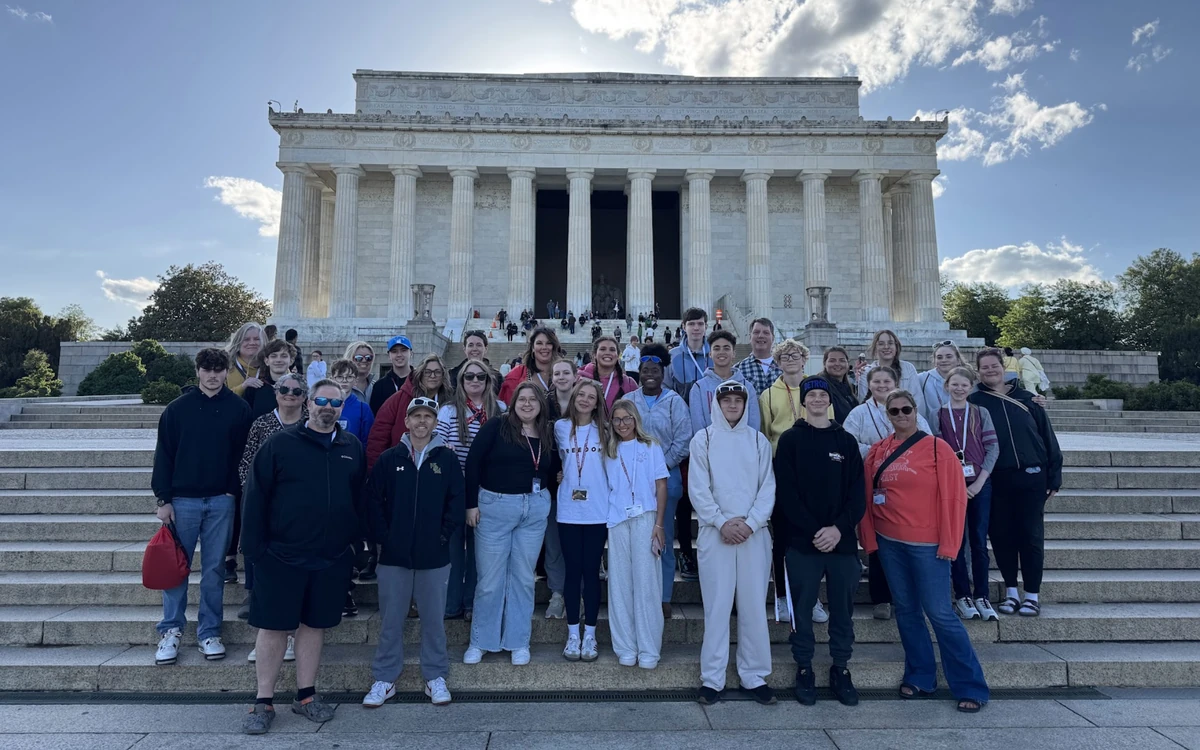
To start planning a student trip, do five things in this order: write down what you want students to take away from it, shortlist two or three destinations that serve that goal, get a realistic per-student cost, put a short written proposal in front of your administrator, and request a quote from a student travel company before you promise anything to families. Those five steps take an afternoon of work, and they turn a vague idea into something a principal can actually approve.
Most first-time organizers do it in the opposite order. They fall for a destination, mention it to a class, and then find out that the dates collide with state testing, that the price is higher than families were picturing, or that the district wanted paperwork nobody knew existed. Nothing about that is a failure of effort. It is a failure of sequence — and the sequence is the easy part to fix.
Two numbers shape almost every decision that follows, so it helps to have them from the first day. Budget roughly $300 to $400+ per traveler per day for a fully inclusive trip, and start the process nine to twelve months before departure. Everything below explains where those numbers come from and what you do in between.
What follows is how experienced organizers actually work — what each step requires, what it does not, and what happens after you commit. Landmark Educational Tours has been building custom student trips for more than twenty years, and a good part of our job is walking a teacher through their very first one.

The Five Steps to Start Planning a Student Trip
- Name the learning goal. Two or three sentences you could read aloud to a parent.
- Shortlist two or three destinations that serve that goal, rather than committing to one.
- Get a realistic cost range per student, including what is and is not in it.
- Write the proposal your administrator needs in order to say yes.
- Request a quote — before you announce anything to students or families.
Everything after that — itinerary, hotels, motorcoaches, admission tickets, rooming lists — is work somebody else can do for you. The five steps above are the part only you can do, because only you know your students.
Step 1: Decide What Students Should Get Out of It
Start with the takeaway, not the place. The question to answer first is simple: what should a student be able to say, think, or understand at the end of this trip that they could not at the beginning?
The answer changes everything downstream. If it is how a bill becomes a law and who the government answers to, you are looking at Washington, DC, and your itinerary needs the Capitol and a congressional office, not just monuments. If it is what the founding arguments actually said, Philadelphia does that better than anywhere. If it is what it felt like to arrive in America with nothing, you want New York and Ellis Island. If it is biodiversity you cannot demonstrate in a classroom, you are talking about a longer trip abroad.
Write it in two or three sentences. Not a paragraph of educational language — sentences you could say out loud at a parent night without notes. That short statement becomes the opening line of your proposal, the answer to every “why are we spending money on this” question, and the filter you use when an itinerary gets too full.
It is also the part that makes the difference between a trip students remember for a month and one they remember for good. There is real research on why field trips affect learning the way they do, and the common thread is that the strongest outcomes come from trips with a clear purpose behind them.
Step 2: Shortlist Two or Three Destinations — Not One
This is the single most useful habit a new organizer can build. Do not walk into your administrator's office with one destination. Walk in with two or three that all serve the same learning goal.
Three reasons. First, an administrator who is handed a choice is being asked to pick, not to approve or reject — a very different conversation. Second, if one destination turns out to be over budget or unavailable on your dates, you do not go back to the beginning. Third, comparing options is how you discover what you actually care about; organizers routinely change their minds once they see two itineraries side by side.
For a first trip, the domestic classics earn their reputation: Washington, DC, for civics and American history; Philadelphia for the founding era, and compact enough that a single day with a class genuinely works; New York City for immigration, art, and finance; Boston for the Revolution. If you are looking further ahead, our roundup of the best destinations for spring 2027 student trips lays out what each one does well, and the full destinations list covers what we run beyond the usual four.
One practical filter while you shortlist: check your school calendar before you check anything else. State testing windows, AP exams, graduation, prom, and the spring sports schedule eliminate more candidate weeks than budget ever does.
Step 3: Get a Real Number Before You Say Anything to Families
The fastest way to lose a trip is to float a number early, guess low, and have to correct it later. Families forgive a high price. They do not forgive a moving one.
For planning purposes, fully inclusive Landmark trips generally run about $300 to $400+ per traveler per day, which works out to roughly $1,200 to $3,500+ in total depending on the destination, the length of the trip, and what you choose to include. Airfare, when a trip needs it, is quoted separately as a variable cost, because it moves with the calendar in a way ground costs do not.
Those are ranges, not quotes. The spread is wide because it is genuinely driven by choices you have not made yet: how many nights, how close to the sites the hotel sits, how many attractions, how many meals, whether you fly or take a motorcoach. A three-day drive-in trip and a five-day flight itinerary are different products.
If you want to see how a number gets built rather than just quoted, we have broken it down destination by destination: what a school trip to Washington, DC costs, what a school trip to NYC costs, and what private schools typically budget per student. For the general version, start with how much a school trip costs.
Two things belong in your number from the very start, because they are the ones that surprise people later. Gratuities for your Tour Director and any step-on guides are not included in the trip price and should be budgeted separately. And chaperone costs have to land somewhere — either spread across student pricing or covered by fundraising. Decide which, in writing, before anyone asks.
Three more line items get missed often enough to name them. On an overnight trip, chaperone rooms and, on some itineraries, motorcoach driver accommodation have to be paid for by somebody — decide who before you publish a price. A small contingency, even a few percent, absorbs the parking fee, the replacement ticket, and the meal that ran long. And travel protection is worth pricing in rather than treating as an upsell you decide about later.
Then settle the hardest question early, in writing: what a family who cannot pay the full amount can do. Administrators weigh equity of access seriously, and “we will figure it out” is not an answer that survives a board question. A quiet scholarship line funded by group fundraising, a longer payment schedule, or a confidential hardship process all work. Having chosen one before you announce the trip is what keeps a student from opting out silently.
On that last point: fundraising is normal, not a sign of a trip that is too expensive. There are eight approaches schools use to raise money for field trips that we see work repeatedly, and starting them early is worth more than picking the clever one.
Step 4: Write the Proposal Your Administrator Needs
Approval is where most first trips stall, and almost always for the same reason: the request arrives as a conversation instead of a document. Administrators are not weighing whether the trip sounds nice. They are weighing supervision, liability, instructional days lost, and equity of access. Answer those four before they are asked and the meeting gets very short.
A proposal that tends to clear on the first pass includes:
- The learning goal from Step 1, tied to specific standards or courses.
- Proposed dates, with the school calendar conflicts already checked, plus a backup window.
- A draft itinerary — day by day, not hour by hour.
- Transportation: how the group travels there and how it moves once it arrives.
- Chaperone count and ratio, with named adults if you have them.
- The supervision plan for evenings and overnight hours, which is the part administrators read twice.
- Emergency procedures and who is reachable, at what number, at 2 a.m.
- Cost per student, the payment schedule, and what a family who cannot pay in full can do.
- A parent communication timeline, so nobody is surprised by a deadline.
- Accessibility: how a student with a mobility, medical, or dietary need travels with the group rather than around it.
Chaperone ratios deserve a specific number rather than a promise to figure it out. What a district expects varies widely by grade level and by whether the trip is overnight, so the only reliable source is your own district's current policy — ask for it in writing rather than relying on what was true a few years ago. As an illustration of the kind of detail these documents contain, the Howard County Public School System field trip implementation procedures in Maryland, effective October 12, 2023, set out a three-step approval chain, a minimum submission window measured in calendar days ahead of distributing permission forms, and separate overnight ratios for middle and high school. Your district's numbers will differ. The point is that requirements like these exist, they are written down, and finding yours early costs you one email.
If you want a starting point for the ratio conversation, we walk through how organizers actually land on a number in how many chaperones you need for a school trip.
Step 5: Request a Quote Before You Promise Anything
A common worry among first-time organizers is that asking for a quote commits them to something. It does not. At Landmark, the entire planning conversation — the questions, the custom itinerary, the written quote — is free until you agree to proceed with a trip. You can request a quote, take it to your administrator, sit on it, compare it against another company's, or walk away from it entirely.
What a Travel Consultant needs from you to start is short: your dates or a rough travel window, the destination or destinations you are considering, and a passenger breakdown — how many students, how many adults. If you have never organized a trip before, say so. Our consultants will bring itinerary suggestions rather than waiting for you to produce one.
Two details worth knowing before you ask. Landmark runs private group tours only, which means your group is not merged with another school's; your itinerary is yours and your Tour Director is assigned exclusively to your group for the whole trip. And most travel vendors treat ten travelers as the threshold for group rates, so very small groups are possible but price differently.
On timing: we prefer to have a trip booked at least sixty days before departure, and that is a floor, not a target. The comfortable window for a spring trip is nine to twelve months out, which is when hotel availability, motorcoach supply, and attraction timed entries are all still open. When to book a spring 2027 trip goes through the countdown month by month.
If you are comparing companies rather than starting with one, how to choose a reliable student travel agency covers what to verify before you sign anything, and what makes a strong tour company for a DC trip applies the same test to a single destination.
What Changes by Grade Level
The five steps are the same for every age group. What the trip looks like underneath them is not, and this is the part most planning guides skip entirely. What follows is what we see across the groups we run, not a rule anyone imposes — your own school's expectations come first.
Elementary
Usually a single day, sometimes one night. Adult coverage runs heaviest here, and parent chaperones are the norm rather than the exception. Plan the day around meals and bathrooms honestly rather than optimistically, keep the walking distances short, and accept two substantial stops instead of four. Parents often want to attend, which is a resource and a logistics problem at the same time — decide early whether chaperones travel with the group or meet it.
Middle school
This is the classic overnight trip, and for most students it is the first time sleeping away from home without family. Two to four nights is the common shape, and Washington, DC, Philadelphia, Boston, and New York carry most of it. Your planning energy goes into rooming and evenings, not daytime; the days largely run themselves. Expect homesickness, expect one lost phone, and brief chaperones on both before you leave.
High school
Longer, further, and more likely to involve flying. Students can handle structured independence — a defined block in a museum, meeting at a fixed point — which changes what a day can hold. Two things get harder, though. The calendar is more crowded, with AP exams, athletics, and college visits all competing for the same weeks. And cost sensitivity is often higher, not lower, because families are already carrying college expenses. Start earlier and open payments earlier than you would for a middle school group.
What Happens After You Say Yes
This is the part nobody explains, and the part that makes new organizers nervous. Here is the actual sequence at Landmark.
Once you commit, your Travel Consultant sends a personalized trip agreement confirming the terms, conditions, and payment schedule. After that is signed, your group gets registration instructions for the Landmark portal, where travelers create accounts and pay individually — through the portal's payment processor, or by school check if the organizer prefers to handle it centrally. Families can log in and see where they stand at any time, which removes a remarkable amount of chasing from your life.
Hotel availability is confirmed at the time of group deposit, not before. Closer to departure, we ask you for a rooming list, and you decide who rooms with whom — by default students are placed in quads and teachers, parents, and other adult chaperones in singles, though that is adjustable to your budget. We keep groups on the same floor or wing wherever the property allows it.
What arrives in between is everything you did not want to build yourself: the finalized day-by-day itinerary, transportation, admissions, meals, and the Landmark items your students get on arrival. What is included in a school trip package lists it in full, and the FAQ answers the specific questions organizers ask us most.
A Planning Timeline, Counting Backward From Departure
Start nine to twelve months before departure for most trips, and twelve to eighteen months for a spring trip to a popular destination. The full sequence is below, given in months before departure rather than calendar dates, so it holds whenever you are reading it.
12 or more months out
Name the learning goal. Shortlist destinations. Check the school calendar for conflicts. Have an informal conversation with your administrator so the formal proposal is not the first they hear of it. This is also the most comfortable place to be for a peak-season spring trip.
9 to 12 months out
Request quotes. Submit the written proposal. Get approval in writing. Set the price per student and the payment schedule. Start fundraising if you are doing it — early beats clever.
6 to 9 months out
Announce to families. Hold a parent information night. Open registration and collect deposits. Recruit and confirm chaperones by name. Book the trip — this is where hotel and motorcoach availability is still genuinely open.
3 to 6 months out
Work through interim payments. Collect medical forms, dietary needs, and accessibility accommodations. Finalize the itinerary. Confirm which adults are traveling and what each one is responsible for.
60 to 90 days out
Final payments. Rooming list. Confirm any documentation the trip requires. Brief your chaperones properly — groups, counting procedure, meeting points, and who calls whom if something goes wrong.
The final two weeks
Send the packing list and the day-by-day schedule to families. Distribute emergency contact information. Run a student expectations meeting. At this stage your job is communication, not logistics, because the logistics are already handled.
What First-Time Organizers Get Wrong
Five patterns, in rough order of how much they cost.
Announcing before approving. Once students know, the trip is emotionally real to them, and an administrator saying no becomes a much worse day. Approval first, always.
Waiting to see if there is enough interest. Interest follows a concrete plan; it rarely precedes one. Families commit to a date, a price, and an itinerary — not to an idea that might happen.
Overfilling the itinerary. A day with six stops produces a group that saw nothing. Three or four substantial stops, with actual time inside each, is what students remember. Build in buffer; traffic and bathroom lines are not optional.
Underestimating evenings. The days largely run themselves. Evenings and overnight hours are where supervision plans get tested, and they are the part administrators scrutinize hardest.
Carrying it alone. A co-organizer is not a luxury. If you get sick, or your own life happens, somebody else needs to know the passwords, the payment status, and the plan. Seven mistakes to avoid when planning a trip for students covers the rest.
What You Do Not Have to Figure Out Yourself
It is worth being clear about the division of labor, because new organizers routinely assume they are responsible for far more than they are.
You decide the goal, the destination, the dates, the group, and the budget. Landmark handles the itinerary, the transportation, the hotel with overnight security, the attraction bookings and timed entries, the meals, and the vendor relationships. A Landmark Tour Director travels with your group for the entire trip — an employee of ours, background-checked, not a contractor hired locally for the week. Support is available 24/7 while you are on the road, and optional travel protection underwritten by battleface Insurance Services can be added by each traveler — student travel protection plans explains how that works.
We are employee-owned, more than twenty years in, with former classroom teachers on staff and travel specialists based across the country. We hold SYTA membership #13443, ABA #84360, IATA 22576046, and California Seller of Travel registration CST 2168995-50, and we are an approved vendor with districts including New York City, Boston, Miami-Dade, Broward, Newark, and Oakland. Those numbers exist so you can verify them rather than take our word for it — the full list is on our accreditations and certifications page, and travel safety and support explains what happens if something goes wrong.
Your First Three Moves This Week
If you do nothing else after reading this:
- Write the two-sentence learning goal. Twenty minutes. Everything else depends on it.
- Pull up your school calendar and mark the weeks that are genuinely available. You will have fewer than you expect.
- Ask for a quote on two destinations. It costs nothing, commits you to nothing, and gives you the numbers your administrator is going to ask for anyway.
That is the whole start. The trip gets built from there, and you will not be building it alone.
If you are wondering whether the timing really matters, why booking early can make school travel easier sets out what it changes. If you are weighing how much of the trip you get to shape, student tour companies that customize itineraries covers what is actually adjustable. If step five has you comparing providers, alternatives to WorldStrides for school trips sets out the ten questions worth asking every company you approach.