The best STEM trip is the one that matches what your students are actually studying. For most middle school groups that means Washington, D.C.; for high school groups it more often means Orlando and the Kennedy Space Center, Chicago, or Costa Rica. The question is not which destination is most impressive — it is which one turns a unit you have already taught into something students can stand inside.
That distinction matters because a STEM trip is easy to get wrong in a specific way. A group can spend three days walking through excellent science museums and come home having learned very little, because nothing on the itinerary connected to anything in the syllabus. The destinations below are ordered by what they do well rather than by how famous they are.
Fully inclusive Landmark trips run about $300 to $400+ per student per day, or roughly $1,200 to $3,500+ per student depending on length and inclusions, with airfare quoted separately as a variable cost. If you have not started planning, how to start planning a student trip comes first, and you can request a quote at no cost.
Best STEM Trips at a Glance
| Item | Detail |
|---|---|
| Best all-round STEM destination | Washington, D.C. |
| Best for space and aerospace | Orlando, for the Kennedy Space Center |
| Best for ecology and field science | Costa Rica |
| Best for engineering and industry | Chicago |
| Typical trip length | Three to five days domestically; longer for Costa Rica |
| Typical cost | $300 to $400+ per student per day, fully inclusive |
| Airfare | Quoted separately; the largest variable for any destination you cannot drive to |
| What decides the answer | Your curriculum, not the destination’s reputation |
The Best STEM Destinations Compared
This is the chart to work from. Read the subject column first and the destination column second.
| Destination | Subjects it serves best | What students actually do | Grade fit |
|---|---|---|---|
| Washington, D.C. | Earth science, evolution, aerospace, astronomy, satellite engineering | Air and Space, Natural History’s Deep Time and ocean halls, and a program with NASA staff at Goddard Space Flight Center | Middle and high school |
| Orlando | Space science, physics, aerospace engineering | Kennedy Space Center: launch hardware, astronaut encounters, and the working side of a space program | Strong for both; the single best space trip in the country |
| Costa Rica | Biology, ecology, conservation, environmental science | Field science in cloud forest and rainforest — biodiversity studied where it lives rather than in a case | High school, and mature middle school groups |
| Chicago | Engineering, physics, industry, astronomy, marine biology | A dense cluster of science museums, a planetarium and an aquarium within a short radius | Middle school especially; a lot per day with little travel |
| New York City | Natural history, astrophysics, urban engineering | Major natural history and space collections alongside the engineering of the city itself | High school, where independence buys depth |
| Seattle | Aviation, technology, marine science | Aviation collections and Pacific Northwest marine and environmental science | Middle and high school |
Airfare is the variable that reorders this list. Washington and Chicago are drivable for a large share of US schools; Orlando, Seattle and Costa Rica generally are not. A destination you can reach by motorcoach spends more of the budget on the trip and less on getting there.
Washington, D.C. — the Best All-Round STEM Trip
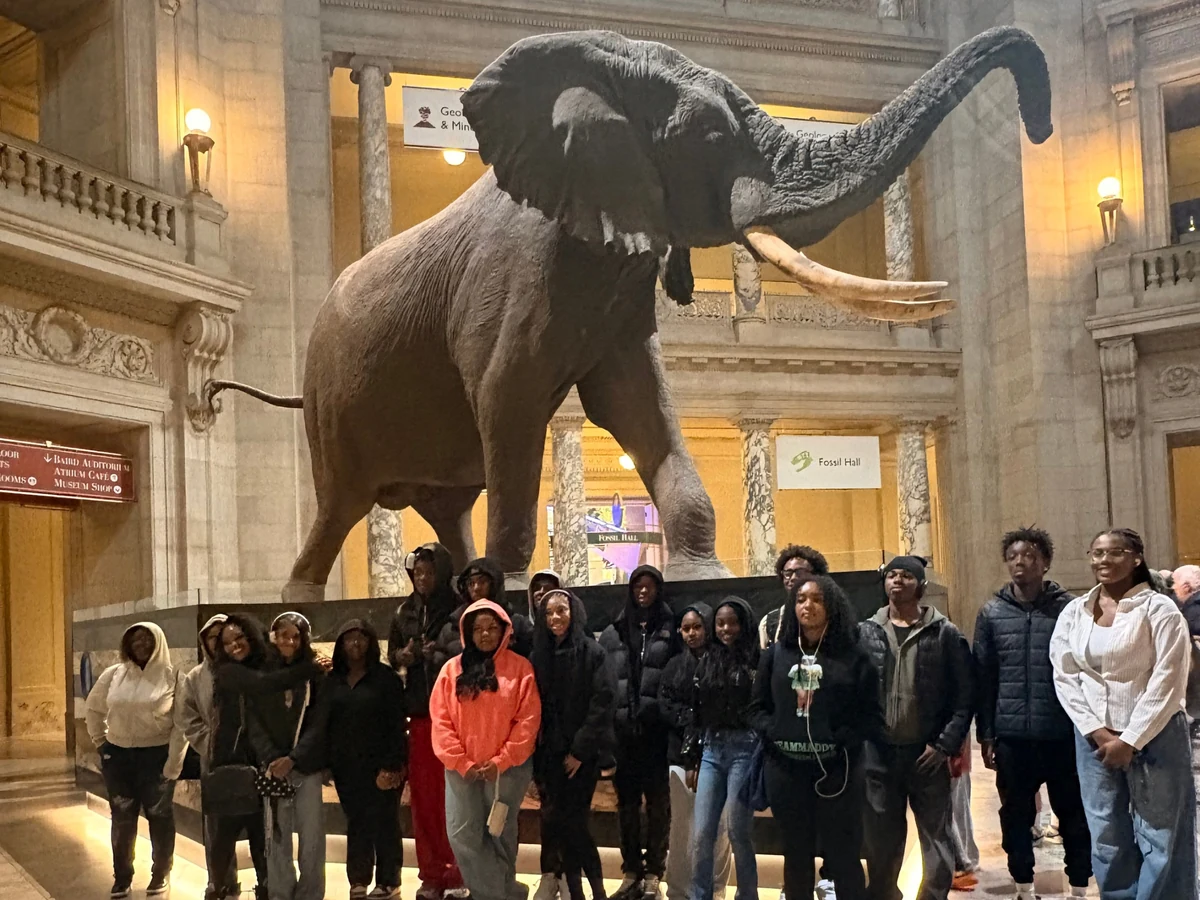
Washington earns first place for an unglamorous reason: breadth at no admission cost. The Smithsonian museums are free to enter, which means a STEM itinerary can be substantial without the admissions budget that would be required anywhere else.
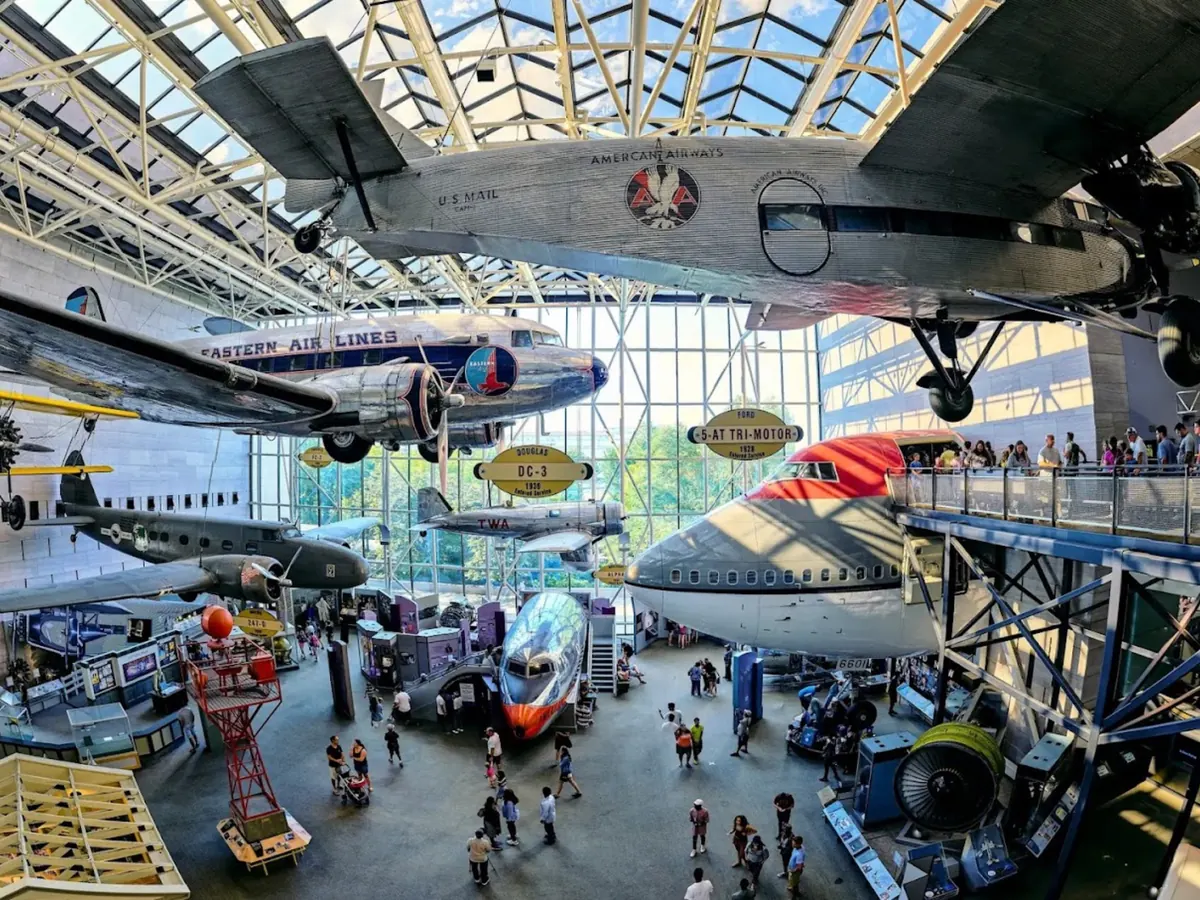
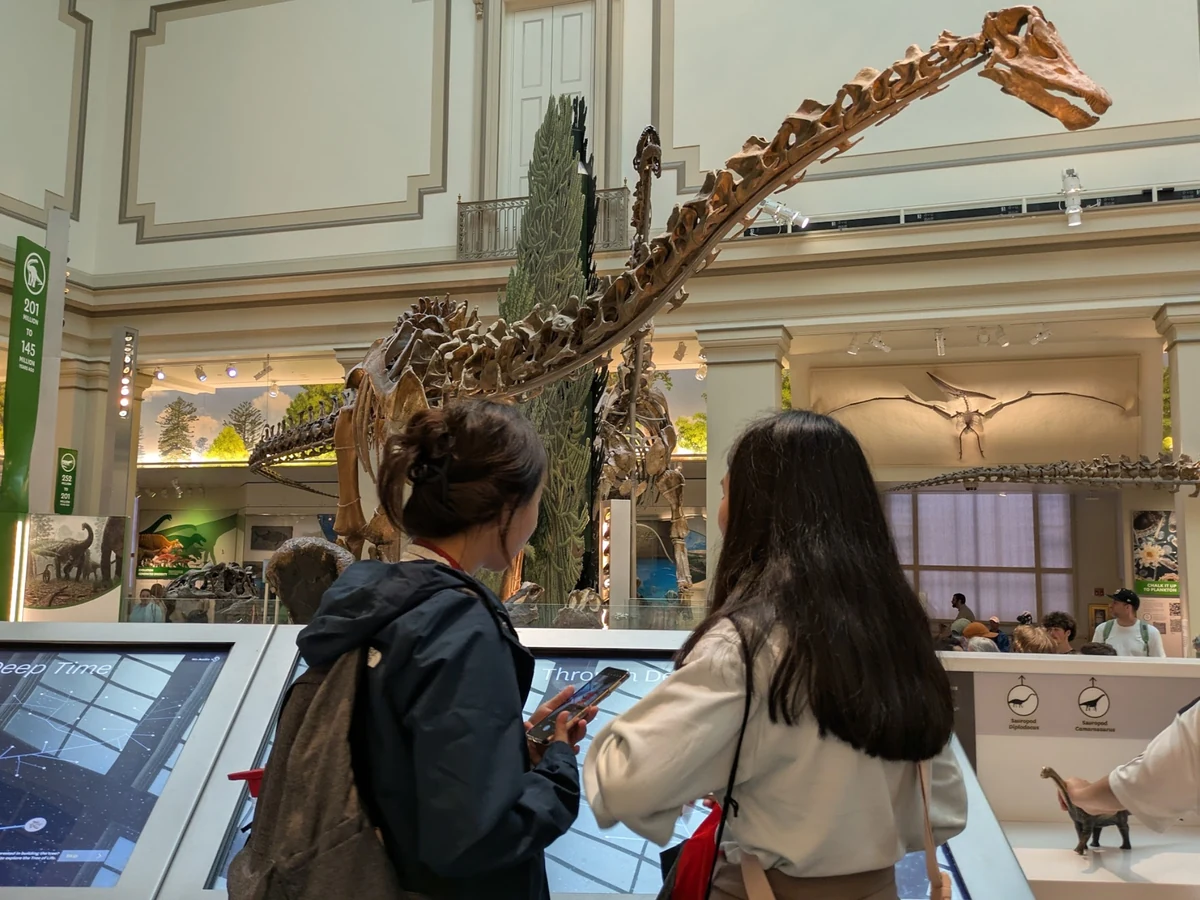
Air and Space covers the physics of flight, rocketry and planetary science in one building, with the Wright brothers’ Flyer and the Apollo 11 command module sixty-six years and one room apart. Natural History handles earth science, evolution, oceanography and geology. And unlike most destinations, Washington has a working federal science facility that opens its doors to school groups — NASA’s Goddard Space Flight Center, where the Hubble and James Webb telescopes are run from.
That last part is what separates a science trip from a museum trip. We lay the whole thing out hour by hour in what a 3-day STEM trip to D.C. looks like, with more options in STEM Washington, DC school trip ideas and the full program on our STEM Washington, DC school trip page.
Orlando — the Best Space Trip in the Country
If your group’s interest is space specifically rather than science generally, the Kennedy Space Center is not matched anywhere else. Students stand next to launch hardware at the place launches actually happen, which lands differently from seeing the same objects in a museum hall.
When Orlando is the right call
It also suits a group that wants one enormous anchor experience rather than several medium ones. Our Kennedy Space Center tour covers what a visit holds, and the benefits of STEM field trips to Orlando covers the wider destination.
Costa Rica — Field Science Rather Than Museum Science
This is the trip that does something no domestic destination can. Students studying ecology, biodiversity or conservation spend their days in cloud forest and rainforest rather than in front of dioramas of them, and the subject is being studied around them rather than displayed for them.
What it asks of a group
It is the most demanding option here in every sense — longer, further, and requiring airfare — and it suits high school groups and mature middle school groups rather than a first overnight trip. For the right class it is also the one students talk about for years. See our Costa Rica STEM trip and the Costa Rica programs.
Chicago — the Most Science Per Day
Chicago’s advantage is density. A cluster of major science institutions sits within a short radius, which means a group spends its time inside exhibits rather than on a coach between them. For a middle school group, where shorter blocks and more movement work better anyway, that is close to ideal.
Why density matters
It is also drivable for a large part of the Midwest, which changes the budget. STEM museums in Chicago covers what is there, and our Chicago school trips page covers the destination.
What Changes for a STEAM Trip?
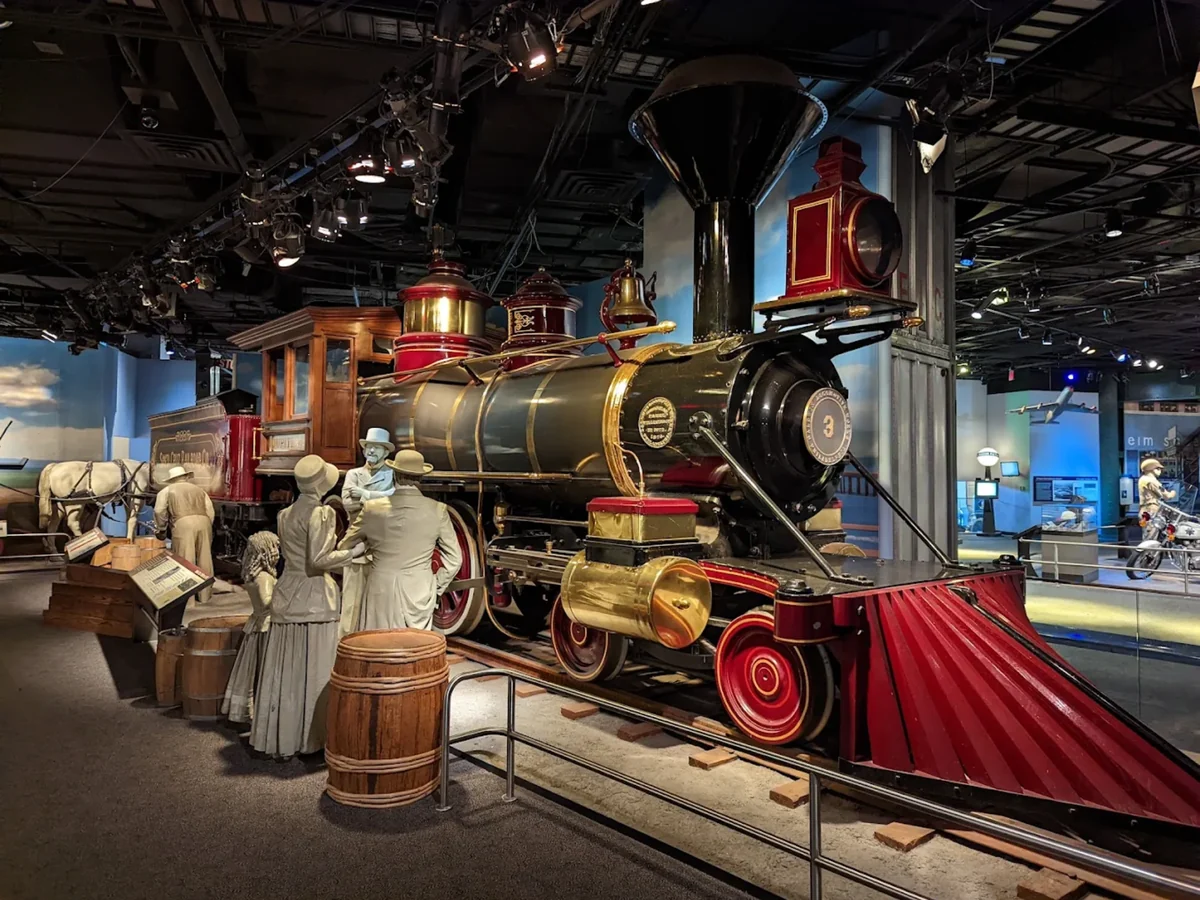
STEAM adds Arts to STEM, and the distinction is not cosmetic when you are choosing a destination. A STEM itinerary can be built almost entirely from science institutions. A STEAM itinerary needs the arts side to be genuine rather than a museum visit bolted onto the end.
Where STEAM works best
New York is the strongest STEAM destination in the country, because the art and the science are both world-class and both within reach of each other. A group can spend a morning on natural history or astrophysics and an afternoon at the Metropolitan Museum of Art without the day becoming a series of transfers.
Chicago works for the same reason on a smaller scale, with major science institutions and the Art Institute in one compact area. Washington handles it through the Smithsonian’s art museums, which sit alongside the science ones and cost nothing to enter.
The design angle most groups miss
The strongest STEAM content is usually not a science stop plus an art stop. It is a single place where the two are the same thing — industrial design, architecture, engineering as an aesthetic discipline. An aircraft hangar where students see that a Mach 3 aircraft is shaped by physics rather than by styling does more STEAM work than two separate visits.
If your program is explicitly STEAM, say so when you request a quote. It changes the itinerary meaningfully rather than adding a stop.
How STEM Trips Differ by Grade Level
Your title question has two halves, and they have different answers.
| Middle school | High school | |
|---|---|---|
| Pacing | Roughly ninety-minute blocks with a specific task at each stop | Longer blocks with defined independence — a set area and a meeting time |
| What the day should hold | Two substantial stops, with movement between them | Two stops, with real depth inside each |
| Best destinations | Washington, D.C. and Chicago — dense, drivable, varied | Orlando, Costa Rica, New York — where depth or specialization pays |
| What lands hardest | Scale and spectacle: the shuttle, the elephant, the T. rex | People: engineers and scientists talking about their actual work |
| Trip length | Three to four days | Four to five days, or longer internationally |
| Careers angle | Worth planting; most students have not considered it | Central. For many students this is the first time they meet someone doing the job. |
Why the careers row matters most
A high school group that meets working scientists and engineers gets something no museum can provide, and it is the single strongest argument for a facility visit over a third museum.
Most students have never met anyone whose job is the subject they are studying. They have met teachers of it, which is not the same thing. The gap between “I am good at physics” and “physics is something a person can do for a living” is closed by a conversation rather than by an exhibit, and that conversation is available on these trips if you plan for it.
Two practical notes. Prepare questions in advance, because unprepared groups waste the question time and prepared ones remember it for years. And follow it up in class afterwards, since the careers thread fades fast without a second conversation.
What About the M in STEM?
Mathematics is the hardest letter to build a trip around, and pretending otherwise does teachers no favors. There is no museum of mathematics on the scale of Air and Space, and a group cannot watch mathematics being done the way it can watch an aircraft being restored.
What works instead is mathematics in application. The engineering exhibits where students see the calculation behind a structure. The astronomy programming where scale and distance stop being abstractions. The launch hardware where orbital mechanics is the reason the object is that shape. A trip does not teach mathematics, but it can make a student understand what it is for, which is often the harder problem.
The same applies to robotics, coding and computer science: the destinations here serve them through engineering and aerospace content rather than through dedicated exhibits. If those are your core subjects, say so when you ask for a quote, because the itinerary should be built differently.
What Makes a Trip STEM Rather Than a Museum Tour
Four things separate the trips that change how students think from the ones that fill three days pleasantly.
- It maps to a unit you have already taught. Students need something to connect the trip to. A trip that arrives before the teaching does lands on empty ground.
- It includes at least one working facility, not only collections. Seeing science displayed and seeing science done are different experiences.
- It has fewer stops than you think. Two substantial stops a day. Four at a walking pace leaves students with less than two visited properly.
- It has classroom framing at both ends. A question to carry in, and a debrief the first class back rather than the following week.
What a STEM Trip Costs
Fully inclusive Landmark trips run about $300 to $400+ per student per day, or roughly $1,200 to $3,500+ per student in total depending on length, destination and inclusions. Airfare is quoted separately, and for Orlando, Seattle or Costa Rica it is usually the largest single variable in the whole budget.
A STEM itinerary does not inherently cost more than a general one. In Washington it often costs less, because the Smithsonian museums are free to enter and the federal facility visits are not ticketed attractions. What moves the number is distance, trip length and group size, the same as anywhere. How much a school trip costs breaks that down, and how much a 4-day school trip costs covers the most common length.
Choosing Between Them
Work in this order and the decision makes itself.
- Name the unit. Not “science” — the specific thing your students have been studying.
- Find the destination that does that subject best, using the chart above rather than the destination’s general reputation.
- Check whether you can drive there. If not, price the airfare before you commit, because it reorders everything.
- Match the length to the grade. Three to four days for middle school, four to five for high school.
- Get a quote on two options. It costs nothing and two written numbers settle the argument faster than any list will.
Tell us your dates, group size and what your students are studying, and a Travel Consultant will build the version that fits and send a written quote at no cost. Browse our destinations or our themed programs.
We are employee-owned, more than twenty years in, with former classroom teachers on staff. Every group travels privately with a Landmark Tour Director of its own, which on a trip built around a facility visit matters more than it does on a standard museum itinerary.