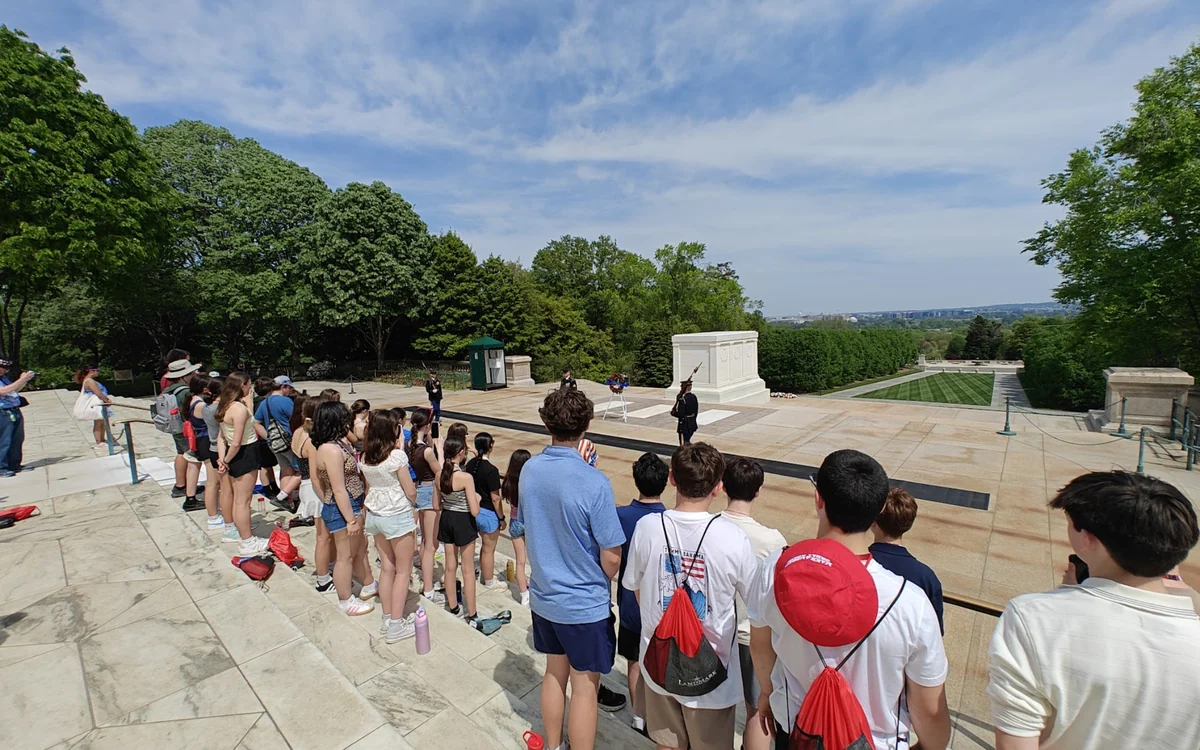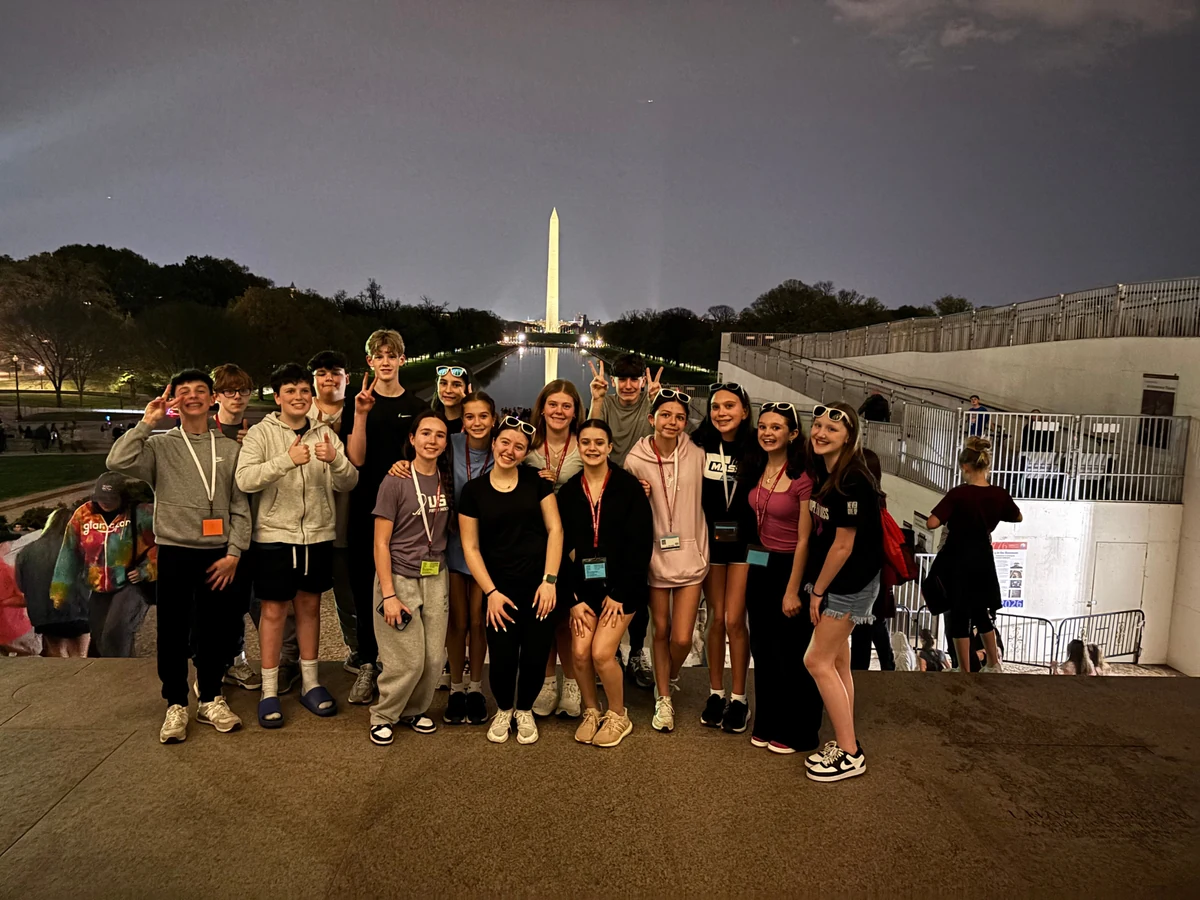
A 3-day STEM trip to Washington, D.C. fits one full day and two partial ones, which is enough for three major science stops if you theme the trip tightly. The shape that works: Natural History on the arrival afternoon, the National Air and Space Museum and a working science facility on the full day, and one last stop on the way out.
Washington rewards a STEM group more than almost any other American city, and not because of the monuments. It is where the national collections in aerospace, earth science and natural history sit within walking distance of each other, and where federal science agencies open their doors to school groups. Nearly all of it is free to enter.
Below is that trip laid out day by day, what students actually do at each stop, and which curriculum each one serves. Three days is a short trip — how many days students need in Washington makes the case for four — but a themed trip is precisely the case where three works, because the theme does the narrowing for you. If you are earlier than this, how to start planning a student trip comes first, and you can request a quote at any point at no cost.
The 3-Day STEM Itinerary at a Glance
| Item | Detail |
|---|---|
| Trip length | Three days, two nights |
| Full days on the ground | One, plus an arrival afternoon and a departure morning |
| Major STEM stops | Three, plus an evening on the National Mall |
| Subjects covered | Earth science, biology, aerospace engineering, physics, astronomy |
| Admission | The Smithsonian museums are free to enter |
| Best for | Middle and high school science, engineering and astronomy classes |
| Typical cost | About $300 to $400+ per student per day, fully inclusive |
| Works best when | Your group drives, or flies in and out of Dulles |
The Full 3-Day STEM Itinerary, Day by Day
This is the chart to hand your administrator. Times are approximate and the stops are swappable — the structure is what matters. Read it as three days with one genuinely full day in the middle, because that is what a three-day trip is.
| Day | Time | Where | What students do |
|---|---|---|---|
| Day 1 | Midday | Arrive, hotel drop | Bags stowed, group briefing, lunch |
| Day 1 | Afternoon | National Museum of Natural History | Deep Time fossil hall, Sant Ocean Hall, gems and minerals |
| Day 1 | Evening | National Mall memorials | Walk the lit memorials after dinner |
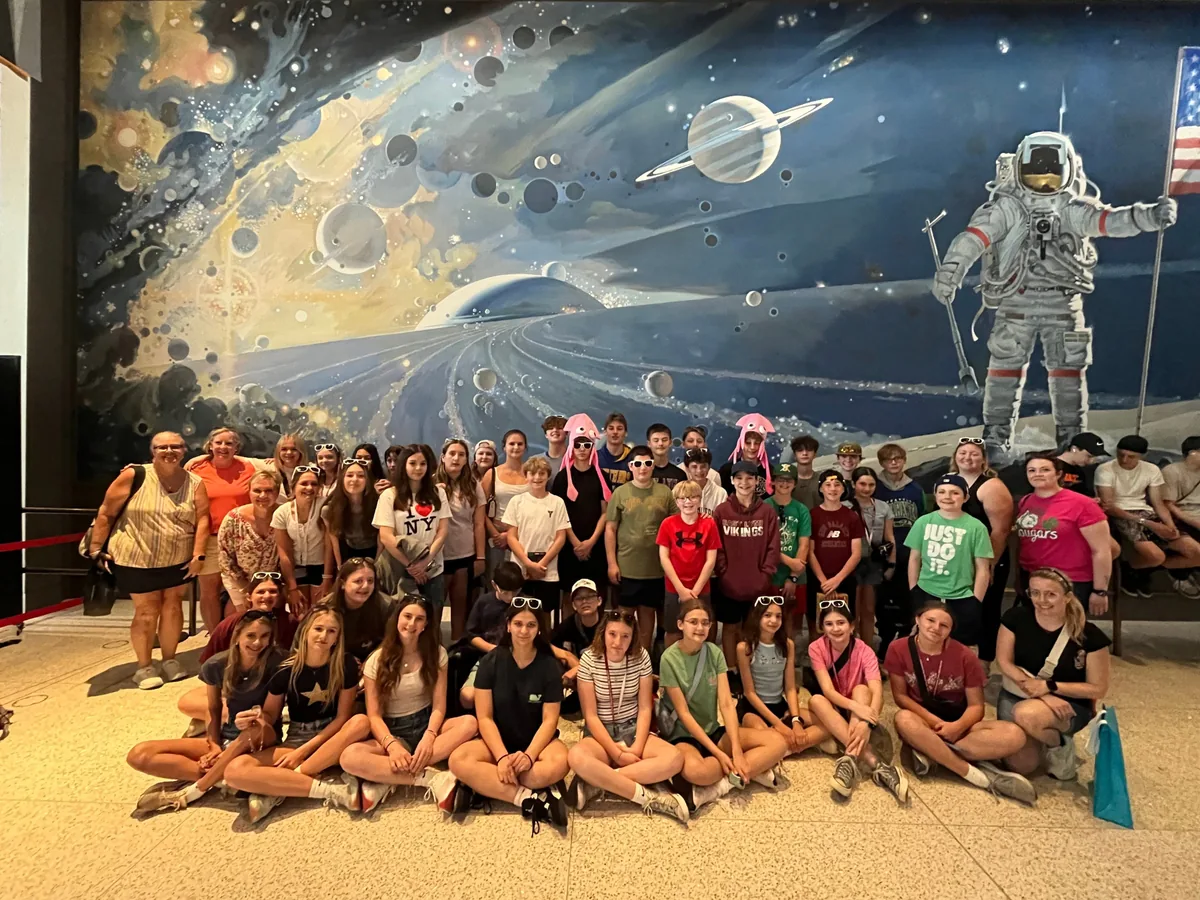
| Day 2 | Morning | National Air and Space Museum | Wright Flyer, Apollo 11 command module, planetarium show |
| Day 2 | Afternoon | NASA Goddard Space Flight Center, Greenbelt, Maryland | Group program with NASA staff, exhibits, and on some visits a look at working areas |
| Day 2 | Evening | Dinner and group debrief | Reflection activity tied to the day’s two stops |
| Day 3 | Morning | Steven F. Udvar-Hazy Center, Chantilly, Virginia | Space Shuttle Discovery, restoration hangar, historic aircraft |
| Day 3 | Midday | Depart | Onward travel |
Why day three is built this way
The Udvar-Hazy Center sits beside Washington Dulles International Airport. For a group flying home from Dulles it is directly on the way, which turns a departure morning that would otherwise be wasted into the single most impressive STEM stop of the trip. Groups driving home westbound can do the same thing.
If your group flies from Reagan National or drives north instead, swap day three for the National Museum of American History and its invention and innovation galleries, which sit on the Mall near your hotel.
Day 1: Earth Science and Deep Time
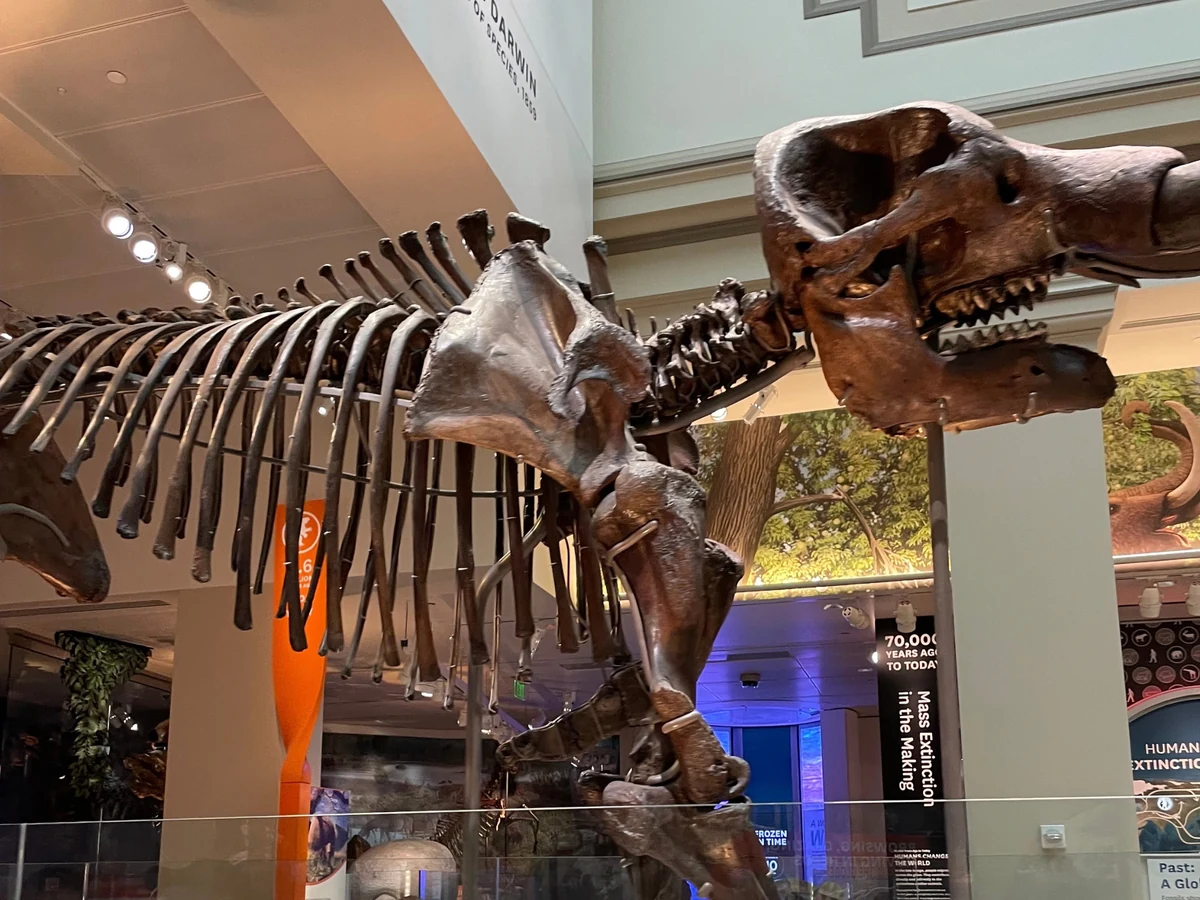
Afternoon — National Museum of Natural History
Starting here is deliberate. Natural History absorbs a group that has been traveling since morning, it needs no equipment or preparation, and it covers more curriculum per hour than anything else on the Mall.
The Deep Time hall walks students through 4.6 billion years of Earth history, with the fossil record laid out as evidence rather than spectacle — the mass extinction sections land particularly hard with classes that have been studying climate. The Sant Ocean Hall handles marine ecosystems, oceanography and deep-sea biology, and the gems and minerals wing does crystal structure and geology with the Hope Diamond as the hook.
Two hours is the minimum here. Three is better, and groups rarely regret giving it the extra hour. Our guide to the Natural History museum goes through the halls in more detail.
Evening — the National Mall after dark
An evening walk among the lit memorials costs nothing, needs no arrangement, and gives a group its first shared memory of the trip on the night they are most likely to be restless. It is also the only civics your STEM trip strictly needs. See our evening monument tour for what that walk covers.
Day 2: Flight, Space and a Working NASA Center
Morning — National Air and Space Museum
The full day opens with the single densest STEM building in the country. Students see the Wright brothers’ 1903 Flyer and the Apollo 11 command module in the same visit, which is a useful thing to put in front of a class: sixty-six years separate them.
The exhibits run through rocketry, aviation engineering, planetary science and the physics of flight, and the Albert Einstein Planetarium adds a dome show that works well as a shared anchor before students disperse into the galleries. Give it a full morning. Our Air and Space guide covers the exhibits worth prioritizing.
Afternoon — NASA Goddard Space Flight Center
This is what separates a STEM trip from a museum trip. Goddard, about forty minutes out in Greenbelt, Maryland, is an operating NASA center responsible for missions including the Hubble and James Webb space telescopes. Student group programs run with NASA staff, cover satellite engineering and astrophysics at a level pitched to the grade, and include exhibits and question time with people who do the work.
Two practical points, accurate as of September 2026 and worth confirming when you plan: group programs run on set weekdays by prior arrangement, and group size is capped, so very large schools may need to split. Availability changes, so this is a stop to settle early rather than late — it is usually the fixed point the rest of the day is built around.
Day 3: The Departure Morning That Earns Its Place
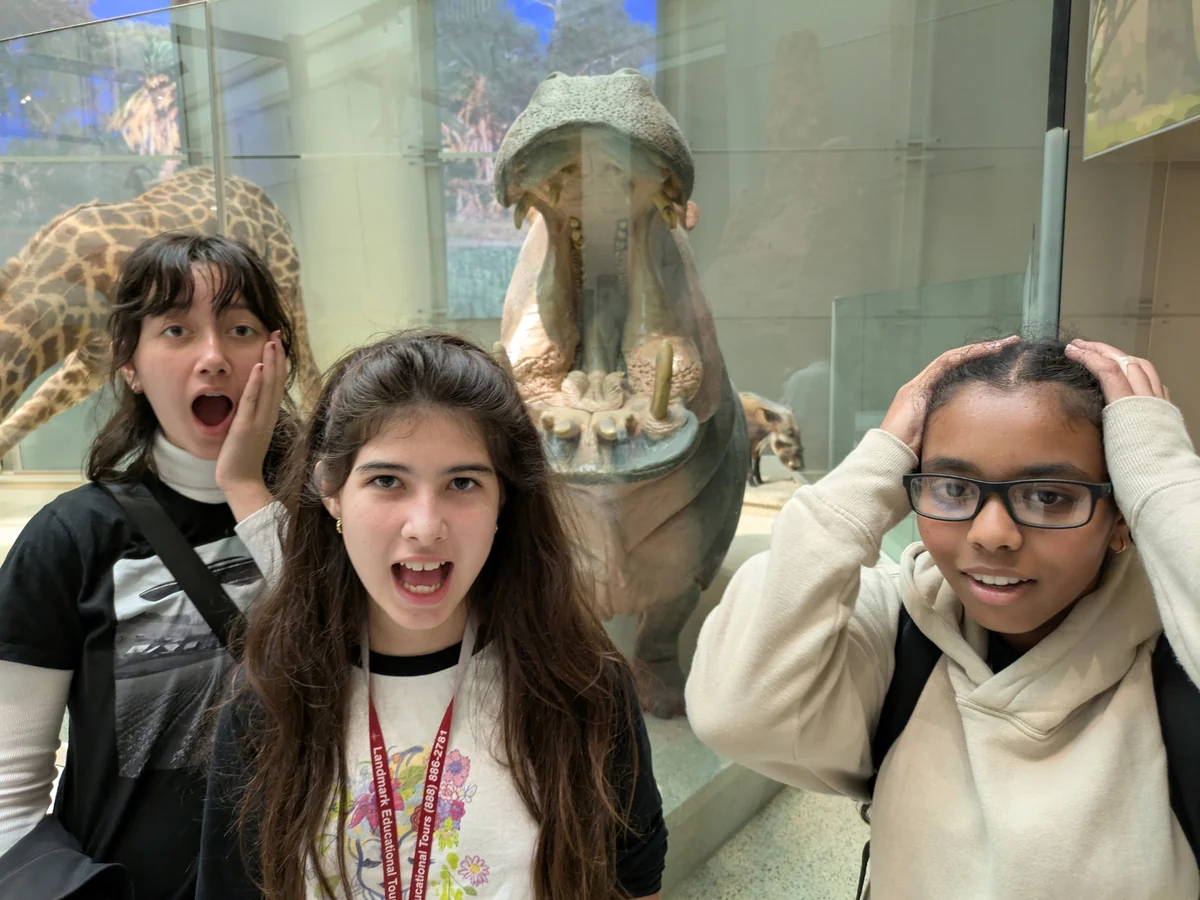
Morning — Steven F. Udvar-Hazy Center
The Air and Space Museum’s companion hangar holds what the Mall building cannot: the Space Shuttle Discovery, a Lockheed SR-71 Blackbird, a Concorde, and an active restoration hangar where students can watch conservation work in progress.
For a group flying out of Dulles it is minutes from the terminal, which is why it belongs on a departure morning rather than competing for time on day two. Ninety minutes is enough to do it justice on a travel day.
What students actually notice here
The building is a hangar rather than a gallery, and the scale is the lesson. Discovery is not behind glass; students walk the length of it and see the heat-shield tiles up close, each one individually shaped. The SR-71 sits low enough to show how little of an aircraft built for Mach 3 is anything other than fuel tank and engine.
The restoration hangar is the part science teachers tend to value most. Conservators work on aircraft in view of the floor, which turns an aviation museum into a visible demonstration of materials science, corrosion and structural repair — work in progress rather than a finished object.
If you are not flying from Dulles
Swap day three for the National Museum of American History and its invention and innovation galleries, which sit on the Mall within reach of most group hotels. It is a weaker finish than Discovery, but it costs no travel time on a morning that has none to spare.
If You Cannot Get NASA Goddard
Goddard runs on set weekdays and caps group size, so it does not fit every calendar or every school. This is worth planning for rather than hoping around, because it is the one stop on this itinerary that can fall through.
The straightforward substitution is to keep the National Air and Space Museum in the morning and give the afternoon to the Smithsonian National Zoo, which is a working conservation biology institute rather than simply an animal collection. For a biology or environmental science group it is arguably the better trip anyway.
The other option is to stay on the Mall and pair Air and Space with the National Museum of American History, using its invention and innovation galleries for the engineering and technology side. That keeps the whole day walkable and removes the afternoon transfer, which on a three-day trip is not nothing.
What does not work is replacing Goddard with a third Mall museum of the same kind. Two large science museums in one day is the point at which students stop absorbing anything, whatever the subject.
How to Swap Stops for Your Subject
The structure holds; the content should match what your students are studying.
| If your focus is | Keep | Swap in |
|---|---|---|
| Biology and conservation | Natural History | The Smithsonian National Zoo in place of Goddard — it is an active conservation biology institute, not just an animal attraction |
| Space and astronomy | Air and Space, Goddard | Add the planetarium show and prioritize Udvar-Hazy over a second Mall museum |
| Engineering and design | Air and Space | The National Building Museum for structural engineering, or American History’s invention galleries |
| Earth and environmental science | Natural History | The United States Botanic Garden at the foot of Capitol Hill, which is free and takes under an hour |
| General science survey | All three core stops | The National Geographic Museum of Exploration, reopened in 2026, for exploration and field science |
Weighing Washington against other STEM destinations? The best STEM trips for middle and high school students compares them by subject and grade.
More options are in our STEM Washington, DC school trip ideas and STEM exhibits in Washington, DC, and the full program shape is on our STEM Washington, DC school trip page.
How This Trip Changes by Grade
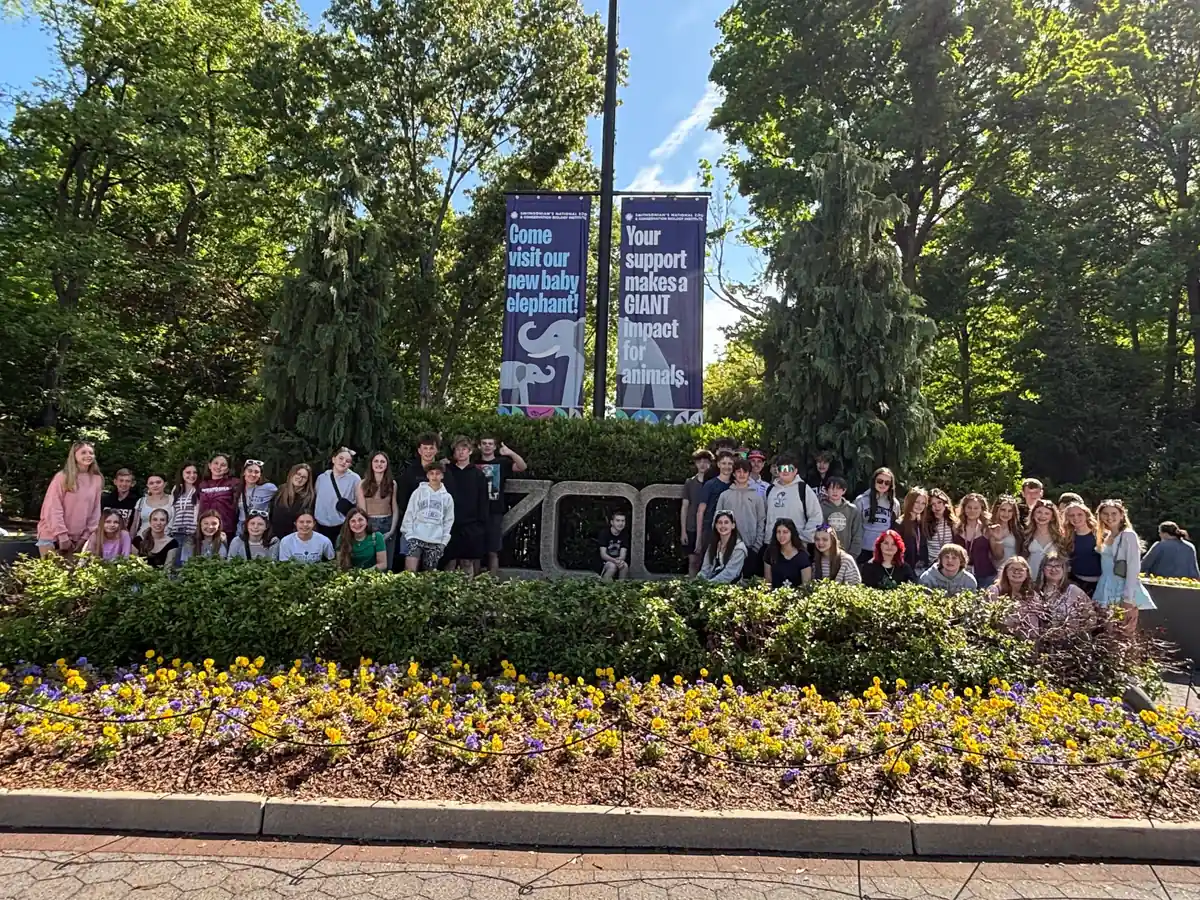
The stops hold across grades. What changes is how long students spend inside each one and how much structure the day needs.
Middle school
Shorter blocks, more movement, and a clear task at each stop. Middle school groups do better with ninety minutes in a museum and a specific thing to find than with three hours and free rein. Goddard pitches its programs by grade and handles this well; the younger sessions lean toward living and working in space rather than satellite engineering.
High school
Longer blocks and real independence. A high school group can be given a defined area and a meeting time, which changes what a morning can hold — depth rather than more stops. AP Physics, AP Environmental Science and engineering classes get the most out of Goddard’s technical sessions and the Udvar-Hazy restoration hangar.
One practical note either way: this is a science trip, so the evening on the Mall is the only civics in it. For middle school groups in particular, that evening tends to be what parents hear about.
What a Fourth Day Would Add
Three days works for a themed trip, but it is tight, and it is worth knowing what you are leaving out.
A fourth day buys a second full day, which is the difference between three major stops and five. It would let you keep Goddard and add the National Zoo, or hold Udvar-Hazy on day three and still have a real departure morning. It would also give students unstructured time inside one museum rather than a schedule they are always slightly behind.
The arithmetic is favorable, too: the fourth day adds a hotel night and a day of meals while the cost of getting your group to Washington is already paid. How much a 4-day school trip costs works that through, and how much a 3-day school trip costs covers this length.
Connecting the Trip to the Classroom
The stops do the work, but a small amount of classroom framing on either side changes how much of it sticks.
Before you go
- Give each student one thing to find. A specific fossil, a specific aircraft, a specific mineral. Students who arrive with a question look differently at a room than students who arrive with a schedule.
- Set up the Wright Flyer and Apollo 11 comparison in advance. Sixty-six years separates them and they sit in the same building. Ask students to predict what changed and check themselves on the day.
- Prepare questions for the NASA staff. The question time at Goddard is wasted on groups that have not thought about it beforehand, and it is the part students remember when they have.
After you get back
- Run the debrief while it is fresh, ideally the first class back rather than the following week.
- Tie Deep Time to whatever comes next in the syllabus. The fossil hall is a spine that most earth science and biology units can hang from.
- Follow up the careers conversation. Goddard is often the first time a student has met someone whose job is the subject they are studying, and that fades fast without a second conversation.
None of this needs materials or preparation time beyond a single lesson at each end. It is the cheapest part of the whole trip and the part that most changes what students carry out of it.
What a 3-Day STEM Trip Costs
Fully inclusive Landmark trips run about $300 to $400+ per student per day, which puts a three-day trip at roughly $900 to $1,200+ per student. That covers transportation, hotel, meals, every scheduled stop, and a Landmark Tour Director traveling with the group. Airfare is quoted separately.
A STEM itinerary does not cost more than a general one. The Smithsonian museums are free to enter and Goddard is a federal facility, so almost all of what makes this trip distinctive adds curriculum value rather than cost. What a school trip to Washington, DC costs breaks the number down by destination.
Planning a STEM Trip That Actually Runs on Time
Three things decide whether this itinerary holds together.
- Settle the Goddard visit first. It runs on set days and caps group size, so it is the fixed point everything else moves around.
- Match your departure airport to day three. Flying from Dulles makes Udvar-Hazy nearly free in time terms. Flying from Reagan National makes it a poor use of a morning.
- Do not add a fourth major stop. The commonest mistake on a themed trip is treating the theme as permission to pack more in. Three stops with real time inside each is what students remember.
A Landmark Tour Director travels with the group for the whole trip and holds the schedule together, which on a STEM itinerary with an off-site facility visit matters more than it does on a standard Mall trip.
Build This Trip for Your Group
The itinerary above is a starting shape, not a fixed package. Tell us your dates, your group size and what your students are studying, and a Travel Consultant will build the version that fits and send a written quote. The whole planning conversation is free until you agree to proceed.
We are employee-owned, more than twenty years in, with former classroom teachers on staff. Every group travels privately, never merged with another school. Browse our Washington, DC programs or our themed programs across subjects. Wondering whether three days is the right length at all? How many days you need in Washington, DC with students works it out from your travel distance.