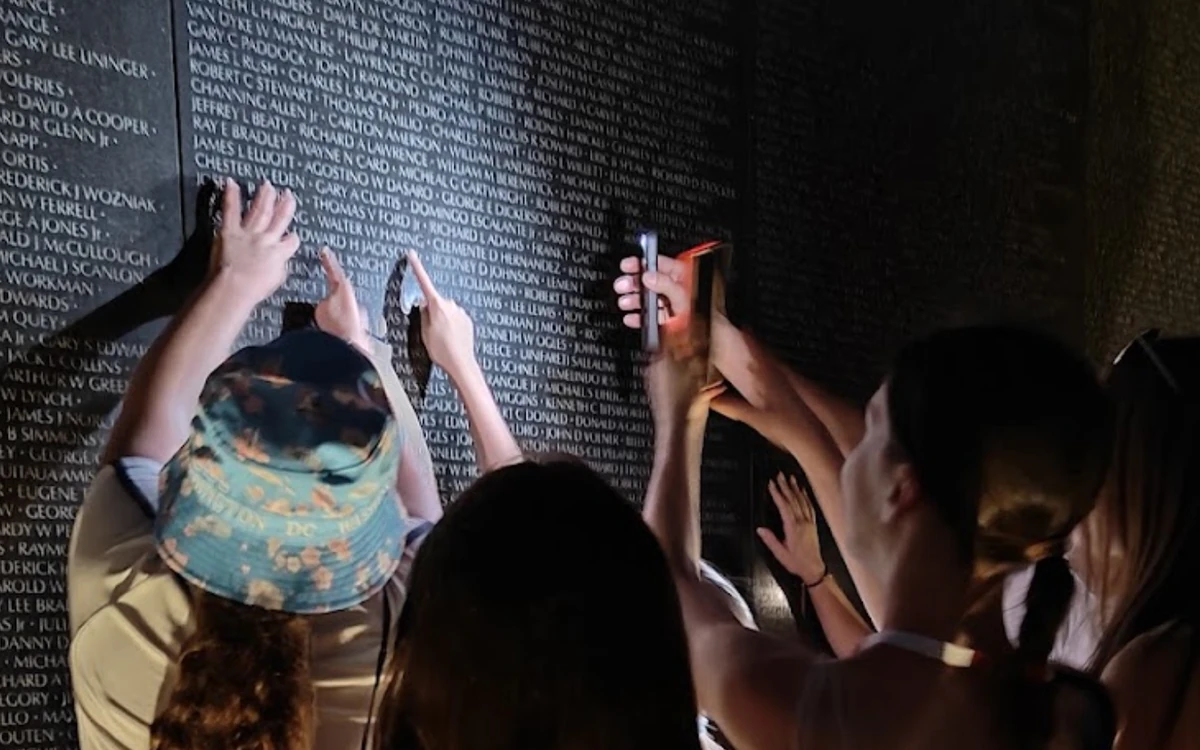
In Washington, D.C., students learn what Veterans Day actually commemorates: an armistice that took effect at the eleventh hour of the eleventh day of the eleventh month of 1918, a holiday that honors every person who served rather than only those who died, and a national ceremony held at Arlington each November 11. The city is the one place where the holiday’s own history is still standing.
Start with the thing most students get wrong, and many adults with them. Veterans Day is not Memorial Day. The Department of Veterans Affairs puts it plainly: Memorial Day remembers those who died in service, while Veterans Day is set aside to thank and honor all who served honorably, in wartime or peacetime — and is largely intended to thank living veterans. A trip that fixes that single confusion has already earned its place in the term.
The Six Things a Washington Trip Teaches
Each one is something students can see on the ground rather than only be told:
- Veterans Day is not Memorial Day — one thanks the living, the other remembers the dead
- The date is the armistice — which is why November 11 never moves to a Monday
- The country moved the holiday once, and moved it back — a civics lesson in public pressure
- The Tomb of the Unknown Soldier belongs to the holiday’s own story — the two were created together
- Memorials make arguments — and students can read the argument in the design
- Veterans are living people — whose accounts students can still record
Veterans Day at a Glance
| Item | Detail |
|---|---|
| What it marks | The armistice that ended the fighting of World War I, 11 a.m. on November 11, 1918 |
| Who it honors | Everyone who served honorably, in war or peace. Largely the living |
| Correct spelling | Veterans Day. No apostrophe, because it does not belong to veterans |
| The date | Always November 11, whatever day of the week it falls on |
| National ceremony | Arlington National Cemetery, beginning at 11 a.m. |
| Red poppies | A Memorial Day tradition, not a Veterans Day one |
| Best D.C. sites for it | Arlington, and the Vietnam, Korean War and World War II memorials |
| Per student, per day | $300 to $400+, fully inclusive |
Veterans Day Is Not Memorial Day
This is the highest-value twenty minutes of the whole trip, because the confusion is near-universal and a student who has stood in both kinds of place does not forget the difference.
Arlington is where the dead are. The Vietnam Veterans Memorial is a list of the dead. But Veterans Day exists to thank the millions of living Americans who served and came home — the grandfather who never talks about it, the neighbor who did one enlistment and left. Teaching the holiday only through cemeteries quietly teaches the wrong lesson.
| Question | Answer |
|---|---|
| Memorial Day | Remembers those who died in service, particularly in battle or of battle wounds |
| Veterans Day | Thanks and honors all who served honorably, in wartime or peacetime |
| Which is for the living | Veterans Day, largely. That is the point of it |
| When | Memorial Day, last Monday in May. Veterans Day, November 11 |
| Poppies | Memorial Day, from the 1915 poem In Flanders Fields |
| The usual mistake | Thanking a living veteran on Memorial Day, or treating November 11 as a day of mourning |
Why the Date Never Moves
Ask students why Veterans Day is one of the few federal holidays that refuses to become a long weekend, and almost nobody knows. The answer is that the date is not symbolic. It is the actual moment the guns stopped.
The armistice between the Allies and Germany took effect at the eleventh hour of the eleventh day of the eleventh month of 1918. President Wilson proclaimed the first Armistice Day a year later, and the original idea was oddly specific: business would stop for two minutes beginning at 11 a.m. The holiday has carried that hour ever since. The VA confirms the rest — Veterans Day is always observed officially on November 11, whatever weekday that is, though towns often hold their parades on the nearest weekend so more people can come.
The Country Moved the Holiday Once, and Moved It Back
This is the part that makes a civics teacher sit up, and almost no one teaches it.
In 1968 Congress passed the Monday Holiday Law and moved Veterans Day to the fourth Monday in October, effective 1971. It did not take. Veterans organizations objected, states refused to follow, and by the mid-1970s most of the country had either ignored the change or reverted. In 1975 Congress passed legislation returning the federal observance to November 11, and in 1978 it went back. The timeline below comes from the U.S. Army Center of Military History.
| Year | What happened |
|---|---|
| 1918 | Armistice takes effect at the eleventh hour of the eleventh day of the eleventh month |
| 1919 | Wilson proclaims the first Armistice Day, with two minutes of silence at 11 a.m. |
| 1921 | Congress approves a Tomb of the Unknown Soldier at Arlington, dedicated November 11 |
| 1938 | November 11 becomes a legal federal holiday |
| 1954 | Eisenhower signs the change of name from Armistice Day to Veterans Day |
| 1968 | Congress moves the holiday to the fourth Monday in October, from 1971 |
| 1975 | Congress reverses itself after states and veterans refuse the new date |
| 1978 | The observance returns to November 11, where it has stayed |
That is a complete civics unit in eight rows: a law passed, a public that would not comply, states acting independently of Washington, and Congress changing its mind. Students who have argued about whether holidays should be moved for convenience have a real case to argue about.
The Tomb of the Unknown Soldier Belongs to the Holiday’s Own Story
Most groups visit the Tomb without knowing it is part of why the holiday exists in the form it does. Congress approved it in 1921 and chose November 11 for the dedication, so the Tomb and the observance grew up together. According to Arlington National Cemetery, it has held an unidentified service member from the First World War since then, with Unknowns from later wars added in 1958 and 1984.
One practical detail decides how much your group actually sees. The Changing of the Guard happens every hour on the hour from October 1 through March 31, and every half hour the rest of the year. A November group that arrives at ten past the hour waits fifty minutes. Build the stop around the clock, not the other way around.
Our guide to the monuments worth building a D.C. trip around goes further into the Tomb and the sentinels, and we also keep an Arlington National Cemetery tour guide and a page of facts about Arlington.
Memorials Make Arguments
The three war memorials on and near the Mall were built in different decades by different generations, and they disagree with each other. That is the lesson, and it is the one students find most interesting once it is pointed out.
The Vietnam Veterans Memorial carries 58,318 names cut into black granite that descends below ground level. It names the dead and makes no claim about the war. Give students the key before they walk down and they will read it instead of looking at it: a diamond beside a name means the person was confirmed dead, a cross means missing in action, a cross inside a circle would mean a missing person returned alive, and a diamond cut over a cross means missing remains later identified. The National World War II Memorial is the opposite: open, triumphal, arranged around a plaza with a wall of gold stars standing for the dead in bulk rather than by name. The Korean War Veterans Memorial puts nineteen figures on patrol across open ground, neither celebrating nor listing.
The argument is not hypothetical. The wall was designed by Maya Lin, a 21-year-old architecture student whose entry won the competition, and it proved controversial when it was chosen, and a flag and a figurative sculpture of three servicemen, by the sculptor Frederick Hart, were added to the plan. Students standing between the wall and the statue are standing inside a compromise between two ideas of what a memorial is for.
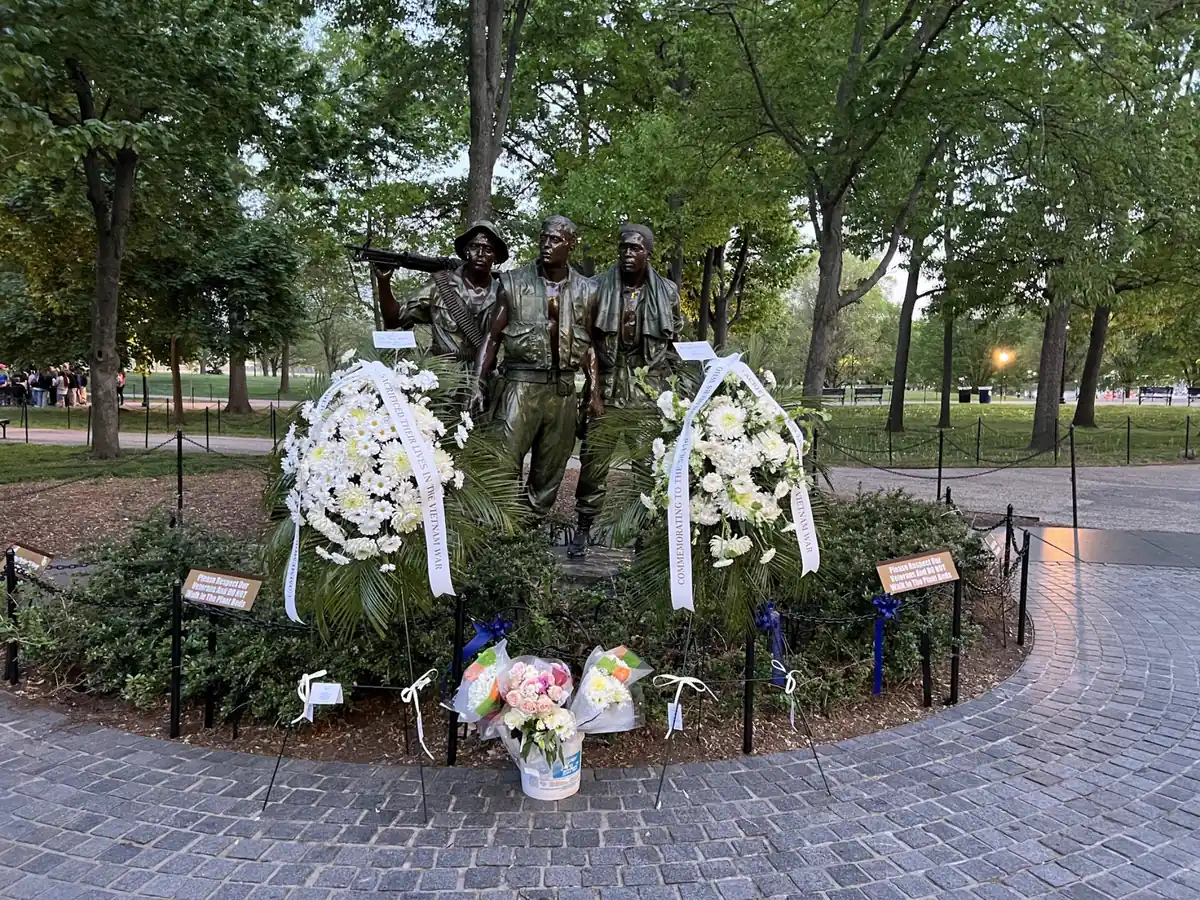
Ask students which of the three they would want if it were their war. The arguments that follow are about design, memory and who gets named — and they are better arguments than most classroom debates, because the students have just stood in all three.
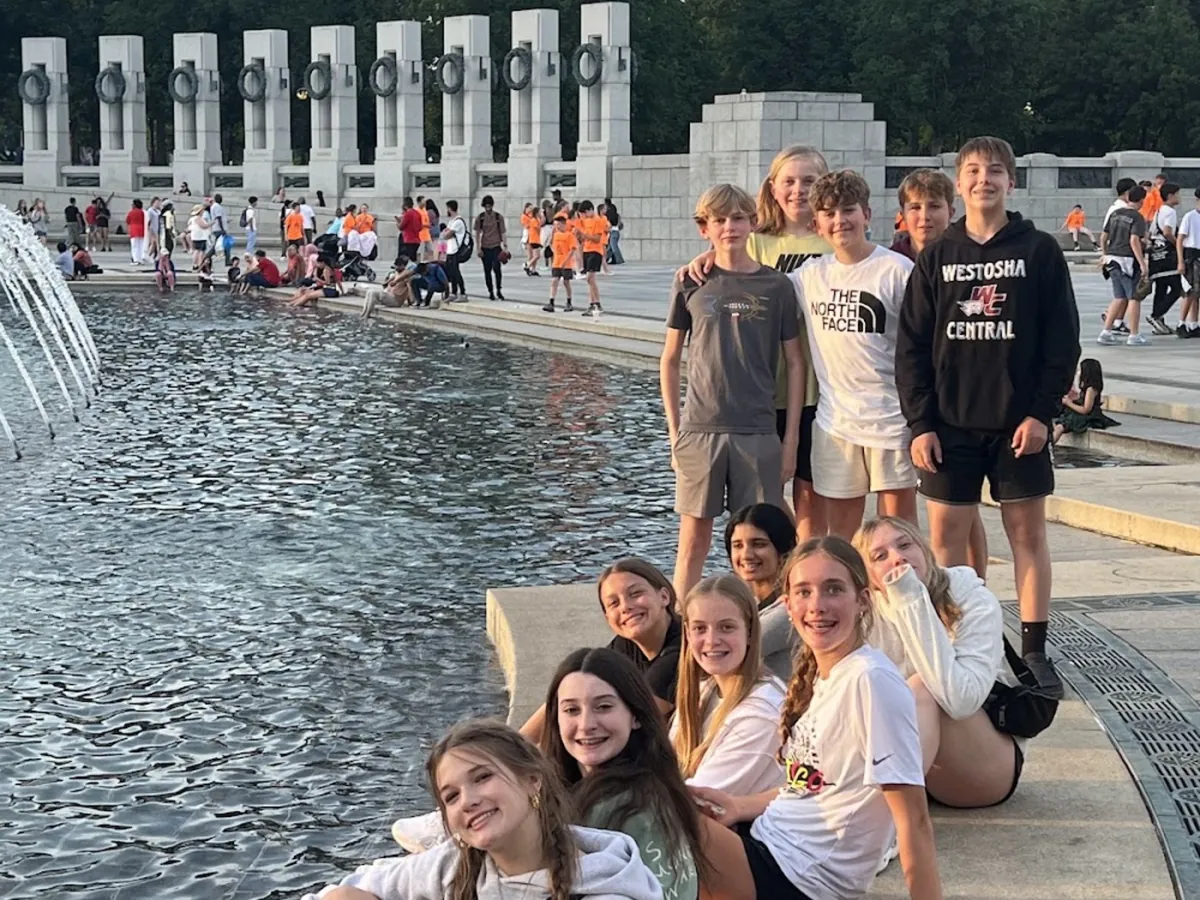
Veterans Are Living People, and Students Can Record Them
The strongest thing a class can take home from a Veterans Day trip is not a photograph. It is an interview.
The Library of Congress runs the Veterans History Project, which collects firsthand accounts from American war veterans and preserves them in the national collection. Its participation guidance allows students aged 15 and over to conduct the interviews themselves, alone or as a group. Interviews need to run at least thirty minutes, be submitted unedited, and come with the project’s own release forms.
That turns a trip into something with an afterlife. A class that visits the memorials in November and spends December interviewing veterans in its own town has produced primary sources that will outlast every one of them, held by the Library of Congress. It also answers the question students ask on the coach home, which is what any of this has to do with them.
What Happens in Washington on November 11
The National Veterans Day Observance is held at Arlington National Cemetery and begins at 11 a.m., with a wreath-laying at the Tomb of the Unknown Soldier and a ceremony in the Memorial Amphitheater with a parade of colors and remarks. In 2026 it was the seventy-third.
If you are considering bringing a group on the day itself, the logistics are stricter than most teachers expect, and they are published each fall by the cemetery. The pattern in recent years looks like this.
| Item | What to expect |
|---|---|
| Cost and seating | Free and open to the public. Amphitheater seating is first come, first served |
| Getting there | Walking to the amphitheater is prohibited. Groups must use the tram from the Welcome Center |
| Timing | Trams start early and run until capacity. Arriving mid-morning is usually too late |
| Security | Every attendee passes a checkpoint |
| Bags | Large bags and backpacks are among the prohibited items. This catches school groups out |
| The wreath-laying | Access varies by year. In 2026 it was limited to official participants |
| Check before you go | The cemetery publishes that year’s rules in October. They change |
The honest advice: for most school groups, the days around November 11 work better than the day itself. The memorials are quieter, the Changing of the Guard is easier to watch, and a group of forty is not competing with a national ceremony for a tram. The teaching does not require the crowd.
What a Washington Trip Costs
Washington is the most affordable of the major American school trip destinations, for one reason: almost everything on this list is free to enter. Arlington, the Mall memorials, the Smithsonian museums and the National Archives charge no admission, so the budget is set by distance, nights and meals rather than tickets. Our full breakdown of Washington school trip costs works through it.
| Length | Per student | Allows |
|---|---|---|
| 3 days 2 nights, 1 full day | About $900 to $1,200+ | Arlington and the Mall memorials, tightly scheduled |
| 4 days 3 nights, 2 full days | About $1,200 to $1,600+ | Adds the Capitol, the Archives and time at the museums |
| 5 days 4 nights, 3 full days | About $1,500 to $2,000+ | Room for the memorials after dark, which changes them |
Those are per student at four to a room and fully inclusive: transportation, hotel, meals, every scheduled admission, and a Landmark Tour Director who is our own background-checked employee and travels with your group alone. Airfare is quoted separately, gratuities are budgeted separately, and travel protection is optional coverage underwritten by battleface Insurance Services, bought separately rather than built into the price. If you have settled on a length, what a three-day school trip costs works the same question by duration.
How This Fits a Landmark Trip
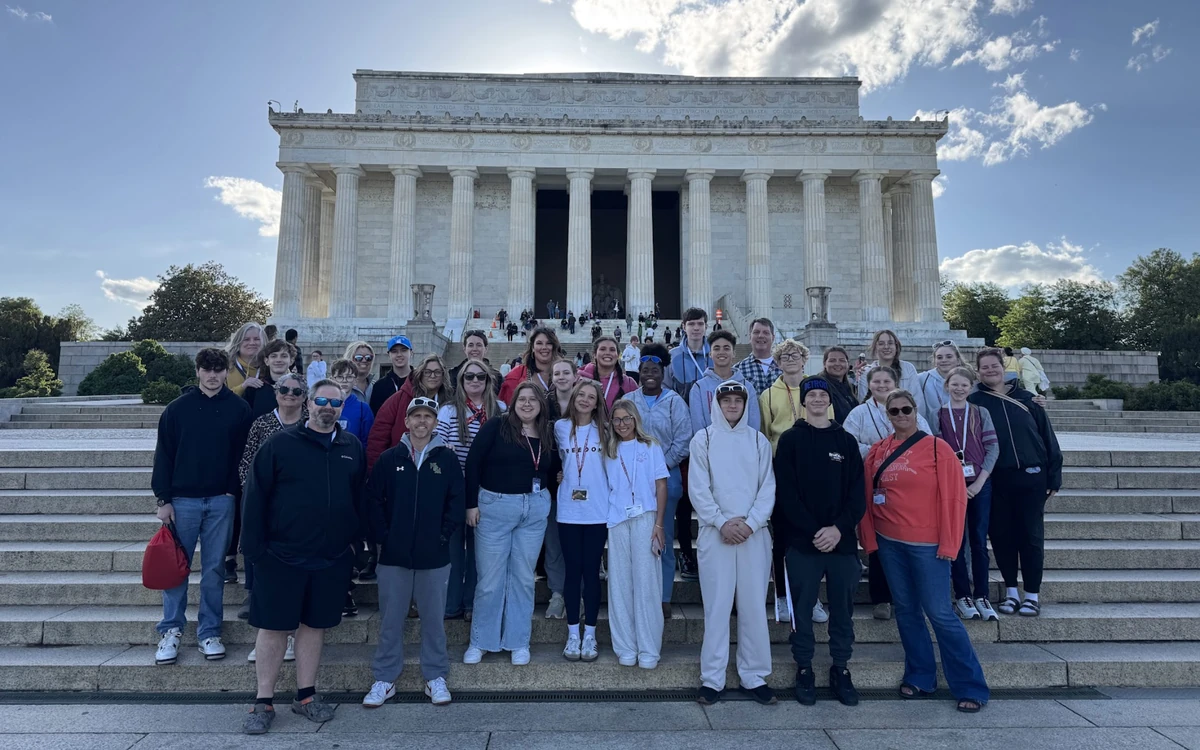
Our Washington, D.C. civics student tour already runs through most of this: the Capitol, the Library of Congress and National Archives, the Lincoln, Korean War and World War II memorials, the U.S. Marine Corps War Memorial, and a guided tour of Arlington including the Changing of the Guard. The Veterans Day version is not a different itinerary. It is the same route with the holiday’s history taught alongside it.
One thing worth asking about early: groups can take part in a wreath-laying at the Tomb of the Unknown Soldier. It has to be arranged well ahead, so raise it when you first talk to your Travel Consultant rather than close to departure. For a group studying the holiday, standing in that ceremony rather than watching it is the difference the trip is for.
If you are earlier in the process, our 4-day Washington, D.C. school trip is the usual starting point, and our guide to preparing students for their first D.C. trip covers what to do before you travel.
Who Is Landmark Educational Tours?
Landmark Educational Tours is a 100% employee-owned educational travel company at 1 Central Street, Suite 205, Middleton, Massachusetts, planning custom trips for school groups across the United States and abroad. We are a member of the Student & Youth Travel Association, SYTA, member number 13443.
Every group travels with a Landmark Tour Director, our own employee, who handles the timing and the entries — including getting a group to the Tomb on the hour rather than ten past it. You can read more about Landmark or work through our frequently asked questions.
Planning a Trip Around Veterans Day
Washington teaches this holiday better than any classroom can, because the armistice, the Tomb and the argument about how to remember a war are all still physically present in the same few square miles. What it asks is that someone tells students what they are looking at before they get there.
Tell us your dates, your grade level and what you want students to understand by the end, and we will build the itinerary around it. Request a quote and we will put real numbers against it.