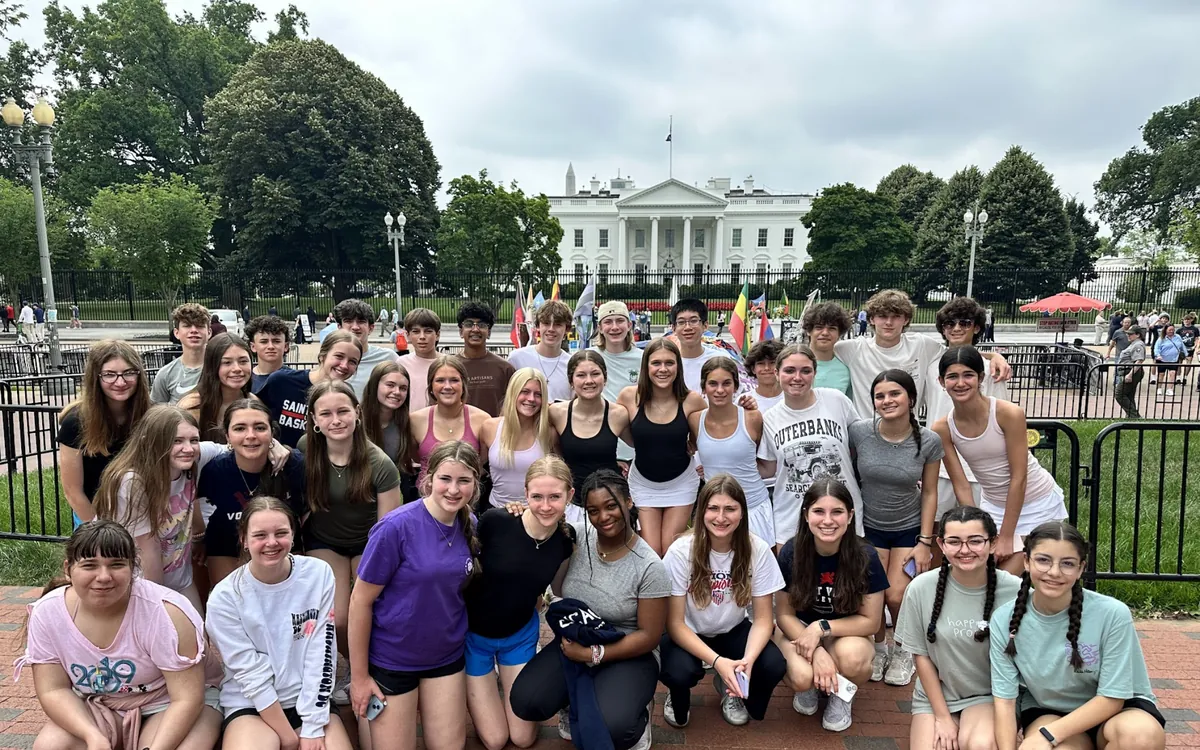
Students should visit six monuments in Washington, D.C.: the Lincoln Memorial, the Vietnam Veterans Memorial, the Korean War Veterans Memorial, the World War II Memorial, the Washington Monument and the Martin Luther King, Jr. Memorial. All six stand within walking distance of one another on the National Mall, and a well-paced group sees them in a single evening.
- Lincoln Memorial — the anchor, with the Gettysburg Address carved into the wall
- Vietnam Veterans Memorial — the stop that affects students most
- Korean War Veterans Memorial — nineteen statues that become thirty-eight
- World War II Memorial — 4,048 gold stars, one wall
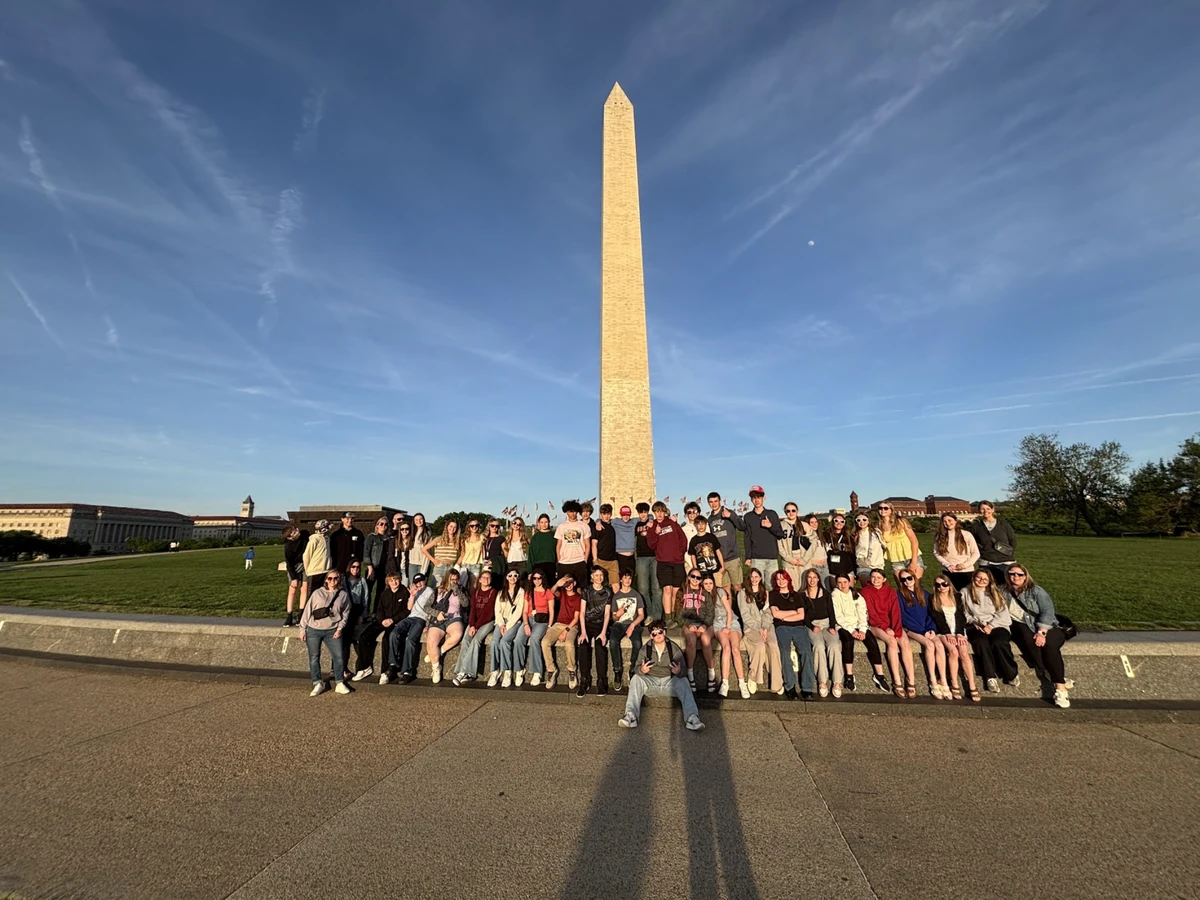
- Washington Monument — the obelisk the city is arranged around
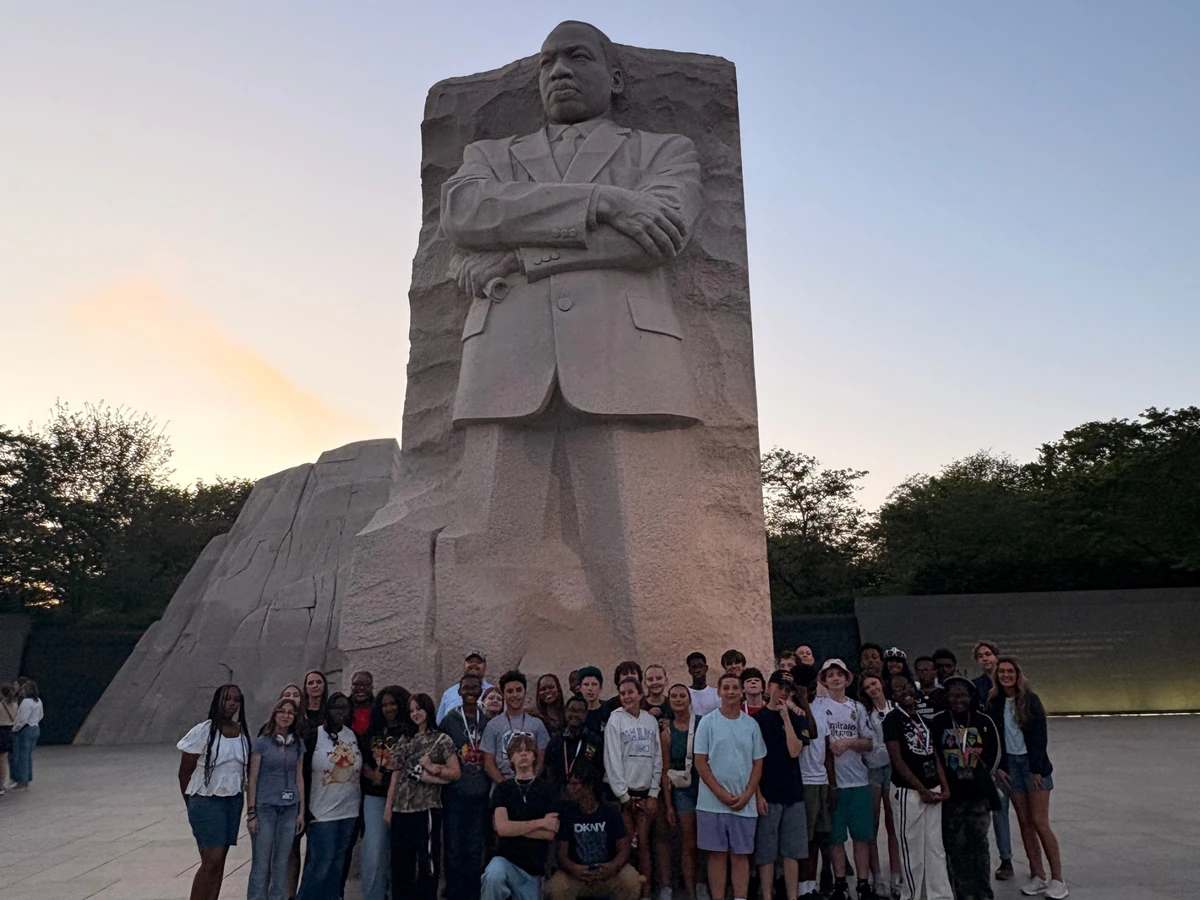
- Martin Luther King, Jr. Memorial — the Stone of Hope, facing Jefferson
Arlington National Cemetery and the Tidal Basin memorials are the next additions when time allows.
The harder question is not which ones to see. It is what to say at each one, because a memorial a student walks past in silence is a memorial they forget by Thursday.
The short version:
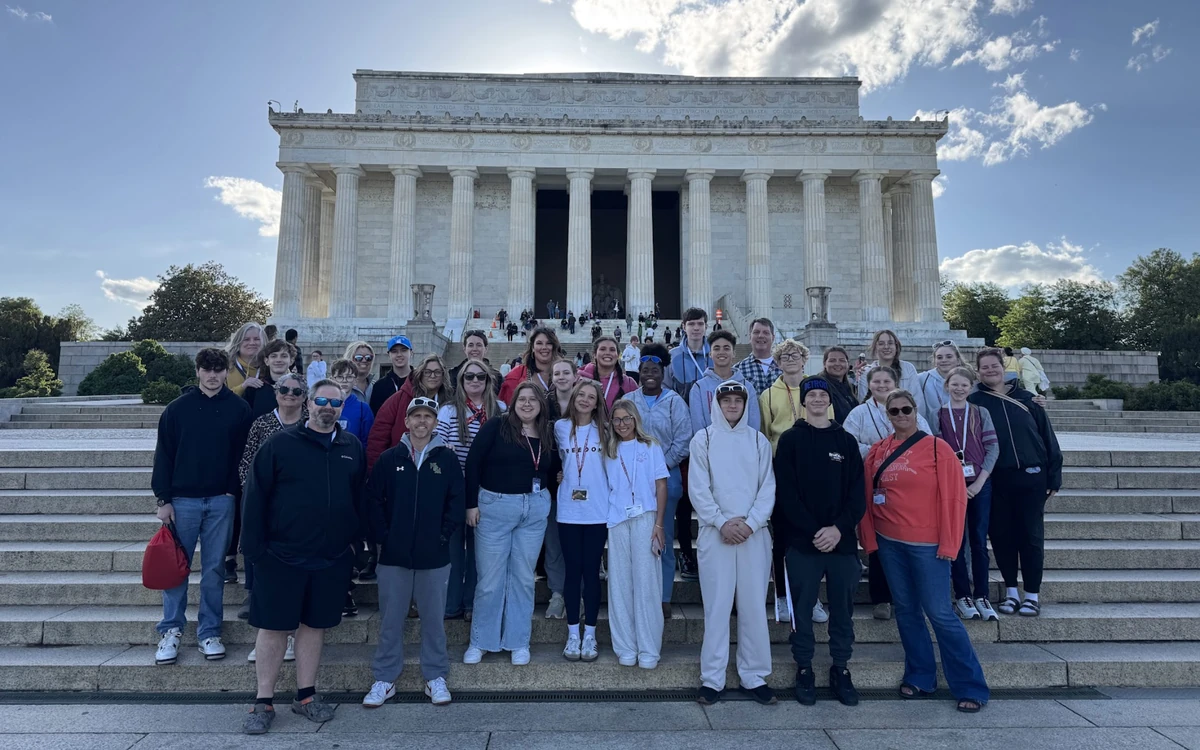
- The Lincoln Memorial is the anchor. The Gettysburg Address and the Second Inaugural are carved into the walls, so students can read the primary source off the stone.
- The Vietnam Veterans Memorial lands hardest with almost every group, and the reason is in how it was designed.
- The Korean War Veterans Memorial rewards one piece of explanation more than any other stop on the Mall.
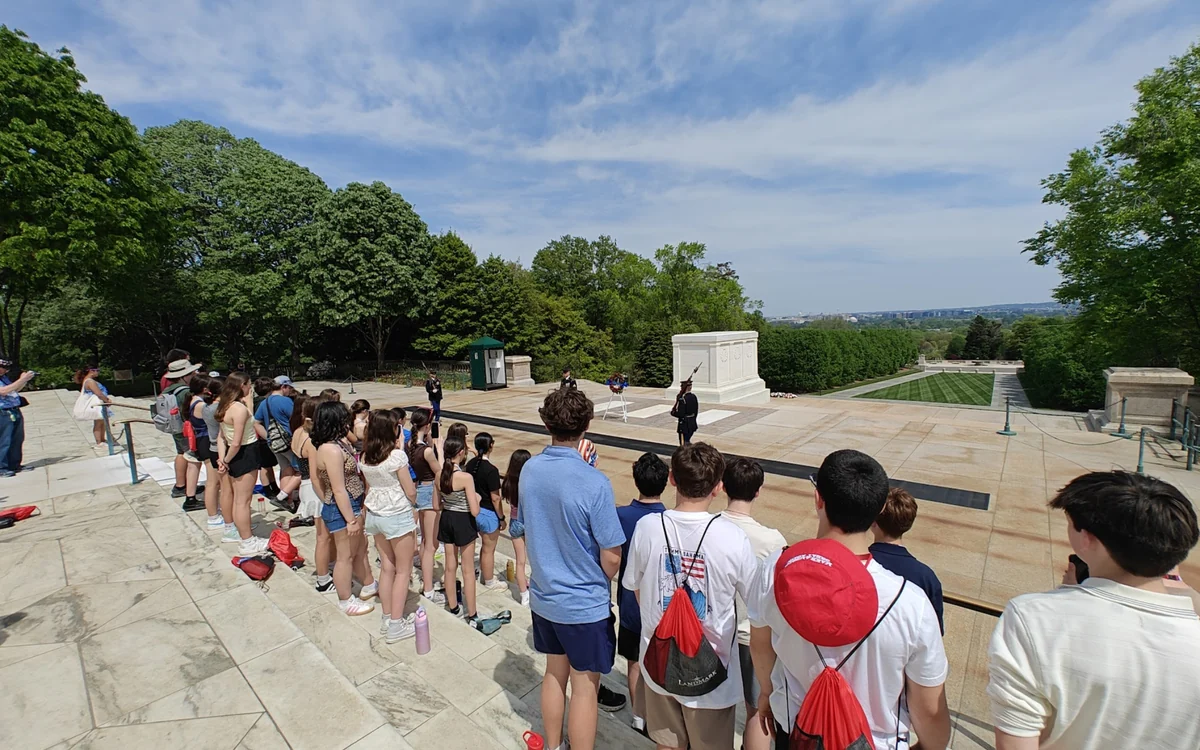
- Arlington is a different register. The Changing of the Guard is the moment most students remember years later.
- Evening is the underrated choice. The memorials are lit, far quieter, and the walk works better as one continuous story.
Below is each monument, what students actually see, and the detail that makes it stick. You can request a quote at no cost before committing to anything.
Washington, D.C. Monuments at a Glance
| Item | Detail |
|---|---|
| The core group | Lincoln, Vietnam Veterans, Korean War Veterans, World War II, Washington Monument, Martin Luther King, Jr. |
| Also widely visited | Arlington National Cemetery, Jefferson Memorial, Franklin Delano Roosevelt Memorial, U.S. Marine Corps War Memorial (Iwo Jima) |
| Where they are | The core six are on or beside the National Mall, within walking distance of each other; Arlington and Iwo Jima are across the Potomac in Virginia |
| Best time to walk them | Evening. The memorials are lit, crowds thin out, and the sequence reads as one story |
| Typical time needed | Two to three hours for the Mall memorials at an unhurried pace; Arlington is a separate half day |
| Strongest curriculum fit | U.S. history, civics and government, 20th-century conflict, civil rights |
| Who manages them | The National Park Service, except Arlington National Cemetery, which is run by the U.S. Army |
The Six Monuments Worth Building a Trip Around
These six sit close together and work best walked in sequence rather than visited one at a time. For each one, here is what students actually see and the detail worth telling them. Our four must-see monuments for students is the shorter version of this list.
| Monument | What students see |
|---|---|
| Lincoln Memorial West end of the Mall | A nineteen-foot marble Lincoln by Daniel Chester French, in a building Henry Bacon modeled on the Parthenon. The Gettysburg Address and the Second Inaugural Address are carved into the side chambers. Students can stand where Dr. King spoke in 1963 |
| Vietnam Veterans Memorial Just north of the Lincoln | A black granite wall carrying more than 58,000 names. They are ordered by date of loss rather than alphabetically, so the wall reads as a timeline. One arm points at the Lincoln Memorial, the other at the Washington Monument |
| Korean War Veterans Memorial South of the Lincoln | Nineteen stainless steel soldiers on patrol. Their reflections in the granite wall beside them make thirty-eight figures, for the 38th Parallel. The wall is etched from more than 2,400 period photographs held by the National Archives |
| World War II Memorial Between the Lincoln and the Washington Monument | Granite columns for every state and territory of the era, two victory pavilions, and a wall of 4,048 gold stars standing for the more than 400,000 Americans who died |
| Washington Monument Center of the Mall | The obelisk everything else is arranged around, ringed by flags. The change in stone color partway up is the most-asked student question: construction stopped for years, and the quarry had moved on |
| Martin Luther King, Jr. Memorial Northwest shore of the Tidal Basin | A figure of Dr. King carved into the Stone of Hope, which has been moved forward out of the Mountain of Despair behind it. The design comes from a line in the “I Have a Dream” speech, and the stone faces the Jefferson Memorial |
Our guide to the top monuments and memorials in Washington, D.C. covers the wider list, and what students should see on a first D.C. trip sets the monuments alongside the museums.
Why the Vietnam Veterans Memorial Lands Hardest
Ask a Tour Director which stop changes a group’s mood, and the answer is almost always this one. It is worth knowing why before you arrive.
The design was chosen by competition, and it was won by Maya Lin, a 21-year-old Yale architecture student. Students are usually surprised that someone barely older than them designed it.
The names are not alphabetical. They run in order of date of loss, beginning at the center, out to one end, back to the far end and in again, so the first casualties and the last meet in the middle.
That single fact changes how a student reads the wall. A name is no longer an entry in a list; it is a day. Groups who are told this before they walk down tend to walk slower.
The wall descends as you go, so you end up below ground level, looking at your own reflection behind the names. Nothing about that is accidental.
Arlington National Cemetery and the Tomb of the Unknown Soldier
Arlington is a different experience from the Mall and deserves its own block of time rather than being added to the end of a long day.
The Tomb of the Unknown Soldier has been guarded without a break since 1937. The 3rd U.S. Infantry Regiment, the Old Guard, has held that duty since 1948.
During the Changing of the Guard, the sentinel marches twenty-one steps, which matches the twenty-one gun salute, the highest honor the military gives. Students who know that in advance watch it differently.
One detail silences a group reliably: the crypt set aside for the Vietnam Unknown is empty. The service member once interred there was identified by DNA and returned to his family, and the crypt was deliberately left vacant.
If your group would like to take part in a wreath laying at the Tomb, let your Travel Consultant know early so it can be arranged. Our Arlington National Cemetery tour guide and facts about Arlington go further.
The Tidal Basin Memorials
A short walk from the Mall, the Tidal Basin holds three memorials that work well together and are frequently done as one loop.
| Memorial | Why it is worth it |
|---|---|
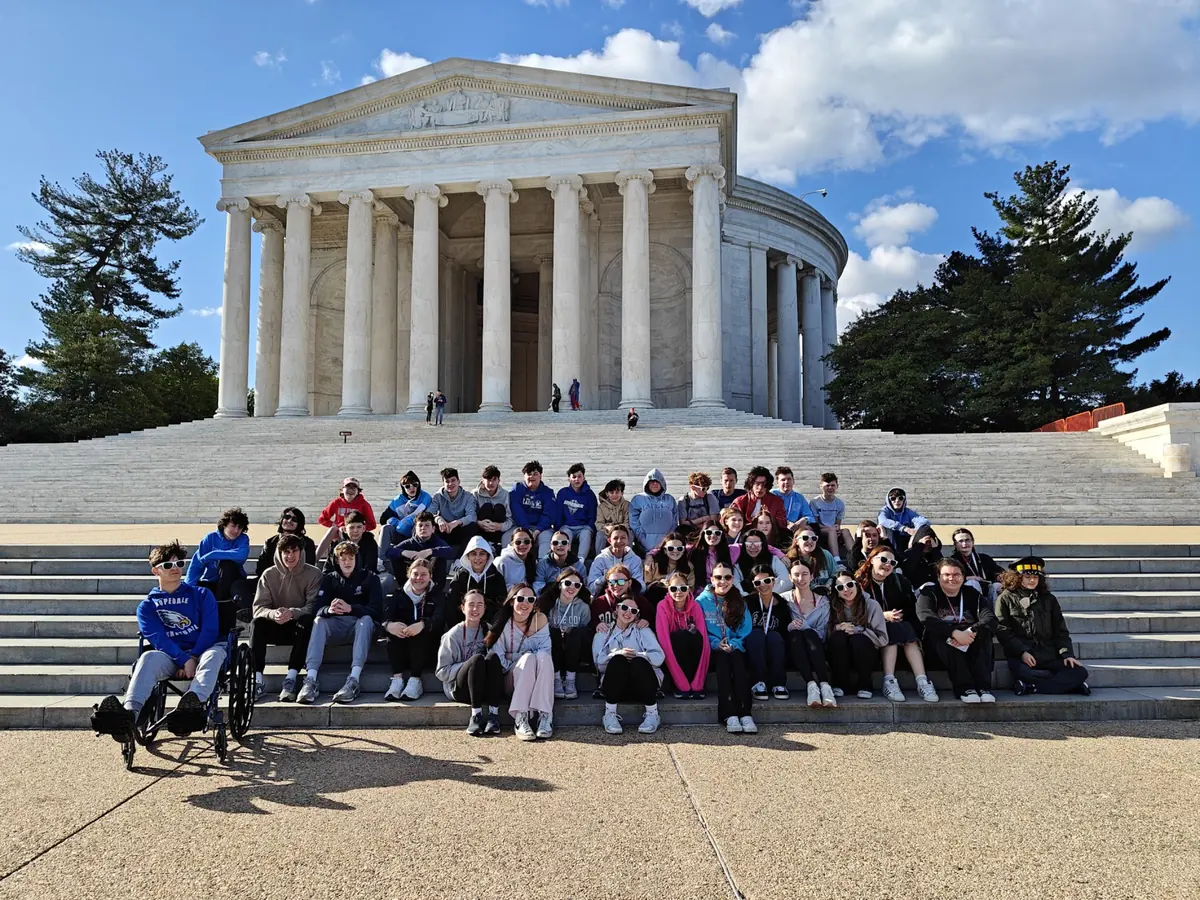
| Jefferson Memorial | A domed rotunda with passages from the Declaration of Independence on the walls. Pairs directly with any unit on the founding documents |
| Martin Luther King, Jr. Memorial | Dedicated in 2011, on the anniversary of the 1963 March on Washington. A curved wall carries quotations drawn from across his career, including the Letter from Birmingham Jail and his Nobel Peace Prize acceptance |
| Franklin Delano Roosevelt Memorial | Four outdoor rooms, one per term, walking students through the Depression and the war in sequence. The most physically navigable of the three for a large group |
Our Tidal Basin memorials tour walks the loop in order.
See the Monuments at Night
This is the recommendation most first-time planners do not expect, and the one that changes the trip most.
The memorials are lit after dark and stay open. The crowds that fill the Mall at midday are gone, the temperature is kinder in spring and fall, and a group of forty can actually hear the person speaking.
It also solves a scheduling problem. Daylight hours are the only time museums and government buildings are open, so spending them on outdoor memorials wastes the part of the day you cannot get back.
Landmark itineraries frequently put the memorial walk on the evening of arrival, which turns travel day into something more than a bus ride and a hotel check-in. Our evening monument tour guide explains the sequence.
Monuments and Students Who Need Accommodations
This is the first question some teachers have and the hardest to find an answer to, so here is what the Park Service actually provides.
Wheelchair access. The National Park Service states that all of the major monuments and memorials are wheelchair accessible. The Park Service does not lend wheelchairs, so a group needing one brings it or rents locally.
Braille and large print. Free Braille brochures cover the Franklin Delano Roosevelt, Korean War Veterans, Lincoln, Jefferson and Vietnam Veterans memorials and the Washington Monument. A ranger at the Lincoln Memorial can provide the Gettysburg Address in large print.
Captioning and interpretation. The films at the Lincoln and Jefferson memorials and the Washington Monument are closed captioned. American Sign Language interpretation is free but has to be arranged several weeks ahead.
Tell your Travel Consultant what your group needs and Landmark arranges it, including the ASL request. Of the Tidal Basin three, the Franklin Delano Roosevelt Memorial is the easiest to move a large group through.
Matching Monuments to What Your Class Is Studying
A trip tied to a unit is easier to justify and easier for students to absorb. These are the pairings that do the most work.
| The unit | Where to go |
|---|---|
| The Civil War and Reconstruction | Lincoln Memorial, with the Second Inaugural read aloud off the north wall |
| The founding documents | Jefferson Memorial, then the National Archives to see the originals |
| The Civil Rights Movement | Martin Luther King, Jr. Memorial and the Lincoln Memorial steps, in that order or the reverse |
| World War II | World War II Memorial and the U.S. Marine Corps War Memorial at Iwo Jima |
| The Cold War era | Korean War Veterans Memorial and the Vietnam Veterans Memorial, visited together |
| Civics and government | The Mall as a whole, read as a deliberate arrangement rather than a set of separate stops |
| The Great Depression and the New Deal | Franklin Delano Roosevelt Memorial, walked in order through its four rooms |
Our Washington, D.C. civics tour and 8th grade D.C. itinerary are both built around these pairings.
How Many Monuments Fit in a Visit
The most common mistake is attempting too many. Five stops done properly beat nine done at a jog.
Distance is the reason. It is roughly two miles from the Capitol to the Lincoln Memorial, and the Park Service notes that visitors are regularly surprised by how much walking the Mall involves. Every Metro station sits at least a mile from the Lincoln Memorial, which is why a group with its own motorcoach can start the walk where it makes sense rather than where the train stops.
| Time | What fits |
|---|---|
| One evening, two to three hours | Lincoln, Vietnam, Korean War and World War II memorials, walked in sequence with the Washington Monument in view throughout |
| Add a second block | The Tidal Basin loop: Martin Luther King, Jr., Franklin Delano Roosevelt and Jefferson |
| Half a day | Arlington National Cemetery, including the Changing of the Guard, on its own |
| Three-day trip | All of the above, with daylight hours kept for the Smithsonians and the government buildings |
For how the rest of the trip fits around them, see how to start planning a student trip and our guide to the Smithsonian museums.
What Makes a Monument Stop Work
The difference between a memorable stop and a photo opportunity usually comes down to three things.
Something to look for. Students given one specific thing to find — the change in the Washington Monument’s stone, the thirty-eight figures at the Korean War Memorial — engage immediately. Without it they drift.
Someone who can tell the story. This is what a Tour Director is for. A memorial explained well becomes something a student thinks about; a memorial walked past is scenery.
Enough time to be quiet. The Vietnam wall and the Tomb of the Unknown Soldier both need a few unhurried minutes. A schedule that does not allow for silence removes the part students remember.
What the research says about student travel covers why the prepared stops are the ones that last.
What a Landmark Trip Includes
A package typically covers a private group tour for your group only, a custom itinerary built around your curriculum, transportation, student-appropriate hotel accommodations, admission to every scheduled site, the meals named in the itinerary, a professional Tour Director traveling with your group, and restaurant and driver gratuities.
Landmark handles the arrangements for ticketed and scheduled sites, so the bookings are not something a teacher has to track.
On average, Landmark’s fully inclusive trips range from $300 to $400+ per traveler per day, or about $1,200 to $3,500+ total for an all inclusive package. Airfare is an additional variable cost. See what a school trip package includes.
Who Is Landmark Educational Tours?
Landmark Educational Tours is a 100% employee-owned domestic and international educational travel company headquartered at 1 Central Street, Suite 205, Middleton, Massachusetts, reachable at (888) 886-2781.
Landmark plans and operates fully managed, custom class trips for public districts alongside private, religious, prep and independent schools. Every trip is a private group tour, and each group travels with a Landmark Tour Director who is an employee of the company.
Landmark is a member of the Student & Youth Travel Association (#13443), along with ABA Member #84360, IATA Code 22576046, BBB Business ID 544197, California Seller of Travel 2168995-50, and ETOA membership. More on the about Landmark page.
Planning the Monument Walk
Three things make a first conversation productive: a rough headcount, the unit the trip supports, and whether you want the memorials by day or after dark.
A Landmark Travel Consultant will build the sequence around what your class is studying, free, with nothing held until you say so.
If you are still choosing a destination, why a D.C. field trip is a rite of passage and our Washington, D.C. school trips are the place to start.