Educational tours build leadership skills by putting students in situations where someone has to decide, organize or speak up, and the consequences are real. A trip supplies the conditions that a classroom cannot easily manufacture: unfamiliar problems, a timetable that matters, and a group of people who depend on each other from the first morning to the last.
But the mechanism is worth being honest about, because most pages on this question are not. Leadership is not absorbed from a destination. Students do not become leaders by standing in front of a monument. What produces leadership is being given a role and being held to it — and whether that happens is a decision the teacher makes before the trip, not something the itinerary does on its own.
The Six Moments That Do the Work
These are the six, and each one is a structure a teacher can choose to build in:
- Carrying a real role — a job with a deadline and other people relying on it
- Briefing the group at a site — preparing something and delivering it out loud
- Solving an unfamiliar problem as a team — a task nobody in the group has done before
- Looking after other people — accountability for someone besides yourself
- Adapting when the plan breaks — deciding well with incomplete information
- Representing the school in public — conduct as a visible choice rather than a rule
Leadership on a School Trip at a Glance
| Item | Detail |
|---|---|
| What produces it | Assigned roles with real consequences, not the destination itself |
| Framework schools use | CASEL, which places leadership and teamwork under relationship skills |
| Who it suits | Any grade. The role changes with age; the mechanism does not |
| Formal option | A structured leadership workshop, with published learning objectives |
| Minimum for that workshop | 15 students per group |
| Per student, per day | $300 to $400+, fully inclusive |
| Decided when | Before departure. Roles assigned on the coach do not work |
| Biggest mistake | Assuming the trip does it by itself |
What Schools Actually Mean by “Leadership”
Almost every page on this topic uses the word without defining it, which is why the claims are impossible to check. It is worth being specific, because most districts already are.
The framework most American schools use for this is CASEL’s five social and emotional learning competencies. Leadership is not a competency on its own in that framework. It sits inside relationship skills, alongside teamwork and collaborative problem-solving, and it draws on self-management, where CASEL lists “showing the courage to take initiative.”
That matters for a practical reason. If you are asking a principal or a school board to approve a trip on leadership grounds, naming the competencies your district already tracks is a far stronger argument than the word “leadership” on its own.
| Competency | On a trip |
|---|---|
| Self-awareness | Noticing what you are good at in a group, and what you avoid |
| Self-management | Taking initiative without being asked. Being ready at the stated time |
| Social awareness | Reading a room, a site, or a culture that is not your own |
| Relationship skills | Leading a small group, sharing a task, settling a disagreement |
| Responsible decision-making | Weighing a real trade-off when the plan changes, and saying which way and why |
Carrying a Real Role
This is the mechanism everything else depends on. A student who has been told “you are in charge of making sure we leave the museum at 2:15” is in a different relationship with the day than a student being moved through it.
The role has to be real. If the teacher is quietly doing the job anyway, students know, and it becomes an exercise. The uncomfortable part of assigning real roles is that some of them will be done badly on day one. That is the point: a role that cannot be fumbled is not a role, it is a chore.
Briefing the Group at a Site
Assign each student or pair one stop on the itinerary. They research it beforehand and deliver three or four minutes to the group when everyone is standing in front of it.
This is the single highest-value structure available on a school trip, and it costs nothing. It converts a passive stop into preparation, public speaking and accountability, and it produces the thing students remember years later — the part where they were the one who knew something. It also raises the quality of the stop for everyone else, because a peer explaining a site is listened to differently than an adult doing it — which is part of why field trips affect learning in the first place.
Solving an Unfamiliar Problem as a Team
Put a group of teenagers in front of a task none of them has done before and the usual hierarchy stops applying. The student who leads in the classroom may not lead here, and someone who never does gets a turn.
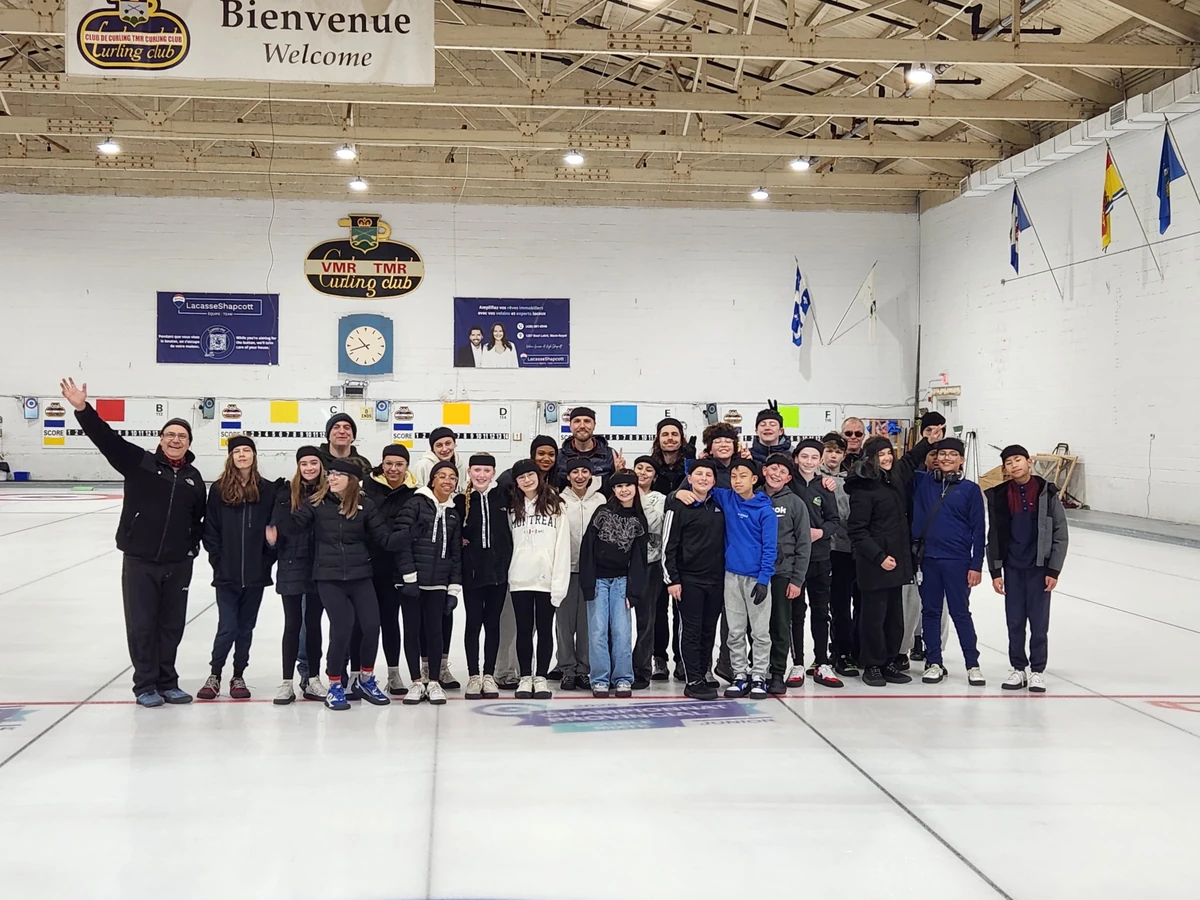
Landmark’s 3-Day Montreal School Trip includes a curling lesson with the Town of Mount Royal Curling Club, which is a good example of why this works. Curling is a strategy sport played in teams of four, nobody arrives knowing how, and a team cannot throw its way out of a bad plan. Within twenty minutes students are negotiating a shot, assigning sweeping and talking each other through it — which is collaborative problem-solving in CASEL’s sense, happening on its own because the task demands it.
The general principle is more useful than the specific activity. Look for one item on the itinerary that the whole group will be equally bad at on arrival. That is where the leadership is.
Looking After Other People
Accountability for another person is the oldest leadership structure there is, and a trip creates it naturally. Room groups, travel partners, equipment checks, a head count before the coach moves.
Give the responsibility a name and an owner rather than leaving it with the adults. A student who is responsible for confirming their group of four is present, and who has to say so out loud to a chaperone, is practicing something specific. Our guide to how many chaperones you need for a school trip covers the adult side of that ratio, which is what makes delegating any of it safe in the first place.
Adapting When the Plan Breaks
Something always moves. A site runs late, weather closes an outdoor stop, a timed entry slips. Teachers tend to treat this as the day going wrong. For leadership purposes it is the most valuable hour of the trip.
The move is to narrate the decision rather than absorb it. Tell the group what changed, what the options are and what the trade-off is, and let them weigh in before you decide. Students almost never see an adult make a real decision with incomplete information and explain the reasoning. Seeing it once is worth more than a term of being told to be a leader. The reason a teacher has the room to do this at all is that someone else is holding the logistics and the safety and support side of the day.
Representing the School in Public
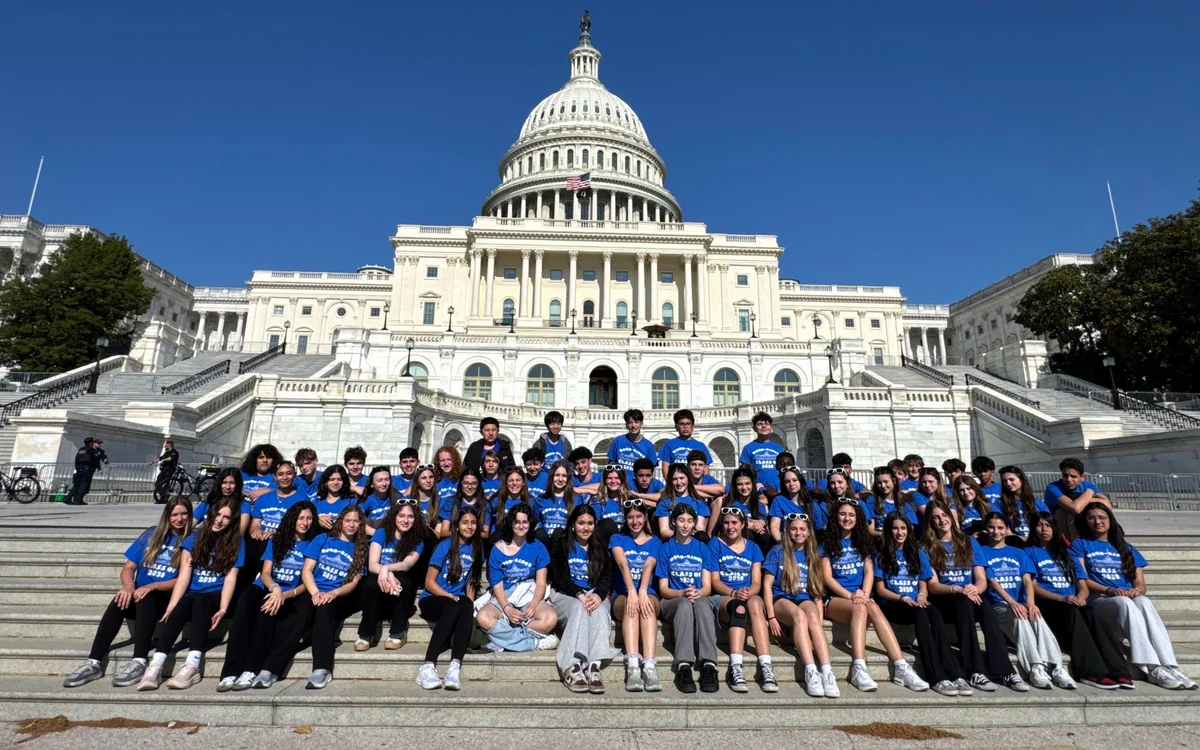
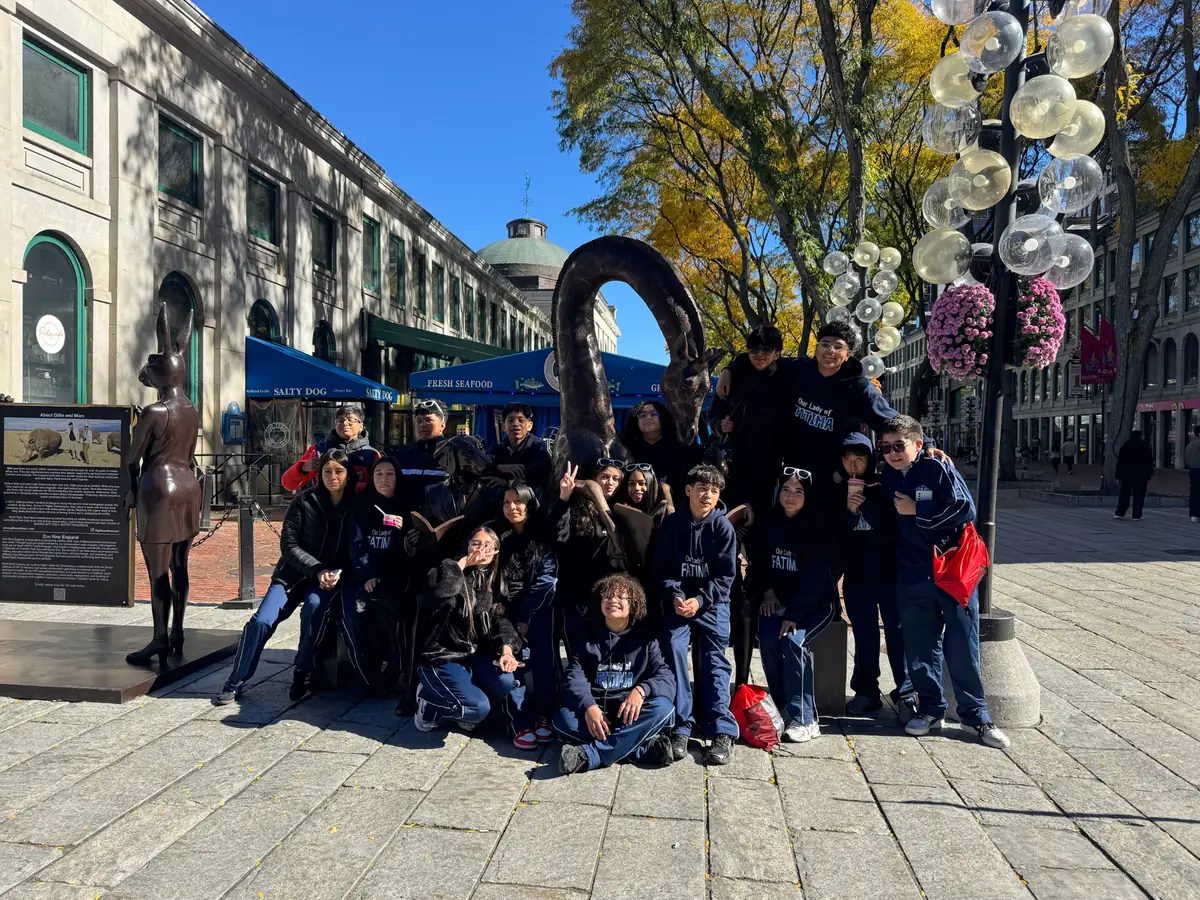
On a trip, conduct stops being a rule and becomes a choice other people can see. Students in matching shirts on the steps of a public building — the Capitol, on one of our Washington, D.C. programs — are read as a group, and they know it.
Said well before departure, this lands as trust rather than a warning: for the length of this trip you are what people here know about our school. That framing does more for behavior than a list of prohibitions, and it is the first time many students experience the idea that they are accountable to a group identity rather than to a teacher watching them.
The Formal Route: A Leadership Workshop
Everything above can be built into any itinerary, in any of our destinations, at no extra cost. There is also a formal version, which is worth knowing about if leadership is the stated purpose of the trip rather than a benefit of it.
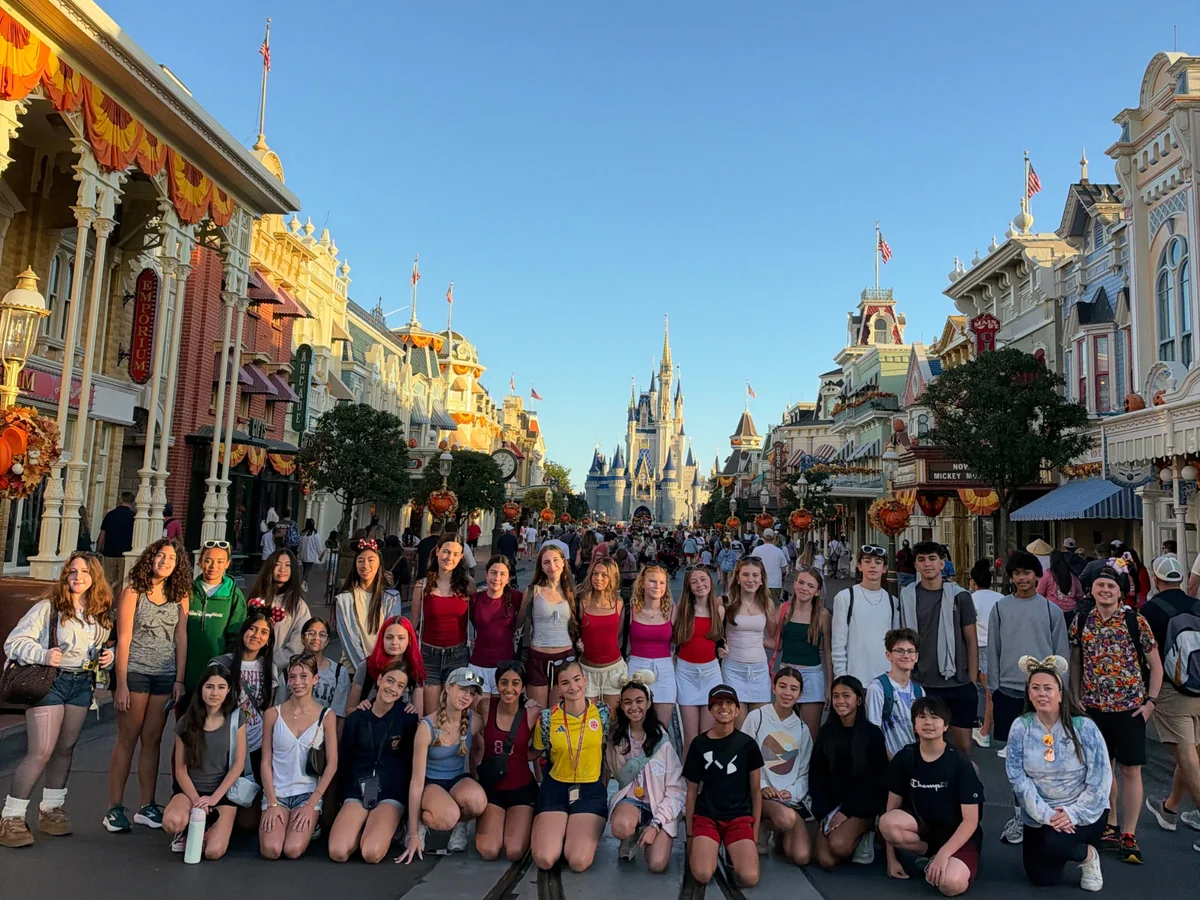
Landmark’s Disney Educational Tours include Leadership the Disney Way at EPCOT and Teamwork the Disney Way, both run by Disney Imagination Campus. These are taught workshops with published outcomes rather than a branded add-on. Disney’s own course page states that students will identify their personal leadership style, analyze how employee excellence connects to customer satisfaction and business results, collaborate with partners to solve problems, discuss why diversity matters when assembling a team, and learn the five Keys of Excellence that Disney Cast Members work to.
Two practical details that decide whether it is an option for you: the workshops are pitched at high school and college groups, though the content can be adapted for middle school, and there is a minimum of 15 students per group. The sessions run in the morning, which means a workshop day is a real day of the itinerary rather than something tucked around the edges.
Building the Roles In Before You Go
Roles assigned on the coach do not work, because the student has had no chance to prepare and nothing to be accountable for yet. Assign them when you hand out the itinerary.
| Role | What it practices |
|---|---|
| Site briefer | Preparation and public speaking. The highest-value role on the list |
| Day captain | Owning the shape of one day and reporting on how it went |
| Timekeeper | Holding peers to a schedule, which is harder than it sounds |
| Head-count lead | Accountability for a named group of four, confirmed out loud |
| Route reader | Following a transit map or route with the group and a chaperone |
| Record keeper | Photos, notes and the account the group takes back to school |
| Budget keeper | Tracking a small shared spend across a day |
Rotate them. A student who is timekeeper for all five days has a job; a student who holds three different roles across five days has had three different experiences of being responsible. Even a three-day trip has room for two.
Then decide who gets them, which is the part worth being deliberate about. Left alone, the roles go to the students who already volunteer for everything, and those students practice something they can already do. The gain is largest for the student who has never been asked. A trip is one of the few settings where a teacher can hand responsibility to a quiet student without it being conspicuous, because everyone has a job and nobody is being singled out.
| Factor | Effect |
|---|---|
| Roles assigned in advance | Large. The single biggest difference between a trip that builds leadership and one that does not |
| Student-led site briefings | Large, and free. Converts passive stops into preparation and delivery |
| Adults narrating decisions | Moderate to large. Students rarely see reasoning made visible |
| One unfamiliar team task | Moderate. Resets who leads, at least for an afternoon |
| Rotation of roles | Moderate. Three experiences beat one job held all week |
| Who gets the roles | Large. The gain is biggest for students who are not the usual volunteers |
| Debrief after the trip | Moderate. Without it, students cannot name what they did |
| Destination choice | Small. It shapes the curriculum, not the leadership |
What the Evidence Supports, and What It Does Not
This question attracts some of the least reliable statistics on the internet. Search it and you will meet precise-sounding figures about retention gains and confidence increases, attributed to no study you can open. We do not repeat those, here or anywhere else on this site, and our review of what the research on student travel actually says explains why at length.
Here is the honest position. The Student & Youth Travel Digest, the largest dataset on student group travel, asked teachers what they observed in students after a trip. The outcomes they reported most often map closely onto the competencies above: better cooperation and collaboration, increased independence and self-confidence, students being more outgoing, and better self-expression. Sixty percent said travel triggers a transformation in students’ ambitions to know, learn and explore.
What that is: teachers reporting what they observe, from the association that commissioned the research, which Landmark belongs to. What it is not: a controlled before-and-after measurement of leadership. Anyone presenting it to a school board should say which of the two they are holding. That distinction is worth more to your credibility than a bigger number would be.
What a Leadership-Focused Trip Costs
A trip built around leadership costs the same as any other trip of the same length, because the structures that matter most — roles, briefings, debriefs — are free. The ranges below are the ones on our breakdown of what drives student trip prices.
| Length | Per student | Allows |
|---|---|---|
| 3 days 2 nights, 1 full day | About $900 to $1,200+ | Roles and briefings, one unfamiliar team task |
| 4 days 3 nights, 2 full days | About $1,200 to $1,600+ | Enough days to rotate roles so students hold more than one |
| 5 days 4 nights, 3 full days | About $1,500 to $2,000+ | Room for a formal workshop day alongside the itinerary |
Those are per student at four to a room, fully inclusive: transportation, hotel, meals, every scheduled admission, and a Landmark Tour Director who is our own background-checked employee and is assigned to your group alone. Airfare is quoted separately. Gratuities are budgeted separately. Travel protection is optional coverage underwritten by battleface Insurance Services, bought separately rather than folded into the price. Our guide to what is in a school trip package itemizes all of it.
The one thing that does change the price is adding a formal workshop day, because it is a ticketed program and it occupies time that would otherwise hold other stops. That is the trade worth discussing when you ask for a quote.
How to Tell Whether It Worked
Leadership is the easiest trip outcome to claim and the hardest to show, which is why so much writing about it stays vague. Two things make it concrete.
The first is a debrief within a week of getting back, while it is still fresh. Ask each student what they were responsible for, what went wrong, and what they would do differently — not what they enjoyed. The answers are the evidence, and students who can name what they did have learned something that the ones who cannot have not.
The second is to ask the adults who did not travel. Parents and colleagues notice changes that teachers on the trip are too close to see, and what they report in the two weeks afterward is the most credible account you will get.
How This Fits a Landmark Trip
Our programs are built for each group rather than sold as fixed packages, so the structures in this article are a planning conversation rather than an upgrade. Tell us leadership is the purpose and the itinerary gets shaped around it: stops chosen so students can brief them, at least one task nobody will arrive competent at, and a day with enough slack that a change of plan is a decision rather than a scramble.
If you want the civic version of the idea, the Washington, D.C. civics student tour puts students inside the institutions that make the decisions. If you want the taught version, the Disney educational tours carry the formal workshops. And if you are at the earlier stage of making the case at all, our guide to how to start planning a student trip covers the approval conversation, and what students learn through educational travel covers the wider curriculum argument.
Who Is Landmark Educational Tours?
Landmark Educational Tours is a 100% employee-owned educational travel company at 1 Central Street, Suite 205, Middleton, Massachusetts, planning custom trips for school groups across the United States and abroad. We are a member of the Student & Youth Travel Association, SYTA, member number 13443 — the association that commissioned the research cited above.
Every group travels with a Landmark Tour Director, our own employee, who handles the timing and the problems so that the teacher is free to do the part that matters here: watching which students step up, and making sure the ones who normally do not get the chance. You can read more about Landmark or work through our frequently asked questions.
Planning a Trip That Builds Leaders
The summary is short. A trip creates the conditions for leadership and a teacher creates the opportunity, and a trip without assigned roles produces a good week rather than a leader. The structures that matter most cost nothing and have to be decided before anyone boards a coach.
Tell us your grade level, your dates and what you want students to come back able to do, and we will build the itinerary around it. Request a quote and we will put real numbers against it.