Prepare students for a first Washington, D.C. trip by covering six things before you leave: footwear and how far they will walk, water and weather, what they carry through museum security, how to behave at the memorials, what Arlington actually is, and what they already know about the sites. The practical half takes one class period and prevents most of what goes wrong.
The itinerary is handled for you. This page is about the part that is not: the students themselves.
The short version:
- Shoes and walking — more than they expect, on pavement
- Water and weather — the Mall has very little shade
- What they carry — every museum has a security line
- Conduct at memorials — some of it is federal law
- Arlington — a working cemetery, and briefed separately
- Context — twenty minutes on what they are about to see
Below is each one, with what to say and when. You can request a quote at no cost before committing to anything.
Preparing Students at a Glance
| Item | Detail |
|---|---|
| Time needed | One class period for the practical briefing, plus context woven into lessons beforehand |
| The single biggest item | Footwear. The Park Service notes it is two miles from the Lincoln Memorial to the Capitol |
| The one most missed | What students carry. Every Smithsonian museum has a security screening line |
| Conduct | Federal law prohibits eating and drinking inside memorial spaces |
| Arlington | An active cemetery. Worth briefing on its own rather than as part of a list |
| What teachers do not handle | Tickets, timings and entries. Landmark holds those |
| Best time to brief | The week before, not the morning of departure |
Shoes, and How Much They Will Walk
If you only say one thing to students, say this one. It is the most common regret on a first D.C. trip and the easiest to prevent.
The National Park Service puts it plainly: many visitors are surprised by the amount of walking they do, and it advises wearing shoes appropriate for standing for long periods and walking long distances. The same page notes it is two miles from the Lincoln Memorial to the Capitol.
That walking is on pavement and stone, not grass. New shoes bought for the trip are the worst possible choice, and students should be told so explicitly rather than left to work it out.
Tell them: broken-in shoes they have already walked a full day in. Nothing new, nothing they are hoping to make work. Our guide to how many days you need in D.C. explains how the walking adds up across an itinerary.
Water, Sun and the National Mall Shade Problem
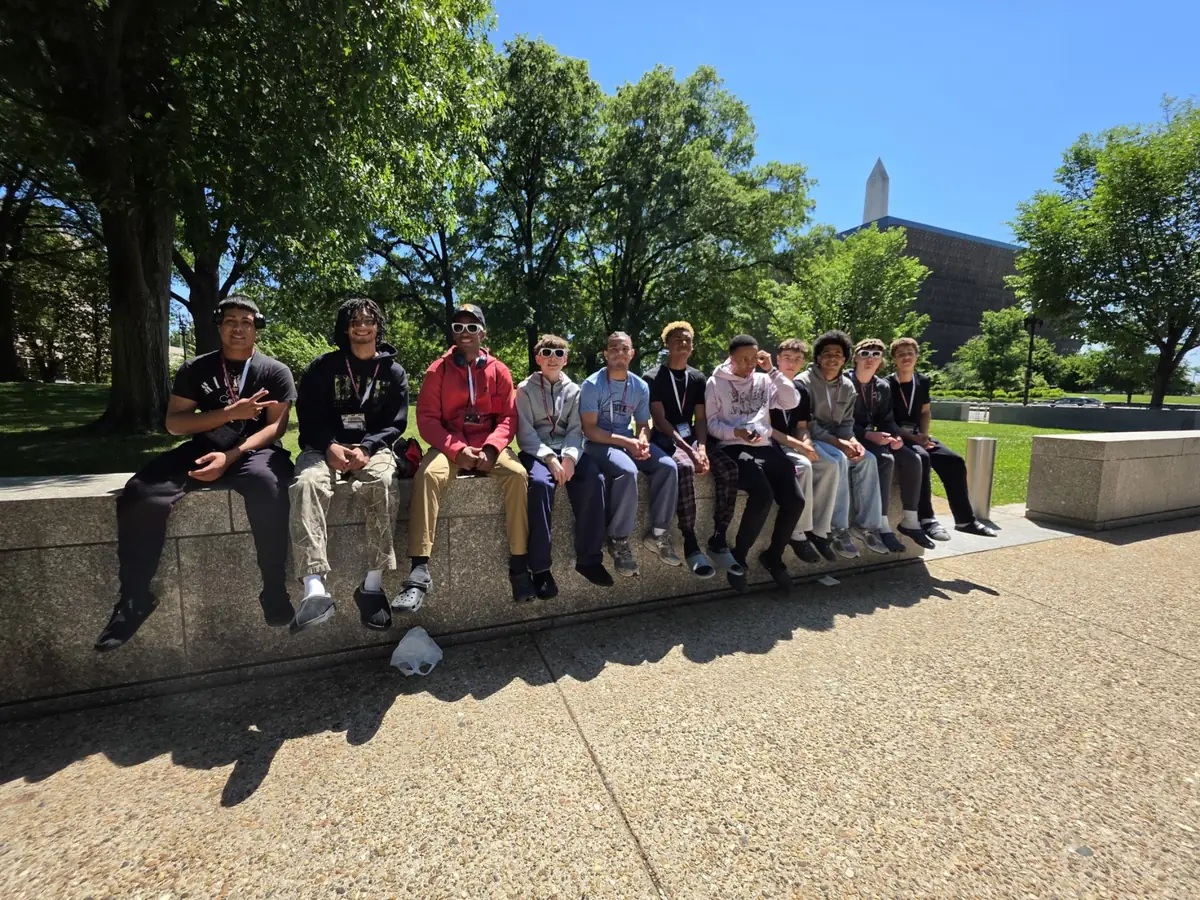
The National Mall is a long open lawn with very little shade, and students consistently underestimate it.
The Park Service describes heat-related illness as a life-threatening condition, and recommends drinking plenty of water through the day, resting in shade, protecting against sun and wearing breathable clothing.
In practice: a refillable water bottle each, sunscreen applied before the coach rather than at the first stop, and a hat for spring and summer departures.
The sites on a first D.C. itinerary are mostly outdoors, which is why this matters. Fall and winter groups have the opposite problem. The Mall is exposed, and wind off the open ground makes a clear day feel much colder than the forecast.
What Students Carry, and Why It Matters More Than It Sounds
This is the prep item teachers most often skip, and the one that quietly costs the most time.
Every Smithsonian museum screens visitors on entry, with bags hand-checked or scanned. Smithsonian guidance asks visitors to limit the number of bags and personal items to move through checkpoints faster, and advises groups to carry as little as possible to speed entry.
Multiply one slow bag check by forty students, at four buildings in a day, and the arithmetic is unforgiving. A group that packs light gets more time inside the museums, which is the whole point of our Smithsonian guide for student groups.
There is a second reason. Many Smithsonian museums have no bag or coat storage, and belongings cannot be left at one museum while the group visits another. Whatever students bring, they carry all day.
| Bring | Leave behind |
|---|---|
| A small bag or sling | Full-size backpacks, which slow every security line |
| A refillable water bottle | Glass bottles and anything that leaks |
| Phone and a charger or power bank | Tripods and selfie sticks, which museums do not permit |
| A light layer | Coats they will carry all afternoon once it warms up |
| Sealed snacks | Open food and drink, which cannot go into memorial spaces |
| Spending money, kept small | Anything valuable they would be upset to lose |
The rule of thumb is simple: nothing they would mind holding for nine hours. Our D.C. packing essentials post is the short version for families.
Conduct at the Memorials
Most students behave well when they understand where they are. The briefing is about giving them that understanding rather than issuing rules.
Worth knowing before you go: federal law prohibits eating, drinking, smoking, bicycling and skating inside memorial spaces. Students arriving at the Lincoln Memorial with an open drink are not being badly behaved, they simply do not know.
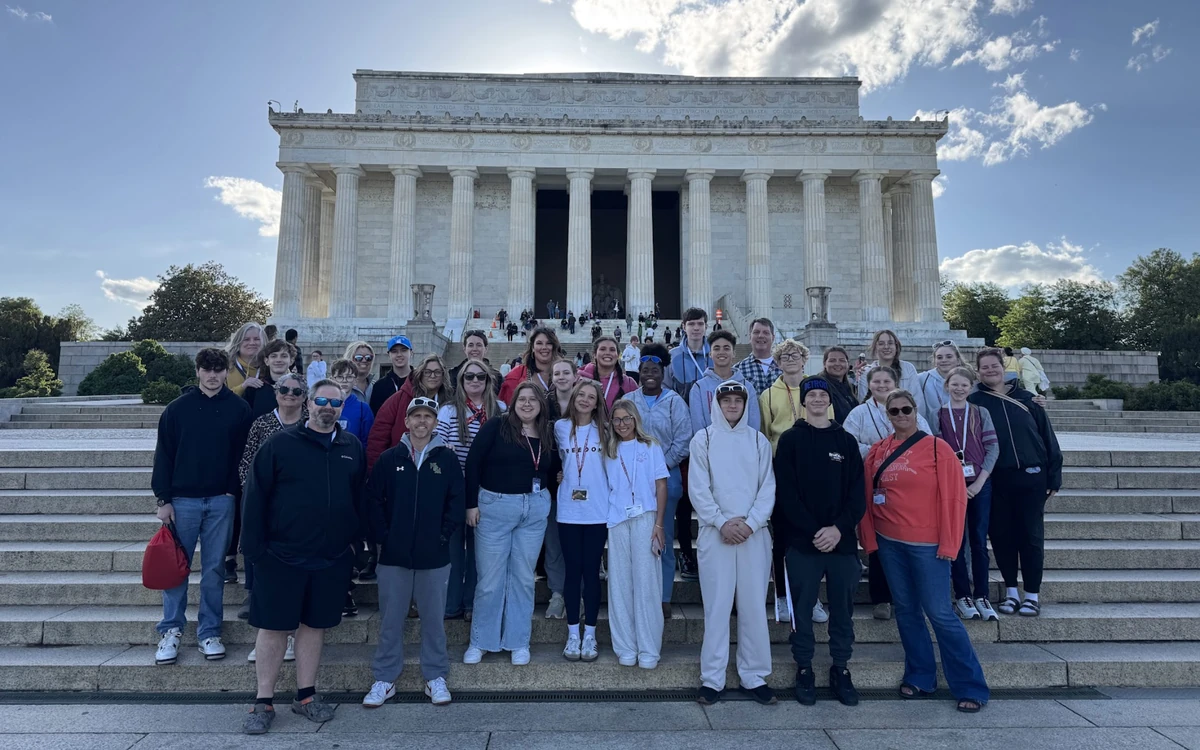
The Vietnam Veterans Memorial is the stop where tone matters most. Students who have been told in advance what the wall is, and that people visiting it are often looking for a specific name, arrive ready to be quiet rather than being asked to be.
Our guide to the monuments students should visit covers what to say at each one.
Arlington Deserves Its Own Briefing
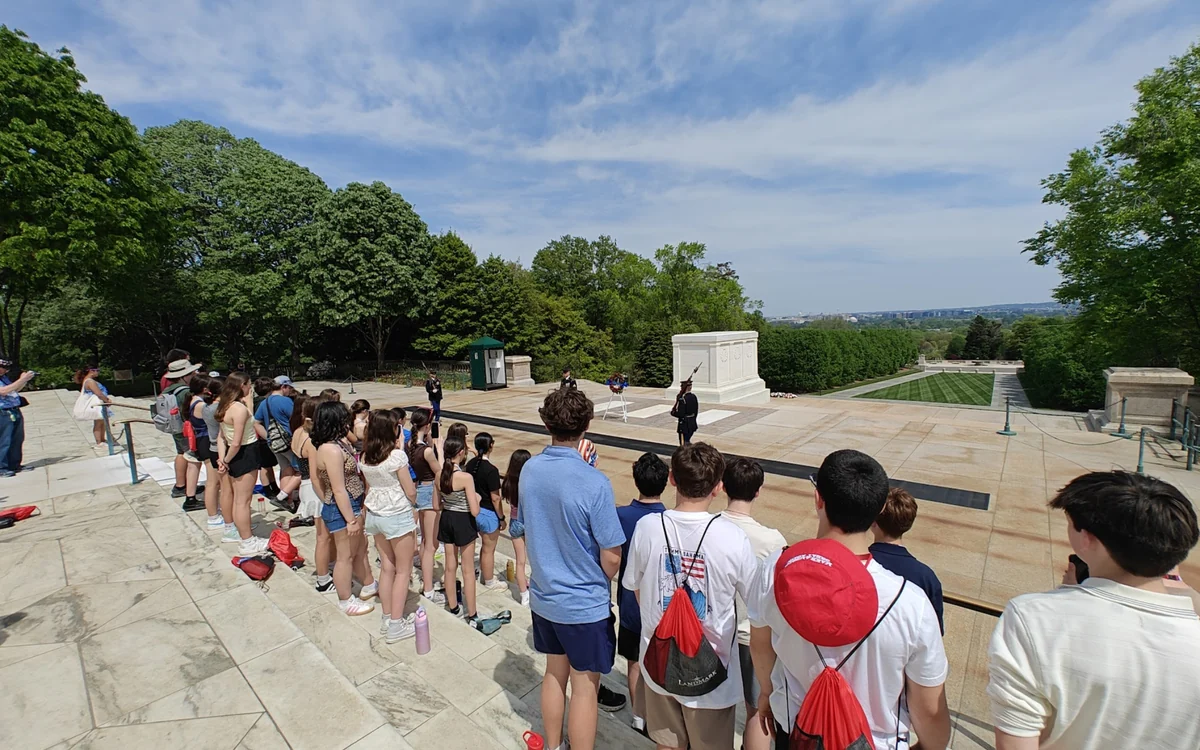
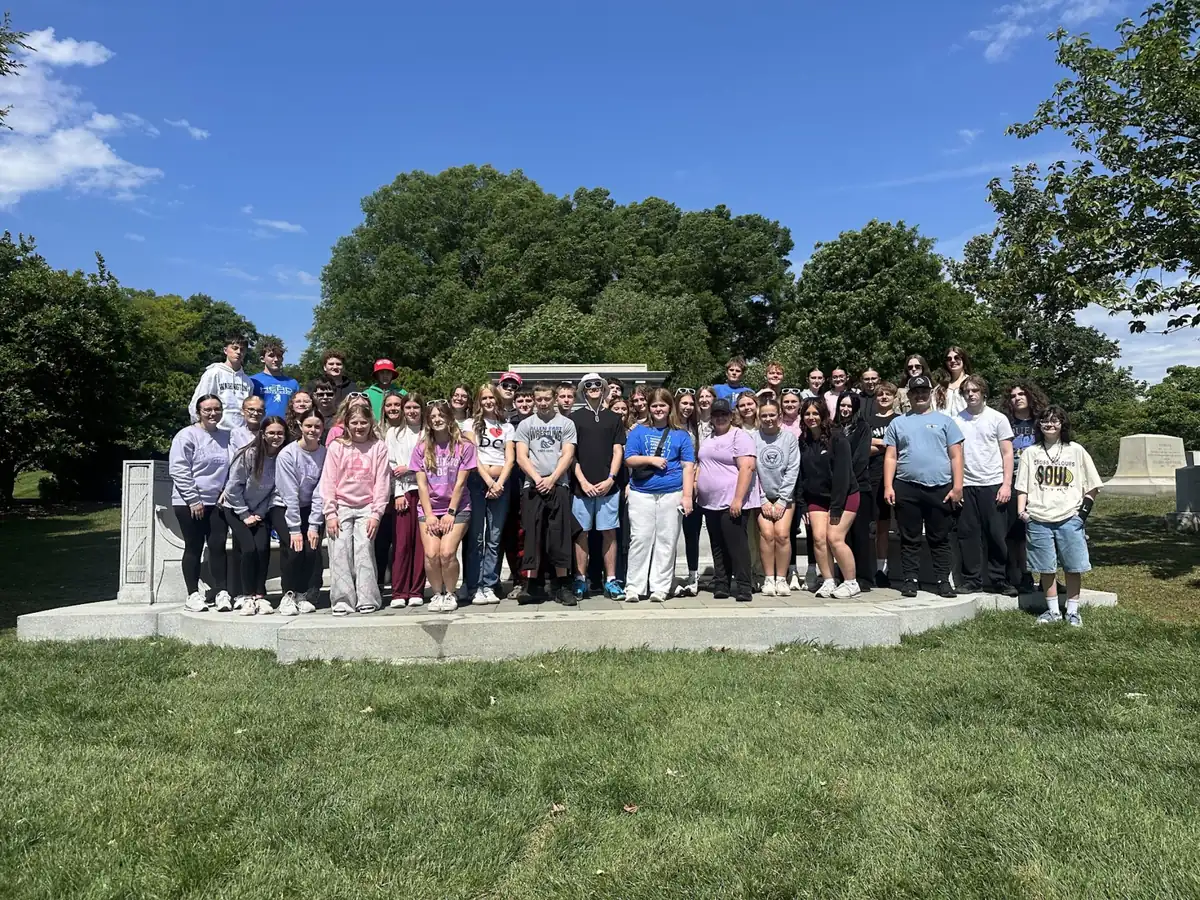
Arlington National Cemetery is not a monument. It is an active cemetery where funerals take place on ordinary weekdays, and a group may well see one.
Students who are told that before arriving behave completely differently from students who work it out at the gate. It is worth saying plainly: this is a burial ground, families are here visiting graves, and a funeral may be in progress.
The Changing of the Guard at the Tomb of the Unknown Soldier is the moment most students remember. Knowing in advance that the sentinel marches twenty-one steps, matching the twenty-one gun salute, gives them something to watch for rather than something to film.
Our Arlington tour guide goes further.
Preparing the Class Before You Travel
Students who arrive knowing what they are about to see get more from every stop. This does not require a new unit, only a few deliberate connections.
| When | What to do |
|---|---|
| A few weeks out | Tie the trip to the unit you are already teaching. Students should know why these sites and not others |
| Two weeks out | Read one primary source they will see in person. The Gettysburg Address is the obvious one |
| The week before | The practical briefing: shoes, water, what to carry, conduct at memorials and at Arlington |
| The week before | Give each student one specific thing to find. It focuses attention and gives you something to assess |
| The night before | Nothing new. A short reminder about shoes and water is enough |
| On the coach | Twenty minutes of context before the first stop changes that stop completely |
Our piece on what students learn through educational travel covers capturing the learning afterwards.
What to Tell Parents
A short, specific note home prevents most of the questions that otherwise arrive the week of departure.
Shoes. Broken in, already worn for a full day. This is the one families most often get wrong.
Weather. Layers, and a refillable bottle. The Mall is exposed in every season.
What to pack light. Explain the security lines, and families understand immediately why a large backpack is a bad idea.
Spending money. A realistic figure for souvenirs and any meals not named in the itinerary, so no student arrives with nothing or with far too much. Our safety page for families covers how groups are supervised.
Our chaperone guide covers the adult side, and travel safety and support answers the question parents actually want answered.
What a Landmark Trip Costs and Includes
A package typically covers a private group tour for your group only, a custom itinerary built around your curriculum, transportation, student-appropriate hotel accommodations, admission to every scheduled site, the meals named in the itinerary, a professional Tour Director traveling with your group, and restaurant and driver gratuities.
On average, Landmark’s fully inclusive trips range from $300 to $400+ per traveler per day, or about $1,200 to $3,500+ total for an all inclusive package. Airfare is an additional variable cost.
| Item | Detail |
|---|---|
| Per traveler, per day | $300 to $400+, fully inclusive |
| All inclusive package | About $1,200 to $3,500+ in total |
| Transportation and hotel | Included, with student-appropriate accommodations |
| Admissions and entries | Included for every scheduled site, held and timed by Landmark |
| Meals named in the itinerary | Included, with restaurant and driver gratuities covered |
| Tour Director | Included, traveling with your group start to finish |
| Airfare | Quoted separately. Many groups reach D.C. by motorcoach instead |
| Travel protection | Optional coverage, bought separately rather than included |
| Student spending money | Not included. Souvenirs and meals not named in the itinerary |
See what a Washington, D.C. school trip costs and what a package includes.
Who Is Landmark Educational Tours?
Landmark Educational Tours is a 100% employee-owned domestic and international educational travel company headquartered at 1 Central Street, Suite 205, Middleton, Massachusetts, reachable at (888) 886-2781.
Landmark plans and operates fully managed, custom class trips for public districts alongside private, religious, prep and independent schools. Every trip is a private group tour, and each group travels with a Landmark Tour Director who is an employee of the company.
Landmark is a member of the Student & Youth Travel Association (#13443), along with ABA Member #84360, IATA Code 22576046, BBB Business ID 544197, California Seller of Travel 2168995-50, and ETOA membership. More on the about Landmark page.
Planning a First D.C. Trip
Three things make a first conversation productive: a rough headcount, the year group, and the unit the trip supports.
A Landmark Travel Consultant builds the itinerary and holds the entries, so the preparation you do is the preparation above: the students themselves.
If you have not started, see how to start planning a student trip and our Washington, D.C. school trips.