Washington, D.C. is the best 8th grade trip destination for most schools, and it is not close. It is the most-booked middle school class trip in the country for a reason. The civic curriculum lands exactly where eighth graders are in US history, almost everything students come to see charges nothing to enter, and the city is built to absorb school groups. After that it depends on what your eighth grade is actually studying — and on what your students are like to travel with.
That second part is what most middle school field trip lists leave out. Eighth grade is a specific age to take away for three nights: old enough to handle a real itinerary, often young enough that it is a first trip without parents. The right destination accounts for both.
Below are the destinations Landmark actually runs for eighth grade groups, what each one suits, and how to choose between them. You can request a quote at no cost before deciding anything.
Best 8th Grade Trip Destinations at a Glance
If you have not begun, how to start planning a student trip is the step before choosing a city.
| Item | Detail |
|---|---|
| Most common choice | Washington, D.C. — the most-booked middle school class trip in the country |
| Usual trip length | Four days, three nights |
| Curriculum fit | US history and civics, which is where most eighth grade sits |
| First passport option | Quebec City or Montreal — international without a long flight |
| Reward trip option | Orlando, usually paired with a science or performance component |
| What decides it | Curriculum, travel distance, budget, and whether this is a first trip away from home |
| Booking lead time | Six to twelve months domestically; twelve months or more for anything requiring passports |
| Typical cost | $300 to $400+ per traveler per day depending on package inclusions, or about $1,200 to $3,500+ in total for an all-inclusive package. Airfare is an additional variable cost. |
The Destinations, Compared
This is the chart worth taking to a grade-level meeting, because it answers the question a committee actually argues about: not which city is best, but which one suits this particular eighth grade. Every destination below is one Landmark runs; the full list is on our US destinations page.
| Destination | Why it works for eighth grade | Usual length |
|---|---|---|
| Washington, D.C. | Matches the US history and civics curriculum almost exactly, and the Smithsonian museums, National Mall memorials, Capitol and Arlington National Cemetery all charge nothing to enter | 4 days |
| New York City | Enormous range in a small area — Ellis Island, the 9/11 Memorial, the Met, a Broadway show. Intense in a way eighth graders mostly enjoy. | 3 to 4 days |
| Boston | The Revolution on foot. The Freedom Trail turns a textbook chapter into a walk students can actually follow. | 3 to 4 days |
| Philadelphia | Independence Hall and the Liberty Bell in a compact, walkable downtown. Pairs naturally with a day in Washington or New York. | 2 to 3 days |
| Williamsburg | Colonial life as a working environment rather than an exhibit, with costumed interpreters students can question directly | 3 to 4 days |
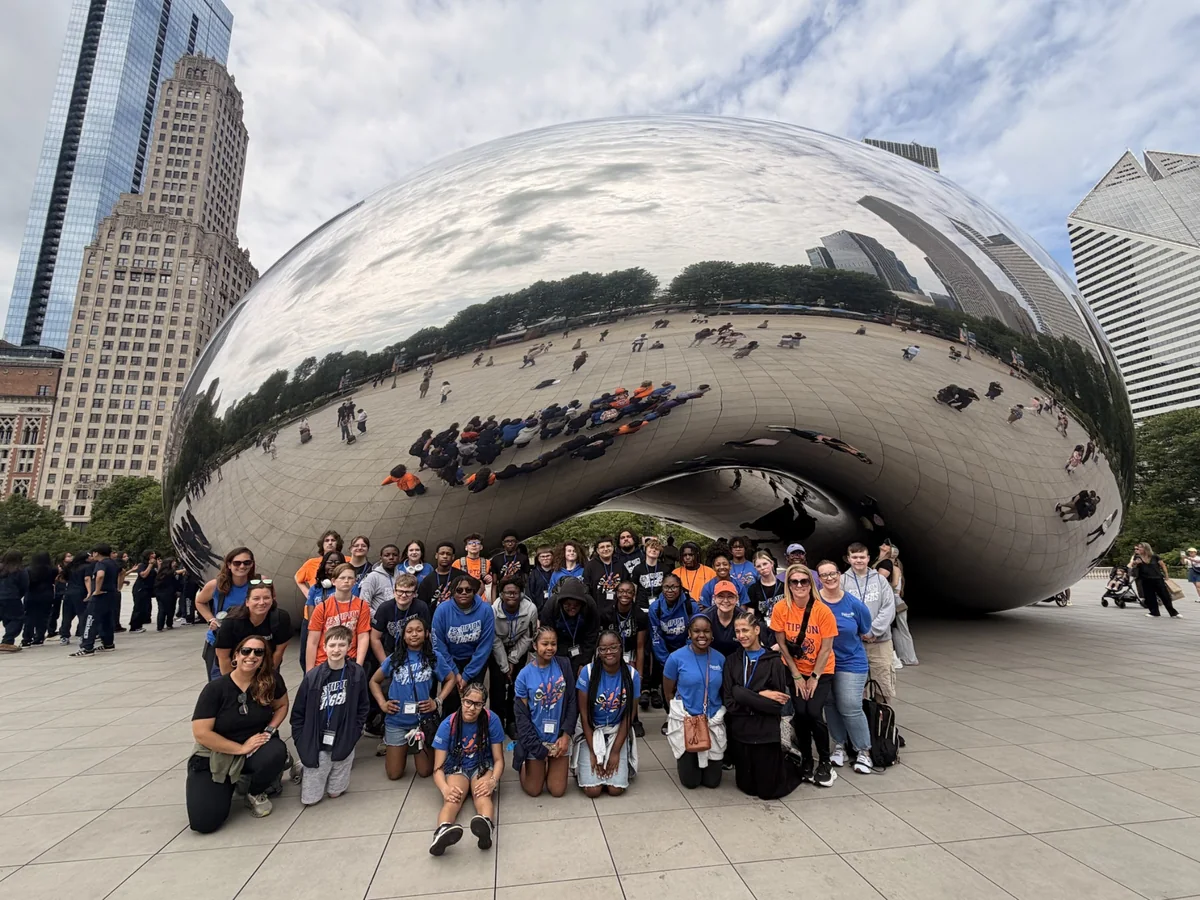
| Chicago | Architecture, art and world-class science museums in a city that is far easier to move a group around than New York | 3 to 4 days |
| Orlando | The reward trip that still teaches — usually paired with a science or performing arts component rather than sold as a holiday | 4 to 5 days |
| Quebec City | A first passport and a French-speaking city, reachable without a long flight. Winter Carnival is the signature version. | 3 to 4 days |
| Montreal | The same international-but-close logic as Quebec, with a bigger-city feel and a strong food and arts angle | 3 to 4 days |
Why Washington, D.C. Is the Default
Three reasons, and the third is the one nobody says out loud.
The curriculum fit is almost exact. Most eighth grade US history covers the founding through the Civil War and into the twentieth century, and Washington puts the documents, the institutions and the memorials in front of students in the same week they are reading about them. Few destinations line up with a grade level this cleanly.
The cost per day buys more. The Smithsonian museums, the National Mall memorials, the Capitol, the National Archives and Arlington National Cemetery all charge nothing to enter, which is a large part of why a D.C. trip delivers more per dollar than most alternatives.
And the city is built for this. Washington absorbs school groups all spring. Hotels know what a forty-student group needs, restaurants can seat one, and the sites are set up for them. That sounds unglamorous and it is the reason a first-time trip organizer has an easier week in D.C. than almost anywhere else. Our four-day Washington, D.C. itinerary sets out what the days look like, and the 8th grade D.C. program is built specifically for this grade.
The Founding-Era Alternatives: Boston, Philadelphia and Williamsburg
If your eighth grade spends its year on the Revolution and the Constitution rather than on government, these three can serve the curriculum better than Washington does.
Boston is the Revolution on foot. The Freedom Trail connects the sites in an order that actually makes narrative sense, which is unusual, and a walking city gives eighth graders the sense of covering ground themselves rather than being driven between stops.
Philadelphia is the most compact of the three. Independence Hall and the Liberty Bell sit within a few blocks of each other, which means a two-day Philadelphia leg fits inside a larger trip without much friction — it is the city most often paired with another.
Williamsburg is different in kind. Colonial Williamsburg is a working environment rather than a museum, and the interpreters stay in character, which means students can ask questions and get answers from inside the eighteenth century. For a group that has found textbook history abstract, it is often the trip that fixes that.

The Big-City Options: New York and Chicago
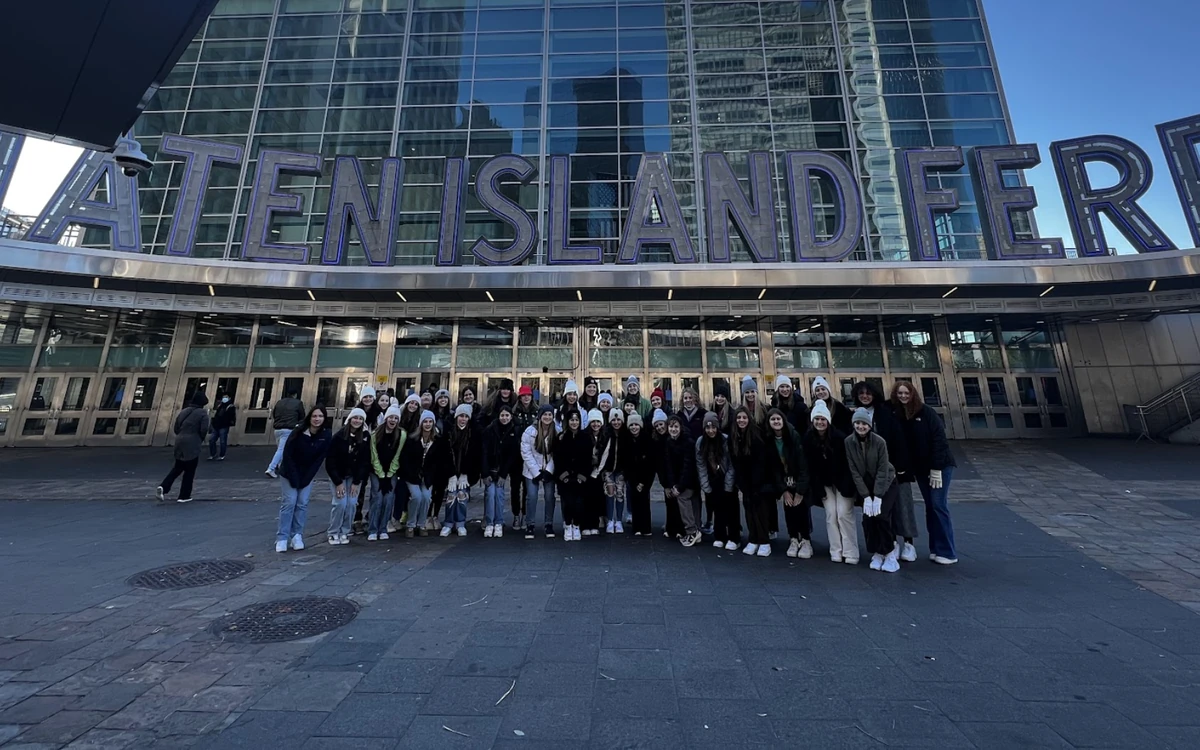
New York City gives you more range per square mile than anywhere else — Ellis Island and the immigration story, the 9/11 Memorial and Museum, the Met, a Broadway show in the evening. It is intense, and most eighth graders find that exciting rather than overwhelming. The trade-off is logistical: moving a group around Manhattan is slower and more expensive than it looks, and hotel costs run higher than the alternatives.
Chicago is the underrated one. It has architecture you can teach from the river, an art institute with a collection students recognize, and science museums that hold up against anything in the country — and it is substantially easier to move a group around than New York. For a Midwest school it is also close enough to keep the travel days short, which matters more than teachers expect.
Orlando: the Reward Trip That Still Teaches
Some schools want the eighth grade trip to be a reward, and there is nothing wrong with saying so.
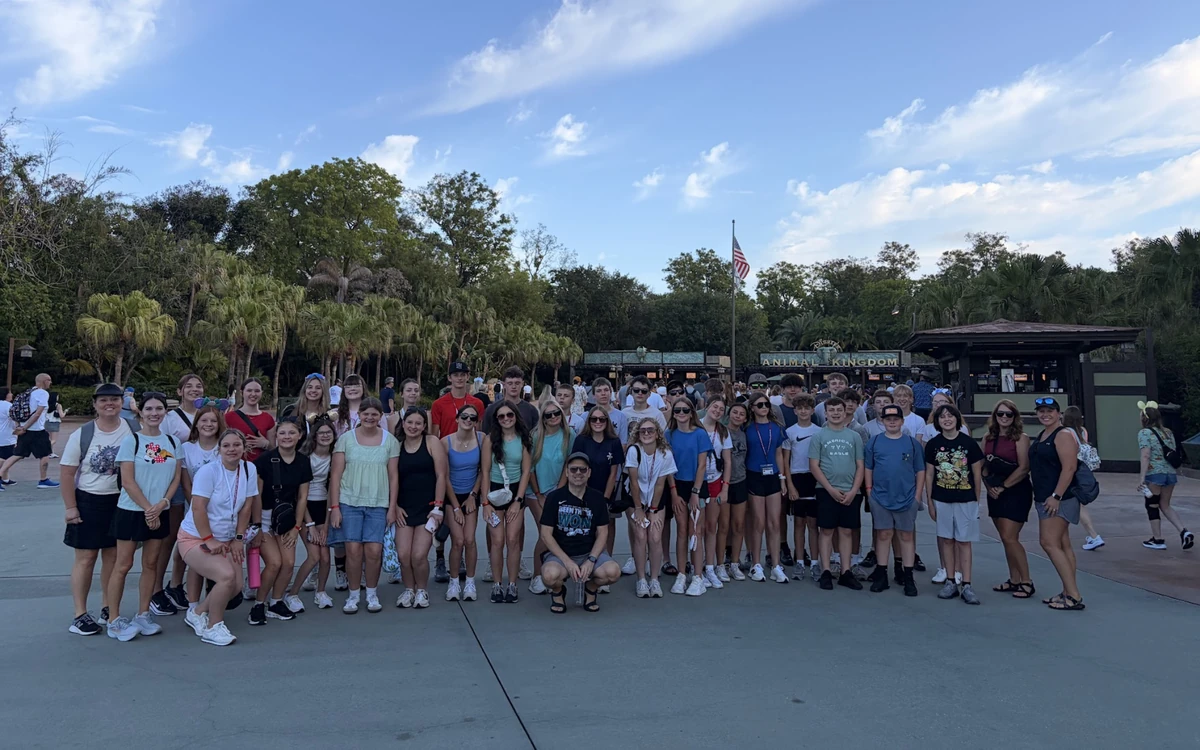
The version that survives a board meeting pairs Orlando with something academic — a science component at the Kennedy Space Center, a performing arts workshop, a behind-the-scenes program. The trip is still fun and the proposal has an answer when someone asks what students will learn. That framing is worth getting right before the first parent meeting rather than after.
It is also worth being honest internally about why a school picks it. An Orlando trip usually sells itself to students in a way a civics itinerary does not, which means higher participation and a group that arrives excited. Those are real advantages, not guilty ones — a trip more students can be talked into going on is a trip more students actually take.
The practical trade-offs: it is usually the longest of the options at four to five days, most groups fly, and the per-student number lands at the upper end of the range once airfare is added. Budget for more personal spending money than a D.C. trip needs, and say so at the parent meeting.
Quebec City and Montreal: the First Passport
For a lot of eighth graders this is the first time out of the country, and Canada makes that manageable in a way Europe does not at this age.
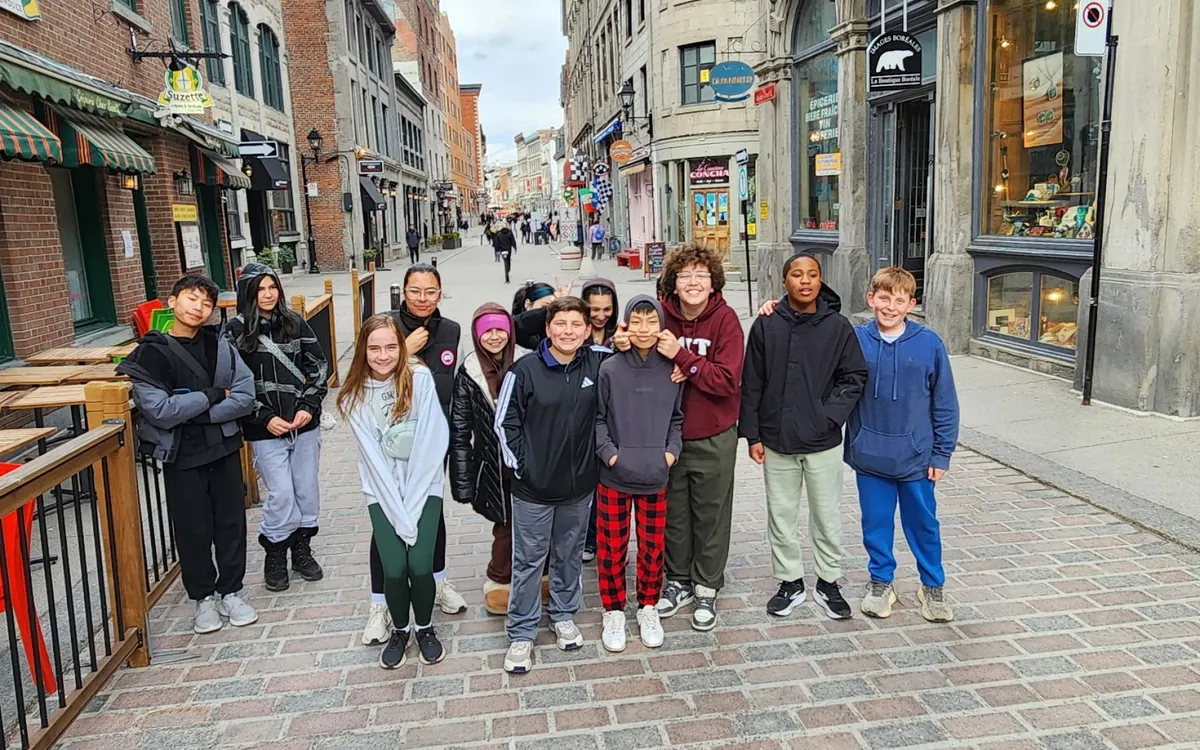
Quebec City is a French-speaking walled city reachable without a long flight, which makes it genuinely international without the cost or the jet lag. For a French program it is the obvious choice, and the Winter Carnival version gives the trip a spectacle that students talk about for years. Montreal offers the same logic with a bigger-city feel.
Both still require passports for every traveler, which is the real planning constraint — thirty families completing a government process is why these trips are booked twelve months out rather than six.

What Eighth Graders Are Actually Like to Travel With
This is the part that makes a destination right or wrong for the grade, and it rarely appears on a list of cities. It is also what our FAQ gets asked about most.
It is often the first time away from home
For a meaningful share of any eighth grade, three nights away without a parent is new. That argues for a destination where the days are structured and the evenings have something in them, because unstructured time is where homesickness arrives. It also argues for a shorter first trip rather than a longer one — four days is usually better than six at this age, and how many days you need works that question through from your travel distance.
Stamina is a real constraint
Eighth graders walk further than they expect to and complain about it later rather than sooner. A destination that is compact, or one where the coach does some of the work, produces better afternoons than one that assumes everyone can walk five miles and still concentrate.
The social dynamics matter as much as the itinerary
Rooming lists carry more weight in eighth grade than in any other year, and the evening activity is not a filler — it is often what students actually remember. A destination with something to do after dinner is doing more work than it appears to.
They are old enough for the serious stops
Eighth grade is generally ready for Arlington National Cemetery, the 9/11 Memorial, the Holocaust Museum. Those stops land hard and they land well, provided the group is prepared beforehand rather than walked in cold. Preparing them is the teacher’s job and it is the difference between a stop that matters and one that passes.
When to Go: Spring or Fall
Most eighth grade trips travel in spring, and most of them would have a better week in fall.
Spring — March through May — is the default because it sits at the end of the year and feels like a send-off. It is also when every other eighth grade in the country travels. Hotels near the center cost more, sites are busier, and the dates fill first. If your group wants spring, the answer is to book earlier rather than to avoid it — and the best spring destinations covers that season in detail.
Fall — late September through mid-November — is the quieter, cheaper option, with lighter crowds at the major sites and far easier availability. The objection is usually that it comes too early in the year for a class that has not gelled yet, which is a fair point and worth weighing against the saving.
Two destination-specific notes. In Washington, the cherry blossom weeks are spectacular and the single most crowded stretch of the year. In Quebec, the Winter Carnival is the whole argument for going in February rather than May.
How to Choose for Your Group
| If this is true of your group | Look at |
|---|---|
| The year is US history and civics | Washington, D.C. |
| The year is the Revolution and the Constitution | Boston, Philadelphia or Williamsburg |
| You want maximum range in minimum space | New York City |
| You are in the Midwest and want short travel days | Chicago |
| A French program is co-sponsoring | Quebec City or Montreal |
| The school wants a reward trip with an academic answer | Orlando with a science or arts component |
| It is a first trip and nerves are the concern | Somewhere compact, four days, with evenings planned |
| The budget is the binding constraint | Washington, D.C., where most of what you see is free to enter — see what a D.C. trip costs |
What an 8th Grade Trip Costs
On average, Landmark’s fully inclusive trips run $300 to $400+ per traveler per day depending on package inclusions, or about $1,200 to $3,500+ in total for an all-inclusive package. Airfare is an additional variable cost.
| Trip length | Typical cost per traveler | Common for |
|---|---|---|
| 3 days | $900 to $1,200+ | Philadelphia, or a focused trip close to home |
| 4 days | $1,200 to $1,600+ | Washington, D.C., Boston, New York, Chicago — the usual eighth grade length |
| 5 days | $1,500 to $2,000+ | Orlando, or a longer trip from farther away |
Three things move that number more than the destination does:
- Season. Fall is cheaper than spring almost everywhere, and the gap is widest in Washington.
- Group size. The motorcoach and Tour Director are largely fixed costs, so a larger group carries a lower per-student rate.
- Trip length. Each extra day is a real line on the permission slip rather than a rounding error.
Those figures apply the daily rate to each length and exclude airfare. The levers that move the number most are season, group size and trip length rather than destination — what a school trip costs breaks that down, and how payment plans work covers the part families care about.
Planning Notes for an 8th Grade Trip
- Book six to twelve months out, or twelve-plus if passports are involved. Booking early is also what keeps the monthly payment small enough for every family.
- Announce it a year ahead. Eighth graders have sports seasons and family calendars too, and early notice raises how many of them can actually come.
- Confirm your district’s chaperone ratio first. It sets your bed count, which sets your quote — how many chaperones you need covers it.
- Prepare students for the heavy stops. Arlington, the 9/11 Memorial and the Holocaust Museum all work far better with context beforehand.
- Plan the evenings. At this age they are not filler.
Who Is Landmark Educational Tours?
Landmark Educational Tours is a 100% employee-owned educational travel company with more than twenty years in student travel. Eighth grade is one of the grades we travel most, and every trip is private — your group travels alone, on an itinerary built for you, with a Tour Director assigned to your group and no one else.
Planning, a custom itinerary and a written quote are free until you agree to proceed. Browse the full list on our destinations page or by subject on themed programs, and our approach to student safety is on travel safety and support.
Tell us your dates, roughly how many travelers and what your eighth grade is studying, and we will tell you honestly which destinations fit. Request a quote or contact us to start.