The strongest four-day Washington, D.C. itinerary for students runs memorials on arrival, the Capitol and White House on day two, Arlington National Cemetery and the Smithsonian museums on day three, and Mount Vernon on the way out. That order is not arbitrary. It is built around which sites are reserved furthest ahead, which ones work outdoors on a travel-weary afternoon, and which one sits outside the city so it can close the trip without dragging the group back through downtown.
Four days gives a group two full days in Washington plus two partial ones, which is why it is the length most school groups land on. Below is the itinerary day by day, the reasoning behind the sequence, and what to change if your group is traveling for a particular subject.
This is Landmark’s actual four-day Washington, D.C. program rather than a generic plan, and you can request a quote at no cost before deciding anything.
The 4-Day D.C. Itinerary at a Glance
If you are still deciding on length, how many days you need in Washington with students works that question from your travel distance.
| Item | Detail |
|---|---|
| Trip length | 4 days / 3 nights |
| Full days on the ground | Two, plus an arrival afternoon and a departure morning |
| Grade level | Middle and high school; eighth grade travels this itinerary most often |
| Day 1 | Travel, then the Lincoln, Korean War and World War II Memorials |
| Day 2 | Guided tour of the U.S. Capitol, Smithsonian time, the White House and Lafayette Park, evening memorials |
| Day 3 | U.S. Marine Corps Memorial, guided Arlington National Cemetery tour, Smithsonian and museum exploration, evening activity |
| Day 4 | George Washington’s Mount Vernon Estate, then home |
| Hotel | Student-appropriate accommodation with on-site security |
| Included | Transportation, hotel, meals, admissions, a Tour Director, and restaurant and driver gratuities |
| Typical cost | $300 to $400+ per traveler per day depending on package inclusions, or about $1,200 to $3,500+ in total for an all-inclusive package. Airfare is an additional variable cost. |
The Itinerary, Day by Day
Each day below links to our fuller guide for that site, if you want the detail behind a particular stop. Our earlier 4-day Washington D.C. school trip itinerary covers the same route in brief.
| Day | What the group does |
|---|---|
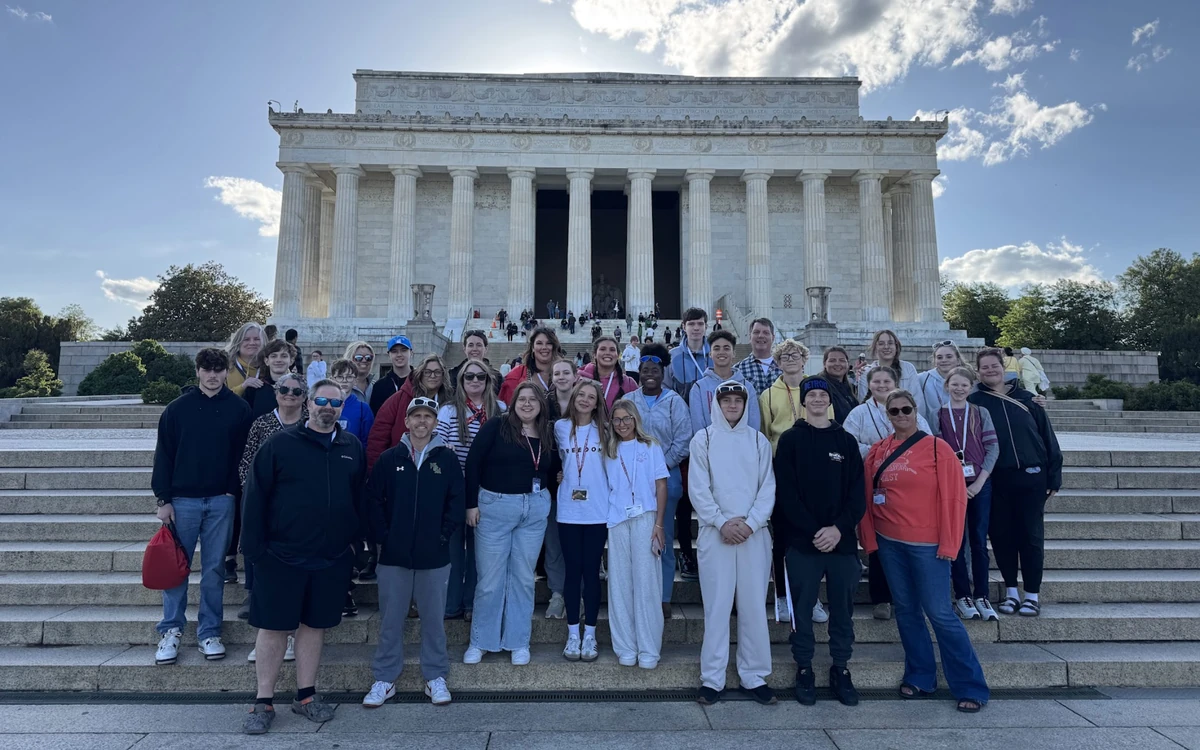
| Day 1 — Arrival and memorials | Travel to Washington. Lincoln Memorial, Korean War Veterans Memorial and World War II Memorial. Group sit-down dinner, then check in to the hotel. |
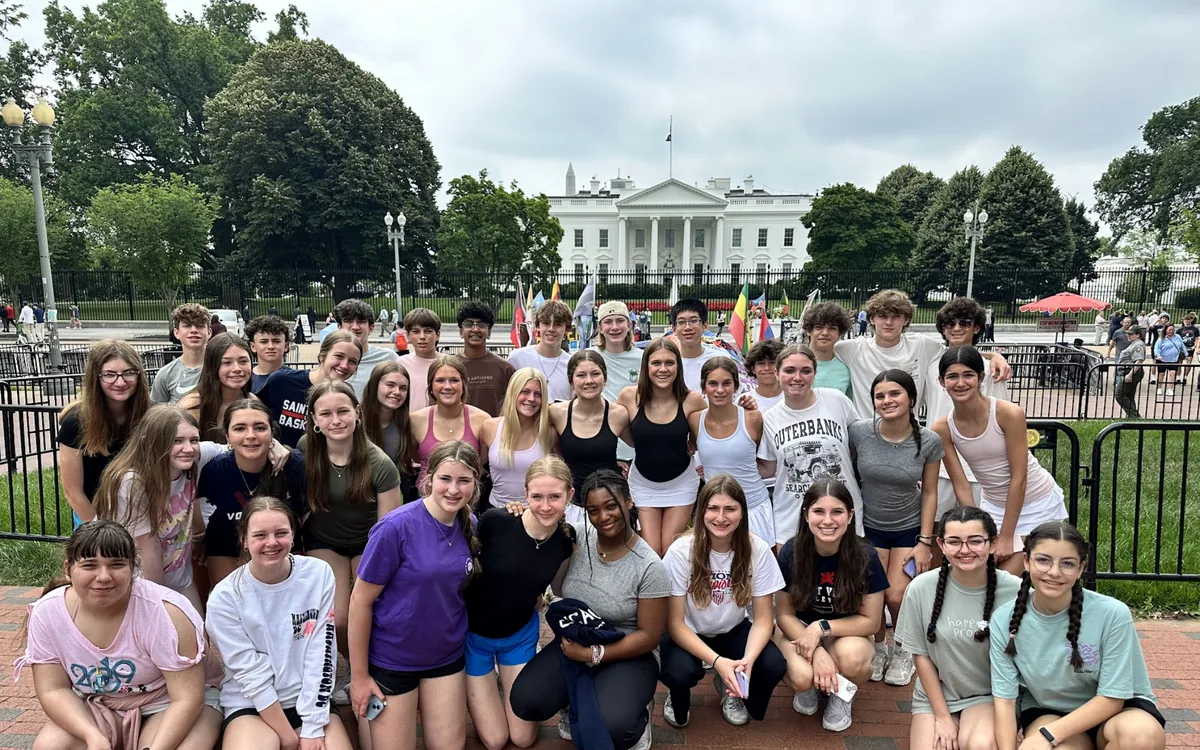
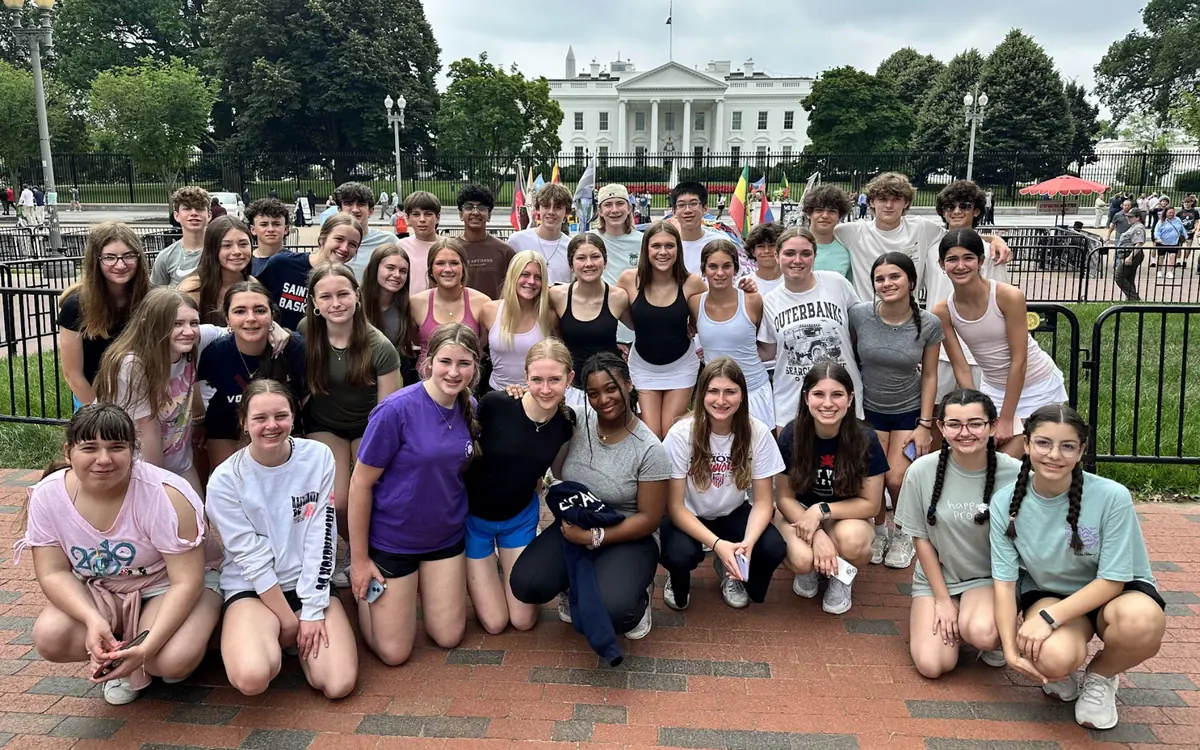
| Day 2 — Capitol and White House | Breakfast at the hotel. Guided tour of the United States Capitol. Lunch and Smithsonian museums of the group’s choice. Group photo at the White House and Lafayette Park. Evening memorial visits and dinner. |
| Day 3 — Arlington and the museums | Breakfast. U.S. Marine Corps Memorial. Guided tour of Arlington National Cemetery, including the Changing of the Guard and the Kennedy gravesite. Lunch voucher or boxed lunch. Smithsonian museums, the International Spy Museum, the U.S. Holocaust Memorial Museum and others. Sit-down dinner and an evening activity. |
| Day 4 — Mount Vernon and home | Breakfast. George Washington’s Mount Vernon Estate — the mansion, gardens and exhibits. Lunch at the Mount Vernon food court, then depart for home. |
Day 1: Arrival, and Why It Belongs to the Memorials
Day one is a travel day with an afternoon attached, and what you put in that afternoon matters more than teachers expect.
The memorials are the right answer because they ask nothing of a group that has been on a coach since morning. They are outdoors, they are walkable from one another, and nobody has to be anywhere at a fixed minute. A group that has just arrived can move at the pace it actually has.
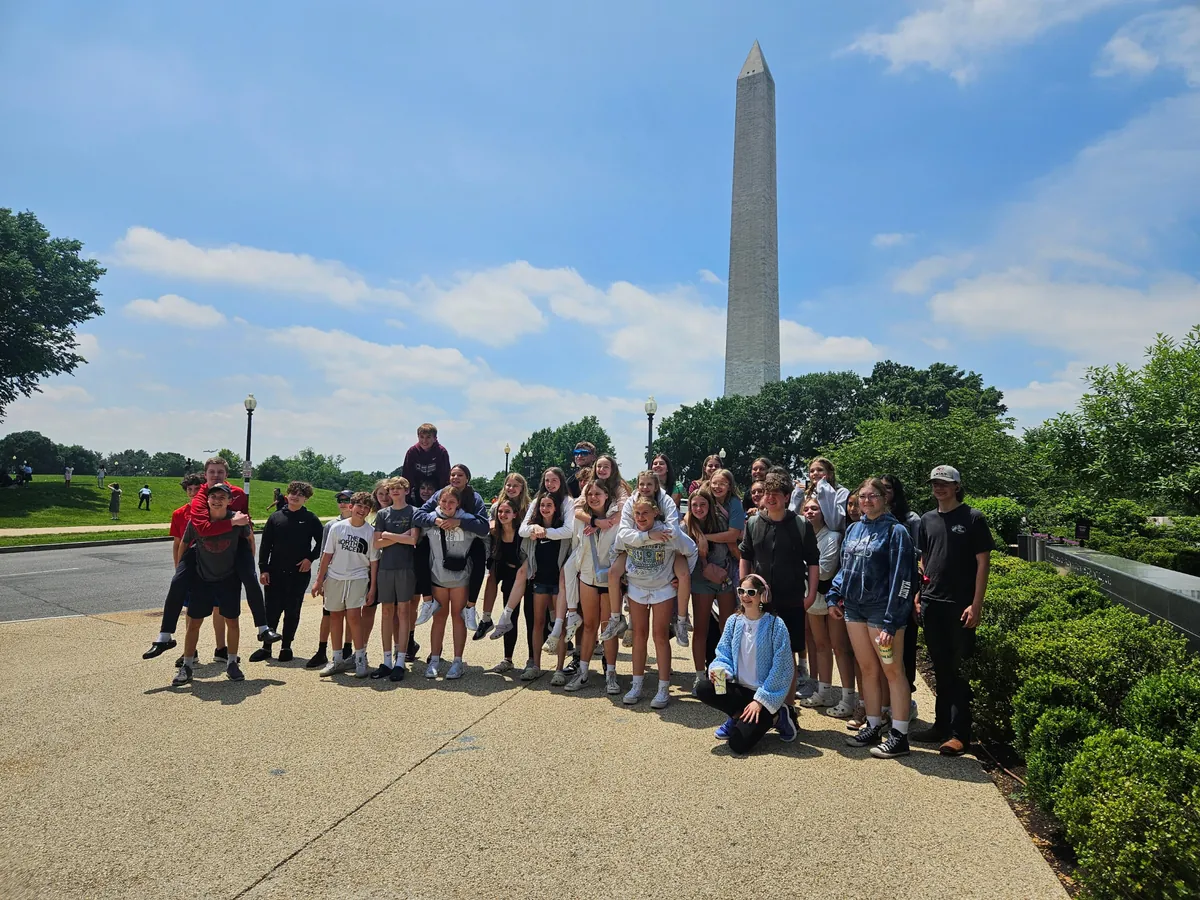
They are also the correct emotional opening. The Lincoln Memorial, the Korean War Veterans Memorial and the World War II Memorial sitting within a few minutes of each other give students the scale of the place before any of the detail arrives. Students who have only seen the Lincoln Memorial in photographs are generally quiet for a moment when they reach the top of the steps, and that moment sets the tone for three days. Our guide to the top monuments and memorials in Washington covers each one in turn.
Dinner is a sit-down group meal, and the hotel has on-site security. Both matter more on the first night than any other, because that is when a group is still learning how to be a group.
Day 2: The Capitol, the Smithsonians, and the White House
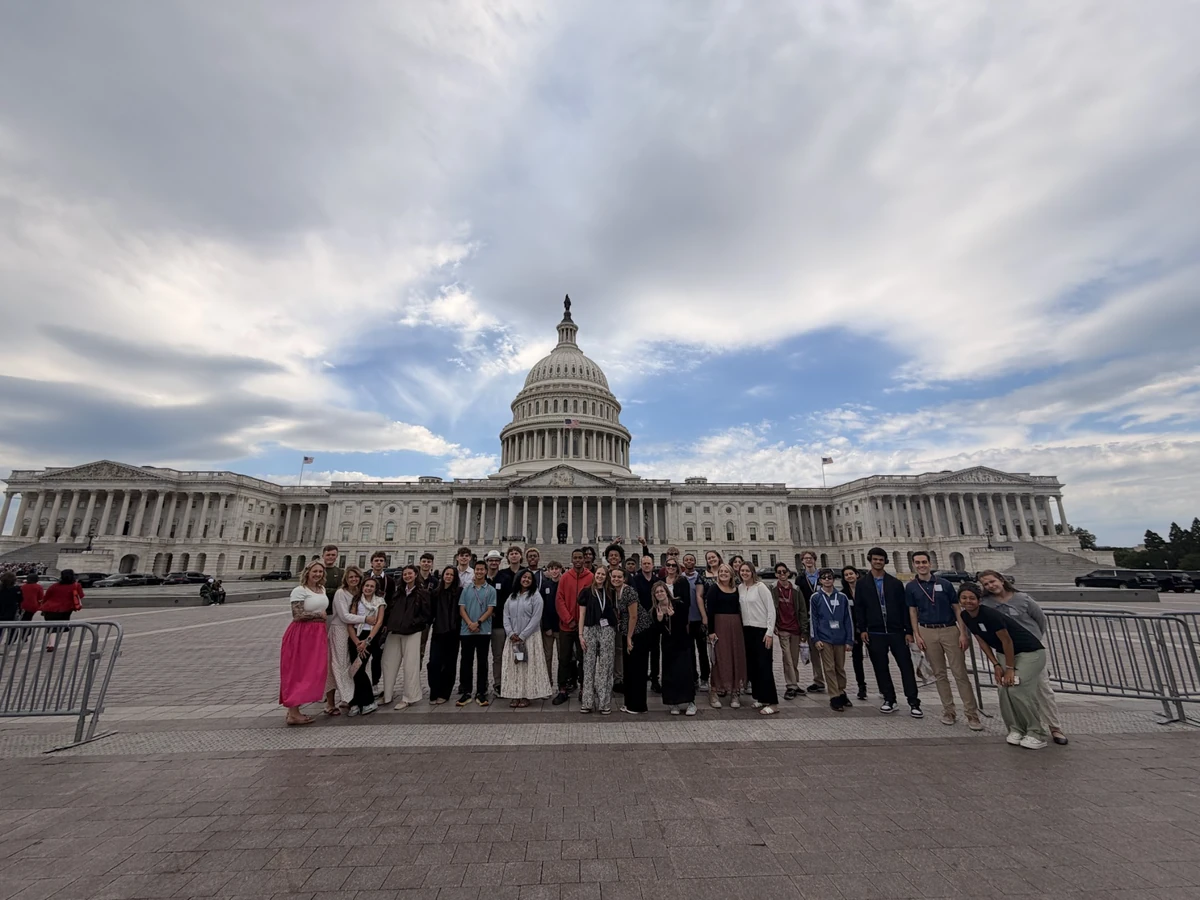
The first full day carries the civic core, and the Capitol is why the day is shaped the way it is.
The Capitol drives the calendar
A guided tour of the United States Capitol is arranged furthest ahead of anything else on the trip, and the slot you are given is a fixed point rather than a preference. Everything else on day two is built around it. That is the single most useful thing to understand about planning a D.C. itinerary: you do not schedule the Capitol into your day, you schedule your day around the Capitol.
Our guide to the U.S. Capitol tour covers what the visit involves. Students come out of it with something a textbook does not give them, which is a sense of the building as a workplace. It is a place where people argue for a living, and seeing the scale of the room changes how a government class reads about it afterwards.
Smithsonian time, and the White House
Lunch and Smithsonian museums of the group’s choice follow. Letting students pick within a shortlist is worth doing; a student who chose Air and Space will spend the hour differently from one who was marched there. The best Smithsonian museums for student groups is a useful shortlist to build from.
The group photo at the White House and Lafayette Park is a short stop and an unmissable one — it is the picture that ends up on the yearbook page. The day closes with evening memorial visits and dinner, which is the first of the two nights that make a four-day trip feel longer than it is — the evening monument tour is the part students describe when they get home.
Day 3: Arlington, and the Day Students Remember
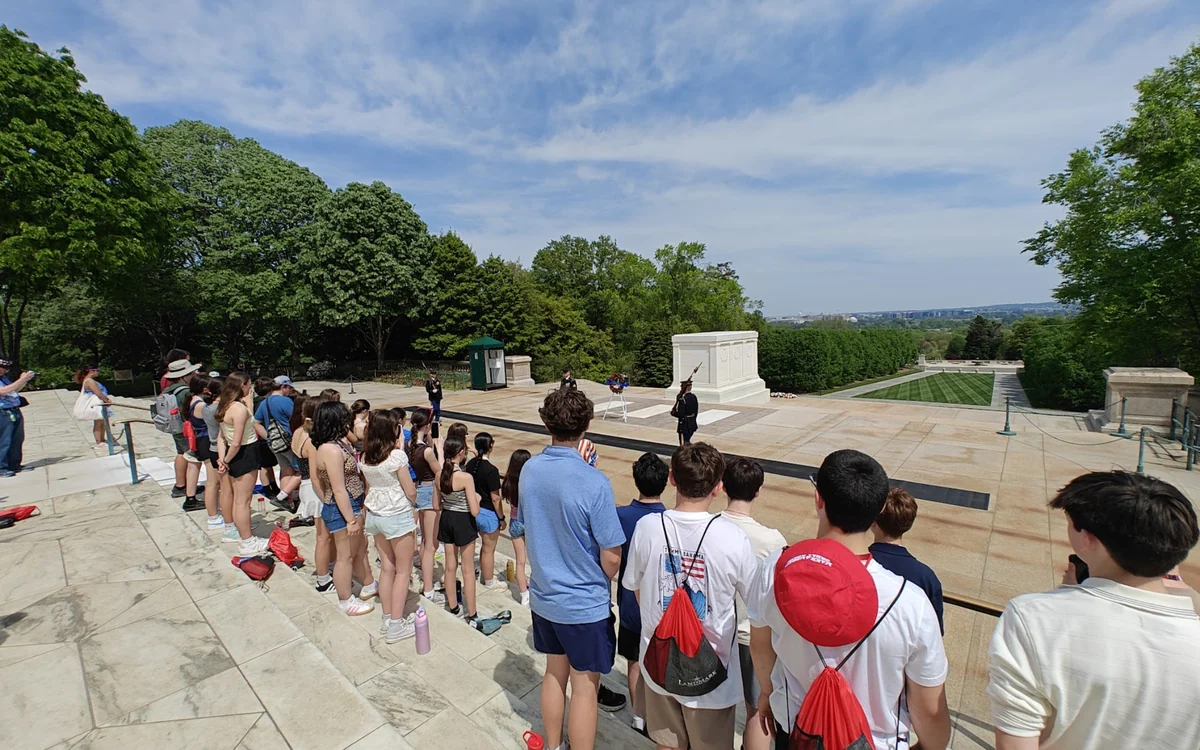
The second full day opens at the U.S. Marine Corps Memorial and moves into a guided tour of Arlington National Cemetery, including the Changing of the Guard at the Tomb of the Unknown Soldier and the Kennedy gravesite.
Arlington is the stop that changes a group. Teachers who have run this trip repeatedly tend to say the same thing: students who have been loud for two days go quiet at the Tomb, and stay that way for a while afterwards. The Changing of the Guard is precise, silent and entirely unlike anything in their daily experience, and it does not need a teacher to explain why it matters. Our Arlington National Cemetery guide sets out what a group sees.
It is worth preparing students for it rather than letting them arrive cold. A group that knows what they are about to watch behaves differently from one that does not, and the difference is visible.
The afternoon, and how much to attempt
The afternoon opens up: Smithsonian museums, the International Spy Museum, the U.S. Holocaust Memorial Museum and others. The temptation is to schedule three. The honest advice is two.
Moving a group of forty between buildings costs more time than anyone budgets for, and a museum visit that is cut short to make the next one is worse than the museum you skipped. Our guide to how many days students need in Washington goes into what realistically fits in a day.
The day finishes with a sit-down dinner and an evening activity, which is where the trip stops being a schedule and starts being a trip.
Day 4: Mount Vernon, and Why It Goes Last
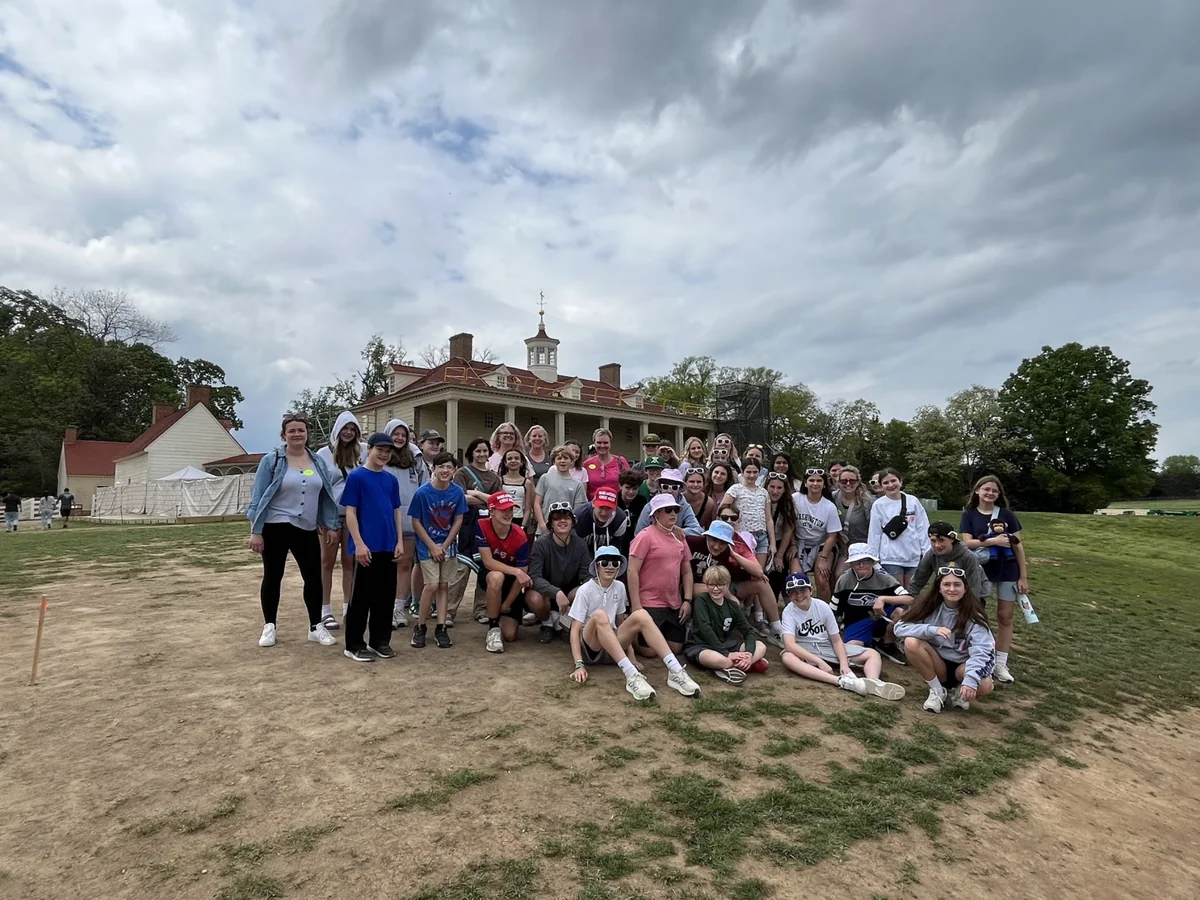
The final morning is George Washington’s Mount Vernon Estate — the mansion, the gardens and the exhibits — with lunch at the food court before the group departs. Our Mount Vernon guide covers the estate in detail.
Putting it on day four is a logistics decision that happens to be an excellent curricular one. Mount Vernon sits outside the city, so visiting it on the way out means the group is not fighting back through downtown traffic on a departure morning. A stop that would cost half a day midweek costs almost nothing on the last day.
It also closes the trip in the right place. Three days of monuments and marble, and then the house the first president actually lived in, with the gardens he planned and the view over the Potomac he chose. Students leave with a person rather than a statue, which is a better last impression than a souvenir shop.
Why This Order Works
Four principles sit behind the sequence, and they are worth knowing whoever builds your itinerary.
- Fixed points first. The Capitol is reserved furthest ahead, so it anchors the week and everything flexible moves around it.
- Outdoors on the partial days. The arrival afternoon and departure morning go to things that do not depend on a reserved time, because travel runs late and a missed slot is money and disappointment.
- The heaviest day in the middle. Arlington lands on day three, when the group has settled and is not distracted by arriving or packing.
- Out-of-town sites on the way out. Mount Vernon costs half a day midweek and almost nothing on departure day.
Those four rules are why an itinerary built by someone who runs D.C. regularly looks different from one assembled from a list of attractions. If you want to understand what is adjustable within them, what customizing an itinerary actually means covers it.
What the Days Actually Feel Like
The itinerary tells you where the group goes. These are the things students and parents ask about, and most itinerary pages never mention them.
It is a lot of walking
The National Mall looks compact on a map and is not. It runs roughly two miles end to end, and a day spent on the memorials and a museum can put several miles on a student without anyone noticing until the evening. Broken-in walking shoes are the single most useful thing on the packing list, and the one students most often get wrong — our note on what to pack for a D.C. school trip covers the rest.
The weather decides more than the season does
Washington is humid in late spring and genuinely cold on a February morning, and most of this itinerary is outdoors. Layers and a packable rain jacket matter more than the month on the calendar. Spring groups should also know that the cherry blossom weeks are beautiful and crowded in equal measure, which changes the pace of every stop.
Meals, and what students actually eat
The four-day route includes sit-down group dinners, breakfast at the hotel each morning, and a mix at lunch — some days a restaurant, some days a lunch voucher or boxed lunch so the group can stay where it is rather than lose an hour relocating. The food court at Mount Vernon handles the last day. Gratuities for restaurants and the driver are included; gratuities for your Tour Director and any step-on guides are not, so budget for those separately.
How much free time there is
Less than students hope and more than parents expect. Free exploration happens in bounded settings — inside a museum, at a memorial, around the hotel in the evening — in chaperone groups or on the buddy system, with headcounts before the group moves on. It is not unsupervised time in a city, and that distinction is worth making clearly at the parent meeting. Our page on how we keep students safe sets out the protocol.
What to Change If Your Group Has a Focus
The route above is the general-purpose version. A trip traveling for a particular subject should look different, and the four-day frame holds either way.
| If your focus is | What changes |
|---|---|
| Civics and government | More time at the Capitol and the Archives, and a civics-focused route in place of some museum time |
| STEM | Air and Space and Natural History carry the weight, with a STEM-built itinerary replacing part of day three |
| African American history | The National Museum of African American History and Culture becomes a half day rather than a stop, on a dedicated route |
| College visits | A day shifts to HBCU campus tours, usually replacing the Mount Vernon morning |
| Middle school, first trip | Pacing eases and the evening activity matters more. Our middle school programs are built on that. |
| Eighth grade | The classic route, largely as written above — see the 8th grade itinerary |
What a 4-Day D.C. Trip Costs
On average, Landmark’s fully inclusive trips run $300 to $400+ per traveler per day depending on package inclusions, or about $1,200 to $3,500+ in total for an all-inclusive package. Airfare is an additional variable cost.
| Trip length | Typical cost per traveler | Full days in Washington |
|---|---|---|
| 3 days / 2 nights | $900 to $1,200+ | One |
| 4 days / 3 nights | $1,200 to $1,600+ | Two |
| 5 days / 4 nights | $1,500 to $2,000+ | Three |
Those figures apply the daily rate to each length and exclude airfare. The reason four days is the common answer is in the right-hand column: going from three days to four adds roughly a third to the price and doubles your full days on the ground. Very little else in trip planning has that ratio. What a D.C. trip costs and what a four-day trip costs both break the drivers down.
Planning Notes That Change the Trip
- Book six to twelve months out. The Capitol slot and a hotel close to the Mall are the two things that get harder first. Booking early covers what else it protects.
- Travel in the fall if you can. Late September through mid-November is lighter and easier than the spring peak.
- Prepare students for Arlington. It is the one stop that works far better with context beforehand.
- Protect an evening. The memorials after dark are what students describe when they get home, and they need a night that is not the night before departure.
- Confirm your chaperone ratio before pricing. It sets your bed count, which sets your quote. How many chaperones you need covers it.
- Say what the trip is for before the itinerary is written. Weighting four days toward a subject works at the start and not afterwards.
- Warn students about the walking. Shoes are the one packing item that changes a student’s week.
Who Is Landmark Educational Tours?
Landmark Educational Tours is a 100% employee-owned educational travel company with more than twenty years in student travel. Washington, D.C. is our most-requested destination, and every trip is private — your group travels alone, on an itinerary built for you, with a Tour Director assigned to your group and no one else.
The four-day route above is a starting point rather than a fixed package. Planning, a custom itinerary and a written quote are free until you agree to proceed. More is on our Washington, D.C. programs, our FAQ and travel safety and support.
Tell us your dates, grade level and roughly how many travelers, and we will build the four days around what your group is actually traveling for. Request a quote or contact us to start.