The ten best destinations for spring 2027 student trips are Washington, DC; New York City; Boston; Philadelphia; Williamsburg; Atlanta; Orlando; Costa Rica; Quebec City; and Italy. Each one is at its best in spring for a specific reason — a bloom, a reenactment, a harvest, a dry season — and each maps onto a curriculum a school is already teaching.
Spring is the busiest window in student travel, which makes choosing well and moving early matter more than in any other season. Below is why each destination works in spring, what it suits, when to commit for 2027, and how to break a tie between two that both look right.
The ten at a glance
- Washington, DC — American history and civics. Cherry blossoms.
- New York City — performing arts, immigration history, global studies.
- Boston — the American Revolution and college visits. Patriots’ Day.
- Philadelphia — the Constitution and the founding era.
- Williamsburg — colonial America and living history.
- Atlanta — civil rights history and HBCU campus visits.
- Orlando — music and performance festivals, STEM and space.
- Costa Rica — biology, environmental science, Spanish immersion. Dry season.
- Quebec City — French immersion and francophone culture. Maple season.
- Italy — Latin, classics, art and Renaissance history.
Spring 2027 at a glance
- The spring window — March through May, with late April and early May the busiest fortnight of the school-travel year.
- What fills first — Washington during the cherry blossom weeks, then New York, then anywhere requiring a timed museum pass.
- What moves latest — hotel blocks close to a city centre, motorcoach availability, and Broadway or theatre group seats.
- Best value weeks — early March and the first half of June sit just outside the peak and are noticeably easier to book.
- Settle first — your travel window and your chaperone count. Almost everything else can be adjusted afterwards.
The 10 best destinations for spring 2027 student trips
1. Washington, DC
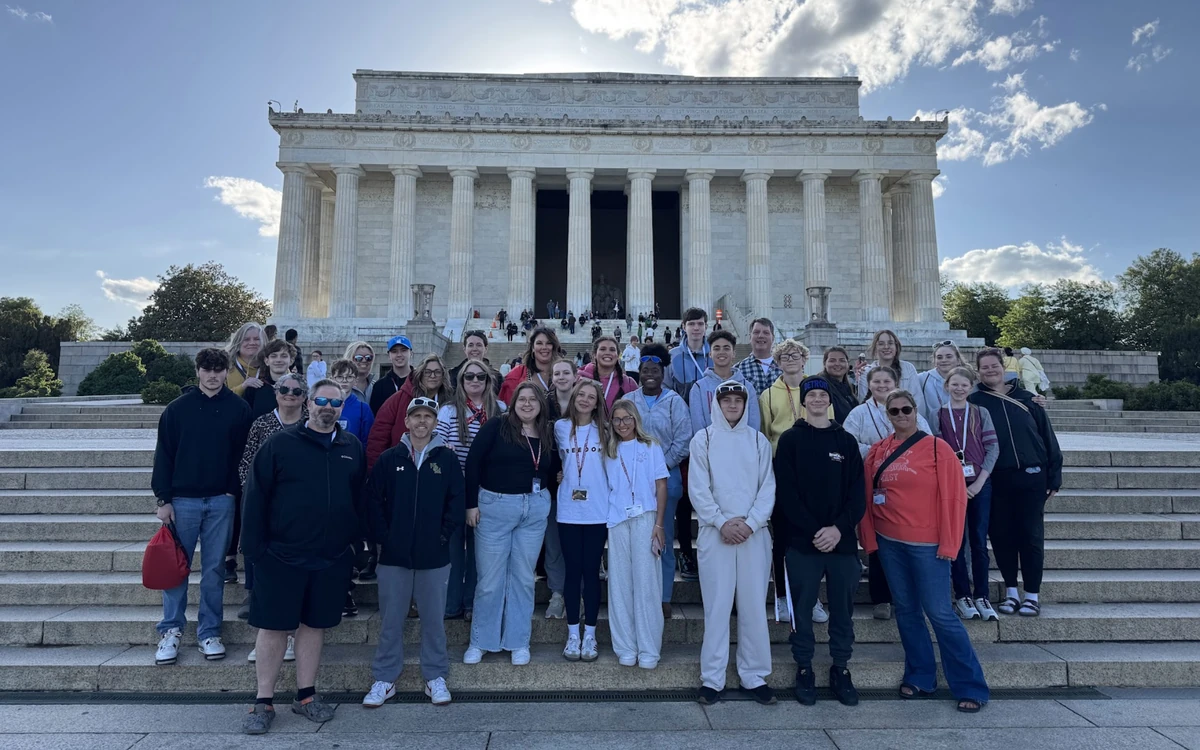
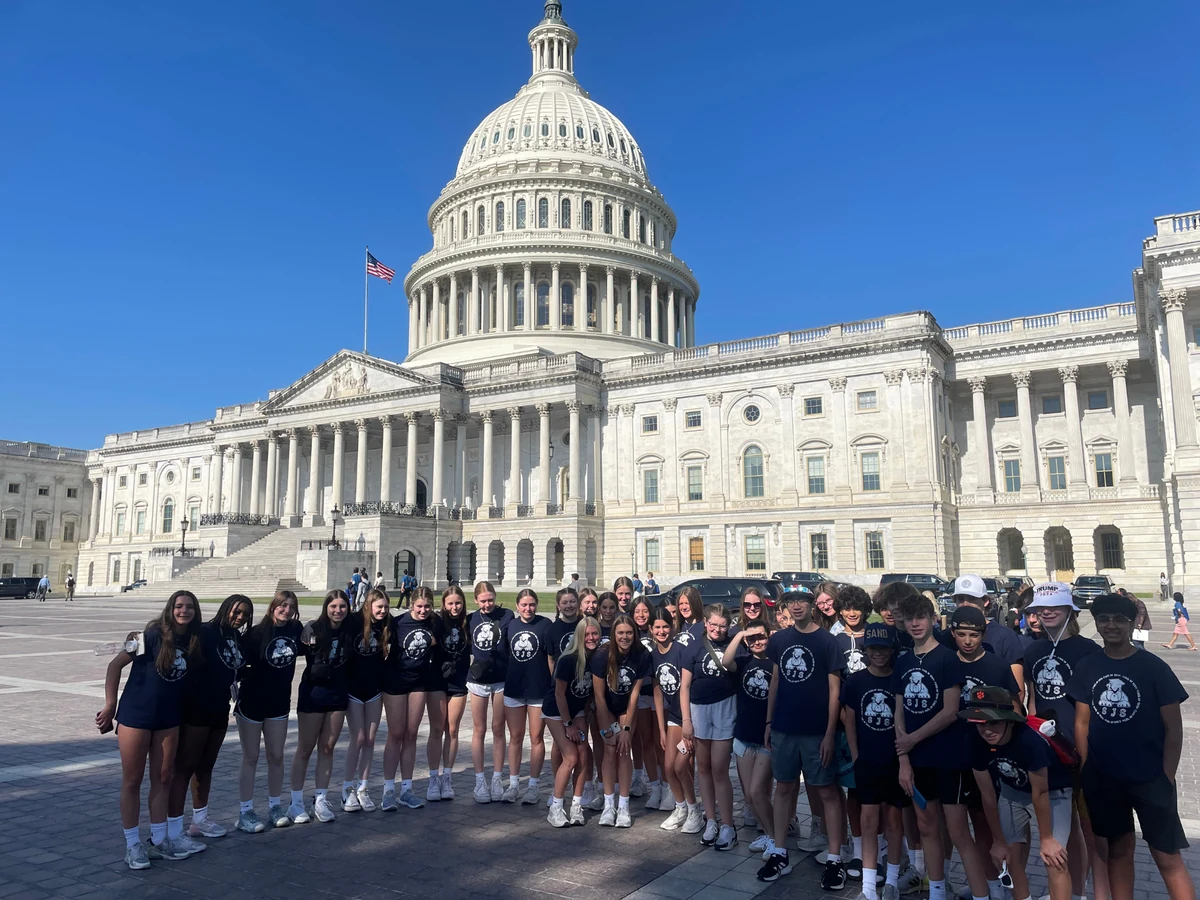
The defining American spring class trip, and the one that books earliest. The cherry blossoms around the Tidal Basin usually peak between the last week of March and the first week of April, and the National Park Service publishes a peak bloom forecast each year that spring groups plan around. Those weeks are the single most competitive window in American student travel.
What makes Washington work beyond the blossoms is density. The Mall memorials, the Capitol, the National Archives, Arlington and the Smithsonians sit within a few walkable miles, so a group covers an enormous amount of curriculum without losing hours to transit. Most of it charges no admission, though the free federal sites ration access by timed pass and congressional request rather than by price, which is why spring itineraries need booking earliest.
Best for: American history, civics and government, 8th grade. Start with our 4-day DC itinerary or browse Washington, DC school trips.
2. New York City
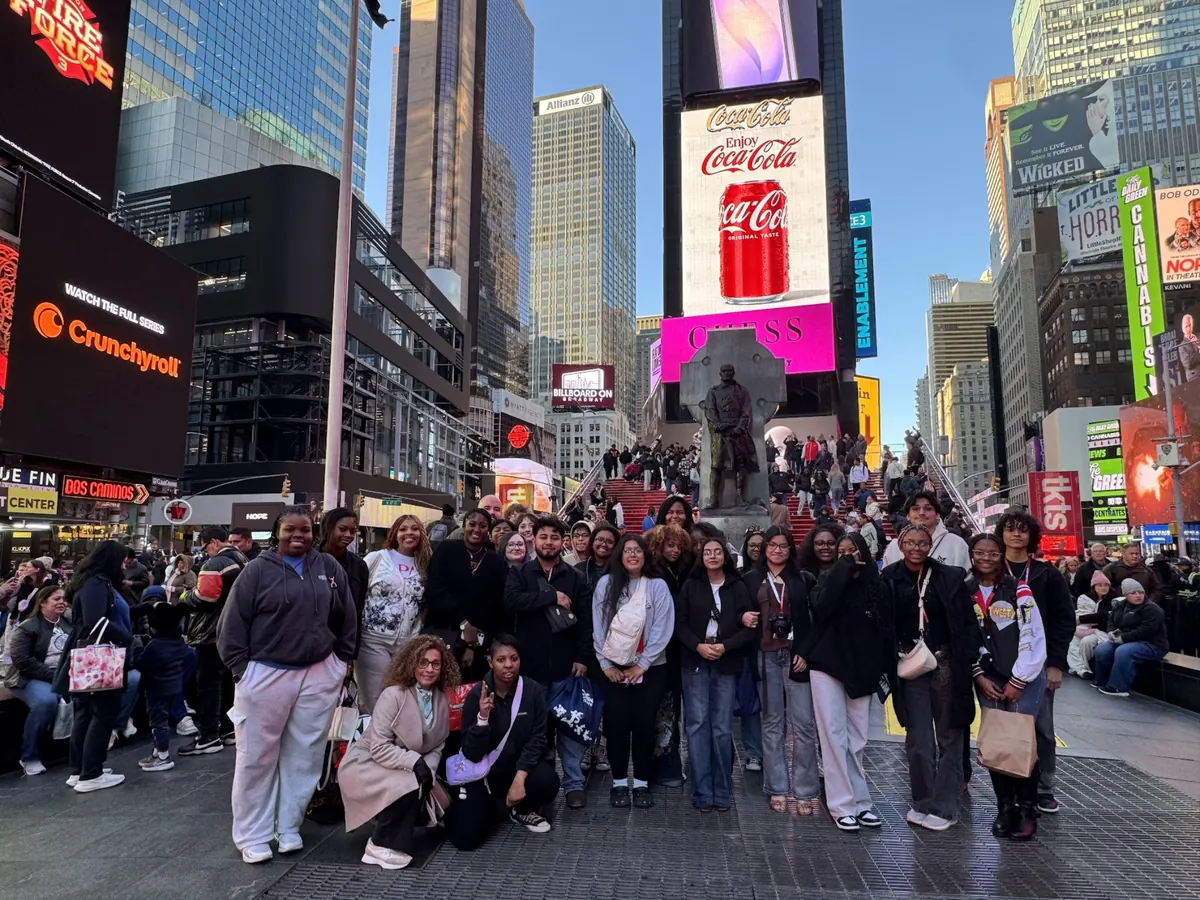
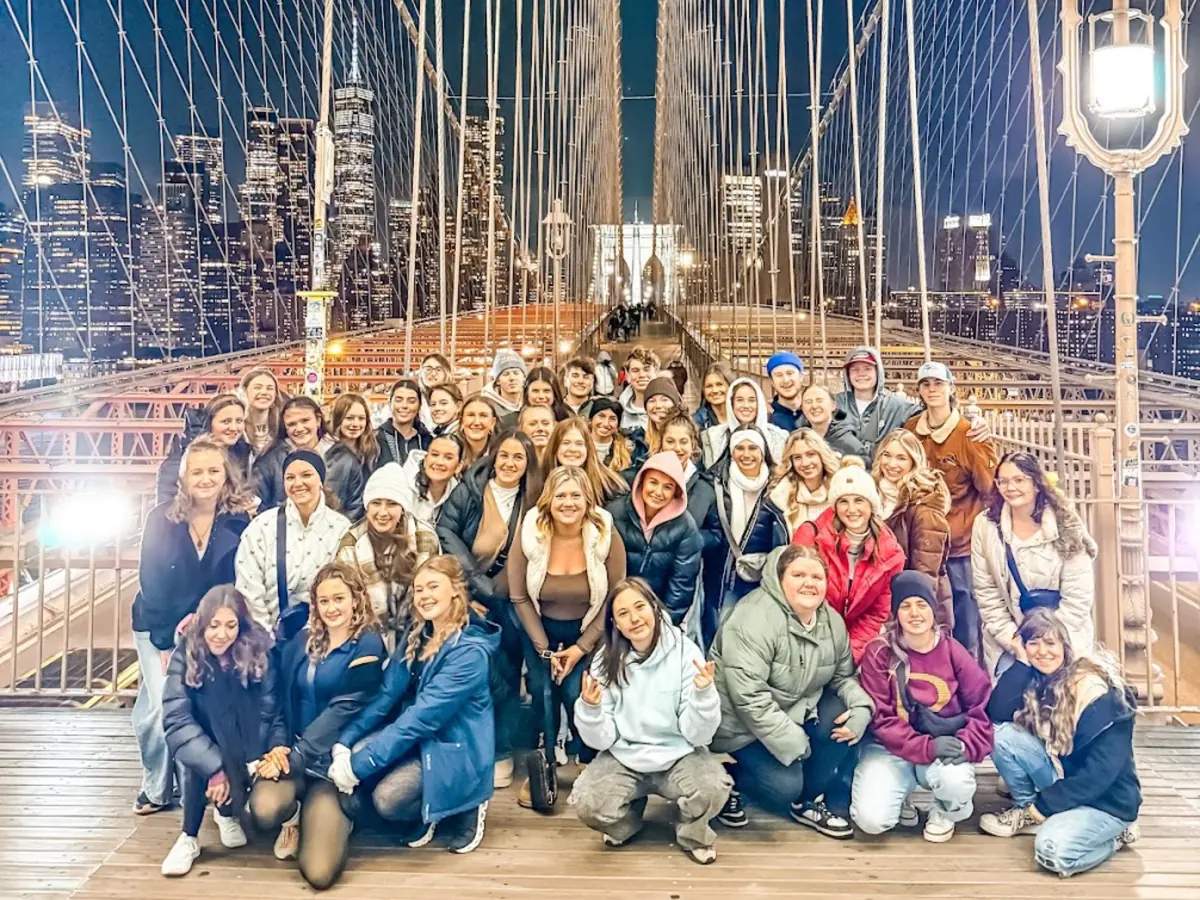
Spring is when New York becomes a walking city again. Central Park and the High Line come back to life, the Brooklyn Bridge crossing stops being an endurance test, and the theatre season is at full strength before the summer tourist crush arrives.
No other destination packs this much curriculum into so few square miles. Ellis Island and the Statue of Liberty carry the immigration story, the United Nations anchors global studies, the Met and MoMA cover art from antiquity to now, and Broadway gives performing arts groups something no classroom can. A single well-built week can serve a history class, an art class and a drama department at once, which is why New York is so often the trip a whole grade takes together.
Best for: the performing arts, immigration and American history, global studies, art and design. See the top attractions for school trips or our New York City school trips.
3. Boston
Boston is a spring city. The Freedom Trail is a two-and-a-half-mile walk rather than a trudge once the weather turns, and the city is compact enough that a group can cover the Revolution, the harbour and a university campus in a single day.
Spring also brings the one thing Boston has that nowhere else does: Patriots’ Day, the third Monday in April, when Minute Man National Historical Park stages reenactments of the fighting at Lexington and Concord on the ground where it happened. For a class that has just finished the Revolution, watching it play out in the field is a different order of experience from reading about it. Add the Boston Tea Party Ships, the Old North Church and a walk through Harvard or MIT and the week builds itself.
Best for: the American Revolution, colonial history, college visits. See the best of Boston class trips or our Boston school trips.
4. Philadelphia
Independence Hall and the Liberty Bell sit within a few blocks of each other, which makes Philadelphia the most efficient founding-era itinerary in the country and a natural two- or three-day pairing with Washington or New York rather than a competitor to them.
Spring opens up the walkable historic district and the museum campus along the Benjamin Franklin Parkway. The National Constitution Center turns an abstract document into something students argue about, and the Museum of the American Revolution fills the gap between Boston’s opening shots and Yorktown’s surrender.
Best for: the Constitution, the founding era, civics. See our guide to the National Constitution Center or our Philadelphia school trips.
5. Williamsburg
Colonial Williamsburg is an almost entirely outdoor experience, so the season decides the trip. Spring gives you the trades working at their forges and benches, the gardens planted, and the interpreters comfortable outdoors through a full day rather than retreating indoors.
The real argument for Williamsburg is the Historic Triangle. Jamestown, Williamsburg and Yorktown sit close enough to visit across a single field trip, giving students the founding arc end to end — first settlement, colonial capital, final surrender — in the places it happened.
Best for: colonial America, living history, elementary and middle grades. See our Colonial Williamsburg field trip guide or our Williamsburg school trips.
6. Atlanta
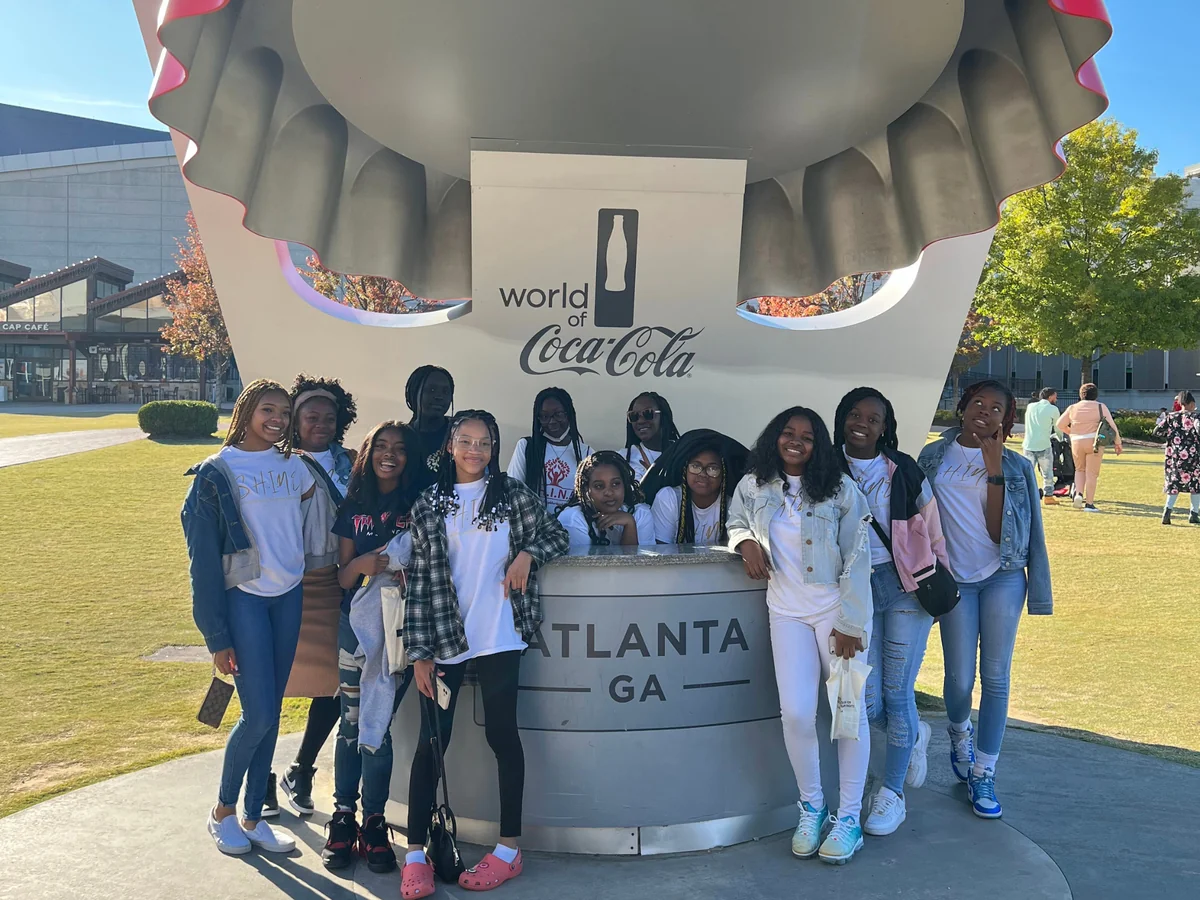
Atlanta carries the civil rights story with unusual directness. The Martin Luther King Jr. National Historical Park on Auburn Avenue holds his birth home, Ebenezer Baptist Church and his tomb within a few hundred yards, and the National Center for Civil and Human Rights connects that history to human rights movements today. Students walk the block rather than read about it.
Spring makes that walking district comfortable well before the summer heat arrives, and Atlanta pairs unusually well with college visits — Morehouse, Spelman and Clark Atlanta sit together in the Atlanta University Center, the largest consortium of historically Black colleges in the country.
Best for: civil rights history, social studies, HBCU college visits. See our Atlanta and Alabama HBCU field trip or our Atlanta school trips.
7. Orlando
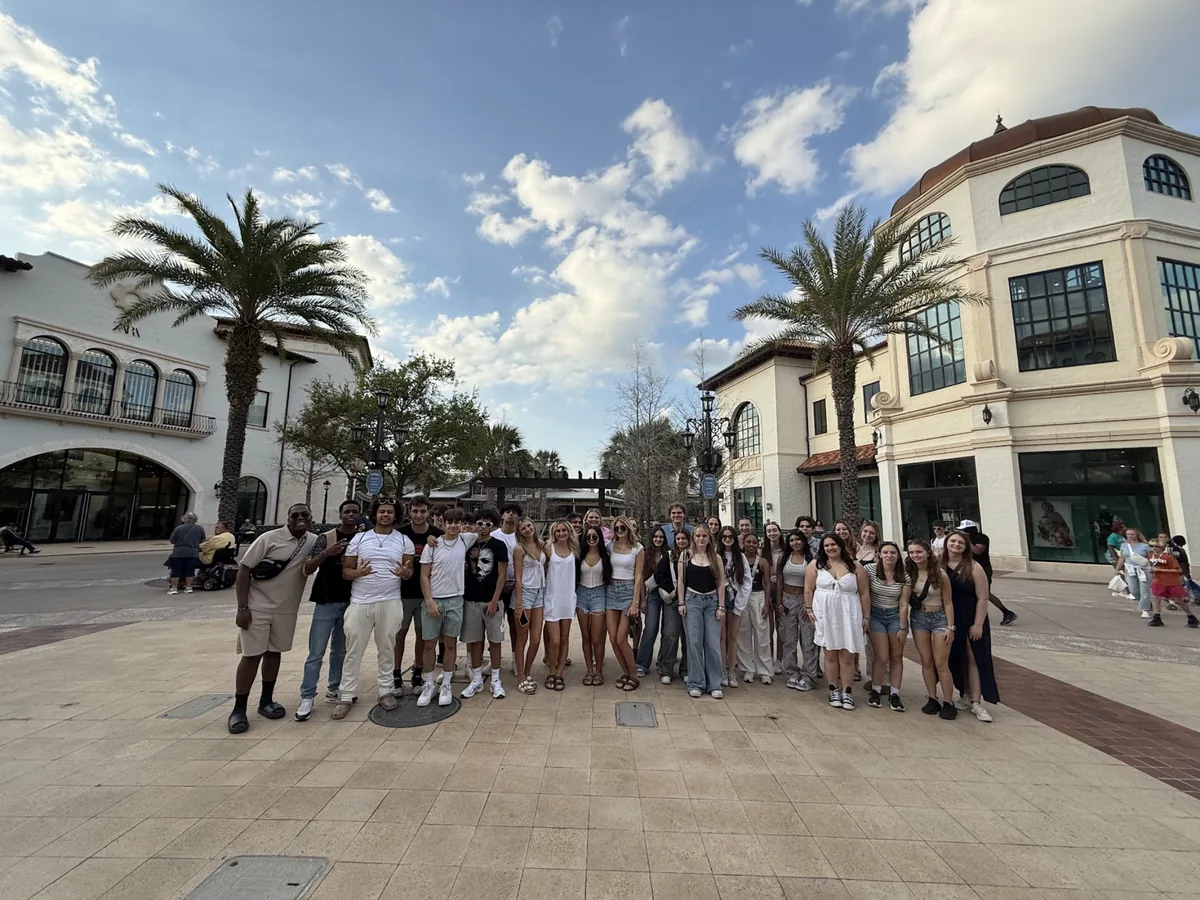
Orlando is the strongest spring option for performance groups. Band, choir, orchestra and dance programmes travel here for adjudicated festivals and parade performances, and spring is when that circuit runs — which also means the best performance slots are allocated a long way ahead.
It is also a genuine STEM destination, which surprises people who think of it only as theme parks. The Kennedy Space Center on the coast is an hour away and puts students under a Saturn V, in front of the shuttle Atlantis, and in workshops run by people who work in the industry. Spring is comfortable before the summer humidity arrives.
Best for: music and performance groups, STEM, physics and engineering. See the benefits of STEM field trips in Orlando or our Orlando school trips.
8. Costa Rica
The single best international option for a spring departure, because Costa Rica’s dry season runs from December through April. A spring trip lands inside the most reliable weather window of the year, which matters enormously for an itinerary built around being outdoors.
What students get is fieldwork rather than sightseeing: cloud forest canopy walks at Monteverde, hikes on the flanks of Arenal, and sea turtle conservation work on the coast. For a biology or environmental science class it is a living laboratory of a country that protects roughly a quarter of its land, and Spanish students get immersion with genuinely patient hosts.
Best for: biology, environmental science, Spanish immersion, sustainability. See our Costa Rica STEM trip or our Costa Rica school trips.
9. Quebec City
The most accessible international trip for most American schools — French immersion without a transatlantic flight, and for many groups a drive rather than a fly.
Spring is sugar shack season. From roughly March into April the maple runs, and the cabane à sucre tradition — a working sugarhouse, a long communal meal, taffy poured on snow — is the part students describe when they get home. Old Quebec, the only walled city north of Mexico, is quiet in those weeks before the summer crowds arrive, which makes the French practice easier and the streets more walkable.
Best for: French language and immersion, North American history, francophone culture. See our guide to Quebec City school trips and the sugar shack or our Quebec City school trips.
10. Italy
Spring is the right season for Italy: warm enough for the Roman Forum and Pompeii, cool enough to walk them for hours, and well ahead of the July heat and the summer crush at the Vatican Museums and the Uffizi.
For a Latin, classics or art history class it is the destination the entire curriculum has been pointing at — the Forum and Colosseum in Rome, Pompeii preserved under ash, Florence’s Renaissance in the buildings that produced it. Spring queues at the major sites are a fraction of what they become by June, which buys back hours across a week.
Best for: Latin and classics, art history, Renaissance and ancient history. See our student trip to Italy or our Italy school trips.
What makes a destination work in spring specifically
Every destination on this list runs year-round. What puts them here is that spring does something for each of them that another season does not:
- Outdoor itineraries stop fighting the weather. Williamsburg, Boston and the National Mall are largely outdoor experiences, and the season is the difference between a walk and an ordeal.
- Seasonal programming only runs now. Cherry blossoms in Washington, Patriots’ Day in Boston, the maple run in Quebec, and the spring festival circuit for performance groups.
- Weather windows close. Costa Rica’s dry season ends in April, and Italy before the summer heat is a materially different trip from Italy in July.
- The academic year is on your side. A spring trip lands after students have covered the material, so travel reinforces a year of teaching rather than previewing it.
Teacher tip: if your dates are even slightly flexible, ask what early March or the first half of June looks like. Both sit just outside the peak fortnight and are markedly easier to book, with the same itinerary.
When should you book a spring 2027 student trip?
As early as you can now. The standard guidance is nine to twelve months ahead for a spring departure, which means the comfortable planning window for spring 2027 has already opened — and for the peak weeks in late April and early May, groups that have not yet named a travel window are behind the ones that have.
That is not a reason to abandon a spring 2027 trip. Groups book successfully much closer in than this all the time. We break the remaining months down in when to book your spring 2027 school trip. It is a reason to settle your travel window and approximate group size now rather than after the winter, because spring departures compete for the same finite supply — hotel blocks near city centres, motorcoaches, timed museum passes, theatre group seats — and that supply is allocated in the order groups commit.
Booking early protects the itinerary more than it protects anything else. A group that commits late can usually still travel; what it loses is the hotel within walking distance, the Capitol tour slot, the Tuesday matinee. We break the timeline down month by month in how far in advance you should book a school trip.
How to choose between two destinations
Most groups narrow to two and then stall. These are the questions that break the tie:
- Which one matches what you actually taught this year? The trip that reinforces a completed unit does more than the one that photographs best.
- How far can your group reasonably travel? Distance drives both the budget and the number of days lost getting there.
- What grade level is travelling? Williamsburg and Washington suit middle grades particularly well; Italy and Costa Rica reward older students who can handle a longer, more independent week.
- Does the destination need a season? Costa Rica in the dry season and Quebec during the maple run are meaningfully different trips than the same places six months later.
- How many adults can you bring? Your chaperone count shapes what is practical — see how many chaperones you need for a school trip.
- What is still available around your dates? For spring, availability is often the honest tiebreaker, and it is worth asking before you settle on one option.
For a wider view of where groups are heading next year, see the most popular student travel destinations for 2027 and our roundup of student travel trends for 2027.
Who is Landmark Educational Tours?
Landmark Educational Tours is an educational group travel company based in Middleton, Massachusetts, planning and operating custom class trips for schools across the United States. Every trip is built privately around a single group rather than sold as a fixed departure, and every travelling group is accompanied by a Landmark Tour Director who handles itinerary timing, venue entries and on-the-ground problems for the whole trip.
Landmark is a member of the Student & Youth Travel Association and the National Tour Association. Our full list is on the accreditations and certifications page, alongside our travel safety and support commitments and what teachers have said on our testimonials page.
Turning a destination into an itinerary
A destination is a starting point, not a plan. The same city produces a very different week depending on your curriculum focus, your grade level, how long you stay and how many adults travel with you — and all of those are adjustable before you present anything to families. What is not adjustable is availability, which is why the groups that settle their travel window earliest end up with the itinerary they wanted.
Tell us your grade level, approximate group size and travel window, and a Travel Consultant will build a custom itinerary and quote at no cost. Browse all our destinations, see the themed programs we run, or read what is included in a school trip package before you compare anything.