The best museums in Philadelphia for student groups are the National Constitution Center, the Museum of the American Revolution, the Franklin Institute, the Philadelphia Museum of Art, the Academy of Natural Sciences, the African American Museum in Philadelphia, Eastern State Penitentiary, the Independence Seaport Museum, and the Penn Museum. Between them they cover civics, the Revolution, science, art, natural history, Black history, criminal justice, maritime history and world archaeology — most of it within a compact, walkable core.
What separates a good Philadelphia museum field trip from a frustrating one is rarely the museums themselves. It is the booking rules: group minimums, lead times, chaperone ratios and, at one major museum, a hard cap on how many students can tour at once. Below is what each museum does best, the rules that shape a class trip itinerary, and how to choose by grade level.
The museums at a glance
- National Constitution Center — civics and government. Grades 5–12.
- Museum of the American Revolution — the Revolution through the people who lived it. Grades 4–12.
- The Franklin Institute — hands-on science, the Giant Heart, the planetarium. Grades K–12.
- Philadelphia Museum of Art — world art collections, and the steps. Grades 3–12.
- Academy of Natural Sciences — dinosaurs, dioramas, live animals. Grades K–8.
- African American Museum in Philadelphia — four centuries of Black history. Grades 5–12.
- Eastern State Penitentiary — criminal justice, reform and civics. Grades 7–12.
- Independence Seaport Museum — maritime history, hands-on, on the water. Grades 4–12.
- Penn Museum — ancient Egypt, Rome and Mesopotamia. Grades 6–12.
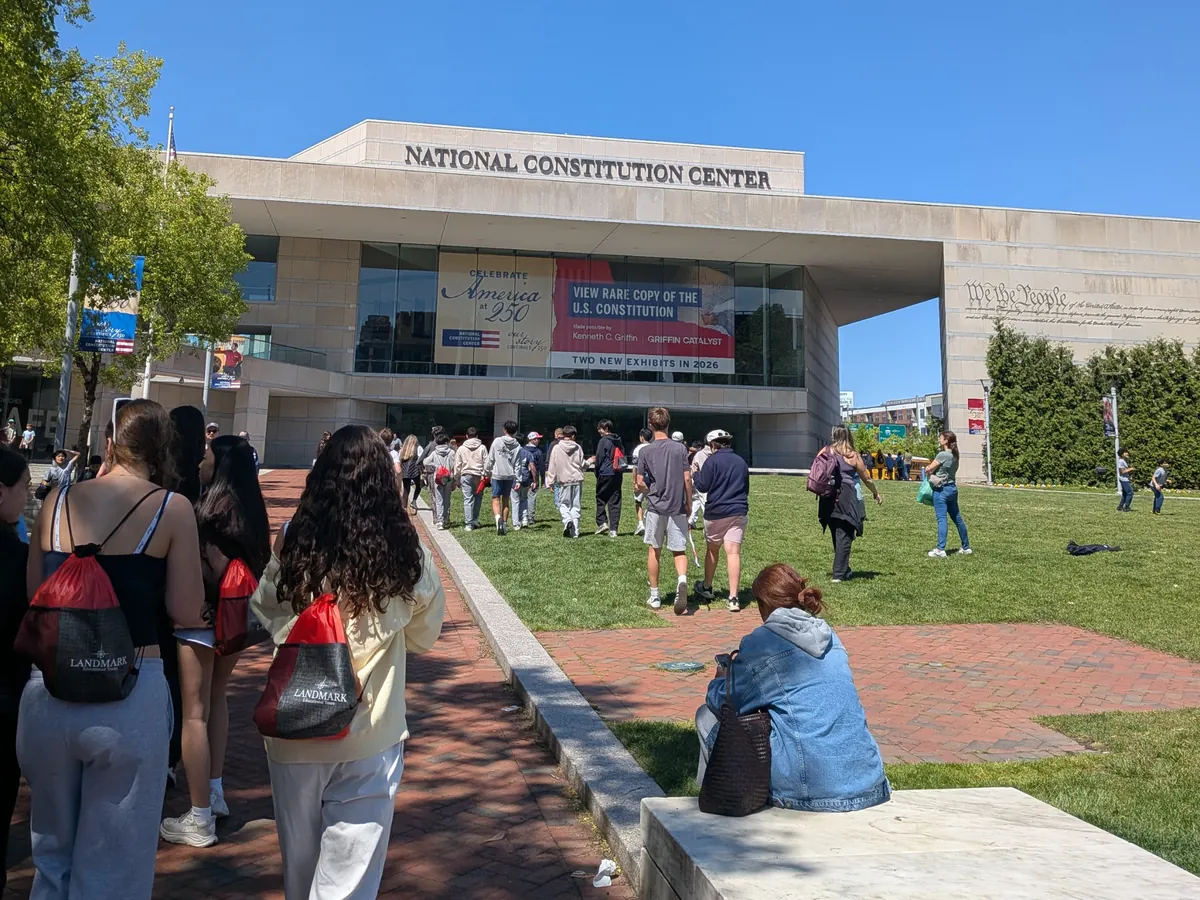
The best museums in Philadelphia for student groups
1. National Constitution Center
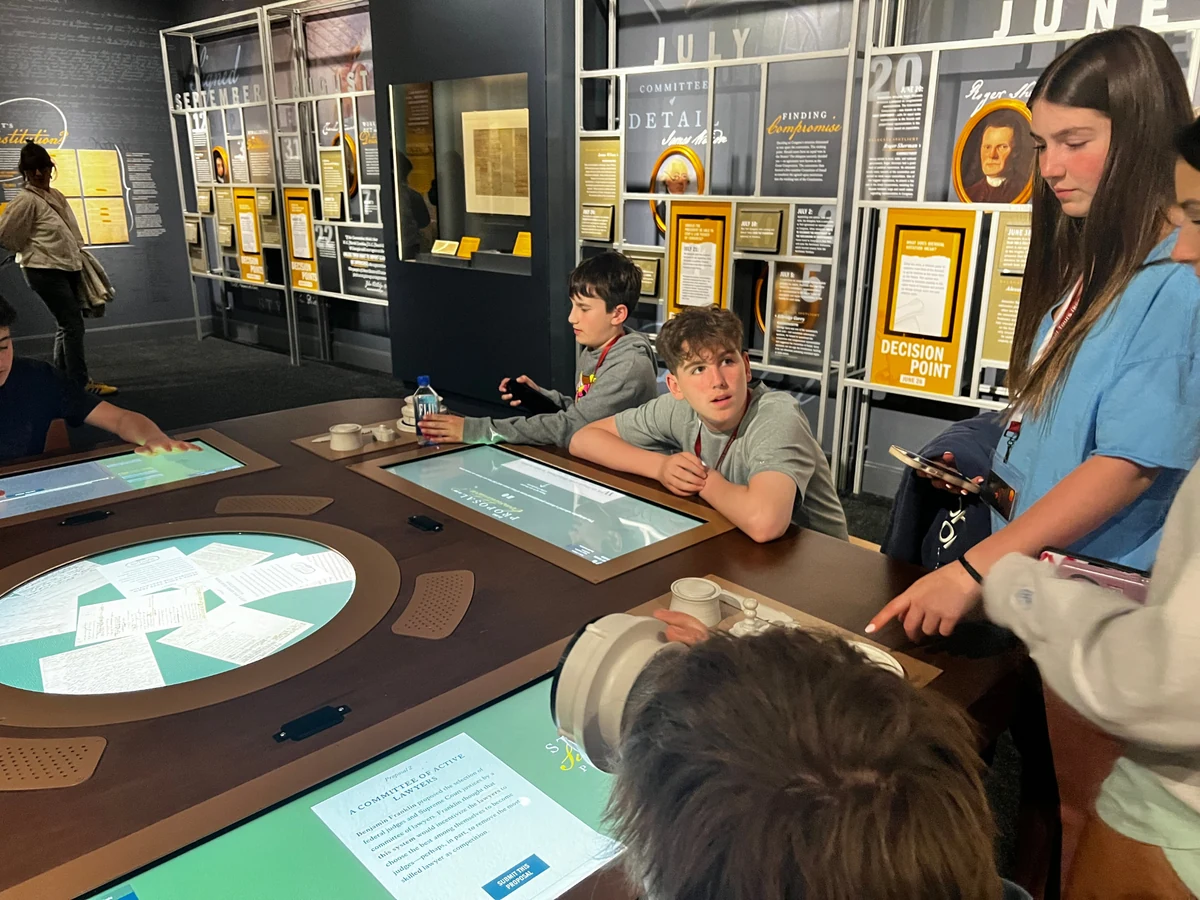
The only museum in the country devoted to the U.S. Constitution, and the strongest civics stop in Philadelphia. What makes it work for students is that it treats the Constitution as an unfinished argument rather than a document under glass. Interactive stations put students inside the drafting debates — the compromises, the votes, the things that nearly did not happen — and Signers’ Hall surrounds them with life-size bronzes of the delegates, where students can stand among the men who signed and the ones who refused.
It sits at the top of Independence Mall, a few minutes’ walk from Independence Hall and the Liberty Bell, which makes it the natural anchor for a founding-era morning. School groups of fifteen or more get access to guided gallery tours and educational programming that general admission does not include.
Best for: civics, government, constitutional law, grades 5–12. More in our guide to the National Constitution Center.
2. Museum of the American Revolution
The newest of the major Philadelphia history museums and, for many teachers, the most effective. It fills the gap most classrooms leave: what the Revolution actually felt like to the people inside it — soldiers, enslaved people, Loyalists, Native nations, women running households and businesses while the war moved through.
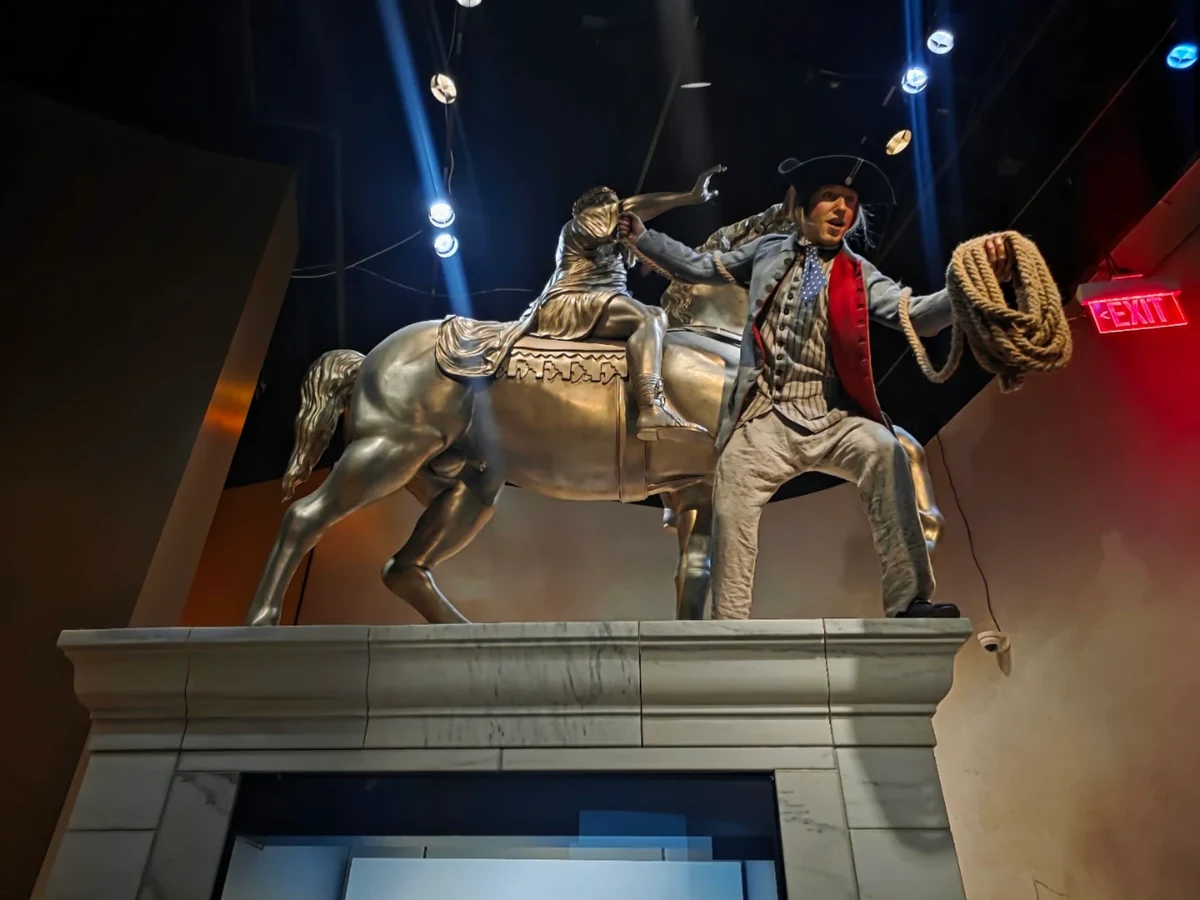
The museum leans on tableaux and first-person storytelling rather than cases of objects, which holds middle-school attention in a way that document displays often do not. Its student programming, including Through Their Eyes, is built around following individual people through the war. Advance reservations are strongly recommended for groups.
The building itself is an argument: it opened in 2017 two blocks from Independence Hall, on ground where the Revolution was decided, and its centrepiece is George Washington’s actual field headquarters tent — the canvas he commanded from through the war, shown in a purpose-built theatre. For students who have spent a unit on the Revolution as dates and documents, standing in front of the tent reliably lands.
Best for: American Revolution, colonial history, grades 4–12. Pairs naturally with Independence Hall and the Liberty Bell, a few blocks west.
3. The Franklin Institute
Philadelphia’s science museum and one of the oldest in the country. Students come for the Giant Heart — a two-storey walk-through heart that has been a rite of passage for Pennsylvania schoolchildren since 1954 — and stay for three floors of genuinely hands-on exhibits, live science demonstrations and the Fels Planetarium.
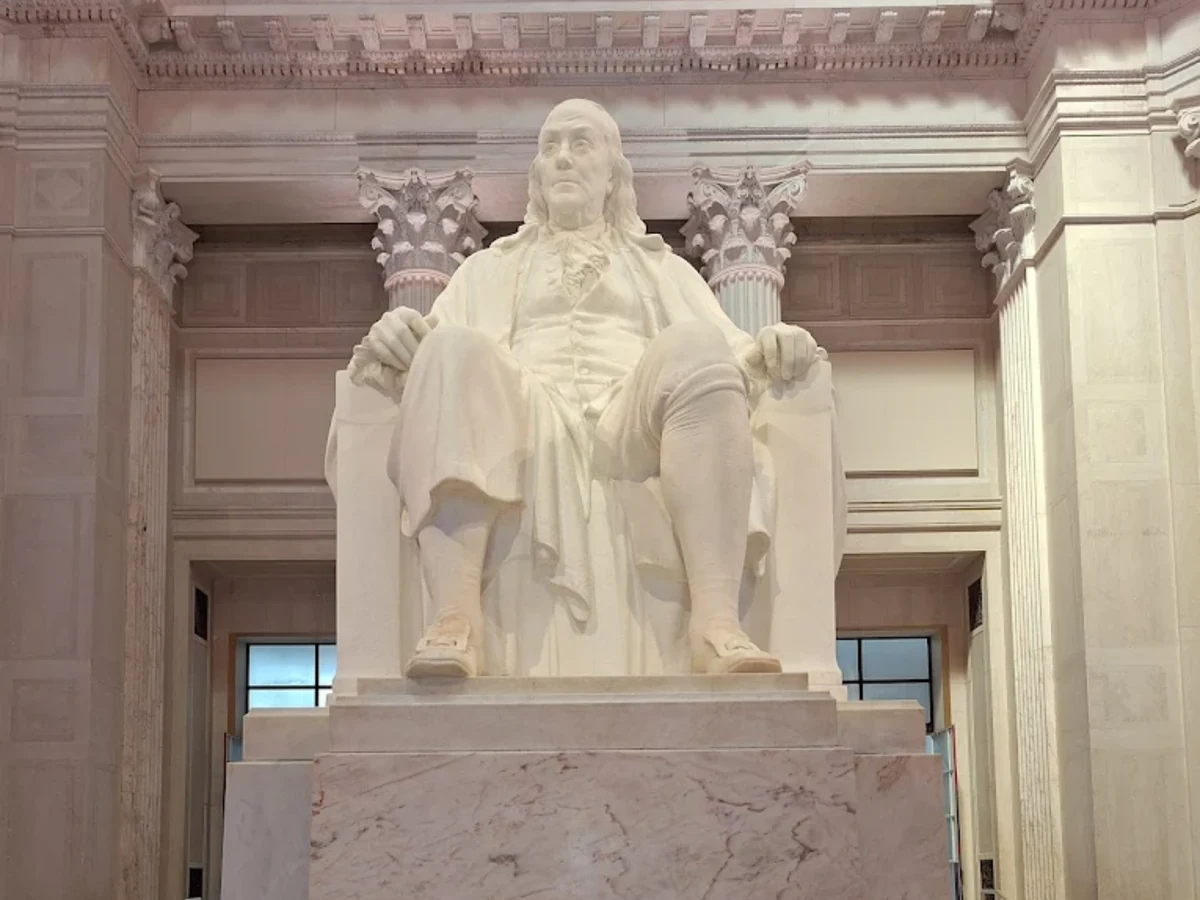
The Benjamin Franklin National Memorial sits at its centre: a twenty-foot marble Franklin in a domed rotunda, which is both a photograph every group takes and a useful reminder that Franklin was a working scientist as well as a founder. The Institute asks groups to book about six weeks ahead for best availability and requires one adult aged 21 or over for every ten young people, with chaperones staying with their students throughout.
Best for: STEM, physics, biology, grades K–12. The broadest grade range of any museum on this list.
4. Philadelphia Museum of Art
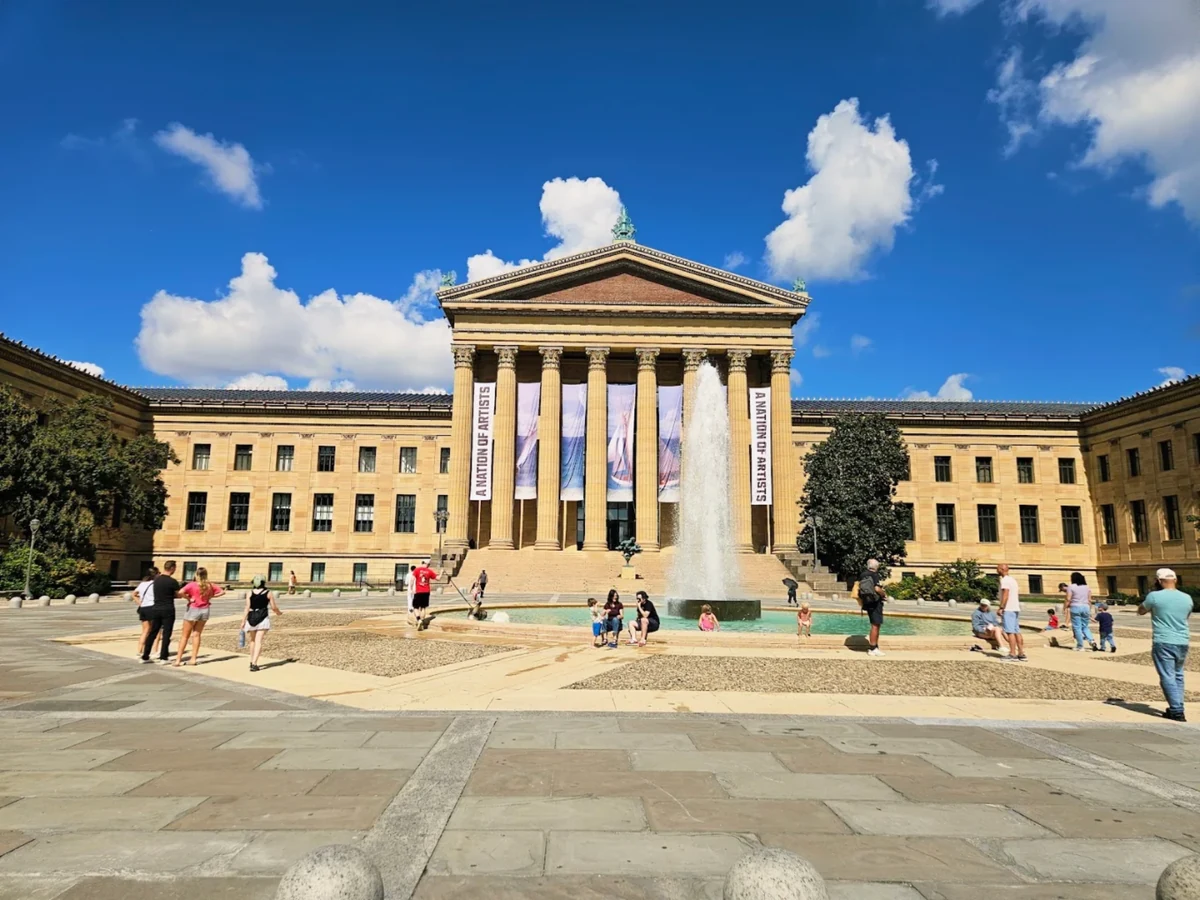
One of the largest art museums in the United States, with collections running from medieval armour to Duchamp, and a building that is itself a landmark — the east steps are the ones Rocky ran, which is worth knowing because students will ask.
The museum runs guided school tours led by trained museum guides, and this is where the most important planning detail on this page lives: school tours are capped at twenty students per class, so a group larger than twenty must book as two or more separate classes. The museum also asks groups to bring no more than one chaperone for every two students. A grade of fifty arriving as a single block will not work here; a grade of fifty booked as three tours will.
Best for: art history, studio art, world cultures, grades 3–12.
5. The Academy of Natural Sciences of Drexel University
The oldest natural history museum in the Americas, founded in 1812, and the most straightforwardly enjoyable stop on this list for younger students. Dinosaur Hall, the historic wildlife dioramas, a live butterfly house and hands-on specimen carts cover earth science, biology and ecology in a building small enough that a class does not get lost in it.
Two scheduling facts matter more here than anywhere else. School field trips run Wednesday, Thursday and Friday only during the school year, which rules the Academy out of a Monday or Tuesday itinerary entirely. And every school group is scheduled into a live science show at no additional charge, so the visit has a fixed anchor time to plan around. Chaperones aged 18 and over come free at one per ten children, and final headcounts are due two weeks ahead.
Best for: earth science, biology, ecology, grades K–8.
6. African American Museum in Philadelphia
Founded in 1976 as the first museum built by a major American city to preserve and interpret African American history, and still one of the few institutions of its kind. Its core exhibition, Audacious Freedom, covers Black life in Philadelphia from 1776 to 1876 and uses life-size projected figures who speak directly to visitors — a device that lands hard with students who have only met these histories as names in a textbook.
It sits two blocks from Independence Hall, which makes it the most natural corrective to a founding-era itinerary that would otherwise leave out the people the founding documents excluded. Pairing the two in one day is one of the strongest things a Philadelphia trip can do, and the museum runs school programming built around its collections.
Best for: American history, Black history, social studies, grades 5–12. More in our post on the African American Museum in Philadelphia.
7. Eastern State Penitentiary
Not a conventional museum but one of the most memorable stops in the city: a ruined 1829 prison, roofless and crumbling, that pioneered solitary confinement as a model of reform and was copied around the world. Students walk the cellblocks, see Al Capone’s cell, and confront an institution that believed isolation would produce penitence.
What makes it work academically is the museum’s willingness to connect the building to the present. Its exhibits on mass incarceration turn a historic site into a civics and social justice discussion rather than a ghost tour. Guide-led tours and workshops run forty-five minutes and groups must book at least four weeks in advance.
Best for: civics, criminal justice, social studies, US history, grades 7–12. Best judged by the teacher for younger or sensitive groups.
8. Independence Seaport Museum
On the Delaware River at Penn’s Landing, and the most physically hands-on history museum in the city. Students board the USS Olympia — Admiral Dewey’s flagship from the Spanish-American War and the oldest steel warship still afloat anywhere in the world — and climb down into the submarine USS Becuna, a Second World War boat whose bunks and torpedo room make the scale of submarine life immediately obvious in a way no textbook manages.
Inside, the working boat shop has wooden boats under construction by hand, and the river galleries connect Philadelphia’s founding to the port that made it possible. Group visits are booked in advance, and the museum is the stop that rescues an itinerary from being entirely indoors and entirely reading. For a group whose students have flagged by the third museum, this is the one that wakes them back up.
Best for: maritime history, engineering, US history, grades 4–12.
9. Penn Museum
The University of Pennsylvania’s museum of archaeology and anthropology, and the reason a Philadelphia class trip can cover the ancient world without leaving the city. Its Egyptian collection is among the largest in the United States and includes monumental architecture from the palace of the pharaoh Merenptah — not casts, but the stone itself, moved to Philadelphia after the museum’s own excavations.
The Middle East galleries hold material excavated at Ur, including the goldwork from the royal tombs, and the collections run on through Greece, Rome, Asia and the Americas. Because it is a working research museum on a university campus, a visit doubles as a first look at a major research university, which is useful for high school groups already thinking about college applications. It sits in University City rather than the historic core, so it needs its own half-day rather than being squeezed into an Independence Mall morning.
Best for: ancient history, world history, archaeology, anthropology, grades 6–12.
Booking rules that shape a Philadelphia museum itinerary
Philadelphia’s museums are unusually close together, which tempts groups into ambitious itineraries. The constraints that actually decide what is possible are administrative rather than geographic:
- The Philadelphia Museum of Art caps school tours at twenty students. A larger group books as multiple classes, which means multiple start times. This is the single most common reason a Philadelphia itinerary has to be rebuilt.
- The Academy of Natural Sciences takes school groups on Wednesdays, Thursdays and Fridays only during the school year. It cannot anchor a Monday or Tuesday.
- Chaperone ratios differ by museum, and some are requirements rather than suggestions. The Franklin Institute requires one adult aged 21 or over per ten young people. The Academy comps chaperones at one per ten. The Art Museum asks for no more than one adult per two students. Your district ratio is a floor, not the whole answer — see how many chaperones you need for a school trip.
- Lead times run from four to six weeks at minimum, and considerably longer for spring dates. Eastern State asks for four weeks; the Franklin Institute suggests six for best availability.
- Group thresholds unlock programming, not just rates. At the National Constitution Center, fifteen students is the line at which guided tours and educational programming become available.
- Headcounts lock before you travel. The Academy needs final numbers two weeks out. Late changes are where costs and headaches appear.
Teacher tip: book the museum with the tightest constraint first and build the rest of the day around it. In Philadelphia that is almost always the Art Museum, because of the twenty-student cap, or the Academy, because of its three-day window.
Which Philadelphia museums are walkable together
Philadelphia’s museums sit in four distinct clusters, and knowing which is which is the difference between a day that flows and a day spent on a coach. Group your field trip within a cluster and you walk; cross between clusters and you are budgeting travel time.
- Independence Mall and Old City — the National Constitution Center, the African American Museum in Philadelphia, the Museum of the American Revolution, Independence Hall and the Liberty Bell all sit within a few blocks of one another. This is the densest concentration of curriculum in the city and the only cluster where three stops in a day is genuinely comfortable.
- The Benjamin Franklin Parkway — the Franklin Institute, the Academy of Natural Sciences and the Philadelphia Museum of Art run along the same boulevard, with the Barnes Foundation and the Rodin Museum between them. A science-and-art day lives entirely here.
- Penn’s Landing — the Independence Seaport Museum on the Delaware waterfront, a walk east from Old City and a natural afternoon after a founding-era morning.
- University City — the Penn Museum, across the Schuylkill on the Penn campus. Its own half-day, and best paired with a campus walk rather than another museum.
Eastern State Penitentiary sits apart from all four, north of the Parkway in Fairmount. It is close enough to the Parkway cluster to combine with the Franklin Institute or the Art Museum, but it is not a walk from Independence Mall.
Teacher tip: build each day inside one cluster. The most common Philadelphia scheduling mistake is a morning on Independence Mall and an afternoon at the Penn Museum, which spends an hour of a two-day trip on transit for no educational gain.
How to choose museums by grade level
Elementary
The Academy of Natural Sciences and the Franklin Institute carry an elementary day comfortably — both are hands-on, both tolerate noise, and both are small enough to keep a class together. The Please Touch Museum in Fairmount Park is purpose-built for the youngest grades. Keep the founding-era sites short and outdoors at this age.
Middle school
The strongest Philadelphia grade band, because the curriculum lines up exactly. The National Constitution Center, the Museum of the American Revolution and the African American Museum together tell the founding story and its contradictions in a single walkable day. Add the Franklin Institute for a change of pace on day two.
High school
Go deeper and more thematic. Eastern State Penitentiary and the African American Museum support a civics or social justice track. The Penn Museum and the Philadelphia Museum of Art serve art history, ancient history and world cultures, and both double as campus-adjacent college exposure. The National Liberty Museum works well for groups studying civil rights and civic responsibility.
How many museums can a group fit in a day?
Two, comfortably. Three if one of them is short and the walk between them is not. The temptation in Philadelphia is to over-schedule, because the historic core is genuinely compact — the Constitution Center, Independence Hall, the Liberty Bell and the African American Museum sit within a few blocks of one another.
What eats the day is not distance. It is entry logistics: bag checks, timed starts, splitting a large group across multiple tour slots, and getting forty-five students through a gift shop. A museum that a family covers in ninety minutes takes a school group closer to two hours. Two substantial museums plus a walk through Independence National Historical Park is a full, satisfying day; four museums is a day students remember as rushing.
Lunch, accessibility and the details that catch groups out
Two practical questions decide more about how a museum day feels than the exhibits do, and both need settling at booking rather than on the morning.
Where a group eats
Most Philadelphia museums will let a school group eat bagged lunches on site, but the space has to be reserved in advance and it is released in timed slots, not left open. The Franklin Institute’s lunch rooms are available weekdays only and are booked in twenty-five minute blocks. The National Constitution Center holds a dedicated school lunchroom that groups reserve ahead for half an hour. The Academy of Natural Sciences offers lunchroom space at no additional charge, but availability is limited and it must be scheduled with the visit.
The practical consequence is that lunch is a fixed appointment in the middle of your day, not a flexible gap — and a group that has not reserved anywhere is a group eating outside in whatever the weather is doing.
Accessibility
The major Philadelphia museums are well equipped, and the provision goes well beyond step-free access. The Franklin Institute is fully wheelchair accessible with elevators throughout, lends manual wheelchairs at the ticketing desk, arranges ASL interpreters on request, and checks out sensory backpacks containing noise-reducing headphones, sunglasses and fidgets. The National Constitution Center lends wheelchairs at the information desk, keeps sensory tools including noise-cancelling headphones available during visits, and runs sensory-friendly days with quiet rooms and modified programming.
If you have students who will need any of this, say so when you book rather than when you arrive. Most of it has to be arranged ahead, and all of it is easier to secure with notice.
Who is Landmark Educational Tours?
Landmark Educational Tours is an educational group travel company based in Middleton, Massachusetts, planning and operating custom class trips for schools across the United States. Every trip is built privately around a single group rather than sold as a fixed departure, and every travelling group is accompanied by a Landmark Tour Director who handles itinerary timing, museum entries and on-the-ground problems for the whole trip — which on a Philadelphia museum day means holding the timed slots and moving a split group between them.
Landmark is a member of the Student & Youth Travel Association and the National Tour Association. Our full list is on the accreditations and certifications page, alongside our travel safety and support commitments and what teachers have said on our testimonials page.
Turning a museum list into an itinerary
A list of good museums is not a trip. The order you visit them in, which ones you book first, how a large grade splits across capped tours, and what sits between them are what turn nine good options into two well-paced days — and all of that is easier to solve before you present anything to families.
Tell us your grade level, approximate group size and travel window, and a Travel Consultant will build a custom itinerary and quote at no cost. Browse our Philadelphia school trips and all our destinations, see the themed programs we run, or read what is included in a school trip package.
Planning the wider trip? Start with our field trip to Philadelphia guide, Philadelphia historical sites for students, and how far in advance you should book. Still weighing cities? See Boston or Philadelphia for your students and our best destinations for spring 2027.