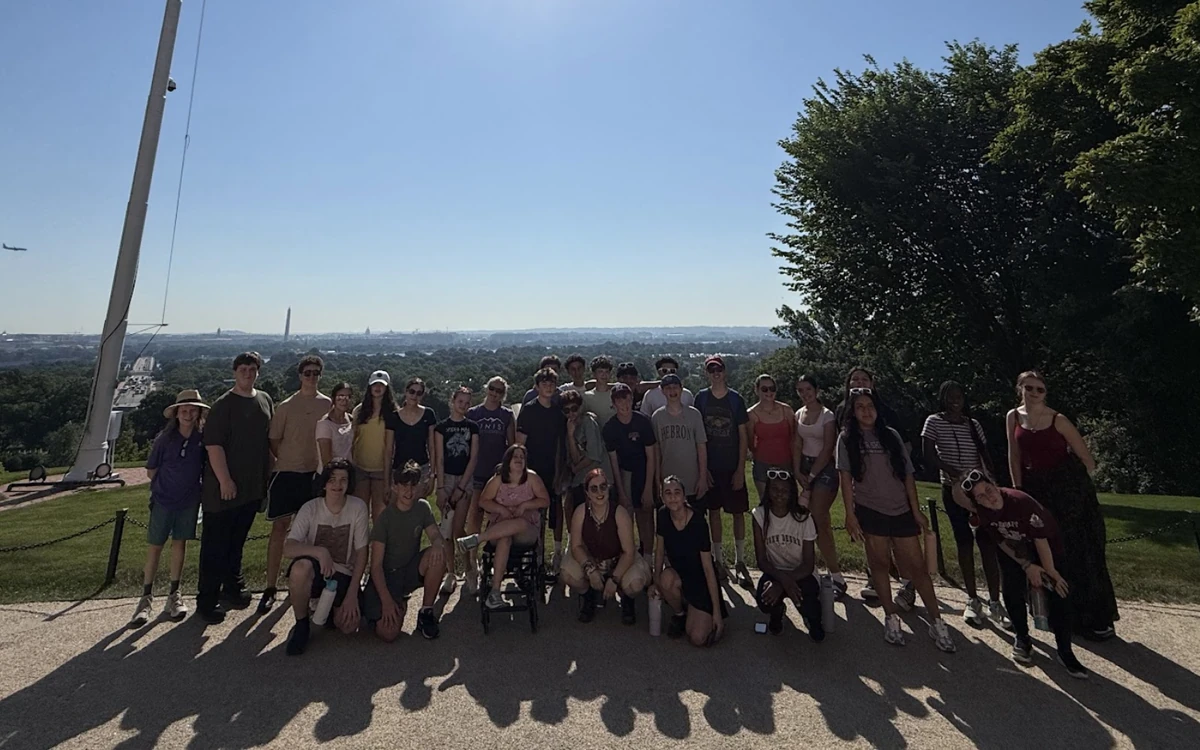
Student travel benefits students by turning subjects they have only read about into places they have stood in, and by giving them a stretch of independence they rarely get at home. Teachers report the effects in both directions: better understanding of what they are studying, and noticeable growth in confidence, curiosity and the ability to work with other people.
Most pages on this subject repeat the same handful of striking statistics without saying where they came from. This one sticks to what is actually documented, and is clear about what the research does and does not show.
The short version:
- Teachers see curriculum gains. In SYTA’s research, 53% said travel directly influences students’ understanding of curricula and 54% said it positively affects performance at school.
- The growth is personal as much as academic — independence, self-esteem, curiosity, working with other people.
- Broadening horizons is the point, and teachers say so: 79% give it as a reason they organize trips.
- Experience sticks differently. Standing somewhere beats reading about it, and students recall it years later.
- Preparation decides the payoff. A trip tied to what a class is studying, with context given before students arrive, outperforms one chosen for the destination.
- The research is teacher-reported, which is worth knowing when you quote it.
Below is what the evidence actually says, how the benefits break down, and what makes the difference between a trip that lands and one that does not. You can request a quote at no cost before committing to anything.
Student Travel Benefits at a Glance
| Item | Detail |
|---|---|
| Academic effect | 53% of teachers say travel directly influences understanding of curricula; 54% say it improves performance at school |
| Personal effect | 60% of teachers say student travel triggers a transformation, with students developing higher ambitions to know, learn and explore |
| Why teachers organize trips | To broaden students’ horizons (79%) and for the out-of-class experience (69%) |
| Teacher confidence | 74% believe travel has a very positive impact on students’ education and career |
| What makes the difference | The curriculum link. Trips tied to what a class is studying outperform trips chosen because the city is appealing |
| Evidence type | Teacher-reported survey data, not measured student outcomes |
| Source | SYTA’s Student & Youth Travel Digest, researched with StudentMarketing |
What the Research Actually Says
The most widely cited study of this market is the Student & Youth Travel Digest, published by the Student & Youth Travel Association. SYTA began collecting the data in 2012 and partnered with StudentMarketing, an independent market specialist, UNWTO Affiliate Member and member of ESOMAR World Research.
The sample represents more than 1,162,000 students, 51 U.S. states and 70 countries, which makes it the most substantial dataset available on student group travel.
Landmark is a member of SYTA (#13443), the association that commissioned this research, which is how we are able to point you at the document itself rather than at another page quoting it.
Here is what teachers in that research reported.
| Finding | Share of teachers |
|---|---|
| Organize trips to broaden students’ horizons | 79% |
| Believe travel has a very positive impact on education and career | 74% |
| Organize travel for the out-of-class experience | 69% |
| Say travel triggers a transformation, with higher ambitions to know, learn and explore | 60% |
| Say it positively impacts performance at school | 54% |
| Say it directly influences understanding of curricula | 53% |
One honest caveat. These are teachers reporting what they observe, not test scores measured before and after a trip. That is still meaningful — teachers see these students every day and are well placed to notice change — but it is perception data, and anyone quoting it at a school board meeting should say so.
If you are at the stage of making that case, our guide to how to start planning a student trip covers the approval conversation.
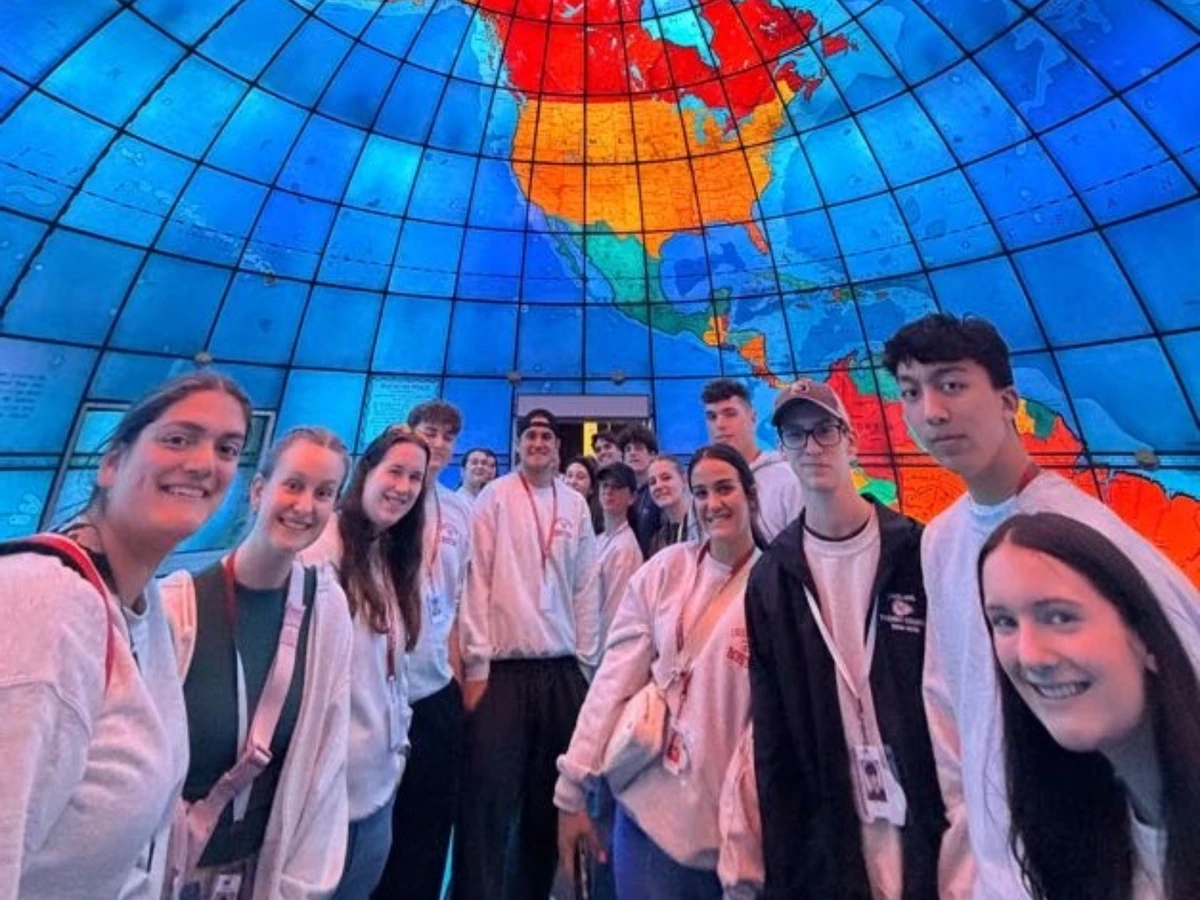
A Word About the Statistics You Will See Elsewhere
Search this question and you will repeatedly meet two figures: that students who travel graduate high school at 95% and college at 63%, against much lower rates for those who do not.
Those numbers circulate across dozens of travel company pages. We went looking for the primary source and could not establish one. Where a source is named at all, it is a 2013 report that the citing pages do not link to.
They may well be accurate. But a figure you cannot trace is a figure you should not put in front of a principal or a room of parent chaperones, so they do not appear on this page. Everything above comes from a document you can open and read yourself.
The Academic Benefits of Student Travel
The clearest gain is the one teachers describe most: a subject stops being abstract.
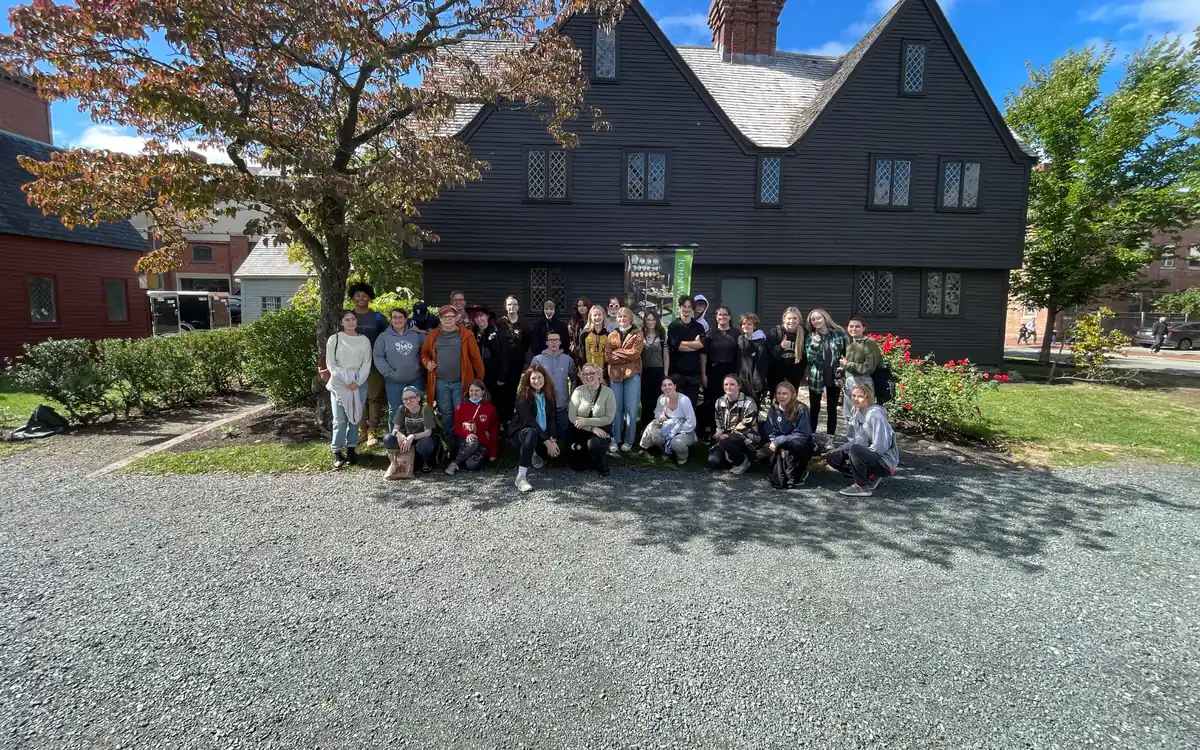
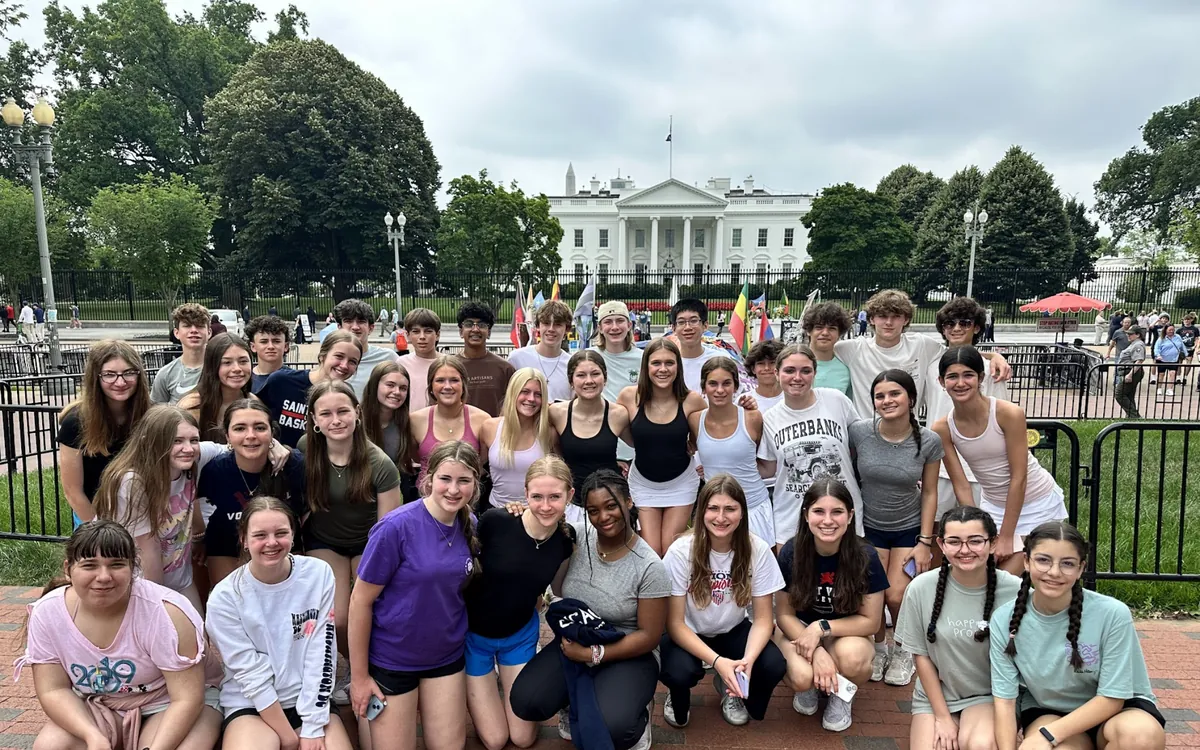
History becomes a place. A student who has stood at the Lincoln Memorial, walked the Freedom Trail or seen the Salem Witch Trials Memorial carries a physical reference point into every later lesson on those topics.
Scale becomes real. No photograph conveys the size of a Saturn V, the height of a Gothic cathedral or the quiet of a national cemetery. Students consistently report being surprised by scale, and surprise is what makes things stick.
Context arrives all at once. In a classroom, a subject is delivered in pieces over weeks. On site, the geography, the architecture, the distances and the atmosphere arrive together, and students make connections nobody taught them.
Our piece on why field trips have a positive effect on learning goes further on the classroom side.
Questions get better. Teachers often notice that the questions students ask on the second day of a trip are sharper than the ones they asked in class, because the material is now in front of them.
The Personal Benefits of Student Travel
Ask a teacher a year later what changed, and they rarely lead with the curriculum.
Independence. For many students a school trip, often an 8th grade trip, is the first stretch of days away from a parent. Managing a schedule, a room key, their own money and their own belongings is a genuine developmental step, and it happens inside a supervised structure.
Confidence. Students who are quiet in a classroom are often different on a trip. A different setting gives them a different role, and that role sometimes follows them home.
Working with other people. A group of forty on a private group tour has to move, eat, queue and make decisions together for several days. Students who barely interact at school end up sharing a week.
Curiosity. This is the one teachers describe most warmly, and it matches the research: 60% report that students come back with higher ambitions to know, learn and explore.
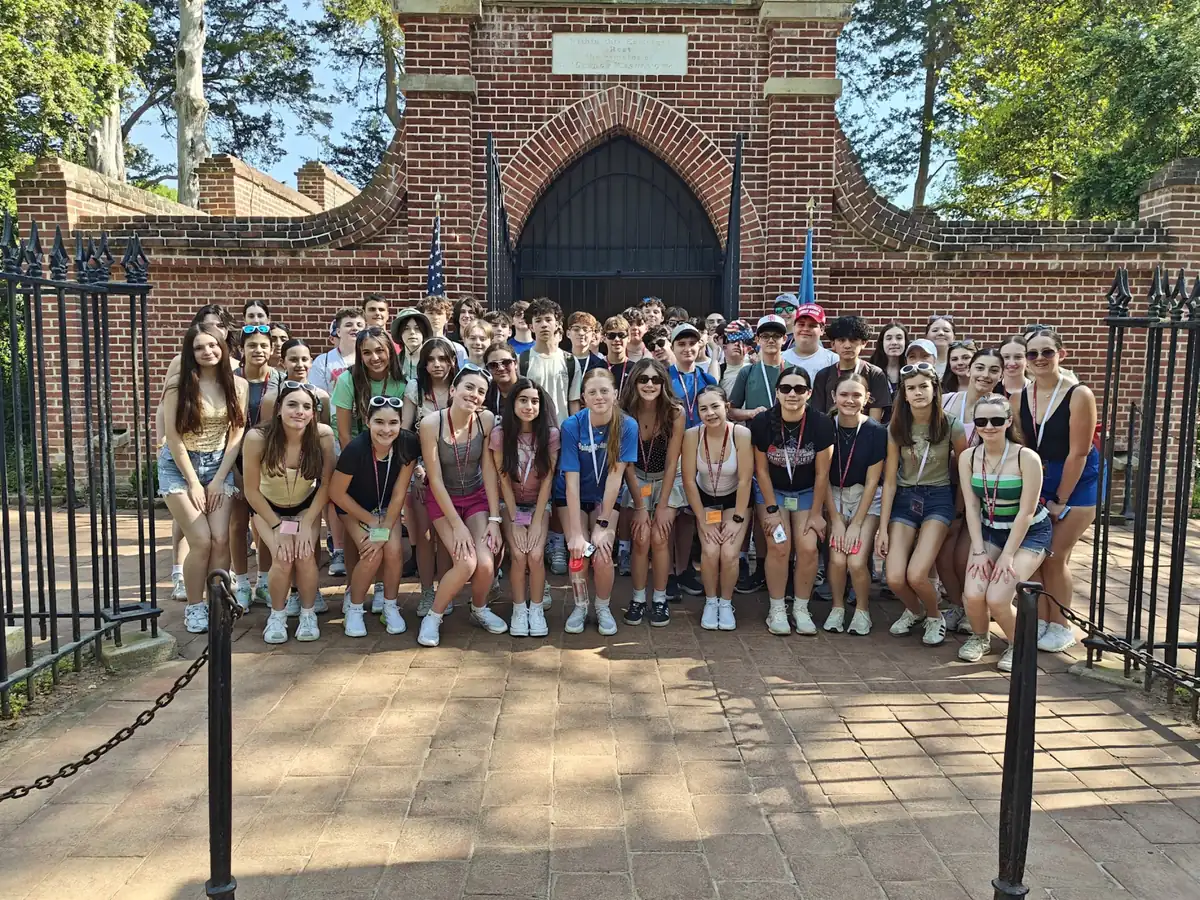
Benefits by Grade Level
The same trip does different work depending on when a student takes it.
| Stage | What travel does most |
|---|---|
| Middle school | Often the first time away from home. Independence and confidence are the headline gains, with the curriculum close behind |
| 8th grade | The civics and US history sequence lines up almost exactly with Washington, D.C., so the academic payoff is at its highest |
| High school | Students can handle ambiguity and discomfort, so difficult subjects land properly. International travel starts to make sense |
| Any stage | Shared experience. The thing graduates mention years later is almost never the itinerary |
If you are choosing where to go, the best 8th grade trip destinations and international school trip destinations compare the options.
What Makes a Trip Actually Deliver
Not every trip produces the benefits above. The ones that do tend to share four things.
A reason beyond the destination. A trip tied to what a class is studying outperforms a trip chosen because the city is appealing. Teachers in the SYTA research say curriculum-linked tours are the most requested kind for exactly this reason.
Preparation. Students who arrive knowing what they are about to see get far more from it. Twenty minutes of context on the coach changes a stop completely.
Room to absorb. A schedule that sprints between nine sites produces photographs; a schedule that allows time at five produces memories.
Someone who can tell the story. This is the difference a Tour Director makes — a site explained well becomes a thing a student thinks about, rather than a place they stood.
Getting there is its own piece of work. Our guides to the best fundraising ideas and how payment plans work cover how groups build the budget, and why student trips cost what they do explains where the money goes.
What Parents Notice Afterwards
Parents are not in the room for any of it, which is what makes the things they report afterwards worth listening to.
A student who ran their own week. Waking themselves up, keeping track of their own things and managing their own money for several days tends to show up at home before anything academic does.
A different vocabulary. Students come back using the names of things — a memorial, an exhibit, a neighborhood — and using them correctly, because they were there.
A shifted friend group. Groups re-sort on a trip. Students who had never spoken at school come home having shared a week, and it frequently holds.
None of this is measured in the SYTA research, and we are not presenting it as data. It is what teachers and families consistently describe, offered as observation.
How to Make the Case to a School Board
If you are the one asking for approval, four points carry the most weight.
Lead with the curriculum link. Name the unit the trip supports. A trip that answers a syllabus is easier to approve than a trip that answers a wish.
Use the research, and cite it honestly. Teachers in a sample representing over 1.1 million students report gains in understanding and performance. Say that it is teacher-reported, and you will be more credible than the page quoting untraceable graduation statistics.
Address cost directly. Show the payment plan and the fundraising plan alongside the price, and name the quiet mechanism for students who cannot pay.
Name the supervision. Duty of care is usually the unspoken question. Our travel safety and support page sets out the protocols.
What a Landmark Trip Includes
A package typically covers a private group tour for your group only, a custom itinerary built around your curriculum, transportation, student-appropriate hotel accommodations, admission to every scheduled site, the meals named in the itinerary, a professional Tour Director traveling with your group, and restaurant and driver gratuities.
On average, Landmark’s fully inclusive trips range from $300 to $400+ per traveler per day, or about $1,200 to $3,500+ total for an all inclusive package. Airfare is an additional variable cost. See what a school trip package includes.
Who Is Landmark Educational Tours?
Landmark Educational Tours is a 100% employee-owned domestic and international educational travel company headquartered at 1 Central Street, Suite 205, Middleton, Massachusetts, reachable at (888) 886-2781.
Landmark plans and operates fully managed, custom class trips for public districts alongside private, religious, prep and independent schools. Every trip is a private group tour, and each group travels with a Landmark Tour Director who is an employee of the company.
Landmark is a member of the Student & Youth Travel Association (#13443), the body behind the research above, along with ABA Member #84360, IATA Code 22576046, BBB Business ID 544197, California Seller of Travel 2168995-50, and ETOA membership. More on the about Landmark page.
Planning a Trip That Earns Its Place
Three things make a first conversation productive: a rough headcount, the unit or subject the trip supports, and a sense of what families can carry.
A Landmark Travel Consultant will build the itinerary around the curriculum rather than around a city, free, with nothing held until you say so. That link is what turns a good trip into one a school board approves again next year.
If you have not started, how to start planning a student trip is the step before choosing a destination.