The best Ireland field trip ideas for students pair the country’s ancient sites — Newgrange, Glendalough, the Rock of Cashel — with the living history of Belfast and Dublin, and with landscapes like the Cliffs of Moher and the Ring of Kerry that teach geography without a textbook. Ireland is small enough that a group can reach all of it in a week, which is what makes it work as a school trip rather than a highlights reel.
That compactness is the practical point. A group can stand inside a passage tomb older than the Pyramids in the morning and walk a city where the history is still being negotiated in the afternoon. Below are the ideas worth building a trip around, what each one gives students, and which courses they serve.
Every site here is on Landmark’s Historic Ireland program rather than a generic list. You can request a quote at no cost before deciding anything.
An Ireland Field Trip at a Glance
The full route is on our Ireland destination page, and if you have not started planning yet, how to start planning a student trip comes before this decision.
| Item | Detail |
|---|---|
| Trip length | Nine days, including an overnight flight each way |
| Regions covered | Dublin, Northern Ireland, the southeast, the southwest and the west coast |
| Subjects served | History, geography, literature, religion, earth science and government |
| Grade level | Middle and high school; the Belfast material lands hardest with high schoolers |
| UNESCO sites | The Giant’s Causeway and Newgrange |
| Language | English, which makes Ireland one of the easiest first trips abroad for a US group |
| Staffing | A Landmark Tour Director travels with the group start to finish |
| Booking lead time | Twelve months or more, because international trips run on a passport clock |
| Typical cost | $300 to $400+ per traveler per day depending on package inclusions, or about $1,200 to $3,500+ in total for an all-inclusive package. Airfare is an additional variable cost. |
The Best Ireland Field Trip Ideas, Site by Site
This is the chart to take to a department head, because it answers what each stop actually gives students rather than listing what it is. If Ireland is one of several destinations you are weighing, our destinations page has the rest.
| Idea | Where | What students take away |
|---|---|---|
| The Book of Kells and the Long Room | Trinity College, Dublin | A ninth-century illuminated manuscript, and a library that explains what books meant before printing |
| EPIC The Irish Emigration Museum | Dublin | Why twenty million Americans claim Irish descent — migration told from the leaving end rather than the arriving end |
| Belfast: murals, Peace Walls, the Troubles | Northern Ireland | A conflict inside living memory, still visible on the walls, explained by people who lived through it |
| The Giant’s Causeway | County Antrim | Around 40,000 interlocking basalt columns, and the difference between the myth and the geology |
| Newgrange | County Meath | A passage tomb older than Stonehenge and the Great Pyramids, built by people who tracked the solstice |
| Glendalough | Wicklow Mountains | A sixth-century monastic settlement founded by St Kevin — round tower, church ruins and the valley that shaped it |
| The Rock of Cashel | County Tipperary | Cormac’s Chapel, a Gothic cathedral and a round tower on one outcrop: medieval Ireland in a single silhouette |
| Blarney Castle | County Cork | A tower climb, the Blarney Stone, and grounds that reward the students who would rather be outside |
| Killarney National Park | County Kerry | A jaunting cart ride, Ross Castle on Lough Leane and Muckross House — landscape and estate history together |
| The Ring of Kerry | County Kerry | Dingle Bay, the MacGillycuddy’s Reeks, peat bogs and stone walls — rural Ireland read from the coach window |
| The Cliffs of Moher | County Clare | More than 700 feet of Atlantic cliff face, and a visitor center that explains how it got there |
| The Burren | County Clare | A limestone pavement with rare flora and ancient archaeology — the strangest landscape on the island |
| Galway | County Galway | The Latin Quarter, the Spanish Arch and Eyre Square, plus a city small enough for students to walk |
Thirteen ideas is more than any single trip holds comfortably, which is the real planning question. Booking early is what keeps the choice yours rather than whatever is still available.
Dublin: Where the Trip Usually Starts
Dublin is the arrival city and the right place to begin, because it gives a group its bearings before the country opens up.
Trinity College and the Book of Kells are the obvious stop and deserve to be. What lands is not the manuscript alone but the Long Room around it — students who have only known books as disposable objects standing in a room built to hold them as treasure. It is a five-minute conversation that changes how a class talks about the medieval period for the rest of the trip, and the same effect shows up on our other Europe programs.
EPIC The Irish Emigration Museum is the stop teachers underestimate and students remember. American classes arrive knowing emigration as an arrival story — Ellis Island, tenements, assimilation. EPIC tells it from the other end: what it was to leave, who was left behind, and what a country loses when its young people go. For any class that has studied US immigration, seeing the same history from the departure side is genuinely disorienting in the way good teaching is.
The Famine, and Why It Belongs on the Itinerary
For most American students, the Great Famine is the only Irish history they arrive with — usually a paragraph in a US history textbook explaining why so many Irish people turned up in Boston and New York in the 1840s and 1850s.
Ireland is where that paragraph becomes a country. The population fell by roughly a quarter through death and emigration in the space of a decade, and it did not recover for well over a century. That is not a detail students grasp from a textbook, and it is the context that makes EPIC The Irish Emigration Museum land rather than simply being pleasant.
The landscape carries it too. The stone walls and abandoned field boundaries visible from the coach on the Ring of Kerry and across the west are, in places, the outline of a population that is no longer there. A guide who points that out turns a scenic drive into the most effective ten minutes of the trip. It is worth asking your Travel Consultant to weight the itinerary toward it if a US history or world history class is the reason you are going.
Literary Dublin, for an English department
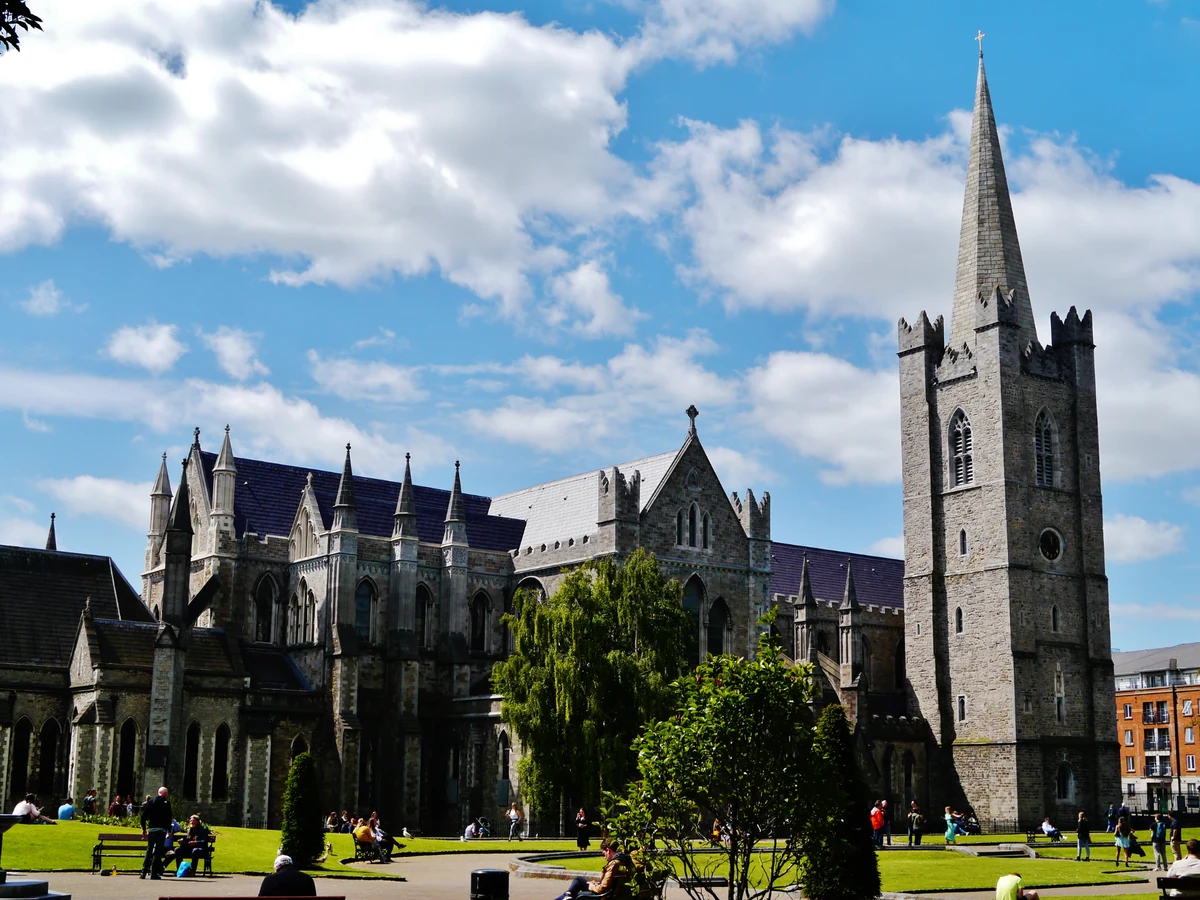
Dublin is one of the most concentrated literary cities anywhere — Joyce, Yeats, Wilde, Beckett, Swift and Heaney all belong to it. Jonathan Swift was Dean of St Patrick’s Cathedral and is buried there, which makes the building a stop that serves an English class and a religion class in the same twenty minutes.
None of that is automatic on a standard route. If an English department is co-sponsoring the trip, say so before the itinerary is written and a literary layer can be built into the Dublin days rather than bolted on afterwards. Our FAQ covers what else can be added once a route exists.
Belfast and the Giant’s Causeway: One Day, Two Subjects
The day north is the strongest single day on an Irish itinerary, and the one that most needs a teacher to prepare students beforehand.
Belfast
A guided tour of Belfast covers the history of the Troubles, the city’s shipbuilding heritage, the Peace Walls, the political murals and the Cathedral Quarter. This is conflict within living memory, in a city still working out how to hold it, and the walls are not a museum exhibit — they are up because of decisions that were made and are still being made.
For a government or modern history class it is the most valuable stop in Ireland, because students can see that a peace process is a thing people do rather than a thing that happens. It asks more of the group than a castle does, which is precisely the argument for it. If Belfast is the reason you are going, say so early — weighting an itinerary toward a subject only works before it is written.
The Giant’s Causeway
Then, the same afternoon, a UNESCO World Heritage Site of around 40,000 interlocking basalt columns. The legend says a giant built it. The geology says cooling lava fractured into hexagons. Students get both, and the gap between the two is the lesson — how people explain a landscape before they can explain it, and why the myth survived anyway.
The Antrim Coast on the way gives you the Carrick-a-Rede Rope Bridge and the seaside villages, which is the part of the day students photograph.
Ancient Ireland: Older Than the Pyramids
This is the thread most US groups do not expect, because American history does not have anything of this depth to compare it to.
Newgrange is a passage tomb in County Meath, a UNESCO World Heritage Site, and older than both Stonehenge and the Great Pyramids. It was built by a society that understood the solstice well enough to align a corridor to it; Ireland’s Office of Public Works runs the visitor center and sets how groups get in. Standing inside it does something to a student’s sense of scale that no date on a timeline manages.
Glendalough, in the Wicklow Mountains, is a sixth-century monastic settlement founded by St Kevin — a round tower, church ruins and lakeside trails in a glacial valley. It is where the trip’s history and its landscape stop being separate subjects — the same thing our Costa Rica guide describes from the science side.
The Rock of Cashel puts Cormac’s Chapel, a Gothic cathedral and a round tower on one limestone outcrop above the Tipperary plain. Medieval Irish history, legible in a single silhouette from the road.
The Southwest: Blarney, Killarney and the Ring of Kerry
The southwest is where an Ireland trip stops being about buildings. All three stops below sit on the Historic Ireland itinerary across two consecutive days.
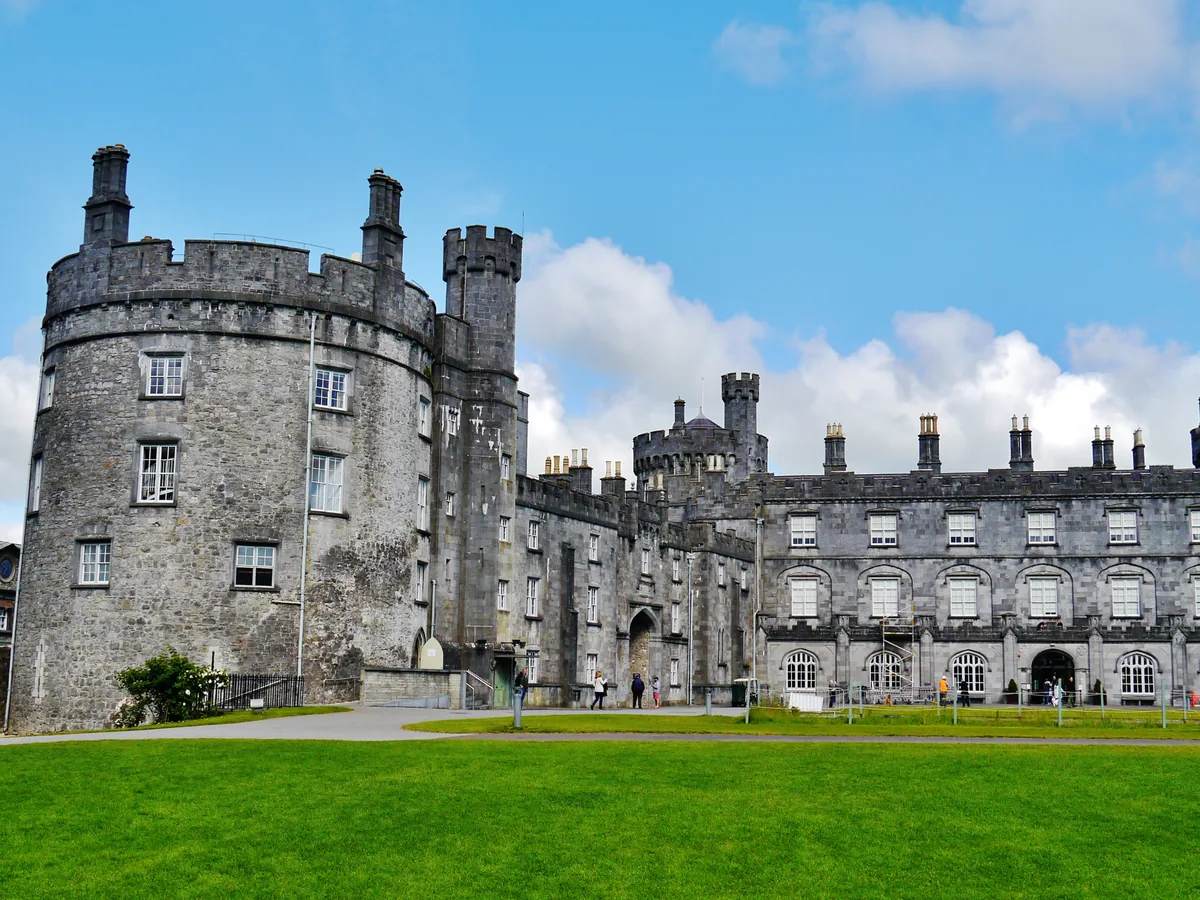
Blarney Castle earns its place partly as a tower climb and partly because the grounds, gardens and rock formations give the students who would rather be outdoors something real to do. Kissing the Blarney Stone is a rite of passage and everyone photographs it.
Killarney National Park works best by jaunting cart, which sounds like a gimmick and is not — it moves at a speed that lets a guide talk. Ross Castle, a fifteenth-century fortress on Lough Leane, and Muckross House give the day its history.
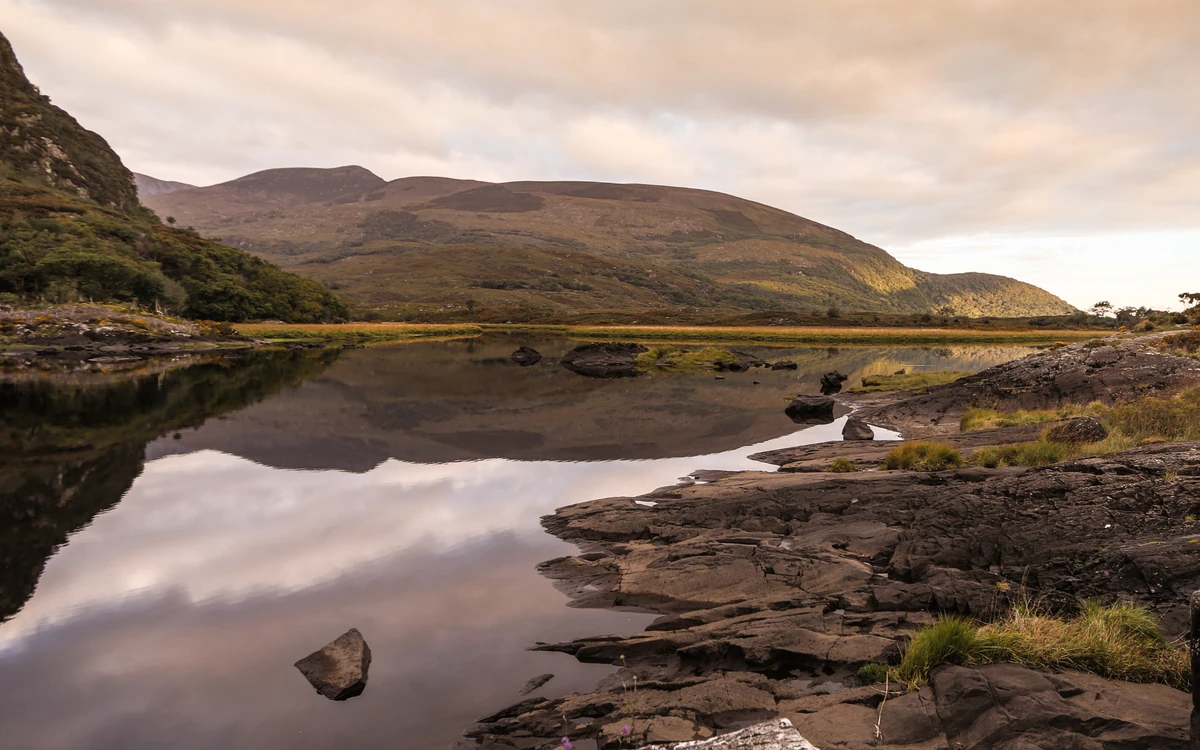
The Ring of Kerry is a full day on the coach and one of the few times that is the point. Dingle Bay, the MacGillycuddy’s Reeks — Ireland’s highest mountain range — the village of Sneem, Atlantic viewpoints, peat bogs, stone walls and small farms. Students see how people actually live on land like this, which is a geography lesson no classroom delivers.
The West: Cliffs, Limestone and Galway
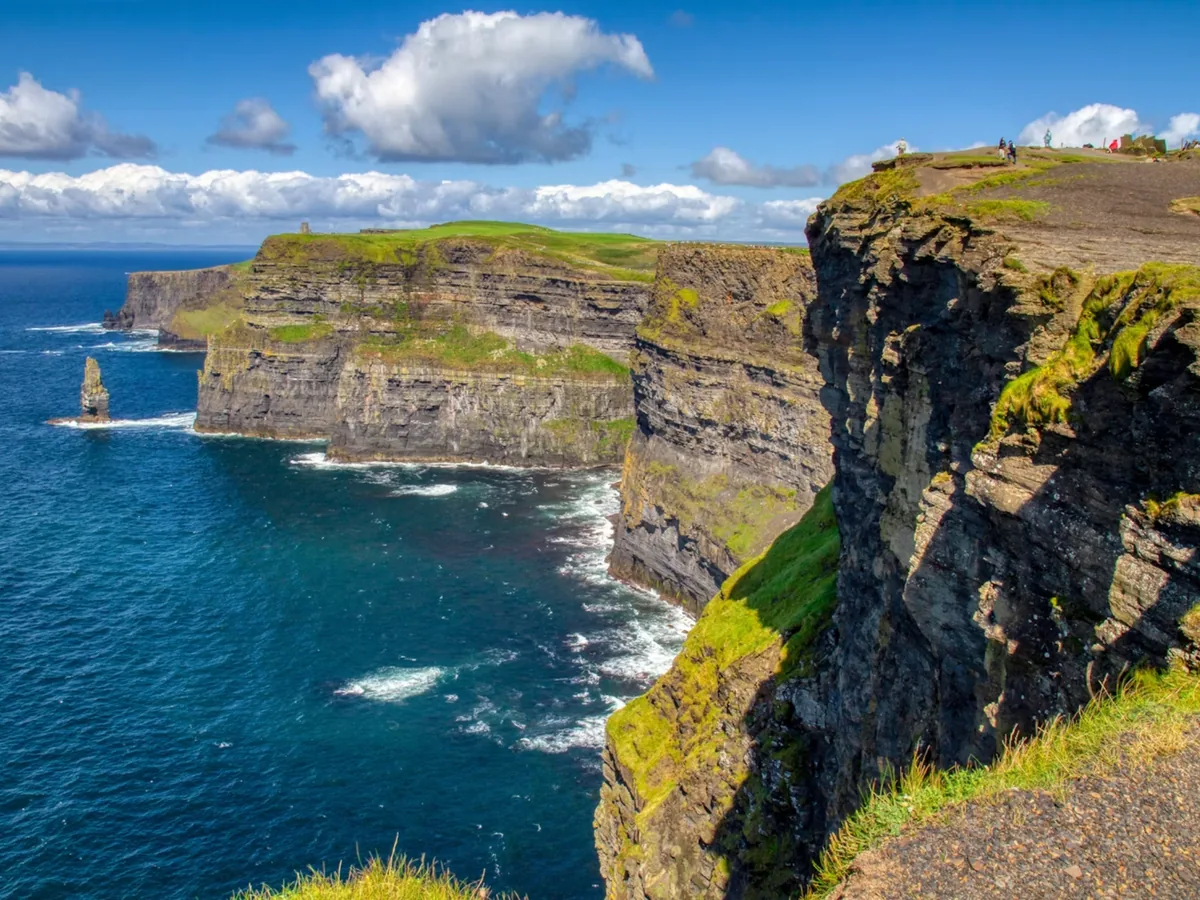
The Cliffs of Moher rise more than 700 feet above the Atlantic and are the image most students have in mind before they arrive. They hold up.
The Burren next door is the more interesting stop and almost nobody expects it: a limestone pavement supporting rare flora alongside ancient archaeological sites. For a biology or earth science group it is the richest ground in Ireland, and worth setting against the options in the best STEM trips for middle and high school students. Adare, with its thatched cottages and medieval ruins, is the stop on the way that students find unreasonably charming.
Both stops repay a briefing on the coach beforehand. Students who know what a limestone pavement is before they stand on one ask far better questions than students discovering it cold, and the same is true of the cliff stratigraphy.
Galway closes the west — the Latin Quarter, the Spanish Arch and Eyre Square, in a city compact enough that a group can walk it without losing anyone.
The Irish Language and Traditional Music
Two things students notice within a day, and neither needs a scheduled stop to teach something.
Irish appears on every road sign, above the English, and in the Gaeltacht areas of the west it is a working daily language rather than a heritage one. For students who have only encountered bilingualism as a classroom subject, a country actively maintaining a minority language is a live civics question — what it costs, who decides, and why a state bothers.
Traditional music is the other. It is genuinely social rather than performed at audiences, and a session is the clearest demonstration a student will get that a folk tradition can be current rather than preserved. It is worth asking for one to be built in; it is not standard on every route and it is one of the cheapest additions that changes how a trip feels, and it barely moves the number on the permission slip — what a school trip costs sets out what actually does.
Which Ideas Fit Which Course
| Course | The stops that serve it |
|---|---|
| World history | Newgrange, Glendalough, the Rock of Cashel, Blarney and Ross Castle |
| Modern history and government | Belfast — the Troubles, the Peace Walls and the murals |
| US history and immigration | EPIC The Irish Emigration Museum and the Famine landscape, told from the departure side |
| Literature | Literary Dublin — Joyce, Yeats, Wilde and Swift — the Book of Kells, and Galway’s Latin Quarter |
| Earth science and geology | The Giant’s Causeway, the Cliffs of Moher and the Burren |
| Geography | The Ring of Kerry, the Wicklow Mountains and Killarney National Park |
| Religion and church history | Glendalough, the Rock of Cashel and St Patrick’s Cathedral in Dublin |
| Music and culture | A traditional music session, and the Irish language in daily use in the west |
A trip serving one course is a nice idea; a trip serving four curriculum areas survives a budget meeting. Ireland serves several at once, which is a large part of why it travels well. Our themed programs work the same way elsewhere.
How Long You Need and What It Costs
Landmark’s Historic Ireland program runs nine days, including an overnight flight in each direction. That length exists because Ireland’s sites are spread across the island, and a shorter trip means dropping either the north or the west.
On average, Landmark’s fully inclusive trips run $300 to $400+ per traveler per day depending on package inclusions, or about $1,200 to $3,500+ in total for an all-inclusive package. Airfare is an additional variable cost.
| Trip length | Typical cost per traveler | What fits |
|---|---|---|
| 7 days | $2,100 to $2,800+ | Dublin, the east and one other region |
| 9 days | $2,700 to $3,600+ | The full Historic Ireland route, north and west included |
Those figures apply the daily rate to each length and exclude airfare, which is quoted separately because it moves with your departure city and your dates. Landmark books and manages group air, airport transfers and every connection so the group travels as one. What is included in a school trip package covers the rest.
Planning Notes That Actually Matter
- Book twelve months out. The binding constraint on an international trip is passports, not flights — thirty families completing a government process, some of them late. Booking early covers what else it protects.
- Prepare the group for Belfast. It is the one stop that works far better with context beforehand, and far worse without it.
- Pack for weather, not for season. Ireland is mild and wet in most months; layers and a waterproof matter more than the calendar.
- Name your two or three courses up front. A Travel Consultant can weight the route toward them, but only before it is built.
- Plan the reflection now. Whatever students will produce afterwards should exist before you go.
Who Is Landmark Educational Tours?
Landmark Educational Tours is a 100% employee-owned educational travel company with more than twenty years in student travel. Every trip is private and built for one group, so your itinerary and dates are your own and your group is never merged with another school’s.
A Landmark Tour Director travels with the group from start to finish, and a team member is reachable around the clock across time zones for the whole trip. Planning is free until you agree to proceed. More is on our Ireland destination page, our about page and travel safety and support.
Tell us your grade level, your subjects and roughly how many travelers, and we will tell you what a week in Ireland could carry for your students. Request a quote or contact us to start. Weighing destinations? Our France guide and Costa Rica guide cover the alternatives.