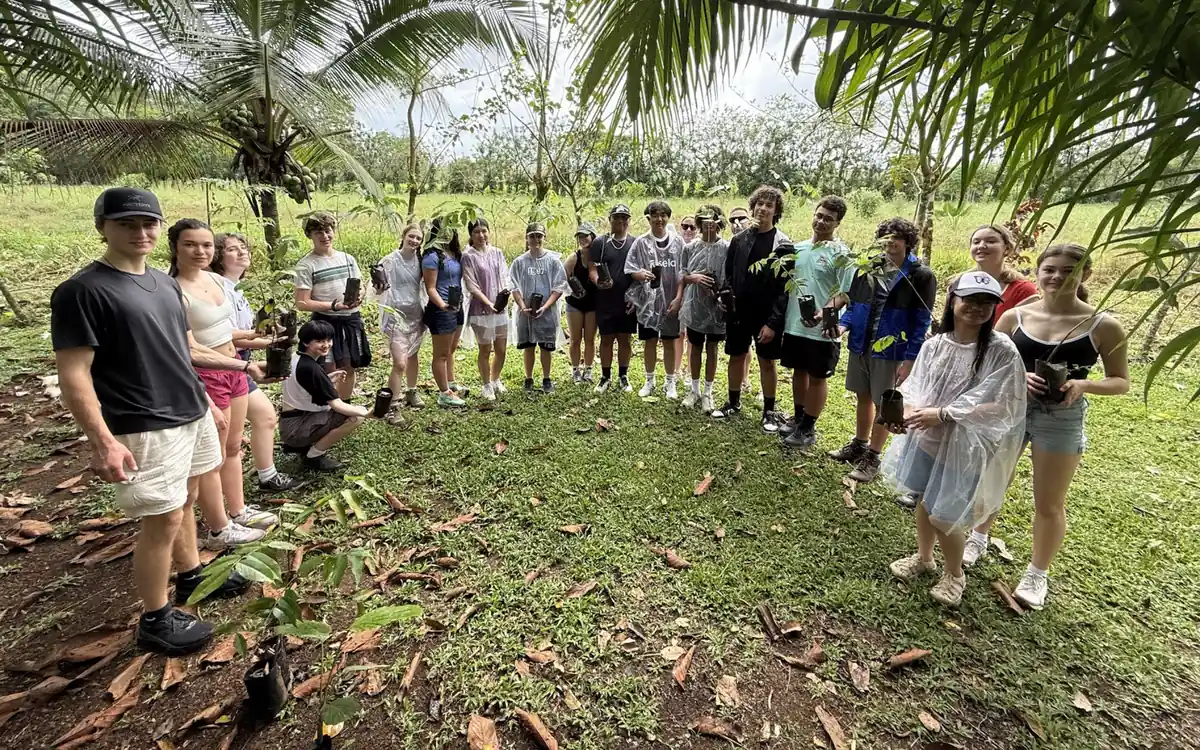
Students on a Costa Rica field trip learn tropical ecology, conservation policy, Spanish, and the economics of a country that rebuilt its forests on purpose — and they learn most of it outdoors, from people who live there. The subjects are real ones, but the reason Costa Rica works as a classroom is that the evidence is standing in front of the students rather than printed in a book.
That distinction matters, because most descriptions of a Costa Rica school trip are lists of activities. Ziplines, rafting, hot springs. Those are on the itinerary and students love them, but they are not the answer to what students learn. This page takes each part of a Landmark Costa Rica trip and sets out what it actually teaches, which subjects it serves, and where the honest limits are.
If you are earlier than that in the process, how to start planning a student trip comes first, and you can request a quote at no cost before committing to anything.
A Costa Rica Field Trip at a Glance
Landmark runs Costa Rica as a six- or seven-day program; the Costa Rica destination page has the full picture, and our overview of a Costa Rica school trip covers the destination itself rather than the learning.
| Item | Detail |
|---|---|
| Main subjects served | Biology, environmental science, Spanish, geography, economics and civics |
| Trip length | Six or seven days, and customized from there |
| Grade level | Middle and high school; the conservation-policy material lands hardest with high schoolers |
| Signature learning sites | Tirimbina Biological Station, the Sarapiquí reforestation program, Arenal, and a local school visit |
| Language | Spanish, used in context rather than practiced in a classroom |
| Staffing | A US-based Landmark Tour Director travels with the group, joined by a Costa Rica–based Tour Director on the ground |
| Typical cost | $300 to $400+ per traveler per day depending on package inclusions, or about $1,200 to $3,500+ in total for an all-inclusive package. Airfare is an additional variable cost. |
| Booking lead time | Twelve months or more, because international trips run on a passport clock |
What Each Part of the Trip Actually Teaches
This is the table worth taking to a department head or a school board, because it answers the question they will ask, which is not “is it fun” but “what is the academic case.” Every line below comes off Landmark’s actual Costa Rica itineraries rather than a generic list.
| On the itinerary | Subject | What students actually take away |
|---|---|---|
| Reforestation program, Sarapiquí | Environmental science | Why a seedling is planted in one spot and not another, and what a restored forest needs decades to become |
| Tirimbina Biological Station | Biology | How field research is actually conducted — observation, transects, data — at a working station rather than a visitor attraction |
| Cacao tour | Economics, history | One crop followed from tree to product, and how a commodity price decided a long way away reaches a small farm |
| Arenal Hanging Bridges | Biology | Rainforest canopy structure seen from inside it — that a forest is layered, and different species live at different heights |
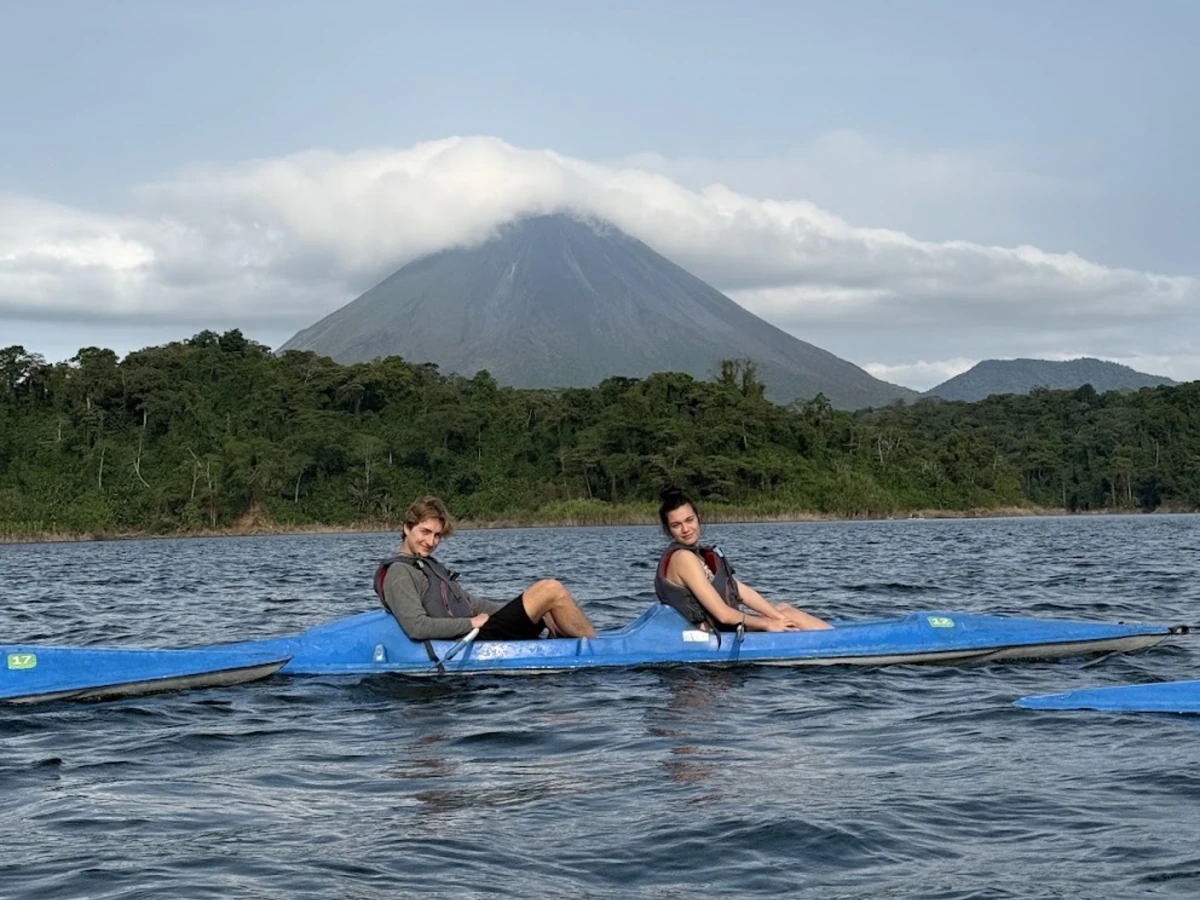
| Arenal volcano and hot springs | Earth science | Plate boundaries and geothermal activity as a landscape students are standing on, not a diagram |
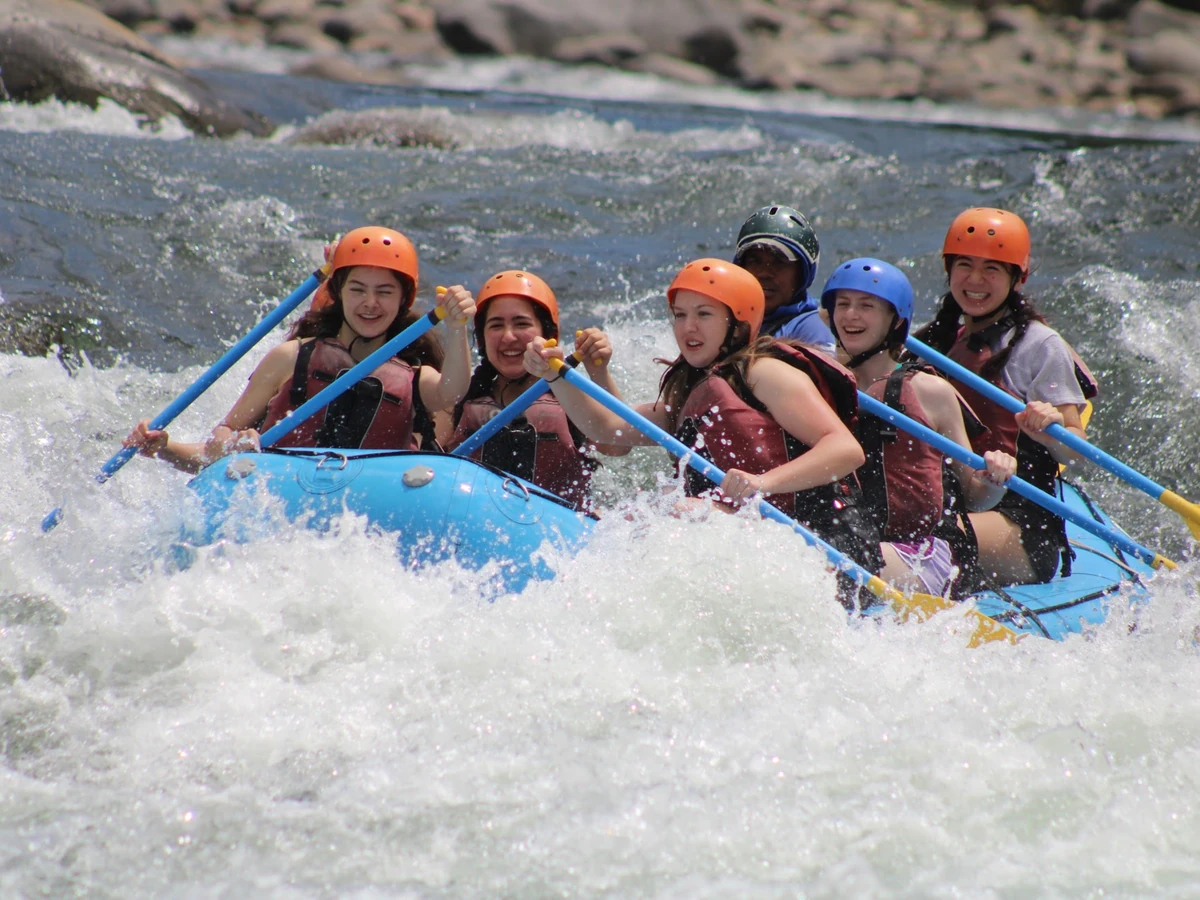
| Sarapiquí River rafting | Geography, teamwork | A watershed read from inside it, and a genuinely non-optional lesson in coordinating with other people |
| Crocodile safari boat tour | Biology | Riverine ecosystems and predator behavior, observed rather than described |
| Volunteer service at a local school | Civics, Spanish | What a school looks like somewhere else, and Spanish used because it is needed rather than graded |
| Sarchí workshop | Culture, art | A craft tradition learned from the people who practice it, in the town known for it |
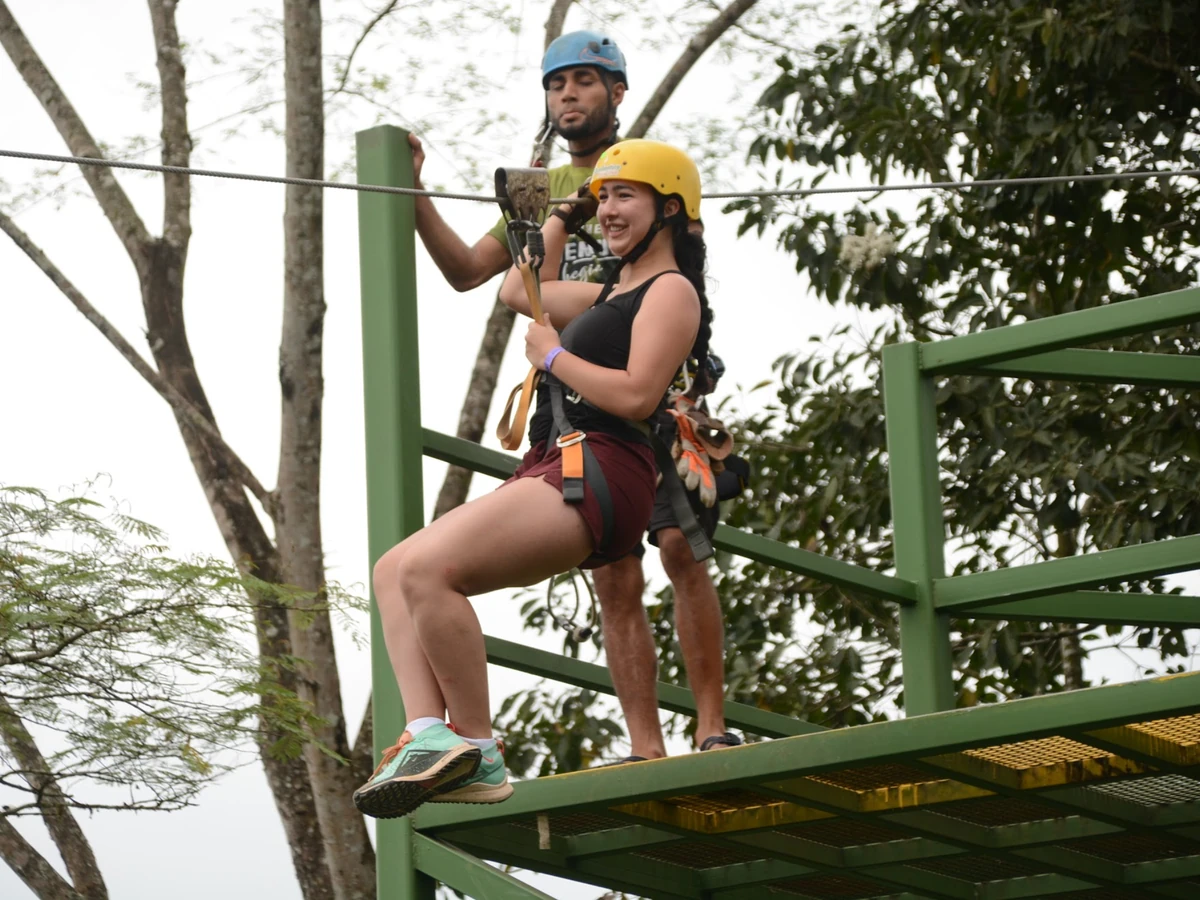
| Zipline and canopy tour | Confidence | Not an academic subject, and worth naming anyway — it is often where a quiet student surprises their teacher |
Biology and Ecology, Seen Rather Than Described
Costa Rica is commonly cited as holding around five percent of the world’s known species on a fraction of a percent of its land surface. Whatever the precise figure, the practical consequence for a school group is the one that matters: students see more rainforest biodiversity in a week than a temperate country would show them in a month. For a science department weighing destinations, the best STEM trips for middle and high school students sets Costa Rica against the alternatives.
The density is what makes it teachable. A student who has been told that a rainforest is layered will believe it; a student walking a hanging bridge at canopy height understands it, because the birds are at eye level and the forest floor is somewhere below. The same is true of biodiversity as a concept. It stops being a word when a guide points out four species of bird in a minute and names them all.
Tirimbina is the piece that makes it academic
Sustainability is the word most often attached to Costa Rica, and it is worth being precise about what students actually study under it: how a rainforest economy pays for itself, what protection costs, and who carries that cost. That is a harder and more interesting question than the poster version.
On the seven-day itinerary, the group visits Tirimbina Biological Station, which is a working reserve and research site rather than a visitor attraction with a gift shop. That distinction is the whole point. Students see what field biology actually looks like — the patience of it, the note-taking, the fact that most observation produces nothing on any given morning.
For a student considering a science degree, that is more useful than another beautiful view. It is also the part of the trip most likely to change what a student thinks they want to do, which is a strange thing to put on a permission slip and a real reason to go. Our Costa Rica STEM trip page goes further into the science side.
The Wildlife Students Actually See
Biodiversity is an abstraction until it has a name attached to it, and this is the part students talk about on the bus home.
On the Sarapiquí and Arenal side of the country, groups commonly see howler monkeys — usually heard well before they are spotted — along with white-faced capuchins, two- and three-toed sloths, toucans, iguanas, coatis, blue morpho butterflies and, for the sharp-eyed, poison dart frogs on the rainforest floor. The crocodile safari boat tour on the seven-day itinerary puts students close to American crocodiles and a long list of wading birds.
The teaching value is not the list. It is that students stop treating animals as isolated facts. A guide who explains why the howlers are in that particular tree, what the sloth’s metabolism costs it, and why the frog is that color has taught more ecology in ten minutes than a chapter does — because the animal is right there and the explanation has to account for it.
Nobody can promise a sloth
Worth saying to students and to parents before you go: wildlife is wild, and sightings are never guaranteed. A rainy morning changes what is moving. Most groups see a great deal, some see extraordinary things, and occasionally a walk produces birdsong and not much else.
That is not a flaw in the trip. It is the single most accurate lesson available about field biology, and a student who has spent an hour seeing nothing understands why researchers talk about sample size. Setting the expectation beforehand turns a quiet morning from a disappointment into the point.
Conservation as a Case Study, Not a Slogan
This is the strongest academic argument for Costa Rica specifically, and most trip descriptions miss it entirely because it is policy rather than scenery.
Costa Rica deforested heavily through the twentieth century. By 1987 forest cover had fallen to roughly twenty-one percent of the country. Today it is around fifty-seven percent. The forest came back, and it came back because of decisions students can examine: a 1996 law restricting clearance, and a Payment for Environmental Services program that pays landowners to keep trees standing, funded in part by a tax on fossil fuels.
That is a complete case study and it is rare. There is a measurable problem, a specific policy response, a funding mechanism students can argue about, and an outcome you can see from the bus window. It serves environmental science, economics and government equally well, and it gives students something more useful than being told that conservation matters — it shows them what it cost and who paid. It is also the clearest example we have of why an itinerary should be built around a subject rather than a checklist — what customizing an itinerary actually means covers how that works.
Why the tree planting is not a photo opportunity
The Sarapiquí reforestation program on the seven-day trip is where that policy becomes physical. A student plants a seedling that will not be a tree for years, in a country that has done this at national scale within their parents’ lifetime.
Handled well, it is the moment the abstraction lands. Handled badly it is a photograph, which is worth being honest about. Ask what the planting is connected to and who maintains the site afterwards — a good answer to that question is the difference between service learning and a staged activity. It is a fair thing to ask us, and the sort of question our FAQ exists for.
Spanish, Used Rather Than Practiced
For a Spanish program, the argument is simple and teachers already know it: the gap between classroom Spanish and used Spanish closes faster in a week abroad than in a semester of exercises.
What changes is not vocabulary. It is the willingness to be imperfect out loud. A student who will not speak in class will order lunch in Spanish when lunch depends on it, and something shifts after that. The school visit and the Sarchí workshop are the two points on the itinerary where the language is genuinely necessary rather than optional, which is precisely why they are worth protecting when the schedule gets tight.
Costa Rica also happens to be a forgiving place to do this. Spanish there is generally spoken clearly and without heavy regional compression, which matters more than teachers expect for a second-year student trying to catch a sentence. Groups wanting language front and center elsewhere often look at our Europe programs as well.
Civics and Economics, Which Nobody Expects
Two things about Costa Rica surprise American students, and both are teachable.
The first is that the country has no standing army. It was abolished in December 1948 and the decision was written into the constitution the following year; UNESCO holds the documentary record of it. For a government class, the follow-up question is the interesting one: what does a country do with the money, and what does it give up in exchange? Students will argue about that, which is the point.
The second is that conservation is not only an environmental policy in Costa Rica but an economic one. Protected land generates tourism income, tourism income funds protection, and the students themselves are inside that loop while they discuss it. A group that notices it is standing in the economy it is analyzing has understood something that is genuinely difficult to teach in a classroom.
What Students Learn That Is Not a Subject
Teachers who have run international trips tend to say the academic gains are real but not the thing they remember, and it is worth saying plainly rather than leaving it implied.
A first passport. A first flight for some students. A week of being somewhere the signage, the currency, the food and the birdsong are all unfamiliar, and discovering that this is survivable and then that it is enjoyable. Students come home slightly harder to impress and noticeably more willing to try things, and that shows up in a classroom for months afterwards.
There is a smaller, less romantic version of the same effect: students learn to manage themselves. Meeting times, their own belongings, their own documents, a roommate who is not a friend. For a lot of families that is the first meaningful rehearsal of independence, and the trip length is long enough for it to take. It is also why chaperone numbers matter on an international trip — how many chaperones you need sets out the ratios.
How It Maps to Your Curriculum
The practical question for a department is whether the trip serves the curriculum or sits beside it. Costa Rica serves several courses at once, which is usually how these trips get approved.
| Course | What the trip contributes |
|---|---|
| Biology | Tropical ecosystems, canopy structure, species interaction and field observation method |
| Environmental science | Deforestation and recovery as a documented national case, plus a policy mechanism to evaluate |
| Earth science | Volcanism, geothermal activity and the landscape a plate boundary produces |
| Spanish | Sustained use in unscripted situations, with two points on the itinerary where it is required |
| Economics | Commodity agriculture, eco-tourism, and a conservation program funded by a fuel tax |
| Government and civics | A constitutional decision to abolish the army, and what a state spends money on instead |
| Geography | Watersheds, climate zones and altitude compressed into a country the size of West Virginia |
A trip that serves one course is a nice idea. A trip that serves four is a proposal that survives a budget meeting, which is why it is worth building the itinerary around the two or three curriculum areas you can actually get behind it. Landmark’s themed programs work the same way in other destinations.
What a Field Trip Cannot Do
Being straight about the limits makes the rest more credible, and teachers can tell when a tour operator is overselling. Four things worth saying out loud:
- A week does not make a student fluent. It makes them braver in the language, which is different and arguably more useful at that stage.
- Students see field biology; they do not do it. Tirimbina gives an accurate picture of the work, which is valuable and worth describing accurately rather than dressing up as research.
- Wildlife cannot be scheduled. A good itinerary maximizes the chances and guarantees nothing.
- The learning is not automatic. Preparation before and reflection after are what separate a trip from a holiday.
A teacher who promises fluency to parents will be answering for it later, and a trip marketed as though students will conduct research is misleading. Both oversell something that is already good enough without it.
And the learning is not automatic. The trips that produce the most are the ones with preparation before and reflection after — a unit that sets up the conservation story beforehand, and something afterwards that requires students to use what they saw. Without those, a superb itinerary still produces a very good holiday. The itinerary is the easy part; the framing is the teacher’s.
What a Costa Rica Trip Costs
On average, Landmark’s fully inclusive trips run $300 to $400+ per traveler per day depending on package inclusions, or about $1,200 to $3,500+ in total for an all-inclusive package. Airfare is an additional variable cost. Landmark books and manages group air, airport transfers and every connection so the group travels together, but the fare itself moves with your departure city and your dates and is quoted separately.
| Trip length | Typical cost per traveler | What the extra day adds |
|---|---|---|
| 6 days | $1,800 to $2,400+ | Rafting, Arenal, zipline, cacao, surfing and a school service visit |
| 7 days | $2,100 to $2,800+ | Adds the reforestation program and Tirimbina Biological Station — the two most academic days |
Those figures apply the daily rate to each length and exclude airfare. If the academic case is what you are building, the seventh day is the one that carries it: the reforestation program and the biological station are on the longer itinerary, and they are the two components hardest to replace with anything else. Our six-day and seven-day Costa Rica programs set out both day by day, and what is included in a school trip package covers what the per-student price does and does not carry.
Planning It So the Learning Survives
A few things decide whether a Costa Rica trip delivers what this page describes.
- Book a year ahead. International trips run on a passport clock rather than a hotel one, and thirty families completing a government process is the constraint. Booking early covers what else that protects.
- Protect the seventh day if the academics matter. It is where Tirimbina and the reforestation program sit.
- Name your two or three subjects up front. A Travel Consultant can weight the itinerary toward them, but only if they know before it is built.
- Do the preparation. Students who arrive knowing the deforestation story ask better questions on day two.
- Plan the reflection now, not on the flight home. Whatever you will ask students to produce afterwards should exist before you go.
Who Is Landmark Educational Tours?
Landmark Educational Tours plans and operates private group travel for schools and student groups, domestically and internationally. Every trip is built for one group rather than sold as a fixed departure, so your itinerary and dates are your own and your group is never merged with another school’s.
On international programs a US-based Landmark Tour Director travels with the group from departure and is joined by a Costa Rica–based Tour Director on the ground, so the group has both continuity and local knowledge. A Landmark team member is reachable around the clock across time zones for the whole trip. Planning is free until you agree to proceed. More is on our Costa Rica destination page, our about page, and travel safety and support.
Tell us your grade level, your subjects and roughly how many travelers, and we will tell you what a week in Costa Rica could carry for your students. Request a quote or contact us to start. If you are weighing destinations, our France guide and best STEM trips cover the alternatives.