Most student groups need four days in Washington, D.C. Three days works only for a tightly focused trip, and five days is what a thorough first visit actually takes. The reason is not walking distance and it is not money — nearly everything students come to see in Washington is free. It is that the major sites run on timed entry, and a group only gets one slot per site per day.
That single fact governs the whole question. You cannot simply move faster to fit more in. The Capitol gives your group one reserved slot. The National Museum of African American History and Culture gives you one. Air and Space gives you one. Those slots are fixed points, and you build the day around them rather than the other way round.
So the honest answer to “how many days” is really an answer to “how many timed slots do you need, and how many can you realistically get?” Below is what each trip length actually holds, what gets cut first, and the booking windows that decide it. If you have not started planning yet, how to start planning a student trip covers the steps before this one, and you can request a quote at no cost.
How Many Days in Washington, D.C. at a Glance
| Item | Detail |
|---|---|
| Recommended for a first trip | Four days, three nights |
| Minimum that works | Three days, if the itinerary is narrowed deliberately |
| Thorough first visit | Five days, four nights |
| The real constraint | Timed-entry slots, not distance or admission cost |
| Realistic major sites per day | Two reserved sites plus monument time |
| Admission | The Smithsonian museums, the National Mall memorials, the Capitol, the National Archives and Arlington National Cemetery charge nothing to enter |
| Longest group booking window | The U.S. Capitol, which opens group reservations furthest ahead |
| Evening monuments | Need a night, which means they need a fourth day to be comfortable |
Why Washington Is a Timed-Entry City, Not a Walking City
Groups arrive expecting the limit to be stamina. It is not. The National Mall is walkable and the memorials are close together. The limit is that the buildings students most want to be inside all hand out a fixed number of entry slots, and several of them handle groups through a separate process with its own lead time.
Several of the buildings students most want to be inside release a limited number of entry slots each day, and a group takes one of them. That is a scheduling limit rather than a cost one — the Smithsonian museums, the memorials, the Capitol, the National Archives and Arlington National Cemetery all charge nothing to enter. But it means a day cannot simply be made denser. Your Tour Director holds those reservations and the timing around them, which is a large part of what they do in Washington.
What this means for your itinerary
Think in slots rather than in stops. Two reserved sites in a day is comfortable; three is possible only when the times happen to fall kindly. Add monument time, meals and the reality of moving a group of forty between locations, and a day holds less than it looks like it should.
It also means the Capitol tends to drive your calendar. Group visits there are arranged furthest ahead of any major site, so the sequence that works is: settle your dates, request the Capitol, then build everything else around the slot you are given. Our guide to the U.S. Capitol tour covers what the visit involves.
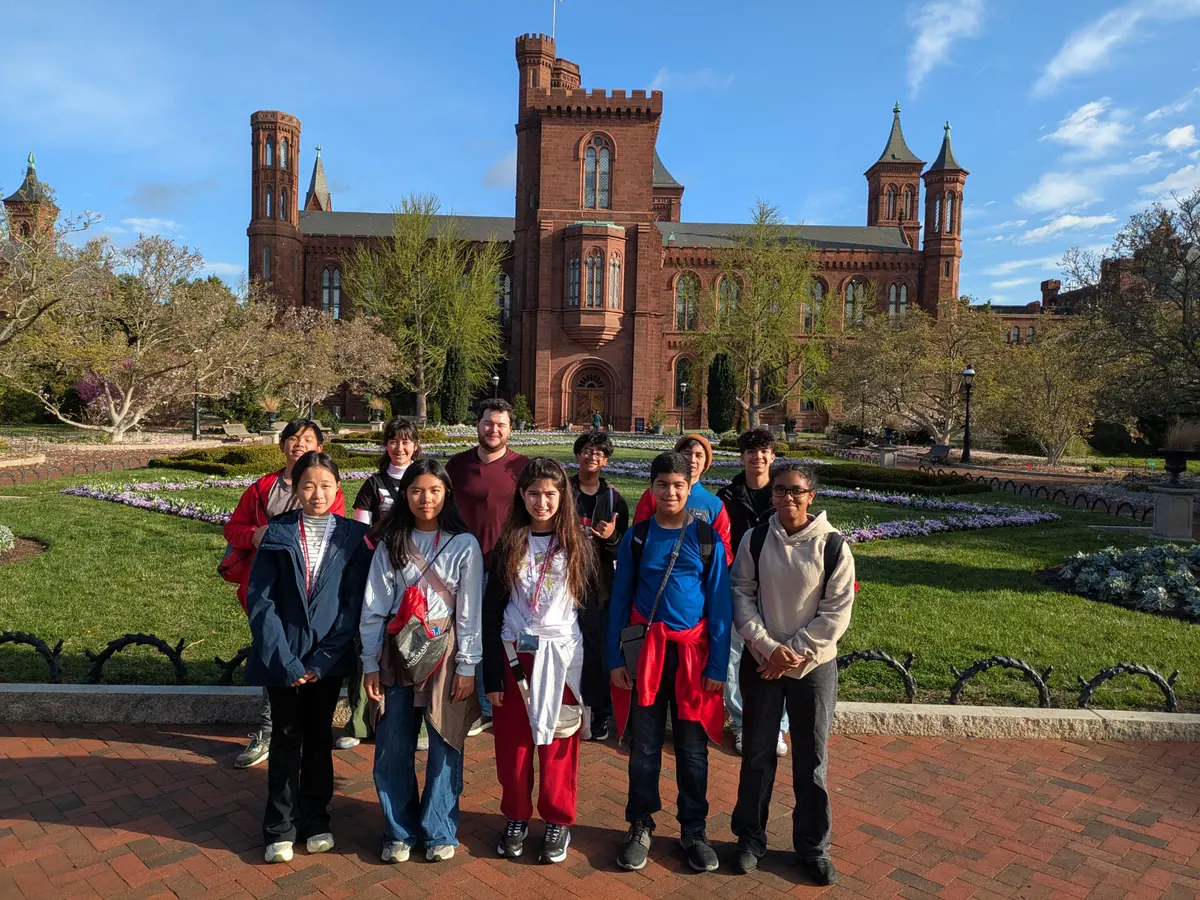
The Smithsonian Museums, and What Student Groups See at Each
The Smithsonian is the reason Washington rewards a longer trip. Nineteen museums, free to enter, and no group gets through more than two or three properly in a day. The table below is the short version of what each one gives a student group, and where it sits — because the ones off the National Mall cost you travel time as well as museum time.
| Museum | Where | What student groups see |
|---|---|---|
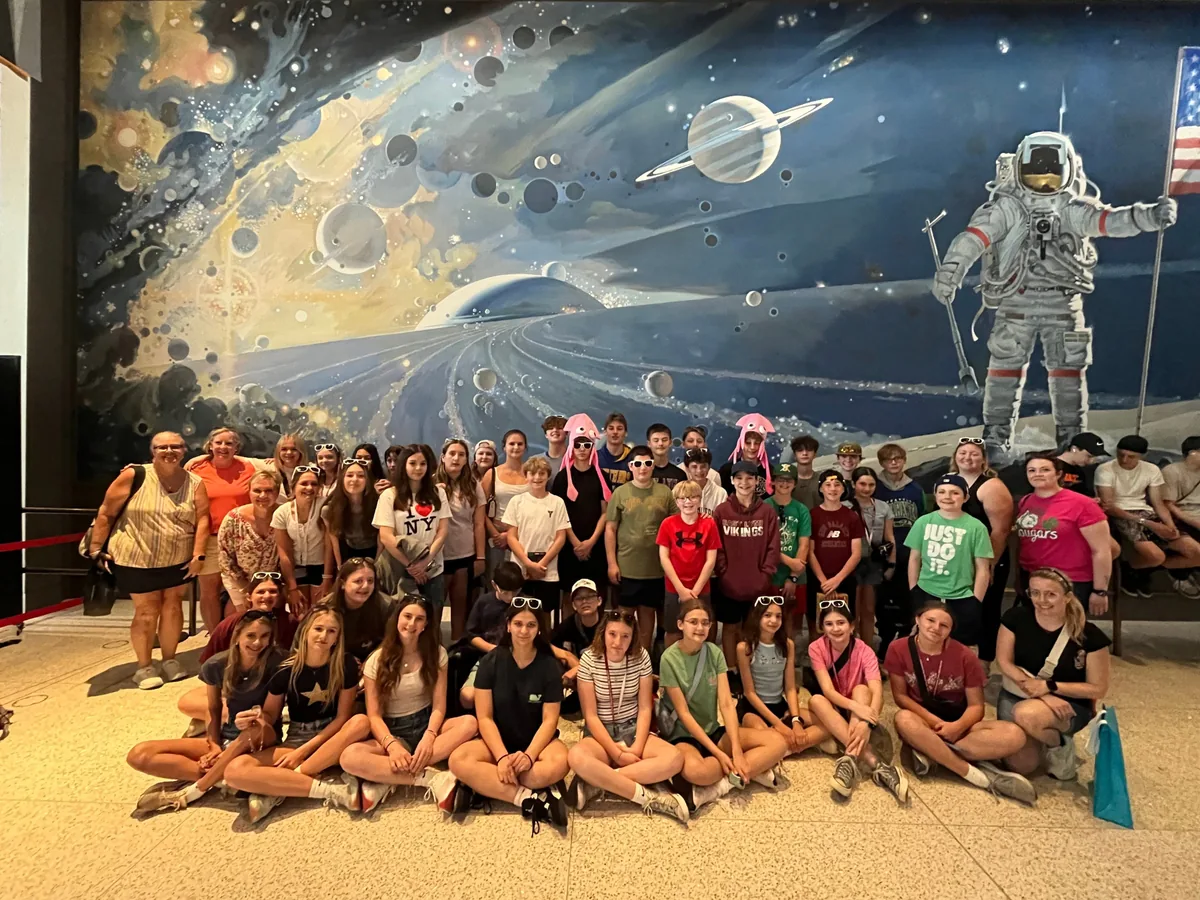
| National Air and Space Museum | National Mall | The history of flight and spaceflight in one building — the Wright brothers’ aircraft, Apollo mission artifacts, and exhibits on satellites and space travel. |
| National Museum of Natural History | National Mall | The Hall of Fossils with its dinosaur skeletons, the Hope Diamond, and interactive exhibits on ocean life, ecosystems and ancient civilizations. |
| National Museum of American History | National Mall | The original Star-Spangled Banner, presidential history, and artifacts from the moments students have been reading about all year. |
| National Museum of African American History and Culture | National Mall | African American history from slavery through the Civil Rights Movement to the present, alongside contributions to art, music, sport and politics. The most emotionally demanding museum on this list, and the one that needs the most time. |
| National Museum of the American Indian | National Mall | The cultures, histories and traditions of Indigenous peoples across the Americas, told through Native voices, traditional art and storytelling. |
| Smithsonian American Art Museum and Renwick Gallery | Downtown, off the Mall | American art across three centuries, with the Renwick’s immersive contemporary craft installations the part student groups react to most. |
| National Zoo | Woodley Park, off the Mall | Animals from around the world with habitats, conservation and biodiversity built into the visit — and the only Smithsonian stop that is mostly outdoors. |
| Steven F. Udvar-Hazy Center | Chantilly, Virginia, near Dulles | The Air and Space Museum’s companion hangar: the Space Shuttle Discovery, historic fighter jets, and restoration work visible in progress. Budget most of a half day, including the drive. |
| Smithsonian Castle | National Mall | Closed for renovation as of September 2026. The garden and grounds remain open, and the building is still the best orientation point on the Mall. |
How many Smithsonians fit in a day
Two is the honest answer, and two done properly beats four done at a walk. Natural History and Air and Space sit almost opposite each other on the Mall, which makes them the natural pairing for a single day. African American History and Culture is the one to give its own half day rather than squeeze alongside something else.
Anything off the Mall — the Zoo, American Art, and especially Udvar-Hazy out near Dulles — costs travel time on top of visit time, which is usually what pushes a group from four days to five. The best Smithsonian museums for student groups goes through them in more depth, and Natural History and Air and Space each have a guide of their own.
How Many Days by Grade Level
The answer shifts with who is traveling, because what a group can absorb in a day changes more between grades than most planning guides admit.
| Grade level | Usual length | Why |
|---|---|---|
| Elementary | One to two days, and usually only if you can drive | Shorter attention spans and heavier adult coverage mean two substantial stops a day, not four. Most elementary groups within driving distance treat Washington as a long day trip rather than an overnight. |
| Middle school, especially 8th grade | Four days, three nights | This is the classic Washington trip and the single most common shape we run. Eighth-grade civics and American history line up with the Capitol, the Archives and the Mall almost exactly, and four days holds that plus an evening at the memorials. |
| High school | Four to five days | Students can handle structured independence — a defined block inside a museum, meeting at a fixed point — which means a day can hold more depth, not more stops. Government and AP classes usually want longer inside the Capitol and the Archives, which is what pushes these groups to five. |
Why 8th grade dominates Washington
If it feels as though every middle school in the country goes to Washington in eighth grade, that is roughly true, and the curriculum is the reason. Eighth grade is where American history and civics are typically taught, and Washington is the only place those subjects exist as buildings you can walk into.
It also has a practical consequence worth planning around: you are competing with every other eighth grade in America for the same spring weeks and the same reservations. That is an argument for booking early and, if your calendar allows it, for traveling outside the peak. Our 8th grade Washington, DC itinerary shows the shape most of these groups take, and we run middle school programs and a civics-focused tour built around it.
How Many Days You Need: Three, Four and Five Compared
| Length | Full days on the ground | What fits | What gets left out |
|---|---|---|---|
| 3 days, 2 nights | 1 | The National Mall memorials, one Smithsonian, and one reserved site if the timing cooperates | Arlington, Mount Vernon, a second museum, and any real depth anywhere |
| 4 days, 3 nights | 2 | The memorials including an evening visit, the Capitol, two Smithsonians, and Arlington National Cemetery | Mount Vernon, Ford’s Theatre, a third museum, and most of the paid attractions |
| 5 days, 4 nights | 3 | All of the above plus Mount Vernon or Ford’s Theatre, a third museum, and time to sit inside exhibits rather than pass through them | Very little that a first trip needs |
If you read one line of this page, read this one. The jump that matters is from three days to four. A three-day trip gives you one genuinely full day; a four-day trip gives you two. That is double the ground time, and it is the difference between seeing the memorials from a coach window and standing at them after dark.
Is Three Days Enough in Washington, D.C.?
It can be, but only if you choose what the trip is about before you arrive and accept that you are not covering the city.
A three-day trip that works looks like this: the memorials on the Mall, one Smithsonian chosen for curriculum fit, and one reserved site. A three-day trip that disappoints tries to add Arlington and Mount Vernon and the Capitol on top, and ends up with a group that spent the trip on a bus.
The specific risk with three days is that your one full day is the only day that can hold a timed slot with any confidence. Arrival and departure days are hostage to traffic. If the Capitol slot you are given falls on a travel morning, you may simply lose it.
If three days is genuinely all you have, our guide to the top places to visit on a school trip to Washington, DC is the right place to make the cut, and how much a 3-day school trip costs covers the budget side.
Why Four Days Is the Usual Answer
Four days is what most groups book, and the reason is structural rather than traditional. Two full days hold two reserved sites each, which is four major slots — enough for the Capitol, two Smithsonians and Arlington, with the memorials filling the spaces between.
The evening is the real gain
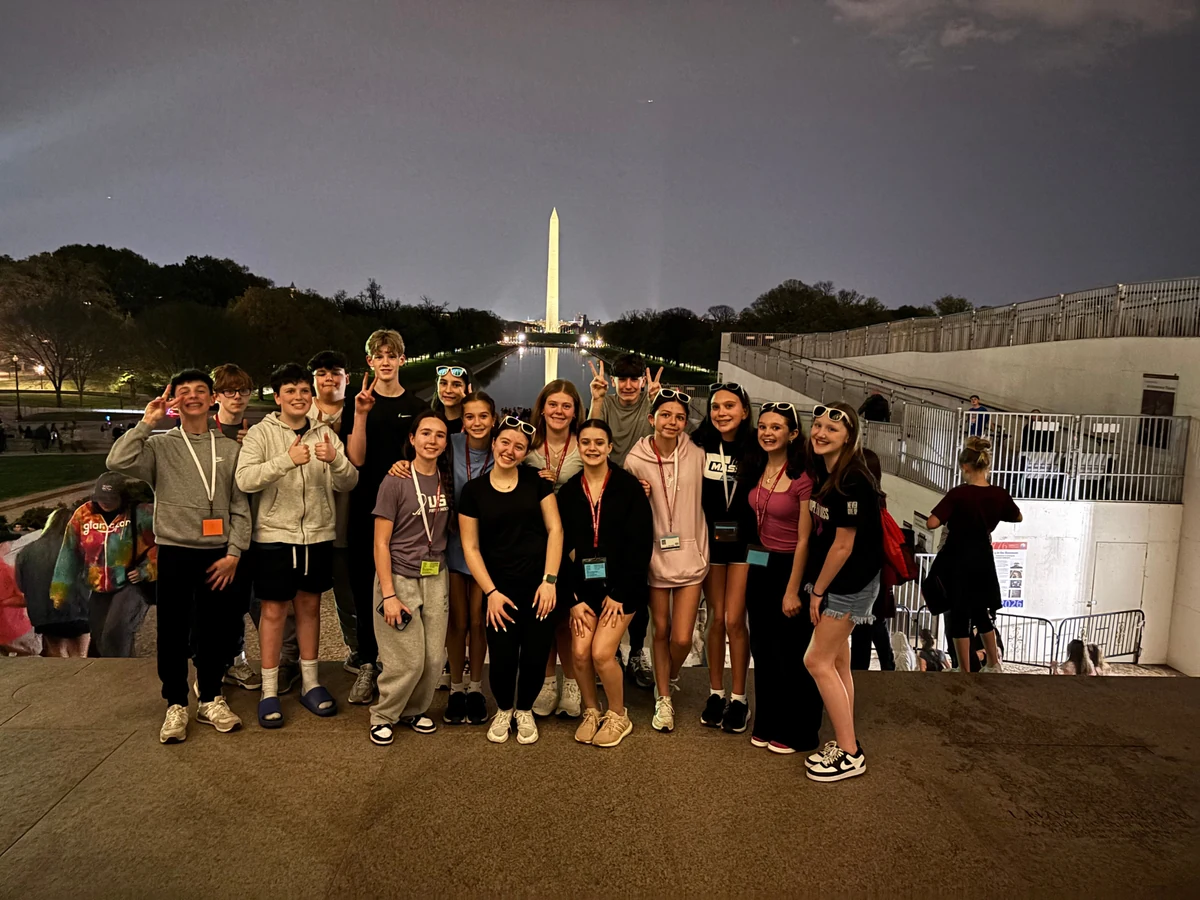
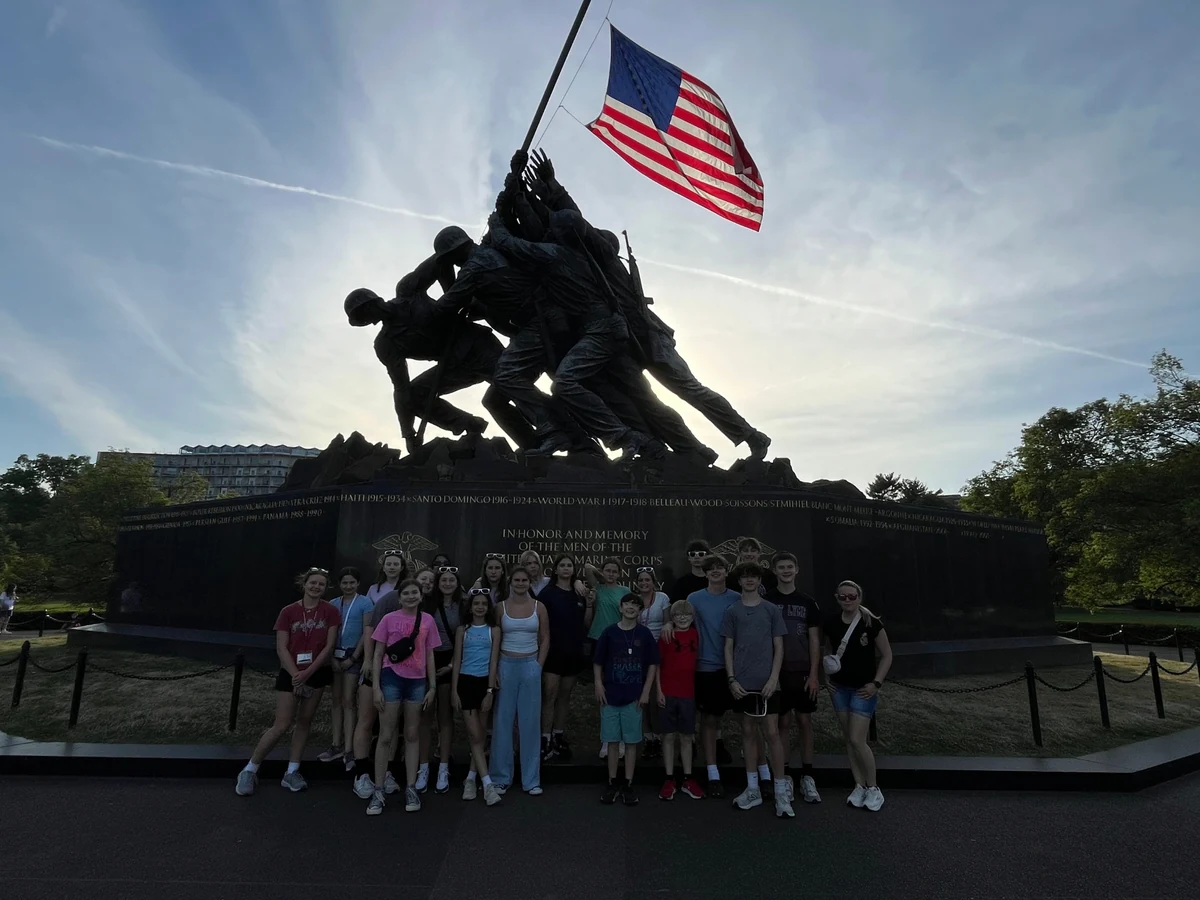
Three nights means you can give up one evening to the monuments and still have students rested. The Mall after dark is, for a lot of groups, the part students talk about afterwards: the Lincoln Memorial lit from within, the Reflecting Pool, the Korean War Veterans Memorial at night. It is also free, and it uses time that would otherwise be spent in a hotel.
Our evening monument tour covers what that night actually looks like, and the top monuments and memorials guide covers which ones earn the stop. For the full shape of a four-day trip, see our 4-day Washington, DC itinerary and the 4-day DC program.
When Students Need Five Days in Washington
A fifth day is worth booking in three situations.
- You are flying. Airfare does not care how long you stay, so spreading it over five days rather than four lowers your cost per day without lowering anything else.
- Your curriculum needs depth rather than breadth. A civics group that wants real time in the Capitol and the National Archives is better served by fewer sites and longer inside them.
- You want Mount Vernon or Arlington done properly. Both sit outside the Mall and both take most of a half day once you count travel. On a four-day trip, adding either means removing something else.
The 5-day DC program shows how the extra day gets used. If you are weighing cost across lengths, how much a 4-day school trip costs sets out the arithmetic, and what a school trip to Washington, DC costs covers the destination specifically.
What the Days Actually Look Like
Length is easier to judge once you can picture the shape. This is the skeleton of a four-day trip, not a full itinerary.
Day one
Travel and arrival, then the National Mall memorials in the late afternoon. The memorials are the right first stop because they are outdoors, free, need no reservation, and absorb a group that has been on a coach since morning.
Day two
Your first full day, and where the reserved sites go — typically the Capitol in the morning and a Smithsonian in the afternoon. This is also the night for the evening monument visit, while students still have energy for it.
Day three
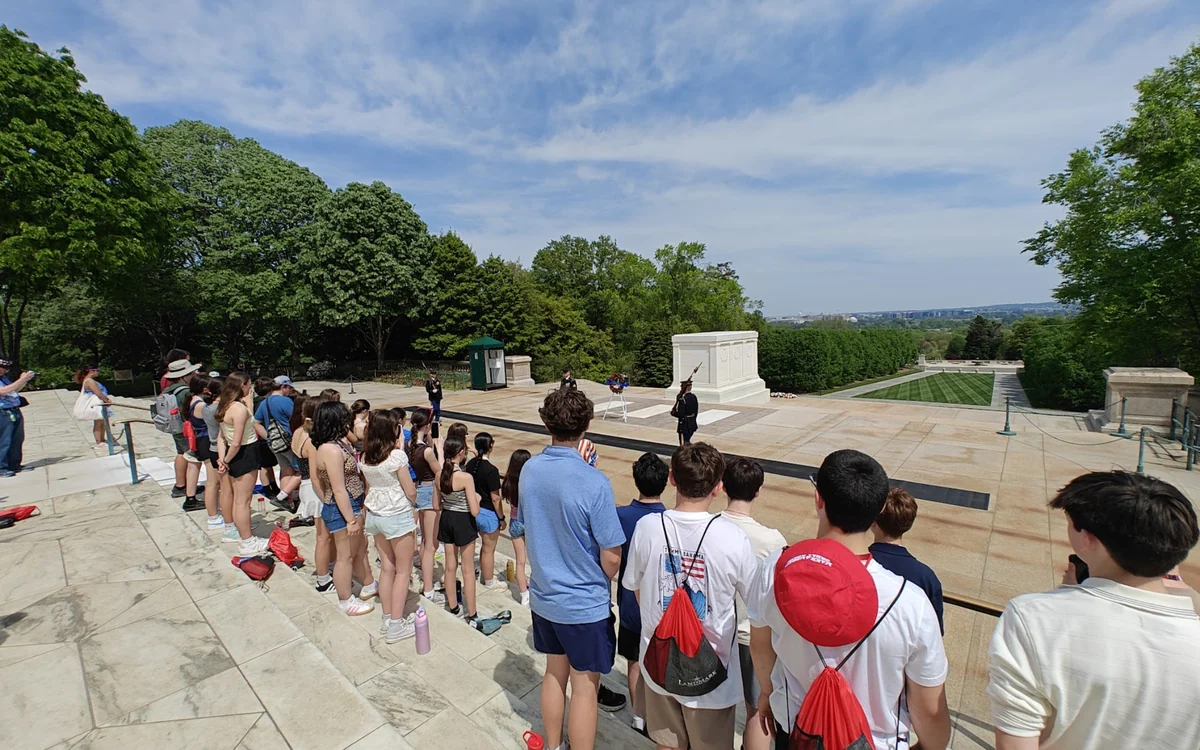
Arlington National Cemetery in the morning, including the Tomb of the Unknown Soldier, and a second Smithsonian afterwards. Arlington needs a half day once you count the transfer and the walking.
Day four
One morning stop and the journey home. Groups that plan nothing for this morning regret it; groups that schedule something demanding also regret it. A single museum or memorial is about right.
The full version, with timings, is in our 4-day Washington, DC school trip itinerary.
What Gets Cut First — and What Never Should
When a trip is shortened, groups tend to cut in the wrong order.
Cut these first
Paid attractions chosen for entertainment rather than curriculum. A third Smithsonian. Anything that requires a long coach transfer for a short visit.
Protect these
The evening monument visit, because it costs nothing and returns the most. Unstructured time inside one museum, because a rushed museum is a wasted museum. And the Capitol, if you managed to get a slot — you will not get another one at short notice.
Which museum to protect depends on your subject. The best Smithsonian museums for student groups breaks them down, and for groups building around African American history, the African American history tour covers the sites worth the slot.
Does the Time of Year Change How Many Days You Need?
Yes, though not in the way people expect. The number of days you need stays the same. What changes is how hard those days are to fill.
Spring is when almost every school group travels, which means timed slots at the popular sites go faster and the Mall is crowded. A four-day trip in April holds less than a four-day trip in October, because the queues and the transfers eat more of each day. If your dates are flexible, a fall trip gets you more out of the same length.
Cherry blossom season compounds it. The bloom is extraordinary and it is also the single busiest window of the year. Cherry blossoms in Washington, DC covers what to expect if that is your target.
Planning the Trip Around the Slots
The practical sequence, in order.
- Fix your dates first. Everything else depends on them, and the longest booking windows open before anything else can be confirmed.
- Request the Capitol as early as your window allows, through the group process or your Representative’s or Senator’s office. Our guide to the U.S. Capitol tour covers what the visit involves.
- Reserve the museums with group thresholds next, starting with the one your curriculum most needs.
- Build the memorials, meals and transfers around those fixed points, not before them.
- Put the evening monument visit on the night your group will still have energy — usually the second, not the last.
A Landmark Tour Director handles the reservations and the day-to-day timing so this does not land on a teacher. That is most of what they do in Washington: hold the schedule together when a slot moves.
Getting the Length Right for Your Group
Four days suits most first trips. Three can work with a narrowed itinerary. Five is right if you are flying, if your curriculum wants depth, or if Mount Vernon and Arlington both matter. The wrong answer is choosing a length before you know which reserved sites your group actually needs.
The whole planning conversation is free until you agree to proceed. Tell us your dates or travel window, your group size, and what your students are studying, and a Travel Consultant will build an itinerary at the length that fits and send a written quote. You can also browse our Washington, DC programs to see the shapes we run.
We are employee-owned, more than twenty years in, with former classroom teachers on staff, and we run DC more than any other destination. Every group travels privately, with a Landmark Tour Director assigned to it alone.
If your trip has a subject behind it, a theme does the narrowing for you and three days becomes more workable. What a 3-day STEM trip to D.C. looks like, day by day is a worked example. And if your school is a long way from Washington, how travel distance changes the number of days you need works the same question from the other end.