
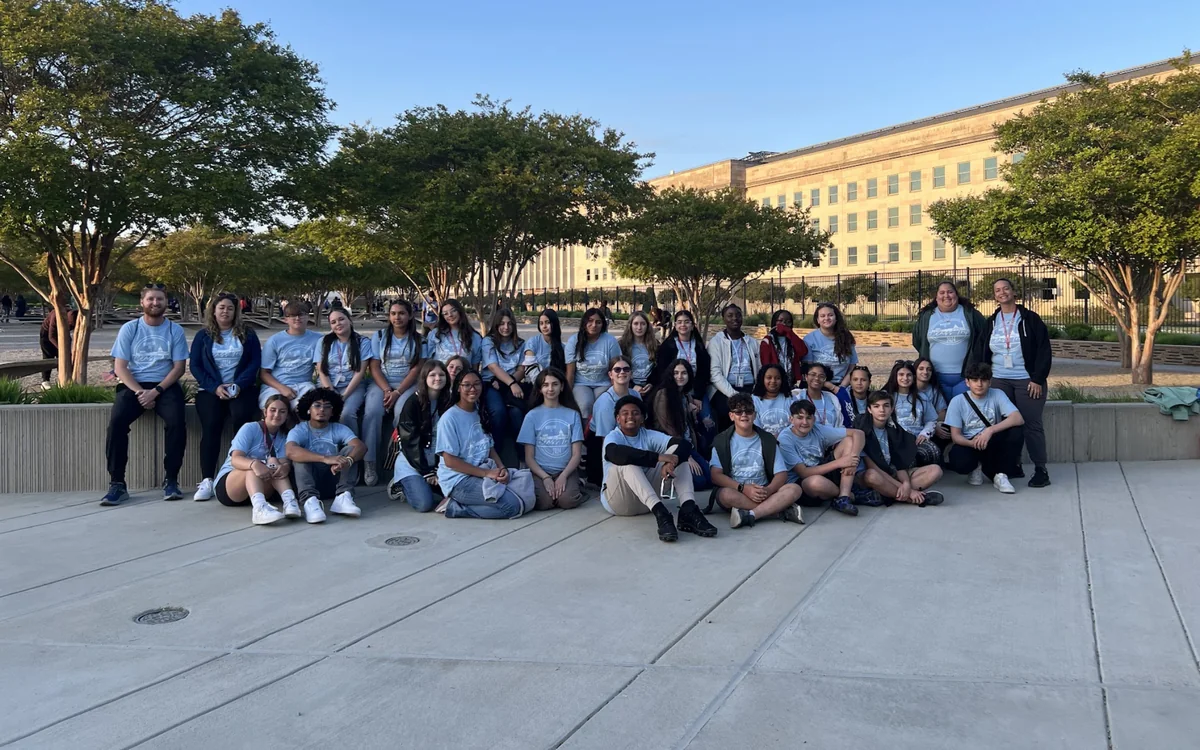
Choosing a tour operator for an 8th grade class trip comes down to one question most comparison checklists never ask: what does this student travel company do differently because the travelers are thirteen? Price, destination and itinerary matter, but they matter the same way at every age. Supervision, rooming, pacing and parent communication are where an eighth grade trip is actually decided.
Landmark Educational Tours runs eighth grade, the busiest middle school field trip year, more than almost any other grade, and builds every trip privately for one group with a Tour Director assigned to that group alone. Below is what to ask, what changes at this age, and where we fit.
If you have not chosen a destination yet, the best 8th grade trip destinations comes first. You can request a quote at no cost, and planning stays free until you agree to proceed.
Choosing an Operator at a Glance
If you are at the very start, how to start planning a student trip covers the steps before choosing a company.
| Item | Detail |
|---|---|
| The question that matters most | What the operator does differently because the group is thirteen |
| Trip type | Private group tours only — your group is never merged with another school’s |
| On the ground | A Tour Director assigned to your group alone, for the whole trip |
| Supervision | Safety bracelets and a safety briefing on day one; free exploration in chaperone groups or on the buddy system, set by the age of the group |
| Headcounts | Two before the group leaves a site — one by the Tour Director, a final one by the head chaperone |
| Rooming | Students in quads and adult chaperones in singles by default; overnight security available |
| Chaperone ratio | Set by your district, not by the operator — confirm it before you ask for a price |
| Accreditations | SYTA, American Bus Association, Better Business Bureau and IATA |
| Deposit | $50 per traveler by land; $150 per traveler where airfare is included |
| Typical cost | $300 to $400+ per traveler per day depending on package inclusions, or about $1,200 to $3,500+ in total for an all-inclusive package. Airfare is an additional variable cost. |
What Changes When the Travelers Are Thirteen
An eighth grade class trip is not a shorter high school trip, and a middle school group is not a small high school group. Four things are genuinely different, and each one should change what you ask an operator.
For many of them it is the first time away from home. That puts weight on the evenings, on how the first night is handled, and on whether anyone has thought about homesickness before it arrives. It is also an argument for four days rather than six — what eighth graders are like to travel with goes into the pacing.
Supervision is tighter and has to be, without feeling like custody. Thirteen-year-olds need more structure than sixteen-year-olds and resent it more visibly. How an operator handles free exploration is the single most revealing question you can ask.
Parents ask more, and ask earlier. Eighth grade parents want to know about phones, food, roommates and what happens if their child is unwell — usually before the deposit. An operator who has good answers to those saves you the parent meeting from a difficult one.
The heavy stops land hard. Eighth grade is old enough for Arlington National Cemetery, a Holocaust museum, a 9/11 memorial. Whether those land well depends on preparation and on a Tour Director who knows how to pitch them to this age. Our four-day Washington, D.C. itinerary shows where those stops sit in a week and why the order matters.

What to Ask a Tour Operator About an 8th Grade Trip
Ask all of these, and compare the answers rather than the prices. A company that has thought about thirteen-year-olds will answer them without hesitating. How much of the trip itself you get to shape is a separate question — what customizing actually means covers it.
| Question | What you are listening for |
|---|---|
| How does free time work for this age? | A specific structure — chaperone groups or buddy system, set by the age of the group, not “students stay together” |
| How do you count the group before moving? | A repeatable process. Ours is two headcounts, one by the Tour Director and a final one by the head chaperone. |
| Is our Tour Director assigned only to us? | At this age, one adult who knows every student’s name matters more than anything on the itinerary |
| How are students roomed? | Quads for students and singles for adult chaperones by default, with the organizer deciding who rooms with whom |
| Is overnight security available at the hotel? | A yes or no, not a maybe. We can provide it on request. |
| How are allergies and dietary restrictions handled? | Collected at registration, sent to restaurants ahead, and reconfirmed on site rather than relying on a thirteen-year-old to speak up |
| What happens if a student loses something? | An honest answer. The Tour Director will try; it is not their primary job, and no one should pretend otherwise. |
| Can parents reach their child? | When and how — free time, the coach, the hotel — so you can tell families something specific |
| What is the chaperone ratio? | That it is set by your district rather than by them, which is the correct answer |
| What happens if the day runs late? | That the itinerary is built with slack, that the Tour Director manages timing, and that the head chaperone is told what is being cut |
Our FAQ page answers most of these in Landmark’s own words, and choosing a company as a first-time planner covers the ground that is not age-specific.
Supervision, and the Question Behind the Question
When a parent asks “will they be supervised,” they are not asking about ratios. They are asking whether a thirteen-year-old can wander off.
On a Landmark trip students are given safety bracelets at their first meeting with the Tour Director, along with the first of several safety briefings. Free exploration happens in chaperone groups or on the buddy system, and which of those applies is set by the age of the group and the organizer’s judgment. The group does not leave an attraction until two separate headcounts have been done — one by the Tour Director and a final one by the head chaperone.
That last detail is the one worth repeating at the parent meeting, because it is concrete. “Two headcounts, by two different adults, before we move” answers the real question in a way that “students are supervised at all times” does not. The rest of our protocol is on travel safety and support.
The ratio is your district’s decision, not ours
Required chaperone-to-student ratios are set by your school or district and they vary. Confirm yours before you ask anyone for a price, because chaperone numbers determine your bed count, which determines the quote — it is the most common reason a first price comes back higher than a teacher expected. How many chaperones you need covers it.
The Questions 8th Grade Parents Actually Ask
These come up at every parent meeting for this grade. Having the answers ready is most of what makes that meeting go well — and holding it early, which booking early makes possible, is most of what makes a trip fill.
“Who will my child share a room with?”
Students are placed in quads and adult chaperones in singles by default, and you decide who rooms with whom — the rooming list is submitted closer to departure. We try to keep a group on the same floor or wing, and can request male and female travelers on separate wings or floors, though that depends on the hotel’s layout and nothing can be guaranteed. At thirteen this is the question that generates the most parent email, so it is worth answering clearly and early.
“What if my child has a food allergy?”
Restrictions and allergies are collected when travelers register on the portal, reported to the restaurants on your itinerary ahead of the trip, and the Tour Director reconfirms with the restaurant before and during sit-down meals. Where students are given meal vouchers or a cash allocation, reporting the allergy becomes the student’s responsibility — worth saying plainly to parents of a thirteen-year-old rather than leaving it implied.
“Can I reach my child?”
Yes. Students with phones can be texted through the day and called during free time — on the coach back to the hotel, at the hotel in the evening. For students too young to carry a phone, the organizer and chaperones agree the arrangement in advance. Give parents the specific windows rather than a general assurance.
“What if my child gets sick, or needs medication?”
Ask this of any operator directly, and ask for the answer in writing rather than over the phone. What you want to know is who makes the call if a student is unwell, how medication is handled during the day, and who contacts the parent — and how quickly.
Some of the answer is the operator’s and some of it is your school’s. Your district will have a policy on medication administration on a field trip and on which adult carries health forms, and that policy governs regardless of who you book with. Sort it out before the parent meeting rather than in response to a question at it. On our side, a Landmark team member is reachable around the clock for the whole trip, and a Tour Director is with the group for every day of it.
“What if they lose something?”
Tour Directors are the last to leave a dining room or meeting point and remind students to check for wallets, phones and bags. If something goes missing they will try to track it down. It is not their primary responsibility and we would rather say that than imply otherwise — which is why the packing advice for this age is to bring the essentials and nothing precious — our packing essentials note covers the rest.

Red Flags Worth Walking Away From
None of these is about any particular company. They are the patterns worth noticing in any conversation, and each one is a reason to slow down rather than sign.
| Red flag | Why it matters at this age |
|---|---|
| Inclusions are not itemized in writing | You cannot compare two quotes, and you cannot answer a parent asking what the price covers |
| Vague on whether your group travels alone | “It depends on the season” is not an answer. It changes who is on your coach. |
| Cannot say how free time is structured | With thirteen-year-olds this is the whole question. A company that has not thought it through has not run many eighth grades. |
| No named accreditations | If they cannot name bodies you can verify independently, there is nothing to check |
| Pressure to deposit before you have a written itinerary | A deposit should follow a plan, not precede one |
| Reluctance to provide a certificate of insurance | Most districts require it anyway, so hesitation here is a problem you will meet again later |
| No clear refund schedule | It only matters when a family needs it, which is exactly when you do not want to be negotiating |
| Charging for a quote | Planning and a written quote should cost nothing |
One more worth doing: ask for references from schools of a similar size and grade, and actually call one. A company that runs eighth grades regularly will offer them without being asked. Reading what groups say afterwards is a start, but a five-minute call with a teacher who has done it is worth more than any page.
Credentials You Can Check Yourself
Do not take any operator’s word for this, including ours. Landmark is a member of the Student & Youth Travel Association and the American Bus Association, holds Better Business Bureau accreditation and IATA accreditation for group air ticketing, and is an approved vendor for districts including Broward County Public Schools and the New York City Department of Education — those districts run their own procurement and insurance checks before approving a vendor, so the approval is independent of anything we say here.
Two more worth requesting in writing from anyone you are considering: a certificate of insurance showing their general liability coverage, and confirmation of whether they can name your school or district as an additional insured. Most districts require both as a matter of procurement anyway, and your front office will know what they mean. Everything of ours is listed on our accreditations page.
What an 8th Grade Trip Costs
On average, Landmark’s fully inclusive trips run $300 to $400+ per traveler per day depending on package inclusions, or about $1,200 to $3,500+ in total for an all-inclusive package. Airfare is an additional variable cost.
| Trip length | Typical cost per traveler | Common for eighth grade |
|---|---|---|
| 3 days | $900 to $1,200+ | A focused trip close to home |
| 4 days | $1,200 to $1,600+ | The usual eighth grade length |
| 5 days | $1,500 to $2,000+ | Longer distance, or a reward trip |
When you compare two quotes, compare what is inside them rather than the headline. The line most often missed is gratuities for the Tour Director and any step-on guides, which are not included and should be budgeted separately. What is included in a package sets out the rest, and how payment plans work covers what families will ask about.
Where Landmark Fits an 8th Grade Group — and Where It Does Not
- A good fit when you want your own group rather than a combined departure, which at this age means one Tour Director who knows every student.
- A good fit when the itinerary needs to serve the curriculum, and when you want the pacing built for thirteen-year-olds rather than inherited from a high school route.
- A good fit if your district requires competing written quotes, because ours costs nothing and is itemized.
- Less of a fit if the lowest headline price is the only criterion. A private group carries costs a combined departure spreads across several schools.
- Less of a fit if you want to book a fixed published itinerary off a website today. We build each trip in conversation.
- Less of a fit for a very small group, since around ten travelers is the usual threshold for group rates.
Who Is Landmark Educational Tours?
Landmark Educational Tours is a 100% employee-owned educational travel company based in Middleton, Massachusetts, with more than twenty years in student travel and former classroom teachers on staff. Eighth grade is one of the grades we travel most.
Every trip is private and built for one group, with a Tour Director assigned to that group alone. Planning, a custom itinerary and a written quote are free until you agree to proceed. More is on our about page, our 8th grade Washington, D.C. itinerary, and our testimonials page.
Tell us your dates, roughly how many travelers and what your eighth grade is studying, and we will send an itemized written quote you can set beside any other. Request a quote or contact us to start.